
Translated material
Was Shakespeare a woman?
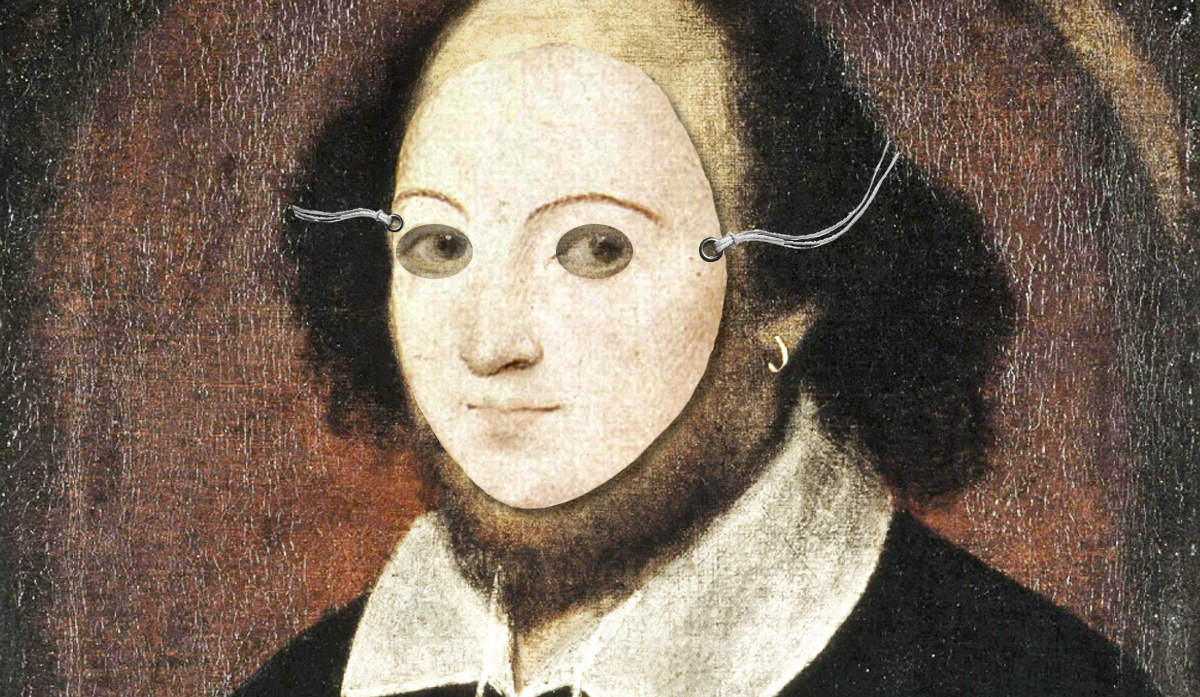
The literary critic claims that the pseudonym "Shakespeare" used Amelia Bassano
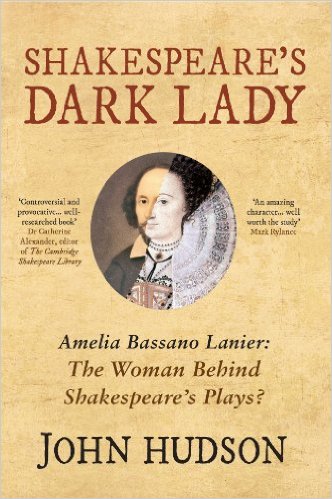
It turned 400 years since the death of William Shakespeare. However, his personality still remains a mystery. The English Shakespeed John Hudson published a book entitled "The Smooth Lady Shakespeare", which proves that in fact, under the pseudonym "Shakespeare" is a woman - poetess Amelia Bassano.
In 2008, a document appeared on the Internet, entitled the “Declaration of a reasonable doubt”, which stated that a person with a six -year education named William Shakespeare could not be the author of plays and sonnets, which shows a thorough knowledge of foreign languages, jurisprudence, astronomy, geography, world history, music, literature and many other sciences and arts. In April 2016, 3321 people signed the document, including 567 scientists. Many outstanding scientists and writers believed that the son of an illiterate glovemate, William Shakespeare, who lived in Stratford-on-Evon, whose daughters were also illiterate-an impostor. Among these "Shakespeareceptics" were, in particular, Charles Dickens, Mark Twain, Henry James, Sigmund Freud.
The father of the so-called anti-Stratford direction in Shakespeare's studies was Vicaria James Wilmot, who visited Stratford-on-Evon in 1785 in the hope of finding evidence that William Shakespeare, who had been born and, who died there, was the author of Hamlet, McBet and Juliet. Having checked all the archives and libraries of the city and county, having viewed the official and private correspondence of the XVI-XVII centuries, he did not find a single document or mention of such a writer. In the will of Shakespeare, written by a notary, there was no mention of books, manuscripts or just about paper (which at that time was very expensive), only about money, real estate and household utensils. Until now, any manuscripts of his works have not been found, there is not even a scrap of paper, written by him with his own hands. Many researchers had the impression that the Skailed Rostov, the grain merchant and the petty landowner William Shakespeare, who lived in Stratford-on Avone, was illiterate. I must say that at first the plays and sonnets attributed to Shakespeare were printed anonymously, and only a few years later the name of one of the actors playing in these plays appeared on the covers. Who in this case could be the author of these dramatic and poetic masterpieces? Among the possible applicants for 38 plays and 154 sonnet, in particular, the outstanding playwright of the Elizabeth era Christopher Marlo, philosopher and statesman Francis Bacon, as well as two aristocrats: Count Oxford (Edward de Vera) and Count Derby (William Stanley) are called. At first glance, the version of John Hudson, which proves the paradoxical, which proves in the book “The Time Lady Shakespeare” that under the name of Shakespeare is a poetess Amelia Bassano, a baptized Jewish of Venetian origin from a family of musicians who played at the royal court. Having studied the biography of Bassano and its poetry, the English Shakespeared came to the conclusion that of all the contemporaries of the Great Bard, only Amelia Bassano had the necessary talent and erudition to create literary masterpieces that were required by the encyclopedic education. The version that Shakespeare was a woman gave rise to stormy debates in the academic environment. Why wake up slyly? - her opponents say. - Let's check this version using the Endoscopic study of Shakespeare's grave. It seems that Shakespeare's society intends to do this. However, most likely, supporters of this idea will be disappointed: in 1820, Washington Irving wrote that "several years ago" the church graveger looked into Shakespeare's grave and "did not find in it a coffin or bones; nothing but dust." The epitaph on the tombstones of Shakespeare, whose authorship is attributed to himself, is now perceived as visionary: it is called not to break the grave and curses the daring to "touch my ashes." However, the endoscope is not a hoe, you will not have to break the grave. It is characteristic that on the tiny tombstones of Shakespeare there is neither a name nor the date of life of the deceased. In an interview with Radio Liberty, John Hudson justifies his "female version."
-The first argument in favor of my version was the fact that Amelia Bassano Lanier possessed the knowledge of all those 20-30 sciences and arts that were captured in Shakespeare's works. And this is a very important point. I mean knowledge of Hebrew, Latin, Italian language; Knowledge of jurisprudence, history, medicine, botanists, heraldry, falcon hunting, cooking and many other sciences, arts and crafts, the mention of which is found in Shakespeare's plays. The second argument was what I call the “literary followed” - the presence of Shakespeare with the poetry of Bassano images, plots, names, in particular, the names of Amelia and Bassano in different transcriptions and versions in the “Titus of Andronika”, “Venetian merchant”, “Othello” and other plays. These mutual literary leitmotifs give serious reason to argue that we are talking about a single authorship. The third argument in favor of my version was the stylistic and prosodic analysis of the poetry of Shakespeare and Bassano. Amelia Bassano was the first woman in Elizabethan England. I mean her poetic collection "Glory to you, Lord, King of Jew", published in 1611. Shakespeare can be called a poet experimental, innovative, in many ways ahead of his time. A comparison of Shakespearean sonnets with poetry Bassano discovers the similarity of style, vocabulary, poetic form, poetic sizes, compositions, historical sources, theological images, dramatic techniques, even the use of similar neologisms. In my opinion, these three arguments are enough to confidently claim that Amelia Bassano had a hand in the creation of Shakespearean plays.
“ Does this mean that the mysterious“ dark -legged lady ”of Shakespeare’s love lyrics was not Mary Fiton, but Amelia Bassano?”
- Leslie Raus was the first to call Amelia Bassano Lanier Lanier Lady Lady Sonets Shakespeare in 1973. His conjecture was true, but the evidence cited was not sufficiently justified, for which he was rightly criticized. Another researcher, Martin Green, in an excellently reasoned article showed that Amelia Bassano in her own lyrics portrays herself a dark lady and that the same image appears in Shakespeare's sonnets. So in Shakespeare's sonnets, Amelia simply depicts itself.
- Your "female version" is not the first in Shakespeare's. Which of the women, except Bassano, was read to Shakespeares?

- The assumptions were expressed that the author of Shakespearean plays could be Queen Elizabeth. They also called Mary Sidni-Herbert, Countess Pembroble. There is a hypothesis that his wife Anne Hatauay wrote for Shakespeare. Russian researcher Ilya Gililov in the book of William Shakespeare, published in 1997, or the Secret of the Great Phoenix "suggests that Shakespeare's plays may have written Elizabeth Sydney Ratland with her husband Count Ratland. Gililov, in particular, noted that the verses in the collection of Amelia Bassano Salve Deus Rex Judaeorum ("Glory to you, Lord, King of the Jew") are not inferior in artistic quality to Shakespearean sonnets. I will not name this with an indirect recognition of the identity of these authors, but one cannot disagree with this opinion.
- Leslie Rauz suggests that Amelia Bassano was Shakespeare's mistress. How probably is it?
A comparison of Shakespeare's sonnets with poetry Bassano discovers the similarity of style, vocabulary, poetic form, poetic sizes
- This idea, of course, is absolutely contrary to my version. If this were so, it would mean that Amelia was a constant source of information for actor Shakespeare, and for twenty years - the time of his creative activity. This would mean that Bassano did not part with him for twenty years and supplied him with musical and literary allusions throughout this time. This contradicts her biography. Shakespeare never left England, and Amelia traveled a lot around Europe when he lived in Stratford.
- You write that the most intriguing moment in Shakespeare's plays was the acquaintance of their author with Judaism and Jewish sacred texts, and you note that in Elizabethan London this was an unusually rare phenomenon. How do you explain the knowledge of Shakespeare or his double of Hebrew and Talmud?
-This is one of the examples that AMELIA Bassano Lanier, who came from the Italian family of Jewish Marrans, for whom Hebrew was his native language, was behind this. Words in Hebrew, metaphors from the Talmud and Mishnah in those days non -Jews could not know. Even the assumptions were expressed that Shakespeare was a baptized Jew. Jews could not live legally in England in Elizabeth times. Throughout the country, there were no more than two hundred Jewish Marrans who adopted Christianity-mostly immigrants from Portugal. These Jews used Hebrew as a trading language. Many of them were engaged in trade, like the character of the "Venetian merchant." It is characteristic that the Jewish allusions almost similar to Shakespearean are also found in Bassano verses, in whose family Hebrew and Italian were “home languages”, and openly, outside the house, her family did not speak them.
- You describe Amelia Bassano Lanier as a renaissance person, an encyclopedically educated woman. How can a Jewish girl from a family of musicians who used a rather low social prestige in those days, could get such an education and join a high culture?
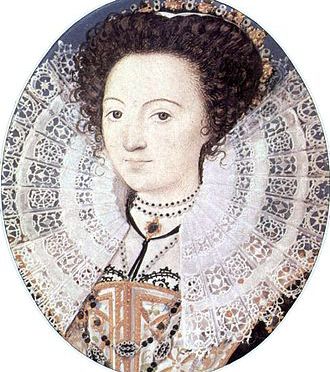
- There is a very rarely exhibited miniature portrait of Amelia Bassano in a court dress, made by Nicholas Hilliard around 1591. The spiritual face of a smart and intelligent woman looks at you. After the death of his father, Amelia at the age of seven was sent to the estate of Katherine Willowi, Duchess of Suffolk. Her daughter Countess Susan Bertie, one of the most educated women of that time, taught Amelia to Greek and Latin, read the Bible and other books with her. At the age of 13, Amelia became the mistress of the cousin of Queen Elizabeth Lord Hansdon, who became her patron, who introduced her to music and theater. He was a cartridge of many musical ensembles and theatrical troupes. At one time, Amelia led the school. Her highest education is confirmed by numerous studies.
- If Amelia Bassano Lanier was not the author of Shakespeare's plays according to your version, so that you talk about her as a person?
She was one of the largest English poets of her time
- We know a lot about her from her letters and thanks to her poetry. She had a very extraordinary life after she was presented to the court and became the mistress of the cousin of Queen Elizabeth Lord Hansdon. Then she married the musician Alfonso Lnony. It is known that she was one of the first women who founded a school for girls in England. The last years of her life were overshadowed by the need and litigation. Amelia Bassano died in 1645. From her poetry we can conclude that she was one of the largest English poets of her time. Her work wears traces of high intelligence and poetic innovation. The same can be said about the author of plays attributed to Shakespeare, who was also an intellectual and literary innovator. As a person and poet, she fully meets these criteria.
- Suppose Amelia Bassano was the author of Shakespearean plays, but it is unlikely that she also played in the theater, under the pseudonym William Shakespeare. Indeed, in those days, women were played by men. Was the historical, Stratford Shakespeare also an actor?
- Yes, he was, not only an actor, but also a theater producer, a kind of theater investor. William Shakespeare is listed in the list of members of the theater troupe entitled "People of Lord Chamberlain", which gave representations at court. Later, we find him in the list of actors who played at the Globus London Theater. True, he played insignificant, secondary roles. There is documentary evidence that he began his theatrical career as a easement-some kind of work scene. In his will, Shakespeare mentioned the small amounts left by him for several friends-actors to buy memorable rings, which was accepted at that time. The fact that Shakespeare was an actor may be another confirmation that he could not be the author of almost forty plays. It is unlikely that the current actor could find the time for the necessary scientific research and work on such complex, multifaceted plays.
- Frankly, for me it became almost a shocking discovery that William Shakespeare, it turns out, was also a member of the criminal group, as you write in his book ...
Amelia Bassano could use Shakespeare as an intermediary or "literary agent" to staging her plays
-William Shakespeare is mentioned in the judicial decision of 1598 as an accomplice of Francis Langley-a London jeweler, a fraudster, the leader of a criminal gang and the owner of the popular Swan Theater. Shakespeare, like Langley, was a very active usurer, simultaneously engaged in extortion. In addition, he was a "theater businessman." It can be assumed that Amelia Bassano could use Shakespeare as an intermediary or “Literary Agent” to produce her plays in the theater, where he was one of the shareholders. Naturally, at the same time the income was shared. Around this time, in 1598, his name began to appear on the covers of plays and scenario sheets.
- The Shakespearean romantic myth is widespread, especially popular in Stratford, in which Shakespeare seems to be a boy from a poor illiterate family from a small provincial town, who, thanks to hard work and talent, has achieved wealth and glory, and at the same time glorified his hometown, turning it into a place of pilgrimage of millions of tourists, into a Shakespeare Temple. In general, something like the Hollywood SUC with Ess Story . Is there a share of truth here?
- The idea of Shakespeare as a poor man is an unproven fiction. His father John Shakespeare, the gloves and mayor of Stratford, was a very wealthy person. He owned three houses, illegally engaged in usury, and led the money at very high interest. In addition, the fair income was brought to him by illegal speculation of wool. Subsequently, the son adopted these classes of his father when he became a member of the gang of Francis Langley. He succeeded in London and, returning to Stratford, acquired the second largest house in the city.
- I will quote your book: "It seems that Shakespeare's plays appeared at the wrong time." What did you want to say this?
- The time when they appeared was a transitional period from the metaphorical theater to realism. The sophisticated allegories on which the plot was built could not create the impression of a realistic performance. Spectators were not deceived on this subject. The stage action was largely conditional. However, over time, elements of realistic drama arose in Shakespearean plays. The evolution of their drama went in this direction. Nevertheless, the influence of the allegorical and metaphorical theater was preserved in the plays of the mature Shakespeare. On everything was the seal of a stylistic transition, a change of artistic method. That is why I used the expression "inappropriate time."
- Once again I will quote your book: "Today, 400 years after the creation of these plays, Shakespeare has turned into a global multi -billion dollar business." Did this change anything in the modern perception of Shakespearean plays?
- You see, these plays were originally written for the elite audience of the Elizabethan London. For their adequate perception, it was necessary to know the Bible well, to know and understand classical and modern literature and history. That is, they were written for the audience formed for that time. However, after 400 years, the plays had a completely different viewer and reader. This audience, which gets acquainted with Shakespeare's plays not only in the theater, but also in the cinema, completely different life and spiritual experience. She has vague ideas about the Bible, she knows neither ancient nor modern Shakespeare of literature, and for the most part this democratic audience is poorly educated. The plays were written for a certain time and place, but the viewer for whom Shakespeare wrote over time disappeared, and the modern education system does not contribute to its reproduction. That is why most of the modern interpretations of these plays demonstrate a purely commercial, populist approach.
- Is it possible to say that your book and your “female version” have finally closed the problem of Shakespeare's personality or is this secret still persisted?
- I think that the long way of revealing this secret has ended. However, it is not for me to judge. New generations of researchers may find new facts and documents, their archival searches can add something or change something in our ideas about Shakespeare's personality. Perhaps in the future some new research methods, new intellectual capabilities will arise. There is a huge probability that this topic will be explored and checked in the future. As they say, "I did everything that I could, who can, let it do better."
За 400 лет в мире появилось около двух миллионов исследований, посвященных Шекспиру, и не более двухсот – творчеству Амелии Бассано.
Для большинства любителей Шекспира абсолютно неважно, был ли он женщиной или придворным-аристократом, существовал ли он на самом деле или являлся субъектом грандиозной литературной мистификации. Гораздо важнее, что король Лир, Макбет, Ромео и Джульетта, Кориолан, Просперо и Гамлет волнуют поколения читателей и зрителей во всем мире. Первую строку кладбищенского монолога Принца Датского никому не надо напоминать. Актер Александр Филиппенко представляет три версии русского перевода, трех авторов, три темперамента: Борис Пастернак, Владимир Набоков, великий князь К.Р. в отражениях Гамлета. К 400-летию со дня смерти Уильяма Шекспира – проект Александра Филиппенко и Радио Свобода.