
Translated material
Passion for gaps
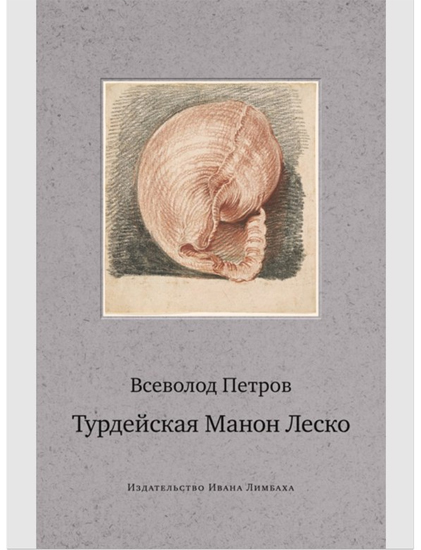
For the first time in Russia, a separate book was published by the Vsevolod Petrov “Turda Manon Lesko”, previously published in the journal New World. As applications, Petrov’s memoirs about the poets Mikhail Kuzmin and Daniil Harms, about the art critic Nikolai Punina, who was the husband of Anna Akhmatova, as well as about the painter and graphics of Nikolai Tirsa, go to her. In addition, the book published articles by Oleg Yuryev and Andrei Uritsky, dedicated to the story.
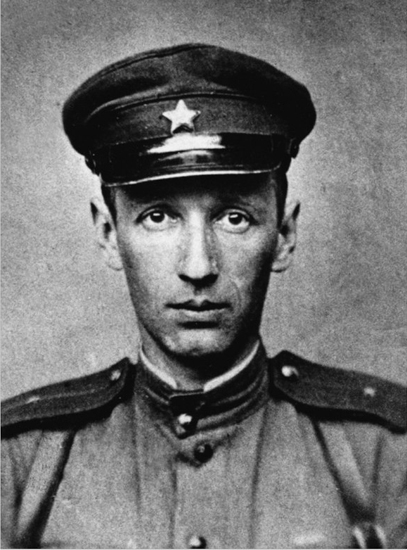
Vsevolod Nikolaevich Petrov (1912-1978) did not find the dawn of the pre -revolutionary Russian culture, but it was with it that he associated himself, constantly present in the circle of those people who retained her fragments from oblivion and testified to its continued existence by the very fact of his life. Of course, one of the main refugees for him was the apartment of Mikhail Alekseevich Kuzmin (more precisely, a room in a communal apartment). Apparently, Kuzmin really influenced Petrov. In 1932, Petrov, being an exterior of the 3rd year of the Faculty of History, entered the Russian Museum, where he worked with the archive of Nikolai Benois and met with Nikolai Punin, and then through him-with Anna Akhmatova.
In the late 1930s, Petrov became the interlocutor of Daniil Harms: “He considered the authority to be the most important property of the writer. The writer, according to his conviction, must put readers before such an indisputable obviousness that they do not dare and to piss against her. ” In 1939, Harms, anticipating the war, will say to him: “In prison you can remain yourself, but in the barracks it is impossible, impossible!” Who could know that in just three years he would not be in prison and not in the barracks, but in a psychiatric hospital, where he would die in early 1942 from hunger. Later, Petrov will write in his memoirs: "The people I am talking about were the phenomena of art."
With the outbreak of World War II, Petrov, like millions of others, was at the front. Oleg Yuryev suggests that after demobilization, he apparently fell by the arm of the bestseller Vera Panova: the socialist novel “Satellites”, released in 1946 and awarded the Stalinist Prize. The book was struck by Petrov something (very likely, mediocrity), and he made her a kind of replica: the story “The Turkish Manon Lesko”.
 © Publishing House of Ivan Lumbach
The plot of the book is extremely brief. The protagonist, a refined officer of those who pursued and planted the Chekists, travels to a military-sanitary train and falls in love with the girl on the way. She cheats on him and eventually dies when a bomb enters the house. The relationship between Vera and the officer is always criticized by the “team”, outlined without details and almost invisible. Such “groups” are often found in Soviet literature and Soviet cinema: they ridicule and condemn, but certainly friendly. Their participants relish certain situations from someone else's life, inventing vulgar jokes and with particular pleasure looking for new details. In this situation of things, it does not matter whether Vera continues to invite men or not, because any choice will be discussed by fellow travelers from the position of ubiquitous control, which cannot arise at the front. However, Vsevolod Petrov is not a Soviet writer, therefore he sends a collective consciousness beyond the boundaries of the main line of narrative, where it appears only as one of the many blind spots, as some kind of bumpy folk path, which, as it were, looks through the forest and leads to the hidden debugged mechanisms of the era. Contrary to the fact that the action of the Turkoy Manon Lesko unfolds into the Second World War, this war until the last moment also remains such a blind spot: explosions, aircraft, and wagon composition - all this is just a given, a fact that should not be put up with, but also to protest against which it is pointless. Therefore, a love story, crushing and a landscape, and participants, and rapidly losing its meaning, immediately comes to the fore. That is, reality is subjected to Petrov simplification in the name of the implementation of the personal utopia of happiness, as Oleg Yuryev is talking about. The protagonist is almost not interested in anything. He goes through snow -covered fields, reads the “suffering of the young Werther” and compares his beloved, faith with Manon Lesko, the presence of which, in essence, also becomes part of his project of personal utopia: “I thought about how my empty existence is, and that life itself is nothing, a flat straight line, rut on a snowy field, disappearing nothing. “Something” begins where the line intersects with other lines, where life enters someone else's life. Any existence is negligible, if it is not reflected in anyone and nothing. A person does not exist until he looks in the mirror. ”
 © Publishing House of Ivan Limbakha V.N. Petrov, 1940s.
I would venture to suggest that Manon Lesko is the heroine of the novel of the Abbot Prevo novel, a girl of free customs, who exhausts his lover - and Cavalier de Garye turn into Petrov into the allegory of the XVIII century in general. In turn, the main characters of the story are in a transition situation: on the one hand, they are a Soviet girl and an officer, on the other hand, an imperfect variation of the allegory, a shadow on the walls of the Platonic cave. Gradually, an additional space of another culture is formed in the story - aristocratic, with which the narrator associates itself. And for the aristocracy, the war was originally a way of life, so it does not take Petrov into the calculation, becoming a kind of natural state (this is also due to the phenomenon of a totalitarian society, where people sometimes felt a war as a relief of their fate: after all, an enemy who is not visible in the front appears at the front). In addition, according to Walter Benjamin, in the allegory “Any person, any thing, any circumstance can serve as a designation of anything”, and “This opportunity makes the profane world a destructive and still fair sentence: it is characterized as a world in which the details are not much important.” From here - from an allegorical to and Denia - the storyteller’s disinterest in the changes stems, his detached observation. It focuses on faith, and at the same time, her death changes little in the spirit of history, since in allegory - I will recut again to Benyamin - the ending story “extends before the view of the viewer as a petrified prehistoric landscape,” that is, it does not open in the light of deliverance or atonement, as is happening in romantic literature. Therefore, the narrator is characterized, for example, the following maxims: “Romanticism breaks the form, and the decay of style begins with it. Here youth and rebellion. And they rebel - bourgeois. The great and perfect Goethe was neglected with romantics because he saw the philistines in them. ”
One more actor should be mentioned: the doctor Nina Alekseevna, who was deliberately left in the shade, playing the role of the confident (the priest has such attorney, a friend of the gentleman de Gari). On behalf of Nina Alekseevna, the mind speaks in the novel, this constant companion of any text of the Enlightenment, to which Petrov refers the reader. However, there is no dictatorship in the voice of the mind: he rather complements the narrator’s speech, expresses his own doubts and hopes, in a word, replaces the choir of ancient tragedy. The secondary, at first glance, the character is full of love when he observes the developing plot. In general, Nina Alekseevna is the figure of a witness, and the testimony for Petrov was very important, judging by the memoirs left by him.
If you remember that the story was created in the conditions of the ideological and heroic perception of the Second World War, it will become clear that the “Turdek Manon Lesko” is a veiled provocation. In fact, Petrov secretly terminates the well-known unspoken agreement between literature and the state, which implies that literature certainly owes something to someone. Petrov - in his characteristic manner - avoids this and plays the drama "under the eighteenth century", a stylization, which is an almost invisible challenge (and others would say that blasphemy). The myth of the war scatters like smoke from a shell, exposing a funnel, some naked wound, which is marked with. Petrov constantly means gaps: with the past, with the Soviet world, finally with a girl faith. After all, having broken with something or someone, we become free, and freedom does not have to be sweet at all, which does not cancel the desire for it. So the boy, in the “Adventures of Ema Lebef” Kuzmin, breaking into a lover’s room and barely starting to admit his love, accidentally finds a girl under the veil and runs out.
Vsevolod Petrov. Turdek Manon Lesko. The story of one love: a story; Memories. - St. Petersburg: Publishing House of Ivan Limbakha, 2016. - 272 p.