Date
Author
Александр Генис; Соломон Волков
Source

Preserved copy
Translated material
Pictures from the exhibition
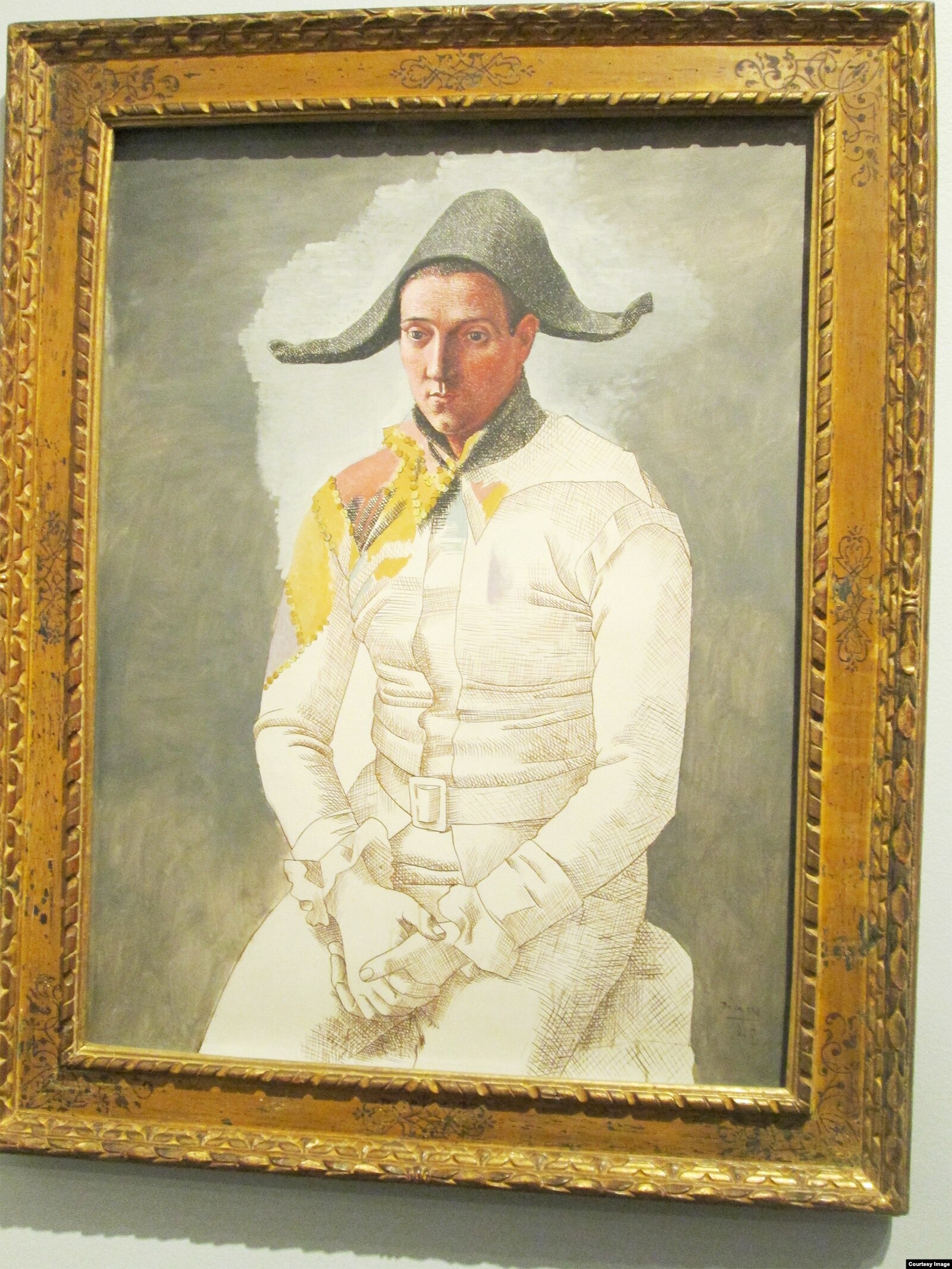
New branch of the metro. Unfinished - in painting and music
Alexander Genis: Today's issue of our monthly heading “Pictures from the exhibition” will lead us to the new branch of the Main Metropolitan Museum of the New York, where the first exhibition “Unfinished” in this room is held. We talk about this with the musicologist and cultural historian Solomon Volkov.
(Music)
Alexander Genis: In New York, the most important event took place, which was not more than a hundred years old. The fact is that the Museum of the Metro is full of works of art, like any great museum. But according to the law adopted by the municipality of New York in the 19th century, the museum cannot expand. So the fathers of the city decided: it should not grow either in height or in width, nowhere. That is why exhibitions of contemporary art were rarely in the metro - there was not enough space for this. And this spring, the Museum of the Metropolitan Museum received a whole building at his disposal - this is the former Whitney Museum, which is located next to the metro on Madison Street. The Whitney Museum itself moved to Dauntown, and his former building received the metro administration at his disposal. The main opening of the Metro branch has just occurred. I was there, and I must say that the museum was simply crowded.
But here I must say about the very building of the museum. The Whitney Museum was built by an architect and designer from Bauhaus, whose name was Marcel Lyosh Broier. He was a Hungarian Jew who emigrated to America. His highest achievement is a chair that stands at my place. Many people know about him, because this chair is called "Vasily." This is a gift from designer Braier Vasily Kandinsky, who was also in Bauhaus.
Solomon Volkov: Is it convenient to sit?
Alexander Genis: So -so. But it looks like an object is quite avant -garde, constructivist, to keep it at home as a work of art. Many do so, including me.
The most famous work of Broier after this chair is precisely the building of the Whitney Museum. It is built in the style of brutalism. Brutalism means unprocessed unprocessed concrete. It was the favorite material of architects of the post -war era, architects who worked with ugly materials, primarily with raw concrete. The Whitney building embodied all the features of the style. Most of all, it looks like a bunker. There are almost no windows, which creates a claustrophobic sensation. It is very difficult to convey the architectural form of this museum in words, because it is none. I avoided walking in this, because you feel there like at a training ground: it seems that the explosion should happen somewhere. Now he was re-cleaned, if there were some kind of beauty’s names there, then they dared this business so that there was no polished tree or some grated floor. Do you love this Whitney museum?
Solomon Volkov: No.
Alexander Genis: We argue about a lot, but we also share tastes in many ways.
Solomon Volkov: We like the avant -garde with a human face. And we don't like the avant -garde with an inhuman face.
Alexander Genis: And here is precisely the Whitney Museum, which is now called the “Metropolitan Broier”, that is, the author’s name has entered the name of the museum, it just, in my opinion, represents the avant -garde without a human face.
Solomon Volkov: Destroy it.
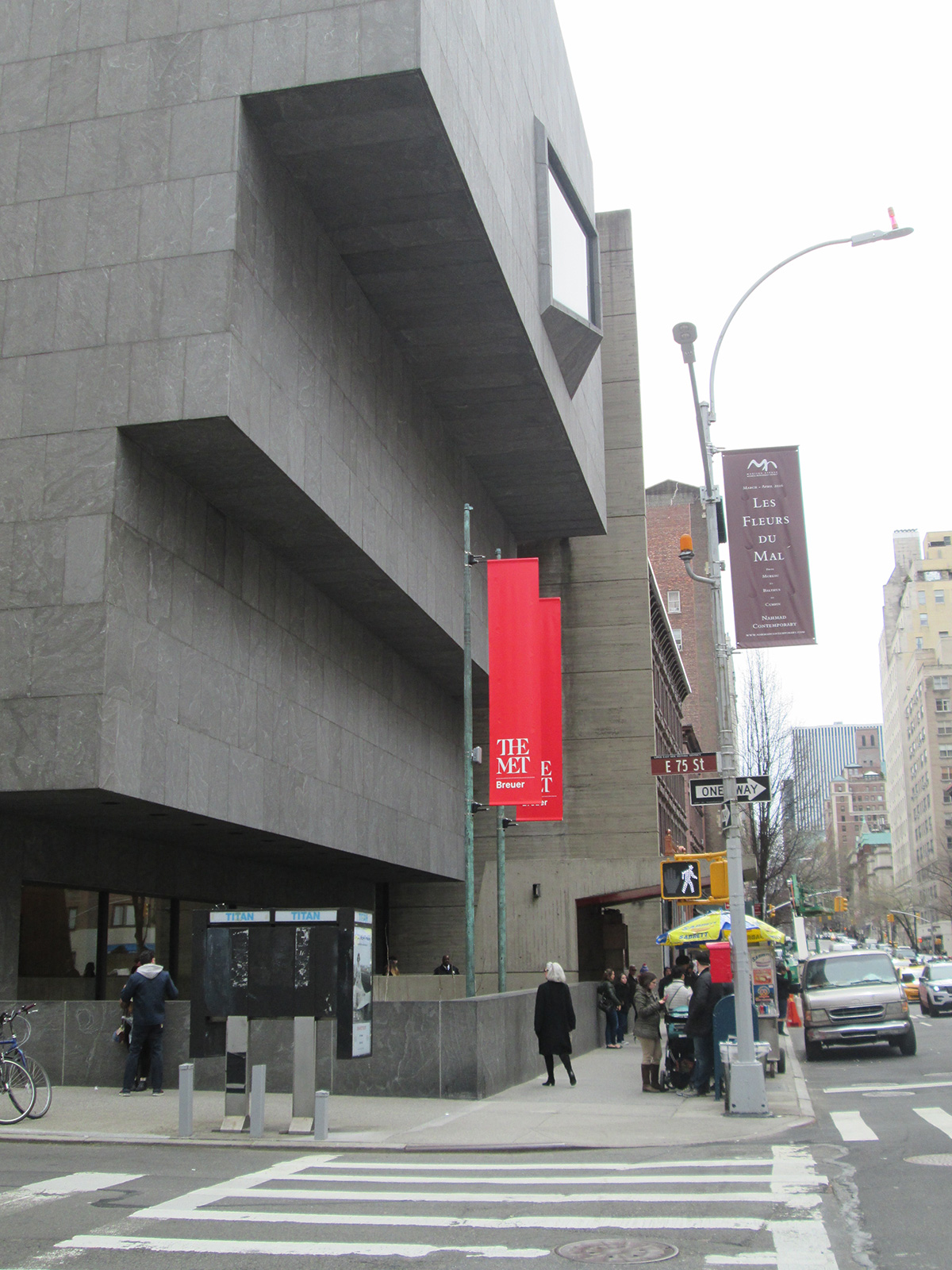
Alexander Genis: In no case, because the metro managed to fill it with invaluable content. I will not give it to destroy it, on the contrary, I believe that they will be humanized at the expense of exhibitions that will be held there. The first exhibition is extremely successful. She is very cool invented. I am proud that my friend Andrea Bayer, curator of the Renaissance department of the metro, worked on her and worked on her - this is in many ways her brainchild, she had long told me how the exhibition was called, which is called “unfinished”.
This is a conceptual exhibition, the essence of which is to show unfinished canvases, drawings, even sculpture. Unfinity is the subject of artistic meditation. It turned out very interesting, even more interesting than it seemed to me at first. First of all, we are met by a quote from Pliny the Elder, no more, no less. Pliny says that an unfinished work of art is extremely important for us because it exposes the artist’s intention. And in this way the exhibition is built - it allows you to get to the artist’s laboratory. We understand what he wanted to say, and not what he said. And this, like drafts of the novel, is very important. But the exhibition itself includes invaluable works, which is why I say that the museum is humanized. To start with the fact that the drawing was first brought to New York - an unfinished work - Leonardo da Vinci from a small museum in Parma. Andrea, the curator, said that she spent almost a month, achieving permission to bring and show this work.
The work of completely inhuman beauty is the face of the Madonna, it is called “shaggy” if it is translated from the Italian language. Because the face was written out by an angel, but this girl’s hair is scattered with quick movements of the brush, which resemble Picasso than Leonardo da Vinci. Together it is as mysterious as everything is with Leonardo da Vinci, that it is impossible to move away from her. It is this sketch that I like it even more. Which, I must say, applies to many exhibits of the exhibition. An unfinished work of art has undoubted dynamism, we see some kind of inner power in it precisely because it is not yet finished.
You know, Solomon, I remember the lesson who received from Alexei Khoostenko, because Khvostenko was such as the Renaissance man, he did everything-he sang, he composed poems, plays, was engaged in visual arts, wrote very strange canvases in the Zen-Buddhist manner, he made sculptures, he had a lot of virtues. In Paris, we once talked about painting. I admitted not without shame that I always did not like Rubens, it seemed to me that it was a landfill of the flesh and watching it was boring. Khvostenko unexpectedly agreed and said: “Now go to the Louvre and look at the sketches of Rubens, then you will see how great it is.” At the exhibition “unfinished” there is a huge canvas of Rubens, which was half manufactured, that is, he drawn something, but something was not. In the foreground is a warrior who has three hands at once, the master has not yet decided which one is superfluous. The battle and it seems real, like in the cinema.
And there are a lot of work. For example, Rembrandt, who is generally difficult to understand where it is finished and where it is not finished, because he has only parts of the picture - the face, hands, source of light, and everything else goes out in the dark, we do not know whether it should be, or he did not have time to finish, or he did not want to finish, and where, in fact, he was not finished. This dialogue determines the art of Rembrandt. Hemingway reminded me with his theory of iceberg: you can not write about what you know.
The exhibition consists of two floors and the entire first floor is reserved for classical painting - these are invaluable works of art that you can look at endlessly. The second floor is something exactly the opposite is contemporary art, and I don’t know how it is incomplete in it. For example, a white canvas on which nothing is drawn at all - is it finished or not finished? Is this a challenge to our perception or is it an artist’s plan? For many abstract paintings, the concept of completeness is arbitrary. As in the work of Pollock in his driping technique. When the artist ran with paint on the canvas, his work was limited to the size of the canvas. He could run more and the canvas could become more. That is, the completeness here is the exhaustion of the artist.
The exhibition has a huge success, the people are shaking, and this is only the beginning. Now we, Solomon, will also be forced to go to this museum to tell our listeners about exhibitions in this new old museum.
(Music)
Alexander Genis: We continue the April release of “Pictures from the exhibition”, in which we and the musicologist and cultural historian Solomon Volkov are discussing unfinished works in painting and music.
Solomon, and now I propose to talk about unfinished in other forms of art. After all, there is incompleteness in everything, there is incompleteness in the literature. How do you, for example, feel about the unfinished things of Pushkin?
Solomon Volkov: They are very interesting to me. The most uninteresting Pushkin is just the most finished Pushkin, this is his early lyceum and post -Great poems, it is not interesting to read them, everything is very smoothly processed there and they do not cling at all. The farther, the more interesting Pushkin’s handwriting of all kinds, sketches. By the way, I love his prose notes, which are also sketches of a kind, its famous “Table Talk”, which is called in English in Pushkin in the original: conversations at the table.
Alexander Genis: Tagging conversations.
Solomon Volkov: Of course, when you are dealing with a genius like Pushkin, one cannot say that this person wrote something for himself. Even if such a person writes a letter to a friend and it is an outwardly private content, it is still designed to read him someday. In this sense, turning to the people whom we knew, we did not know Pushkin, we can’t judge, but we can definitely judge about Brodsky that his letter to Brezhnev was not addressed to Brezhnev at all, not for Brezhnev, although, in particular, maybe he hoped that his Brezhnev would read. It was seen in advance Brodsky as included in some volume of his future full and complete collected works. In this sense, one of Brodsky’s friends, when I was still in the Soviet Union, and Brodsky in the West, he was from Venice, we sat, talked, this man received a postcard from Brodsky from Venice, said somewhat sarcastically that the poet built himself into the future Venetian landscape. And he was absolutely right. I must say that before this conversation, such a simple thought never occurred to me that every act, every postcard, every letter, every handwriting of such a person of such a creative drive, if it is permissible to use such an expression, is designed for life in immortality. So in this sense, unfinished things can be more ambitious than finished.
Alexander Genis: It is curious that Pushkin has sketches, you can’t even say unfinished, because these are a few words, like the debuts to prosaic works. It is amazing how different they are. If he wrote those novels that he conceived, if Pushkin lived for a long time, like Leo Tolstoy, he would write like Leo Tolstoy. This thought has confirmation, because the passage of Pushkin, which began “The guests moved to the cottage,” as you know, served as an impulse for writing “Anna Karenina”. It would seem that you can get out of this phrase? In fact, a lot.
Solomon Volkov: This is Chekhov, by the way.
Alexander Genis: The fact is that the cottage is already something temporary, seasonal, short Russian summer, country novels, no need, but pleasant. On the other hand, the intensity of all feelings, because the northern summer is short. And now “Anna Karenina” flickers in these three words. Maybe we think of Pushkin, but it always seems to me that each of these sketches could have a continuation of a brilliant novel, but besides Tolstoy, I do not know who would be able to write it.
Solomon Volkov: If we talk about unfinished music, then, of course, the most famous unfinished composition comes to mind, which is called Schubert’s “unfinished symphony”, which he wrote when Schubert was only 25 years old - it was 1822, two years before Beethoven's ninth symphony appeared.
We remember that Beethoven personifies romanticism, but this is a special romanticism. Schubert is already a completely opposite romantic. They are contemporaries, and it would seem that from under the shadow of Bethkhoven how could be the greatest symphonist of all times and peoples, it is impossible to come out. How many composers have broken on their attempt to join Beethoven in a competition in this genre.
Alexander Genis: Schubert went the other way, because it was impossible to compete with Beethoven.
Solomon Volkov: Like Vladimir Ilyich Ulyanov, he went the other way. And Schubert won, but he won on the field we are talking about - on the field of unfinished. He wrote his unfinished symphony two -part, did not add two more parts laid down according to the then classic symphonic canon, and the essay not only entrenched in the repertoire - made up the glory of Schubert and made the most performed by his work.
Alexander Genis: You want to say that it became so thanks to incomplete?
Solomon Volkov: That's the point. Moreover, the essay remained in complete unknown 43 years, 43 years, it did not attract any attention at all, they all forgot about it. Then they accidentally removed the considered manuscript. But when they played, it turned out that it exists on its own, it expresses completely innovative feelings, new towards Beethoven. This is a personal story, this is what we can call a romantic monodram, which Beethoven does not have absolutely, he has a drama of the crowd, if you like.
Alexander Genis: Or space.
Solomon Volkov: This is something massive, so Beethoven always play when something requires a massive celebration. 5 Beethoven's symphony play fateful moments or 9-play in the most exceptional moments. When the Berlin wall falls, the 9 Beethoven symphony play. Stalin convenes some kind of extraordinary congress of advice, he is brought to the program, some numbers, he crosses out everything, and writes: 9 symphony.
Alexander Genis: A message is sent to the aliens to space so that they learn something about us, and again 9 Beethoven's symphony.
Solomon Volkov: And Schubert offers an individual drama, an individual tragedy. Of course, around this amazing essay, you only turn on the recording of it, you are mastering the feeling “my sadness is bright”, and maybe it is not very bright in the case of Schubert, maybe there is some dark, dark purple, dark lilac shades there.
Alexander Genis: I would say that this is Mozart, clouded by Beethoven.
Solomon Volkov: Fair observation. Researchers, of course, rack their heads why Schubert did not end this work. One of the rather convincing theories is the following: they associate this symphony with a prosaic work, namely with the story of Schubert himself, written approximately at the same time, in 1821-22, under the name “My Dream”. This essay consists of two parts, it describes the mental drama of the young man, clearly an autobiographical story, a quarrel with his father, exile from the house, the death of a mother is the first part. And the second part is an art that gives at least some reassurance of this rumbing soul. And this observation seems very likely for the program of the unfinished Schubert symphony.
Alexander Genis: It is curious that if all the non -conformity lies in the fact that Schubert did not write the due two of the four, then can we say that he simply transformed the structure of the symphony itself? After all, Beethoven wrote his last sonata in two parts. Its 32 sonatas are not in three parts, like everyone else, but in two parts.
Solomon Volkov: The case of Schubert is another, this circumstance remains to be completely clarified here: having written two parts, did he believe that this essay was not completed or was his author’s decision? We will never know this. But we can judge - in the pandan to your reasoning that it is in the unfinished work that the author carries out his breakthroughs of creative - about this on the example of the same Schubert, because he has an unfinished quartet string, he has an unfinished piano sonata. It was there that he expanded the boundaries of the genre, it was there that he took innovative steps.
Alexander Genis: I admit that my favorite works by Schubert are generally his notebooks. These musical sketches of Schubert sound more intimate for me, it is like lyrical poems where the author’s “I” can be heard. And this is not so similar to the rest of the music of that time.
Solomon Volkov: And this is how this innovative romantic unfinished monodrama Schubert sounds. These are sounds that are familiar to every music fan who live in the soul of every person who listens to classical music.
(Music)
Solomon Volkov: Now, if we try to look at how this concept of unfinished was realized in the twentieth century, then, it seems to me, the best example than the unfinished opera of Shostakovich called “players” by the dramatic passage of Gogol, cannot be found. Incredibly, firstly, Gogol. Gogol does not cease to surprise me, the figure, of course, amazing, entertaining, so to speak.
Alexander Genis: The wrong word. You talked about how Schubert, getting out of Beethoven’s block, went his own way. Gogol did the same. After all, when Pushkin condemned Russian literature to move himself, Gogol came and led it in a completely different way. It does not stop surprising me. Nevertheless, it was clear, Pushkin showed how to write, there could be nothing better than Pushkin. Moreover, Pushkin is really “our everything”, he created both the lyrics and the poems, the whole 19th century, because of him, the genre of the poem was very popular. Но он же создал и драму, сколько можно было написать драм под «Бориса Годунова». Он создал роман в стихах, можно было написать под него и роман в прозе. Короче говоря, он создал целую литературу и теперь надо было ее всего лишь продолжать. Но еще при жизни Пушкина явился Гоголь, который увел русскую литературу в противоположную сторону: вместо солнце - луна.
Соломон Волков: Но при этом заметьте, сколько усилий, сколько, в скобках заметим, вранья Гоголь употребил на то, чтобы доказать, что он все принял из рук Пушкина, и сюжет «Ревизора» ему Пушкин подарил, и сюжет «Мертвых душ» ему подарил. Все эти легенды об этих царских подарках и стремление привязать себя к личности Пушкина, он все жизнь старался.
Александр Генис: Он хотел быть наследником Пушкина, а он на самом деле стал его антагонистом. И это лучшее, что могло произойти с русской литературой.
Соломон Волков: Замечательный отрывок под названием «Игроки», который он, тем не менее, рассматривал как законченное произведение, поскольку, во-первых, опубликовал его в прижизненном собрании сочинений, а во-вторых, разрешил поставить в Москве. Одного из героев, мошенников карточных по фамилии Утешительный играл не больше, не меньше, как сам Щепкин, один из величайших русских актеров. Так что Гоголь не считал, что к этому надо что-то добавлять, все, что он хотел сказать, он сказал. При этом, должен сказать, что все это абсурдистское искусство.
Александр Генис: И драма тоже.
Соломон Волков: Обэриутская, «Нос», скажем, как и «Игроки».
Александр Генис: Как и «Женитьба», пьеса почище Хармса.
Solomon Volkov: Absolutely. На сегодняшний момент это - одна из самых увлекательных страниц Гоголя для нас. С другой стороны я удивляюсь тому, насколько в общем доброжелательно и с пониманием это часть его творчества встречалось при жизни Гоголя — это трудно себе вообразить, какой-то запредельный абсурдизм и авангардизм.
Александр Генис: Будь это написано в Советском Союзе, его бы за такое посадили, как Терца.
Соломон Волков: Когда-то Сергей Михайлович Слонимский совершенно справедливо, он даже написал это в статье уже в постперестроечной, что если бы Мусоргский написал своего «Бориса Годунова» и «Хованщину» в советское время, их бы не приняли к постановке — мол, клевета на русский народ. Мы не то еще слыхали о наших классиках замечательных.
Но возвращаясь к «Игрокам», в частности, к Шостаковичу в данном случае, тоже чрезвычайно интересная история. Вот он написал 7-ю симфонию, история 7-й симфонии - это тоже отдельная эпопея со своими подводными течениями: как, зачем, почему он написал, но факт один — он закончил 7-ю симфонию и буквально на другой день, как свидетельствую люди его знавшие, начал писать оперу «Игроки» по Гоголю, большего контраста себе выдумать нельзя. Как, каким образом это сцепление произошло? Как человек, только что окончивший грандиозную симфонию, которой суждено было изменить судьбу симфонического жанра в ХХ веке, как он начинает писать оперу, причем на какой сюжет - что, почему? Опять-таки он говорил, что он имел в виду здесь не просто игроков карточных. Мы знаем сюжет «Игроков»: карточного жулика по имени Ихарев обманывает трио других карточных жуликов, вот и все дела, как говорится. Это блистательно, читать, не корчась от смеха внутреннего, невозможно. Но Шостакович говорил, что имел в виду политиков как карточных игроков. Он задумал эту оперу еще в 1938 году в связи со всеми предвоенными делами — Мюнхен, думаю, что здесь даже мысли о соглашении Сталина с Гитлером, предвоенном договоре.
Александр Генис: Похоже на увертку.
Соломон Волков: Я как раз считаю, что он тогда уже мог это написать, и не написал потому, что слишком близко, ходить было опасно по камешкам таким. Но он начал писать ее во время войны с колоссальным увлечением. Это единственный известный случай, не единственный, пожалуй, два таких случая, когда Шостакович писал заведомо в стол, не предполагая последующего исполнения. Другой случай — это его знаменитый «Антиформалистический раек», написанный предположительно, еще когда Сталин был жив. Тогда даже думать нельзя было, что эта антисталинская сатира могла быть когда-нибудь исполнена, только для себя можно было писать эту музыку. Но тут он писал внешне нейтральный, никаких актуальных выпадов политических нет, но я понимаю, что он думал: это - политические жулики, и он хотел их вывести на сцену.
Я слушал эту оперу в живом исполнении в Риме, Гергиев дирижировал своим оркестром, и это было незабываемое впечатление. Я тогда сказал, что какая-то грандиозная пурпурная роза расцвела на черном бархате. Но по мере того, как он писал, а он писал на неизмененный гоголевский текст, он постепенно понимал, что опера растягивается. Потому что он где-то треть, меньше может быть трети текста положил на музыку, уже было 50 минут музыки, потому что все это надо распеть. Он в письме приятелю написал, что получается может быть пятичасовая опера, а может быть тетралогия как у Вагнера. Но это уже юмор типично Шостаковича. Он бросил эту оперу, не оркестровал ее даже. Пытался в конце жизни, думал во всяком случае о том, чтобы к ней вернуться. Ввел мелодический материал из нее, между прочим, в свое самое последнее сочинение Альтовую сонату, подумывал может быть, чтобы ее продолжить, так и не продолжил, это сделал за него его большой поклонник Кшиштов Мейер, польский композитор. Это окончание мейеровское исполнялось в Польше, в Германии. На этот счет Максим, сын Шостаковича, хорошо высказался, он сказал, что да, все у Кшиштова получилось стилистически похоже, разница только в том, что как кончил бы Шостакович — мы не знаем. Он бы может быть кончил совершенно неожиданно, совершенно не так, как начал.
Александр Генис: Закончил не похоже на себя, на Шостаковича.
Соломон Волков: Не похоже на Шостаковича, не похоже на начало. А Мейер продолжил в том стиле, в котором были первые 50 минут написаны. Опера эта никогда при жизни Шостаковича не исполнялась и не ставилась. В 1978 году ее записал Рождественский. Он оставил все, как есть, в качестве коды, повторил музыкальный номер, который у Шостаковича ранее присутствовал в опере. А я хочу показать эту музыку очень смешную, если вдумываться в слова и как это все распевается, но в целом эта опера оставляет скорее зловещее впечатление, как и у Гоголя в сущности. Мы оборвем ровно на том месте, на котором оборвал Шостакович. Парадоксальным образом это монолог одного из жуликов, шулеров по фамилии Утешительный, кончается так: «И хозяин, и гости остались без копейки в кармане и кончился...». Тут Шостакович оборвал, осталось слово «банк». На этом слове мы и закончим наш отрывок.
(Music)