
Translated material
Blavatsky syndrome
In principle, all of humanity could be replaced by only one person - Elena Petrovna Blavatsky, nobleman, traveler, publicist, occultist and spiritualist. The dictator of the week is studying how it happened.
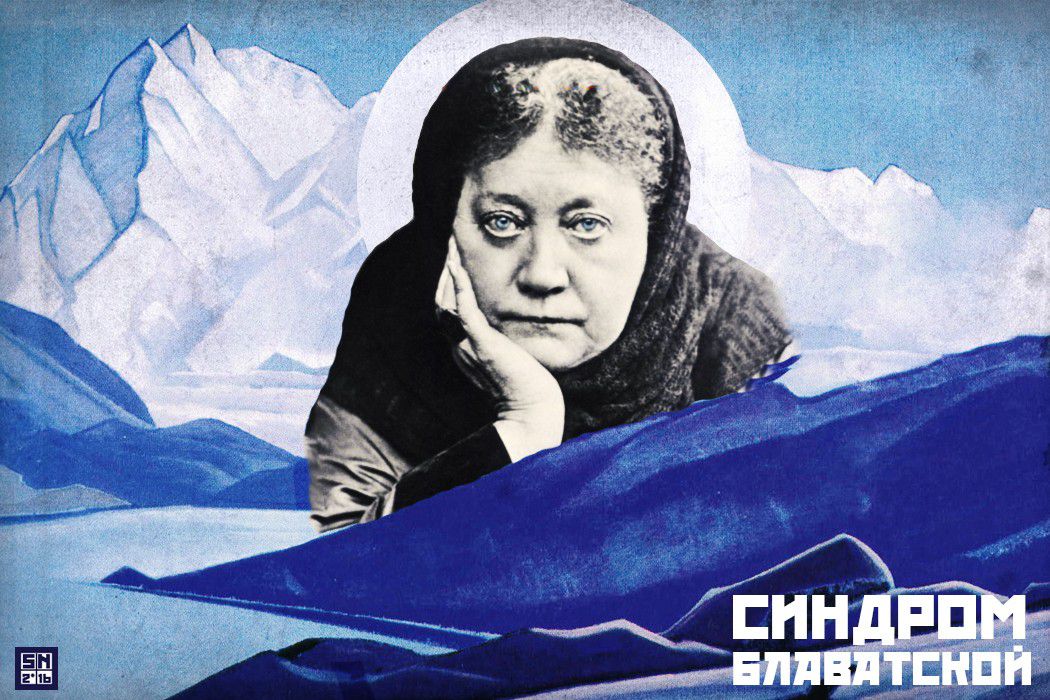
Where did Blavatsky come from?
Elena Petrovna Gan, later known to the whole world as Elena Petrovna Blavatsky, was born on July 31, 1831 in the city of Yekaterinoslav (modern Dnepropetrovsk) at 02:17 in the night. Loli's mother in girlishness wore Fadeev’s surname and belonged to the noble noble family of the princes of Dolgorukovs. At sixteen, she married Pyotr Alekseevich Gan, who came from the German kind, who moved to Russia in the middle of the 17th century. Elena Petrovna’s mother was called the “Russian Georges Sand” for her literary talent, but she died suddenly at twenty -eight years old, leaving behind two daughters. The girls' father was a military man and was constantly traveling, so the grandfather, the most serious member of the huge noble family, secret adviser Andrei Mikhailovich Fadeev, was engaged in the upbringing of Elena's eleven -year -old and her sister.
Elena Petrovna was born premature and from childhood showed unusual abilities and a cool disposition. Everywhere she heard strange voices, she often saw and talked with ghosts, spent a long time in ancient abandoned dungeons of the birth estates and very often embarrassed relatives with her stories about the otherworldly, some adults listened to her and earnestly baptized. Nowadays, such a child, most likely, would have been recognized a little not in himself, and sedatives would be prescribed against hyperactivity, as it was, for example, in the case of Kurt Cobain. Lili's favorite place in the house (as it was called home) was a library. In the XVIII - XIX centuries, the Russian was totally fond of Freemasonry, all were in lodges and circles, studied specific books and professed the Masonic Code of Honor. In 1825, the Masonic lodges in Russia were banned after the failure of the Decembrists' movement, but the aristocrats of the old hardening continued to share the ideals of Masons and dreamed of secret knowledge and worldly human fraternity.
At a very young age, Elena Petrovna re -read almost all the main esoteric works from the grandfather’s library: Kabbalah, treatises on alchemy and astrology, legends about Atlantis and Greek priests. All this surroundings were well applied to Lili's inclinations - adults scolded her for fiction and fantaside, at the same time she found confirmation of her visions in the books of respectable elders. After a personal acquaintance with Eastern culture, India and Tibet, Blavatsky said that any gray -haired yogi from India knew and knows more than a secular mason that has read books and imagined itself to be a Caliostro Count.

A lot of legends are swarming around Blavatsky, and she herself carefully confused traces and never told anyone the whole truth. Her relatives most often tell about young Blavatsky, so the information is more or less reliable. During the baptism of the little Elena Petrovna, her younger sister was either on purpose, or inadvertently, indulging, set fire to the object of church utensils. A fire and panic began in the church, the adults were baptized and considered this event to proof of the demonianess of poor Loli. In adolescence, she refused to go out into the lights in dresses in the last fashion: they seemed too frank to her. When one day relatives still insisted that she put on a dress and go to the ball with them, she put her leg in a pot with boiling water - and then for another six months she did not go anywhere. According to Blavatsky, in childhood, cavalry officers, friends and associates of her father, as well as Buddhists, whom she first met at the age of fourteen, visited the city of Semipalatinsk, located on the border of Siberia and Mongolia, influenced her. From childhood, she learned to stay in the saddle from the cavalry, in her youth she loved to choose a hotter from the stallion and set off with a gallop from the place. From Buddhists, she learned patience and concentration, which, apparently, allowed her to diligently swallow the book behind the book, but did not affect her hussar temperament. Problems from her all her life have been just like from a rampant cavalryman, and not as from a humble Buddhist. Nevertheless, along with the ardor of the disposition and seething through the edge, she possessed an outstanding mental discipline and wrote some of the most complex and all -encompassing works on esoteric philosophy. In addition, from the Semipalatinsk Buddhists, young Lyol learned about the mystical country Shambhala, which later played a significant role in her life.
When the Fadeevs lived with Löley in Tiflis, Prince Golitsyn came to the city with his son Alexander. Sixteen -year -old Elena was captivated by a mysterious fellow and, during one of the walks, found out in secret that he was a Freemason - and at the same time a very ideological and warmly believing in these ideas. He told her that once there was a single continent, on which enlightened people who had the deepest knowledge of nature lived. Golitsyn argued that particles of once unified knowledge were scattered around the world, and modern religions are fragments of a single religious system that the Atlantic priests professed. Plato described this lost continent and conveyed part of the ancient knowledge to us, but even people who have this knowledge in full live. They can be found in distant Tibet, among the surviving American Indians, as well as in India and Egypt. The imagination of the young and hot Blavatsky caught fire: this man brought life to her favorite children's fairy tales, magic and otherworldly suddenly found the flesh, Elena absorbed the idea to see and find out everything that was possible, about this ancient civilization. At sixteen, they wanted to marry the maiden and back. To imagine that Lyol's Solder will be let go on a free journey towards the secrets of Atlantis, there was no way. Then Elena Petrovna turned the first large scam in her life. She looked at the groom, well arranged in the tsarist service, twice as older than her and completely devoid of imagination and vitality, who seethed in a sixteen -year -old dreamy hooligan. She quickly fascinated the innocent man and played a wedding, at which, according to some testimonies, she could not restrain herself at the moment when she was asked if she was ready to obey her husband and so on, she said: “Well, then she caught herself - and from Lelly Fadeeva turned into Elena Petrovna Blavatskaya. Having won a couple of months, Blavatsky appeared to her relatives and in despair stated that she couldn’t live like that, the marriage would kill her, and in general she goes to her father in Odessa to consult what to do. My relatives put her on the ship, he sailed to Odessa, but when he went to the night in the port of Kerch, Blavatsky got rid of the motorcade from the servant and guard and moved to a ship floating in Constantinople. She had neither a ticket nor a passport, but she managed to charm the captain of the ship. He hid his Jung in a coal hold, and he turned Elena Petrovna into Yunga's costume and laid it in a hammock. He said the port inspection that Jung was sick. So Blavatsky went on a free trip, lasting forty -three years.
Long road
A scandal rose in Russia. Now, even if Elena immediately, upon arrival in Constantinople, made themselves felt, relatives would not have called her home. The money quickly ended - and then Blavatsky got a job in the circus. At some point in the equestrian representation, the acrobats turned to the public and offered to try his luck by jumping eighteen obstacles to the horse. Each time there was the same daredevil - Elena Petrovna, and each time she had to, overcoming several obstacles, to fall from the horse. Once she could not restrain herself and decided to jump all eighteen barriers, but at the very last one stumbled and ended up on the ground under the horse. However, the guardian angel saved her from the death of her, the same that, in her words, once saved her in childhood, pulling her out from under the collapsed stairs and evaporating. So this time the angel appeared, pulled Blavatsky from under the horse and disappeared. And she damaged her chest and then most of her life experienced discomfort and periodic attacks of pain. After that, she by the will of chance met Countess Kiseleva, a lover of occultism and the zeal of Orthodoxy, who took a young traveler for some time under her wing. During traveling with Countess Blavatsky, he often had to change clothes of a boy, since the countess seemed piquant - a sixty -year -old woman and a young man traveling around the east together. In Egypt, Blavatsky began to independently study the esoteric tradition of Egypt, get acquainted with local occultists and mysticisms, elders and sages (with charlatans and a cut, for sure, too). Her interest in secrets was powerful, the thirst for adventure was great, and fearlessness shone in the huge blue eyes.
Elena Petrovna met her twentieth anniversary in England. In 1851, the World Industrial Exhibition was held in London, demonstrating the achievements of science and rational thought. The apotheosis of the exhibition was a crystal palace made of glass and iron, an outlandish for that time, anticipating modern skyscrapers. The World Exhibition is generally a significant event, which flow millions of people from all over the world, and in addition to crowds of onlookers, the outstanding minds of modernity from different countries fall into the exhibition, here they are divided by advanced ideas, starting new connections and acquaintances, from which whole movements arise later. At the 1939 exhibition, for example, Edward Bernes already known to you developed the idea of a crystal palace in Democricity, for the first time showing the world the city of the future and charging a culture for democratic values. The exhibition of 1851 was visited by six million people, and one meeting marked the shift of the materialistic culture of the West towards the mysticism of the East: at this exhibition Elena Petrovna Blavatsky met with that very guardian angel who saved her from under the horse and helped her many times. Modern biographers claim that it was a young Indian aristocrat, a representative of a noble family and a bearer of mystical traditions. Elena Petrovna herself says that on her twentieth birthday she met a man named Mahatma Moriah - one of the secret teachers who defeated their material manifestations and now bearing the light of dark humanity. He informed her that he secretly appeared in her life and before, followed her development, and now she was ready. He personally came to tell her that her life has a special meaning, a special goal: to carry the knowledge of teachers to people - she should become a key link in the combination of the West and East and the establishment of a new universal spiritual order. But first she needs to study: she must go to India, and then to Tibet. There, mentors will wait for her, and after the seven -year obedience period, she will gain enough knowledge and abilities to fulfill her mission. From then until the end of her life, Elena Petrovna will constantly keep in touch with this semi -real character, whom she will call Mahatma Moriah. But the main thing is that she will really devote herself to the Great Mission and will carry knowledge and light to people in her unique manner.
After this meeting, Elena Petrovna went on a trip to Canada, Mexico and the entire North American continent, in the wake of the Atlanteans and according to her mentor Moriah, and in 1852 arrived in India. During travel, she is engaged in spiritual practices, studies numerous Indian spiritual traditions, meets with a guru, practices under the guidance of experienced and authentic yogis. In 1855, Blavatsky penetrates Tibet, despite the fact that the Russians and the British, who controlled the borders of Tibet, practically did not let people go there. And even more so they would not have allowed Elena Petrovna, since the Russians would suspect English in her, and the British - a Russian spy. Blavatsky got there thanks to its mysterious teachers, who, according to some versions, were directly related not only to international secret societies, but also to the mysterious underground country Shambhala. In Tibet, she joined esoteric Buddhism: she studied secret texts and, first of all, the Tibetan book of the dead with comments, meditated under the leadership of Tibetan lamas and passed a secret initiation into the world of spirit. After seven years of obedience, she gained a new degree of understanding and abilities and went into the world with a message.
New understanding
In Cairo, even during traveling with Countess Kiseleva, Blavatsky met the famous American Spirit, who caused the spirits of the deceased on an industrial scale, and immediately discovered outstanding medium abilities. In the 1840s, the boom of spiritualism began in the USA, and already eleven million Americans were used by the 50 services of medium services. This boom turned out to be a prologue to a larger esoteric boom in Western society, which also lasts to this day: Spirita, fortunetellers, healers, magicians, yoga and other amazing representatives of the human flora and fauna began to breed at that time. Blavatsky quickly became an outstanding “spite” and began to arrange spectacular communication sessions with the dead for everyone, quickly gaining popularity in the highest circles of Egyptian society. Officials, princes and secular lions, diplomats and noble ladies came to her sessions - and everyone was delighted. At the sessions, Elena Petrovna asked questions, and the souls of the dead answered her through tapping, strange sounds, sometimes voices, sometimes even partially materialized. If most of the spirituals arranged their sessions in the twilight, Blavatsky worked miracles in good lighting, which was really convincing. In 1871, after Tibetan initiation, she created in Cairo a society to study spiritualistic phenomena, which, however, did not last long, since one of the fellow Blavatsky openly screwed up. At one of the sessions, she was convicted that she used a glove suspended with cotton with a glove, and claimed that this was the materialized hand of the deceased. Blavatskaya hastily disowned this scandal, despite the fact that the reputation of society was ambiguous, it still gained the necessary popularity. The leading Spirits from America and Europe became interested in Blavatsky.
When Elena Petrovna was on the forty -first year, she stayed with relatives in Odessa and for unknown biographers and descendants decided to write a letter to the third department of his own imperial majesty of the office. In a confessional letter, she offered her services to the Fatherland and the Sovereign as a spy. She said that the only time she violated the law in her youth, when she fled on a ship in Constantinople without a passport and without permission. She characterizes herself completely cynically, with a taste of bitterness: “I speak French, in English, Italian, like in Russian, I understand freely German and Hungarian, a little Turkish. I belong to my birth, if not by position, for the best noble names of Russia and I can rotate therefore both in the highest circle and in the lower strata of society. My whole life passed in these jumps from top to bottom. I played all the roles, can represent any person; The portrait is not flattering, but I am obliged to show the whole truth to your Excellency and put myself as people, circumstances and the eternal struggle of my whole life, which sophisticated the trick in me, like that of a red -skinned Indian, made me. I rarely did not bring to the desired result of any biased goal. I crossed all the temptations, played, I repeated, roles in all layers of society. Through spirits and other means, I can find out anything, find out the truth from the most secretive person. ” It also interprets her spiritualism and paranormal abilities in a purely practical and pragmatic way: “When engaged in spiritualism, she saw in many places a strong medium. Hundreds of people certainly believed and will believe in the spirits ... I repent of the fact that for three quarters of time the spirits spoke and answered with my own - for the success of my plans - words and considerations. Rarely, very rarely, I did not manage to learn from people the most secretive and serious hopes, plans and secrets from people. Entering a little by little, they got to the point that, thinking of learning the future and secrets of others from the spirits, gave me their own. But I acted carefully and rarely used my own benefits with my knowledge. ”
Officially, no one used her services, but we cannot know for sure how to accept the service in such cases and whether this is a removal of the eye. Elena Petrovna confused traces all her life and the flalor of mystery, almost nothing about her life is unknown, can have several interpretations and layers, and her movements around the world resemble a multi -level chess game. In 1873, she bought a first -class ticket for a steamer floating to America, but met a woman with two children on a ferry, left without a penny who could not get to America to her husband and father, as they sold a fake ticket to them. Блаватская продала один билет в первый класс и купила четыре билета в третий класс, пожертвовав собственным комфортом ради помощи ближнему. В Америке начался новый и заключительный этап в жизни Елены Петровны, главными плодами которого стало создание Теософского общества и написание двух хрестоматийных книг — «Разоблачённой Изиды» и «Тайной Доктрины».
Приехав в Америку, первое время Блаватская жила очень скромно. После смерти отца и переезда на новый континент никаких денег извне ждать не приходилось, поэтому первое время она зарабатывала себе на жизнь, продавая ручные поделки, занимаясь переводами и написанием статей. Немного осмелев и освоившись в новой обстановке, Елена Петровна решила провернуть очередную сатирическую авантюру. В 1874 году она перевела сатиру Салтыкова-Щедрина или Тургенева (мнения биографов расходятся), заменив в рассказе Россию на Америку, а царя — на президента. Разразился скандал, и её литературная карьера в Штатах немного застопорилась до выхода в 1877 году оригинального и принесшего ей значительную славу и гонорары труда, «Разоблачённой Исиды». В этой книге Блаватская продемонстрировала блистательные знания философии, религии и мистицизма древних греков, раннехристианских мистиков и средневековых алхимиков, рассмотрела эзотерические аспекты христианства, буддизма, зороастризма, индуизма, конфуцианства. Она старалась продемонстрировать читателю, что за многообразием религиозных и философских форм стоит одна и та же вечная система. В Каббале и тибетской Книге мёртвых используются разные слова и термины, однако описываются одни и те же явления, одни и те же законы. Это следы той самой исчезнувшей Атлантиды, крупицы знания её жрецов, систематизированные и собранные Еленой Петровной воедино, результаты её научных штудий и непосредственного опыта переживаний. «Разоблачённая Изида» стала прелюдией к Magnum Opus Блаватской, трёхтомной «Тайной Доктрине».
Теософское общество
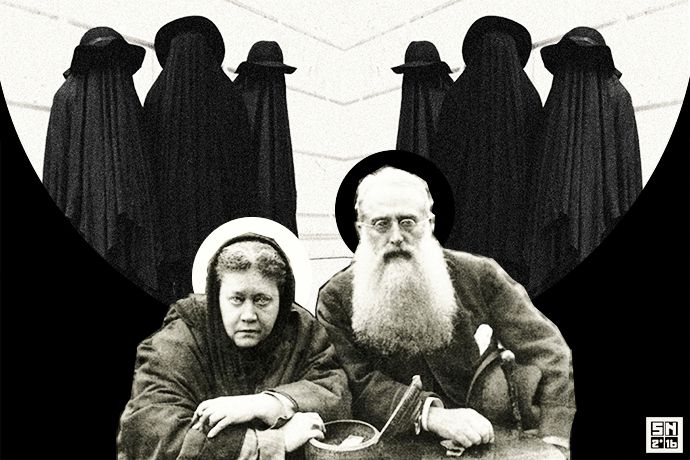
Четырнадцатого октября 1873 года Елена Петровна Блаватская попала на ферму к братьям Эдди, простым деревенским парням, демонстрировавшим навыки медиумов и проводившим сеансы общения с покойниками. На этой ферме уже некоторое время жил полковник Генри Стил Олкотт — участник Гражданской войны, юрист, журналист и писатель, страстный любитель всего потустороннего и мистического, а также масон, магистр Коринфского ордена системы Королевская Арка. Олкотта послали на ферму Эдди для того, чтобы он документально засвидетельствовал или опроверг чудеса, которые там якобы происходили. Он подходил к делу с педантичностью следователя и писал отчёты в газету «Нью-Йорк дэйли график», исправно подтверждая подлинность феноменов. В первый же вечер на ферме мадам Блаватская сразила полковника и всех присутствующих наповал. Будучи приглашённой только в роли эксперта, она вдруг перехватила инициативу в свои руки и устроила свой сеанс общения с потусторонним. В тускло освещённом помещении начали один за другим появляться грузины из прошлого Елены Петровны, а материализовавшийся дух её покойного друга Михалко Гугидзе по её просьбе станцевал для присутствующих лезгинку. Далее появилась укутанная в оренбургский платок нянька Блаватской, а за ней — статный господин с медалями, которого Елена слегка обидела, перепутав его с отцом. В завершении всего к зрителям явился дух некоего Георгия Дикса и вручил Елене вполне материальную медаль, с которой был похоронен её отец. Получив медаль, мадам Блаватская упала в короткий обморок. Вернулась в сознание она полным триумфатором. После первой же встречи Генри Олкотт был полностью захвачен мадам Блаватской, а узнав о Тайных учителях и о миссии Елены Петровны, решил посвятить всю свою жизнь продвижению этих целей.
Семнадцатого ноября 1875 года было основано Теософское общество. Его президентом стал полковник Олкотт, а Блаватская стала секретарём-корреспондентом общества. Однако главным и единоличным лидером общества, конечно, была Елена Петровна, так как корреспонденция, о которой говорит её должность, велась с гималайскими тайными учителями, которые снабжали общество инструкциями, напутствиями и знаниями. Единственной, кто имел доступ к учителям, была Блаватская, никто другой до них не мог дописаться, а ей они отвечали самым скорым и парадоксальным образом. Однажды она с полковником Олкоттом ехала в поезде, и в ходе разговора решила написать письмо учителям, чтобы спросить их совета. Написав письмо, она выкинула его из окна едущего поезда, полковник Олкотт даже записал, в котором именно часу. А когда через полтора часа поезд приехал на следующую станцию, на их имя пришла телеграмма от учителей, в которой содержался точный ответ на вопрос Олкотта.
У Теософского общества было три официальных цели:
1. создание ядра всемирного человеческого братства, невзирая на расу, вероисповедание, пол, касту и цвет кожи; 2. поощрение сравнительного изучения религии, философии и науки; 3. исследование законов природы и сил, скрытых в человеке.Теософы в короткие сроки обрели популярность и начали открывать штаб-квартиры по всем Соединённым Штатам, набирая сотни, а затем и тысячи последователей. В этих отделениях и кружках читались лекции, изучались священные тексты, обсуждались и поощрялись практики работы с сознанием, люди стремились овладеть тайнами природы и человеческой мысли. Это был качественный сдвиг по сравнению с тем, что изголодавшейся по духовности и сверхъестественному публике предоставляли спиритические сеансы. Спиритизмом увлекались богатые и бедные, образованные и безграмотные люди, на представлениях с покойниками мадам Блаватской бывали и египетские, и индийские, и российские, и английские, и французские и, наконец, американские аристократы. Заинтересовав всех их миром сверхъестественного, Блаватская затем отреклась от спиритизма и через Теософское общество заявила: вот учение для просвещённых умов, а не эти детские забавы с вызыванием астральных сущностей. Американцы потянулись к систематизированным тайным знаниям. Среди членов Теософского общества были журналисты, писатели, художники и даже учёные. Изобретатель Томас Эдисон, выдающийся американский философ и психолог Уильям Джемс, ирландский поэт Уильям Батлер Йейтс — лауреат нобелевской премии по литературе, индийский юрист и политик Мотилал Неру, отец первого премьер-министра независимой Индии, и другие.
Теософское общество сыграло важную роль в истории Индии и индийской культуры. Книги и деятельность Блаватской помогли донести до жителей Запада — и до самих индусов — осознание величия и глубины их духовной культуры. Из отставшей колониальной страны Индия стала превращаться в колыбель цивилизаций, настоящую жемчужину человеческой культуры. В 1882 году Теософское общество открыло в Индии представительство в городе Адьяр, и по сей день там располагается основная штаб-квартира теософов. В 1885 году теософами был создан «Индийский национальный конгресс», который впоследствии под предводительством Махатмы Ганди стал краеугольным камнем в вопросе обретения Индией независимости от Англии. Лидер освободительного движения Индии Мохандас Ганди познакомился с теософами, будучи студентом в Англии, и с тех пор считал Елену Петровну своим гуру. Бхагавадгита, один из основных текстов индуизма, пришёл в жизнь Ганди не в Индии, а в Лондоне, и не от индийских гуру, а от последователей этой русской женщины. Можно смело утверждать, что Теософское общество, а в частности Блаватская и Олкотт, сыграли крайне важную роль в том, что Англия потеряла свою самую крупную колонию, а Индия обрела достоинство и независимость. Полковник Олкотт принимал активное участие в продвижении буддизма на территории Индии, в особенности на острове Шри-Ланка, где в наши дни ему до сих пор возводят памятники и называют улицы его именем. Помимо полковника и Елены Петровны, значительную роль в становлении общества сыграли Уильям Джадж и Анни Безант. Первый способствовал тому, что в определённый момент общество раскололось на американскую и индийскую часть. Он в результате бунта возглавил американское отделение, назвал его Всемирным теософским обществом, однако буквально через несколько месяцев скончался — и общество снова воссоединилось под руководством Анни Безант. Безант была одной из первых феминисток и борцов за женские права в Англии, а затем и по всему миру. После знакомства с Блаватской она стала её верной последовательницей и до последних дней помогала Елене Петровне в работе над «Тайной доктриной». Полковник Олкотт был влиятельным масоном в Америке, и Елену Петровну приняли в лондонскую масонскую ложу в 1877 году по специальному обряду, созданному ещё до Великой французской революции специально для посвящения женщин. Анни Безант была крайне влиятельным английским масоном и реформировала масонство, утвердив устав, в котором женщины также могли вступать в масонскую ложу, открыла серию женских лож по всей Англии и к концу жизни обрела самый высокий — тридцать третий — градус в масонской иерархии.
Куда ушла Блаватская?

Последние годы этого земного воплощения Елена Петровна провела в работе над «Тайной доктриной», которая должна была стать основанием долголетия и процветания Теософского общества. В этой книге она суммировала весь свой духовный и интеллектуальный опыт. Для широкой публики была легенда, что книгу ей телепатически надиктовывали тайные учителя из Гималаев и что большие куски писались с помощью автоматического письма (задолго до Фрейда и дадаистов), без участия сознания. Труд удался на славу и стал учебником и любимой книгой для тысяч мистиков, учёных, поэтов, музыкантов и писателей. Альберт Эйнштейн высоко ценил мадам Блаватскую и неоднократно возвращался к её главному труду. Граф Лев Николаевич Толстой также внимательно читал мадам и использовал цитаты из её книг в своих сборниках афоризмов «На каждый день» и «Круг чтения», подписывая цитаты «браминская мудрость», считая Елену Петровну самым надёжным источником индийской мудрости. Горячими поклонниками трудов Блаватской были и русский композитор Александр Скрябин, и нидерландский художник Пит Мондриан, и английский мистик Алистер Кроули и американский создатель саентологии Рон Хаббард. Работая над «Тайной доктриной», Блаватская испытывала перманентный физический дискомфорт и боль: все травмы, полученные за жизнь, вскрылись и настойчиво призывали её покинуть телесную оболочку.
Елена Петровна любила рассказывать, как она воевала вместе с Джузеппе Гарибальди в его итальянских военных кампаниях, была тяжело ранена и едва не умерла, но в очередной раз была спасена своим ангелом-хранителем. Когда ученики спрашивали её, почему она не использует свои способности, чтобы помочь себе, ведь она неоднократно лечила недуги других одним прикосновением, Елена Петровна отвечала: нельзя таким, как я, пользоваться даром силы в своих личных целях — эти силы мне не принадлежат и предназначены только для других людей. В пятьдесят девять лет дух Блаватской отделился от её материальной оболочки, и она продолжила своё путешествие в следующие реинкарнации.
Однажды после одного из очередных спиритических сеансов у Елены Петровны выпал из рукава колокольчик, и, когда один из присутствующих подобрал и подал его ей, она только слегка смутилась. Блаватская не брезговала прибегать к некоторым фокусам, потому что считала, что это нужно для привлечения толпы. В её системе, Христос был одним из махатм прошлого, учителем людей и её личным идеалом в старости. Мы не знаем наверняка, был ли Христос чудотворцем. Библия и христиане утверждают, что был, однако у нас нет никакого основания полагать, что он не был фокусником. Когда женщина исцелилась от одного прикосновения к Иисусу, он объяснил, что не сам творит чудеса, их творит вера. Занимаясь спиритизмом, Елена Петровна позволяла людям делать чудеса за неё, верить в то, во что они хотят и могут верить. В старости она отреклась от спиритизма и настоятельно рекомендовала не участвовать в таких действах никому, особенно слабовольным людям, однако в молодости использовала эту технику для привлечения внимания к более важным вещам: «Мир пока ещё не готов, пусть они для начала убедятся, что в невидимом мире действительно обитают различные существа, будь то «духи» умерших или первостихии; и что в человеке немало скрытых сил, которые способны превратить его в бога на Земле». После посвящения, которое она прошла в Тибете, у нее появилось главное послание о том, что человек – это духовное существо, и донести эту истину она пыталась любыми способами, не брезгуя иногда самыми спорными средствами. Это одно из самых противоречивых мест в биографии и личности мадам Блаватской — многие не могут простить ей врождённый авантюризм и то, что она частенько мистифицировала и обманывала людей. Общаясь с журналистами, она могла в разное время выдать три разных версии одного и того же события из своей жизни, и каждая новая была сенсационнее и загадочней предыдущей. Когда она рассказывала эти истории, все, кто её слушал, обхохатывались. Иногда она заходила слишком далеко и чернила своё имя в прессе, а когда сестра спрашивала, зачем пожилая Лёля водит журналистов за нос, та отвечала: «Журналисты тоже люди, у них детки есть, пускай продадут свою статейку да заработают копейку, мне не жалко».