
Translated material
"To be honest, I really want to make Africa"
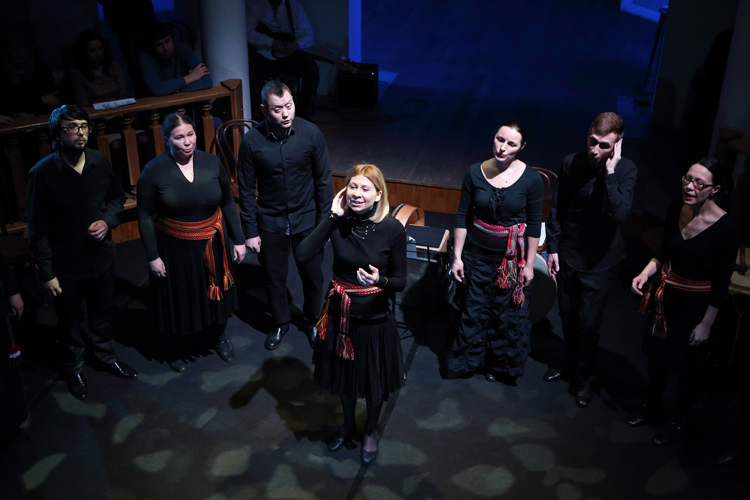
Among the numerous amazing features of the School of Dramatic Art created by Anatoly Vasiliev - the presence in the troupe of this dramatic seems to be the theater of the super -professional choir. On the occasion of today's premiere of his new program “Balkan Phenomenon”, Evgeny Konoplev spoke with the main chief chormaster Svetlana Anistratova.
“Sixteen musical numbers representing different cultures and countries-this is very reminiscent of your concert travel“ Roads of the World ”, already well known to visitors to Sidi. "Balkan phenomenon" - a continuation of that ethno access campaign? The twin brother "Roads of the World"?
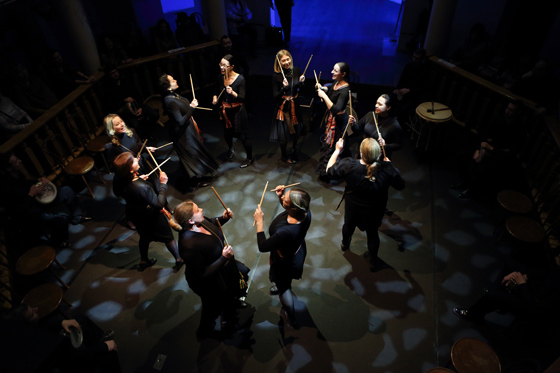
- Yes, and no. I would say that the “Balkan phenomenon” grew out of the “roads of the world”. There we send the audience to a musical expedition throughout the globe - this is such a kaleidoscope from America to Israel - and we complete the route in Russia. "Roads" begin with two folk Bulgarian songs. Of these, the “Balkan phenomenon” in general grew up. We were impressed with what it was a unique world - there is also its own and unique rhythm, a melody. And they decided: now, instead of the globe, we take one region - the famous peninsula. That is, we literally examine the Balkan phenomenon. The viewer, who saw our “roads of the world”, will feel the continuity of the form, but he will also see a lot of new ones: musical instruments (drums, block-fluits, bass) were added to the choir, dance numbers appeared, video with traditional costumes is projected-with dancing and folk rites.
“But why exactly the Balkans?”
- The fact is that the musical culture of this region is simultaneously and very close to us, Russians, and very diverse. Before starting to prepare a new project, I am shoveled by a huge amount of material in search of what the actors and our listeners would respond to. And when a Serbian, Macedonian, Romanian, Croatian, Bulgarian music sounds in one concert - for the Russian soul it is just a holiday!
- How did you master this volume of work? How long has you been preparing the program?
- We prepared it for more than a year. And for the fact that we mastered her, I must say many thanks to our talented conductor in this cultural space. The co-authors of the concert are indicated by Antonio Gramsha-this is a wonderful instrumental musician involved in many performances of the School of Dramatic Art (I think many are aware of how they love live sound in our theater). So, when we thought to the new program, we immediately found a comrade -in -arms - Antonio came to listen to the “roads of the world”, and we knew that he was deeply studying the music of the Balkan peoples. I think that without this meeting - a meeting of people and interests - a new program would simply not have been. But, they say, in the vocabulary of the sage there is no word "accident" ...
And we mastered, by the way, not all. For example, we continue to prepare a Turkish song, add it a little later to the program - when we understand that we perform this complex number impeccably and authentically.
- That is, in the absence of Turkey on your music map of the Balkans there is no subtext? And then thoughts about politics began to creep.
- We are not talking about politics, we are talking about music. When Russia began tense relations with America, some jokers also asked us whether we were going to exclude American state -owned gospel and Spirichuels from the “roads” of the world. Well, it’s ridiculous - for six years, and we, as in 2010, did not think about any conflicts with any countries, and now we do not think. We are engaged in culture, we study the musical traditions of peoples, we show how diverse this world is. But the world is intertwined to the impossibility. Take, for example, the song “In Wilon” from our new concert is the epic of the Cossacks-Nekrasovites. Those who returned to Russia at the beginning of the twentieth century, having lived a century and a half in Turkey (where Anna Ioannovna, tired of their raids to Russia). Naturally, for a century and a half, their culture has incorporated a lot of Turkish - including music. Vera Nikitina-a deep expert on this topic, a teacher of one of our actors-helped us master their songs, we listened to the expeditionary records of the 1970s with her. And now our viewer will be able to touch, including to history through culture. By the way, the song of the Nekrasov Cossacks called “Turkish” we probably will also add to the program over time - while we continue to hone it. So, when I say that soon we are courageous and the Turkish compositions, I mean only the technical complexity of music - these are insanely difficult language and manner of performance.
 © Natalia Cheban
- It turns out that in the musical plan of the Balkans - this is a place of meeting of civilizations, Christian and Muslim. How complicated for you - in fact, representatives of the European musical tradition - was this musical material that absorbs so many different movements?
- The meeting of Orthodoxy and Islam is definitely noticed. After all, even in Bulgaria there are a lot of Muslims. And in other countries, the influence of Turkish culture and Muslim tradition is very felt. I think that this “melting boiler” of cultures gives that famous drive that Balkan music is famous for.
It was very difficult to immerse yourself in this material, I will say frankly. A year ago, we set up the Indian epic “Padmini” - a real Hindu taught us to authentic singing, studied a whole musical culture from scratch - it was even easier then: I learned an unfamiliar text in sound, read the translation (it is important to know what you are singing about), and then just hone it.
And, for example, in Serbian, the word can sound exactly as Russian, and the meaning is completely different. It would seem that it should be simpler, but it turned out that the material is much more difficult. And what is happening with their breathtaking rhythms - you can’t convey words! In our team, all musicians have an academic education, but we also had to work hard, mastering the rhythms that reach the “forty -five -eighth”.
What else is interesting - an unexpected reaction of the audience after a laboratory show was unexpected for us. Some of them asked if we consciously built a concert as a kind of curriculum. For example, they showed how to build a sound in space in different ways or build the interaction of the body, voice and instruments-say, the sound of a darbuk, supplemented with blows through the chest of singers.
No, we did not set any special educational purposes, but if the audience also receives such visual knowledge, this is wonderful!
- All this is more like the work of a research institute or scientific department. But the theater is not an academy: you memorized the role or learned notes, played or sang, received a salary or a fee - and satisfied.
- We have another theater! Do not think that a person studied at the institute, came to us and that’s all - works eight hours a day. Personally, I think that after the institute the real study of the subject begins. Institute is an elementary school, everyone is young and windy there. And growing up, you begin to seriously do some things, do it because you need it and interesting. It was still laid down by Vasiliev - we do not work on the result, but on the process: we are looking, we study, we plunge into the material. We put a concert behind the concert, and every year the actors will master the Indian musical system, then Serbian texts will be understood. Isn't that great?! We even choose teachers for each other program.
- What next? What new journey are you thinking now?
- To be honest, I really want to make Africa. But this also needs to be done for real-I want to sing authentically, and not pop, sorry. After all, we began to study the Balkans first by notes: we took notes of Bulgarian songs, sang - and no Bulgaria sounds. Everyone understood, postponed the notes and went first to communicate with the carriers of culture - to “remove” the manner of singing, pronunciation, dialect from them.
So with Africa-it would be nice to find some very professional carrier of the musical tradition. Maybe some African will come to the concert, listen and say: "Would you like to make a program?" Only let it come in six months later, when we will live completely the Balkans.
 © Natalia Cheban
- Then I wish you to come to the “roads of the world” in six months to come to Bobby Macferrine, listened to your Spirichuels and you have an African concert.
- I like it, it would be wonderful! He, of course, knows the African theme like no other. But in general, what Macferrine does in music is very close to us. If it were lucky, then he would have learned not only to an ethnic. After all, he treats music as a service and constantly emphasizes his religiosity.
- By the way, about religiosity. The “roads of the world” for the most part show spiritual chants: Spirichuels, Gospel, Prayer, Popular Species, Psalm. “The Balkan Phenomenon”, judging by the program, is almost entirely consist of folk songs?
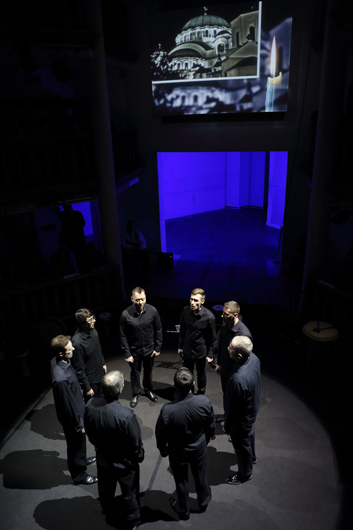
- Yes, really. And this is also the difference between the two programs from each other. Since we focused on one region, we decided to show the variety of traditions - a wedding song, music of a folk holiday, women's lyrics. But spiritual music is also represented by one number, after all, this is also a majority of culture.
- In general, I conclude that it is better for the viewer to see both concerts - for a more voluminous perception of all the material.
- After this conversation, I myself am surprised at which two programs are related and which are different. Directly "Yin and Yang." See both that, of course, a good idea. Moreover, the theater we are state and tickets are very affordable in our country.
- By the way, is there any chance of the audience to see these concerts outside the SDI scene?
- We are thinking about this and a new concert from the very beginning created with an eye on possible tour. But we have a specific situation - we work in the theater, but we give not performances, but, in fact, concerts. We, frankly, do not fit into theater festivals. But if any cultural festival is interested in us and invite you to its site, we are technically ready for this and will only be happy.