
Translated material
Go and don't look
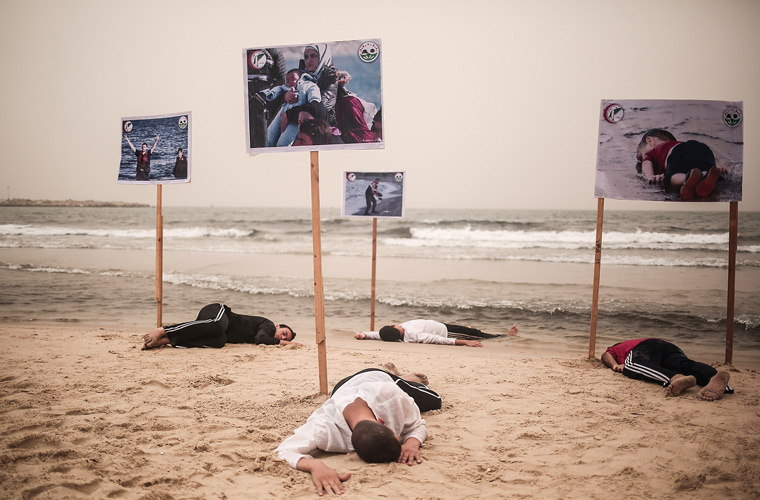
On September 2, 2015, Turkey found the body of a three -year -old boy, Aylan Kurdi, who drowned in the sea on the way to Greece, where he and his family fled from the war in Syria. The tragic photographs of the child, nailed by the sea to the shore, instantly dispersed around the world. The flow of migrants from the regions of the Middle East, where the war is going on, did not stop either before or after the appearance of this photograph, but the explosion in the media occurred only after this picture - migrants began to be called refugees, on state buildings (in the photograph - in Madrid) , Refugees WelCome inscriptions appeared. Who was the addressee of this message? The civilized world, understanding in English, united by collective pain and shame, ready to compassion.

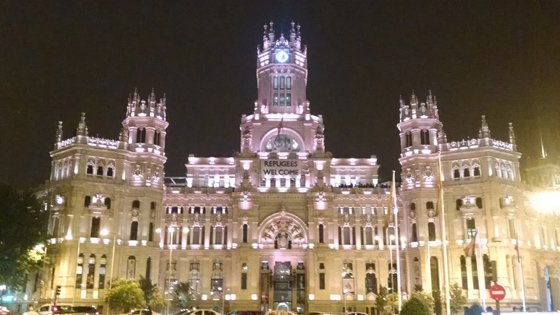
Unlike numerous photographic documents of the horrors of “other people's suffering” that cause dullness of feelings, there is nothing in this picture that would testify to the nightmares of war - but the more concise the evidence, the deeper its impact. In the photo - just a boy dressed the same way we dress our children , carefully carried by the sea on the sand, "he is your son." Such a combination of nature and egregious silence of death reminds of the picture of Arkady Plastov “The Nazi flew”, but it also shows much more: both the bloody spot on the crown and the retreating plane. In the photo, we are left alone with an unbearable attractiveness of an elementary image.
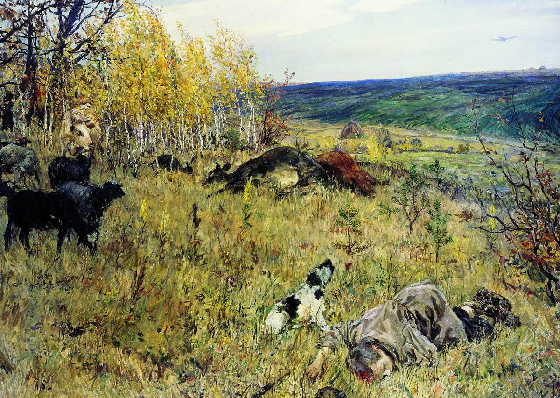
The visual researcher Nicholas Mirzooff in a post on this photograph writes about the dual relations of globalism with the sea - as a necessary channel for goods and an irresistible obstacle to people. Mirzoooff gives examples: today the fish caught in the Arctic is filled in China and serves on the table in America - and the oppressed people die in the sea in the painting of Turner "slave ship".
There, Mirzooff writes about photographs of the Syrian photographer Haleda Barakekh . Barakeh ) , which he posted on the network on August 29, 2015. In the pictures - the bodies of 80 Syrian and Palestinian refugees that drowned the day before in the Mediterranean Sea in the Mediterranean Sea, trying to achieve Europe. All photos were posted on Facebook under the heading " Multicultural Graveyard " . On August 30, Facebook deleted all posts with links to the "multiculturalist cemetery". But a few days later, after a photo with Ailan Kurdi, the question of ethics and censorship broke out with renewed vigor. On September 8, in the German Bild, the article “Power of Images” with the subtitle “Why should we force ourselves” is released, where the famous photographs of the war in Vietnam and the genocide in Rwanda are used; It is argued that "only overcoming yourself, looking into the face of these personnel, causing a resonance, you can change something." And in protest against the letters of readers, outraged by cruel photographs, Bild releases the next printed number without pictures (more precisely, instead of all the pictures - only white contours).

The theoretician Media Thomas Kinan formulated the paradox of “human rights” as follows : a scream about a violation of human rights is meaningless if it cannot be made universal; But he becomes effective only when it comes to some particular person. That is-what is happening should concern everyone, but go through one one. In order for the reality of refugees to invade the houses of people, she must focus on the death of a single boy from Koban.
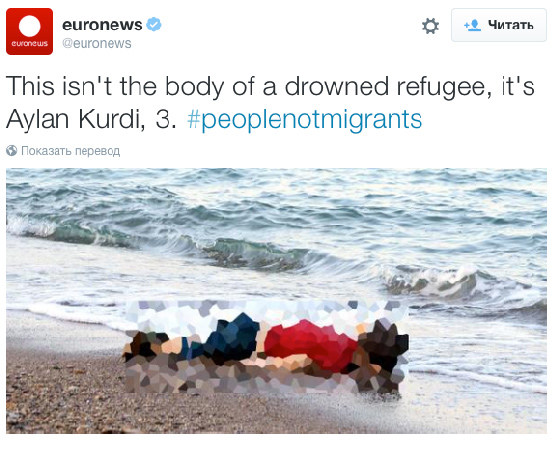
This is how this photograph on the Twitter of the Euronuis channel looked. The applied strange filter of Photoshop seems to emphasize the digitage of the images that reach us, removing their reality, but this is not all-is there something strange in the signature penetrated by the pathos “This is not the body of a drowned refugee, this is Ilan Kurdi, 3 years”? The name of the boy would look more neutral if there were no 3 years at the end. This identification format is NAME , Surname , Age - English. The Syrian would be surprised why write age at the end. On the contrary, it would be necessary to mention the name of the father and write the name of the child as Aylan Kurdi Ben Abdullah. This example shows how visual-textual messages are constructed. To be named means to be told how Liotar wrote in “postmodern in the presentation for children”:
“Names, these“ tough signs ”, in the expression of crypt, determine a certain world, the world of names, which is the cultural world. This world is final, because of course the number of names that are available here. This world is the same. Each human being entering it takes its place, i.e. It enters under the name that will determine his attitude to other names. This place really controls a variety of exchanges - sexual, economic, social, linguistic - into which the individual has the right or is obliged to enter with other names of names. ”
To be named means to be told.
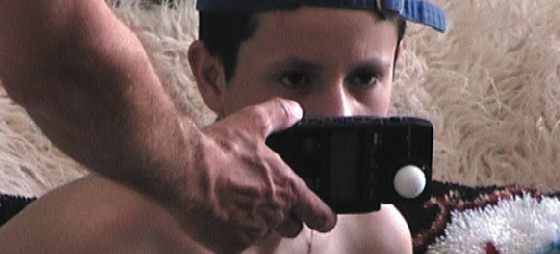
By introducing Ailan Kurdi into his names system, Western society now regulates the logic of handling him. How, to whom and through what mediums to talk about him? The production of such a culturally prescribed system of representation was shown by artist Phil Collins in his 12-minute video work of 1999 “ Howing to Make a Refugee ” (“ How to make a refugee ”). A group of journalists surrounded a family of refugees from Kosovo, sitting on the couch. The teenager was asked to remove the T -shirt to show his wounds (allowing him not to remove the baseball cap). The boy is obviously uncomfortable, and during a group family photo he will stare at the floor. As the historian of art and literature Mike Bal writes in his book “ Art And Visuality in Migratory Culture ” , Collins shows the moment of designing representation: in the future, this teenager will be visually identified as a“ refugee ”.
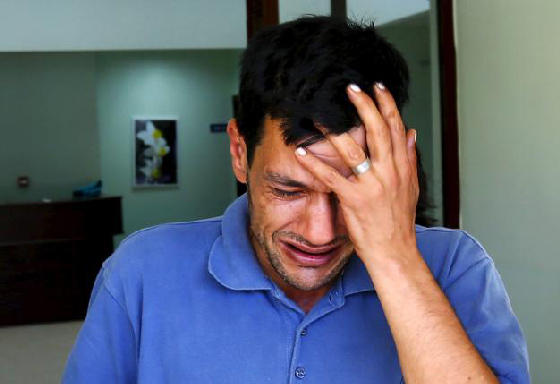
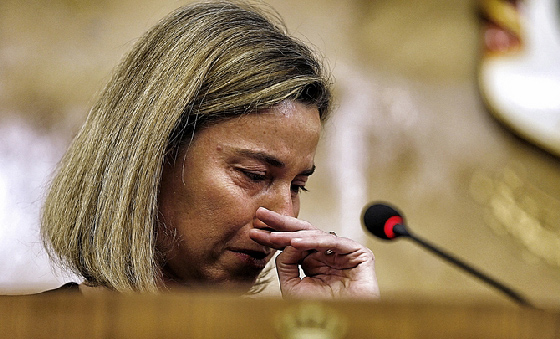
Approximately the same process can be observed in how the media showed the father of the drowned Ailan Kurdi, Abdullah. He sailed in another boat and survived. For comparison, a photograph of the Supreme Representative of the European Union for Foreign Affairs and Security Policy Federica Mogherini, crying during a press conference on the attack in Brussels. In both cases, the face of the face is given, but the suffering of the politician is separated from the rear and foreground by the natural focus of the telephone object, while the refugee is shown without a distance, in the light of the flash.
Susan Umbrelor wrote that photographs do not need a signature (contrasting them with Goya's “disasters”), but now we are more likely to observe something opposite - the key role of the signature in creating the image. Here is a Twitter message about a truck in Austria, where 71 refugees were frozen alive.
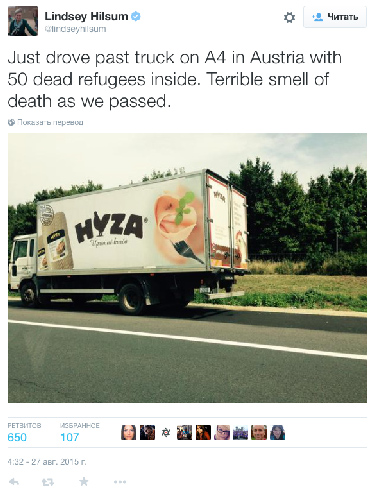
The picture shows a truck, Austrian autobahn and nature. But everything changes as soon as we read the signature and understand what is inside, what is hiding from our gaze. A barely noticeable reflection triangle in the glass at the bottom of the frame adds plausibility, the “undusticity” of the photo taken to the phone. A terrible image of Gazenvagenes immediately pops up, which the European consciousness prefers not to remember, and it cannot really remember, because there are no images left. At those, in 1939, there was a labeling “Kaiser Coffeeum”, here-the Slovak chicken (in the film “Khrustalev, the car” the protagonist was taken to the camp on a truck with the Soviet Champagne logo)-history convulses between the banality of the image and the monstrous of 160 characters of the text.
This gap only intensifies by tautology (the most convincing of the figures of speech), the replication of the pair “Picture/Text” in the media. In all similar pictures, circulating on blogs and the media, we will never see the event itself. It is hidden in the fold between the text and the countless repetition of the image.
- And - and - and - and -

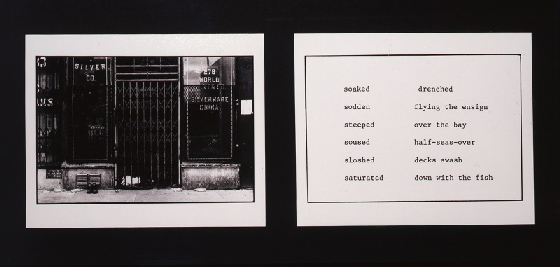
The artist Marta Rosler in her work of 1974-1975 pointed to the same gap. “The Bowry in Two Inadequate Descriptive Systems” (“Baueri in two unequal description systems”). It consists of deserted documentary photographs of the quarter of cheap bars and taverns in Manhattan, Bowry , and cards where various epithets associated with alcohol intoxication have been scored with a newspaper font. In this comparison, a gap between words and pictures, language and photography as descriptive systems was exposed, each of which is in its own way limited to a social problem.
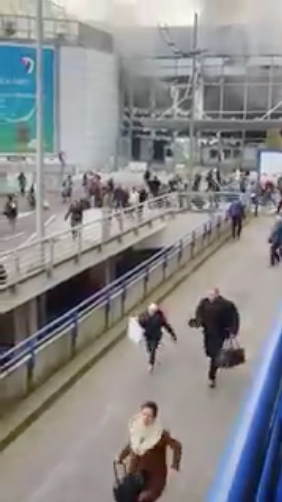
Ethics and optics regulate the policy of showing in the media images of terrorist attacks. And this is not at all a straightforward censorship of the terrible: on the contrary, this is a very complex function, dependent on many parameters (the proximity of the event to Europe, the degree of development in this particular place and society attitude to the problem of representing a new situation for Europe, etc.). On an amateur video shot on the phone and published by the newspaper LE Monde during a terrorist attack in Paris, we see the backyard of the Babaklan cafe, running people - those who can run, crawling - those who can crawl, hanging from a window, wounded, killed and hearing a questioning sunbringing voice: "What is happening?" Later there will be another video with running people - already near the Brussels airport. There will be an iconic image of a wounded Indian woman, but still-the pictures are much more silent than they show, the enemy remains inaccessible to the eyes, something invisible makes people scream, run, hang, tears clothes, cripples, kills. Camcements of tracking are actively involved in this production of horror, because there are more and more of them, and they speak the same language of traces of an incomprehensible event. As Liotar wrote - "if there was more, it is a safety measures."

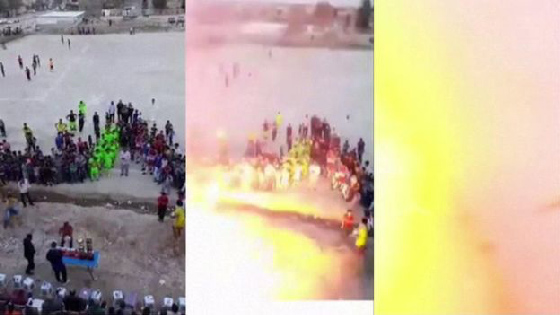
The day after the terrorist attack in Brussels, the suicide bomber explodes himself during the award after a football match in the west of Iraq. Below one twenty -fourth seconds to, a flash and one twenty -fourth after, nothing is visible then. An explosion is just one frame.
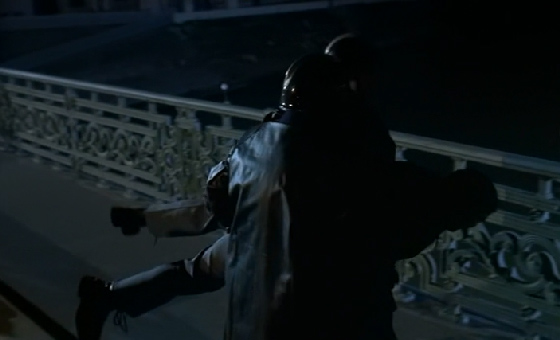
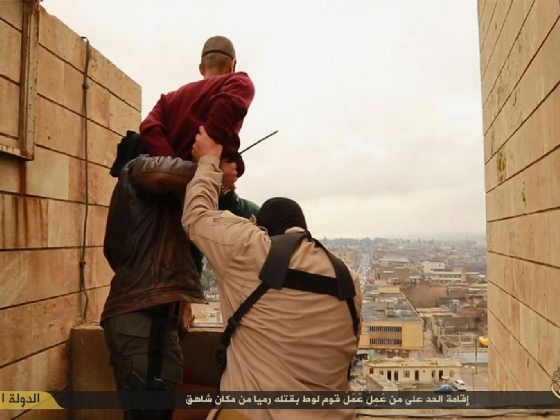
Most often, the farther from Europe the event, the more you can see: visibility is a function from there . Here are two more frames to comparison. One is a frame from a video distributed ISIS (a terrorist organization banned in the Russian Federation. - Ed. ), Where a person accused of homosexuality was dropped from the wall of the fortress - he was printed in the Independent newspaper. The message is read easily - the civilized reader is horrified by ISIS barbarism. The other is a very similar frame from the relatively little -known film “Black Night of October 17, 1961” directed by Alena Tasma about the unrest of the Algerians in Paris, who were brutally suppressed by the police - the wounded demonstrators were simply thrown into the Sena (there are no photographic documents of those events). In France, they try not to remember this, how beautifully shown by the Haneke in the film "Hidden".
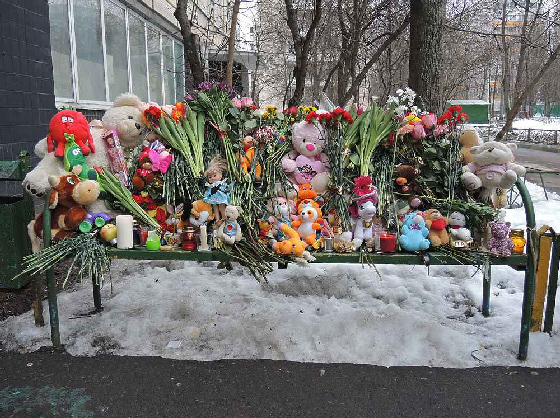
In Russia, a prevailing attitude to terrorism in the media is dictated from above and is indicated by the maximum possible silence. The only opposition channel is discussed whether or not to say nothing about how in the middle of the day a woman in black walks in the Metro “October Field”, waving the cut off her children's head and shouting “Allah Akbar”, and state media mainly pretend that nothing is happening. It seems to the state that, multiplied by the media zero, the event will disappear. Political arises, as Ariella Azulay writes in the book “ Civil PhotoGraphy ” , then and only when people gather together in the public space, and disappears when their unification is destroyed. Despite the active resistance of the authorities to any occasion for compatibility, two instantly arising memorial from flowers and toys (on a bench near the house where the tragedy occurred, and near the subway) cut this silence desired by the state.
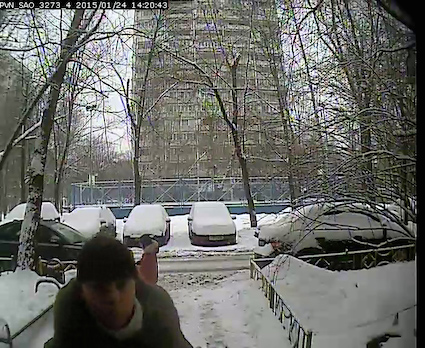
In January 2015, one day suddenly discovered the vulnerability of all surveillance cameras in all Moscow entrances-it was possible to enter a certain address on the Internet, add a random number to it and thus connect to the broadcast from the camera of some Moscow entrance. We see one such stop frame, and next to it-a stop-frame from the camera near the house on the October Field, which recorded the nanny’s exit with a bag. What is in the bag - the text will say. If Eugene Aus was photographed that had not yet managed to disappear in the urban -planning transformations of Baron Osman Old Paris like places of crime, as Walter Benjamin saw it, then a modern view of the city as a crime scene was designed by the optics of surveillance camera. It produces exactly the degree of innocence that is necessary today to know the event.

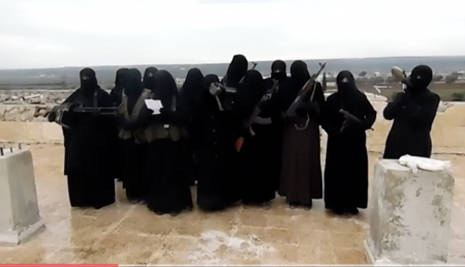
The image of a female shahida, wrapped from head to toe in black-one of the main images of a terrorist-is easily recognized (the Communist Party even made an idiotic icon, placing it in a red ban sign). But if you understand, it turns out that in this meaning there is less value than we read. The image of a terrorist is always dual: for some, he is frightening, for others - heroic. It is bought, for example, girls in developed Western countries, leaving for ISIS in dreams that they will become a military unit in a sacred war with the infidels. The most famous case - the girl fled from Glasgow and led a blog about what I had to take with me to ISIS, as if it was about the weekend at sea: good headphones, high -quality underwear, android, but not an iPhone ... But ISIS will be disappointed in ISIS. It is difficult to say whether these personnel with training women are staged by women (in the picture below) or simply single (cases of the arrest of women from ISIS were indeed in Libya), but the fact is that a woman is prohibited from becoming a fighter (at least if a special fatwa is not published) - on the contrary, she should become a wife, teacher, nurse, and ISIS has a great need. As a “state”, ISIS attracts Muslim men from all over the world as fighters, respectively, they need wives there. Of course, here a big problem is hiding for girls from Glasgow, California, Adelaids who are not accustomed to such subordinate roles. In another picture below - a frame of a video from the captured ISIS of the city in Iraq, in the province of Anbar. On an advertising shield is something like social advertising: the rules for wearing a hijab. Signatures on the right say that he should not be tight -fitting, dissolved, elegant, attracting attention, similar to the clothes of men and incorrect women, pouting; It should be spacious and wide, cover the whole body. A special police, usually consisting of women, follow the city, and monitors the implementation of these rules.

ISIS generally and willingly produces images. The plots of their photographs and videos are different: fighting, training of fighters, the execution of infidels, the consequences of attacks on hospitals and educational institutions of enemy aircraft are demonstrated. Often the video ISIS is deprived of a narrative-for example, just the life of a settlement or cleaning in the park is shown. The camera seems to want to show everything that is, in details that seem to want to be seen. This can be called a kind of naturalism - in contrast to the logic of the camera of the European look, forever evading the essence, more hiding than showing, creating the space of speculation, outlining only the coordinates of an event that testifies to the unusable .
At the same time, all the difficult objects that appear in the ISIS frame, Western origin-be it Kalashnikov assault rifles, American rifles or Toyota jeeps. The usual designer infographics with a small language replacement is also drawn on the ISIS sites - for example, instead of the "undermined suicide bomber," it says about Martyrdom Operations , "Promotions of Martyrdom." It is clear that the audience of these visual messages is Muslims living there , who want to join us here to help in the war with the infidels.

(It is possible to compare such infographics with American infographics of terrorist attacks applied to the world map or the expansion of the “Islamic state”, similar to the picture of the spread of some virus.)
Islam is originally anikonic (involves a ban on creating images), but not iconoclastic. In fundamentalist Wahhabism (or Salafism) ISIS, it turns out, on the contrary, the continuous destruction of cultural monuments, but the multiple production of images themselves, which does not fit with aniconism (Taliban, for example, killed journalists for trying to take a photo). But to talk about duplicity here, as well as to contrast the civilized world with barbaric fundamentalism, means to simplify the problem.
The farther from Europe the event, the more you can see.
As Hal Foster writes, interpreting the lacan in his last book “ Bad New Days ” - the whole culture is only a screen from the real. In the lacan, this is called Image Screen (image-screen) -that which It arises at the intersection of the subject’s gaze to his object and object to his subject. Glance ( GAZE ) is something that the subject and object are connected on both sides; what is between them; What precedes both of them. We are all in the view of the world, and this look, like any contact with the real, is monstrous. We are protected from him, like animals, by the power of images, the power of the imaginary, as well as, unlike animals, in a symbolic language. These are two foundations of human culture.
The fundamentalists, attacking our culture, say: you simply have no vision, the visible is, and we show it to you - and they throw severed heads at our feet. You say that you do not know the truth and it will decide in the elections. We know the truth, it is simple and beautiful: God is merciful and merciful. This is written on all our documents and on our swords.

ISIS flowed page
В статье Вячеслава Иванова «Категория “видимого” и “невидимого” в тексте» приводится эпизод хурритской поэмы (совпадение, но хурритское государство находилось ровно в том же регионе, который сейчас занимает ИГИЛ). В этом эпизоде богиня Иштар пытается обольстить пением Каменного Убийцу, мифологическое существо Улликумми, но Большая Волна объясняет ей, почему ее старания тщетны: «человек этот слеп, ничего он не видит, милосердия нет у него». Иванов далее пишет: слепота Каменного Убийцы, защищенного камнем от вида опасных для него богов (как Иштар), может быть объяснена понятием «обоюдной невидимости» разных миров. Эту же оппозицию обнаруживал Леви-Стросс, анализируя мифы индейцев: открывание глаз — смерть / закрывание — жизнь. Для фундаменталистов мы — огромный каменный слепой монстр, угрожающий богу Грозы, и их задача — восстановить мироздание, помочь богам его уничтожить. Об этом писал Лиотар: «для террористов капиталистический мир тоталитарен, и они не могут ему ничего противопоставить, кроме политики террора». И кроме Реального террора они используют террор Воображаемого. Не является ли для нас тогда спасением отказ от того зрения, через которое нас атакуют?
Мифологическое невидение, неоткрывание глаз, гарантирующее жизнь, как в гоголевском «Вие», не имеет ничего общего с незнанием или неделанием. Речь о другом — о том, как не быть захваченными образами. У Лакана такая захваченность — составляющая воображаемых отношений с другим как двойником, отношений зеркального подобия, созданных взглядом до речи. Если бы человеческие отношения сводились к отношениям Воображаемым и не регулировались Символическим законом, то людьми овладела бы страсть убийства — на то толкает каждого из нас жажда утвердить собственное автономное существование, уничтожив двойника, отнимающего у нас нашу целостность и полноту. И именно к такому убийству толкают нас террористы — и правые политики.
Правые политики говорят: смотрите и увидите, что мы должны их уничтожить.
Террорист — наш страшный двойник, как в древних близнечных мифах, где враждуют старший брат, устанавливающий порядок, и младший, хитростью и обманом его портящий. Террорист пользуется теми же машинами и камерами GoPro , но только не для путешествий и серфинга, а для организации жуткого спектакля. Достаточно немного изучить вопрос, откуда у террористов столько джипов «Тойота», как тут же убеждаешься в том, что ничего хорошего о нашем мире развитого глобализма это исследование не расскажет. Террористы производят ясные акты и образы. А мы дальше оборачиваем их в неотчетливые покровы огибающих чудовищные события видео и картинок. Нет, нужно хорошо рассмотреть отрубленные головы и изнасилования мигрантами наших женщин, говорят правые политики. Они говорят: смотрите и увидите, что мы должны их уничтожить. И тут они забывают, что даже «мы» и «они» — совсем не очевидные категории: устроившие теракты в Сан-Бернардино и Брюсселе были гражданами своих стран. И террористы, и правые хотят истончить защитный экран, дать волю образам править, картинкам — действовать, отвести нас к тому ужасу, о котором они безмолвно кричат. Со стороны же Символического порядка мы имеем другую опасность: наш язык, как заезженная машина, склонен выстреливать жесткими, ригидными означающими («мигрант», «беженец», «террорист») или, даже вводя погибшего мальчика в систему имен, все равно делает это колониально . Проблема, как показывают и древние мифы, не решится силой — потому что сегодня она в том, как радикально по-разному можно отвечать на вопрос о познании.
Знать, что происходит, но не быть захваченными образами, исследовать язык, а не пользоваться готовыми формами — только с этими установками возможно спасение сегодня. Здесь нам может помочь то, что так странно для окулярцентричной картины современности, — постылая зыбкая постмодернистская критика, с которой все уже давно хотят распрощаться. Но, может быть, только под ее защитой возможно сейчас то познание, которое бы провело нас через испытания нашего времени.
Скачать весь номер журнала «Разногласия» (№3) «Империи и колонии. Границы и вторжения»: Pdf , Mobi , Epub