
Translated material
"It's like Hiroshima, only with us"
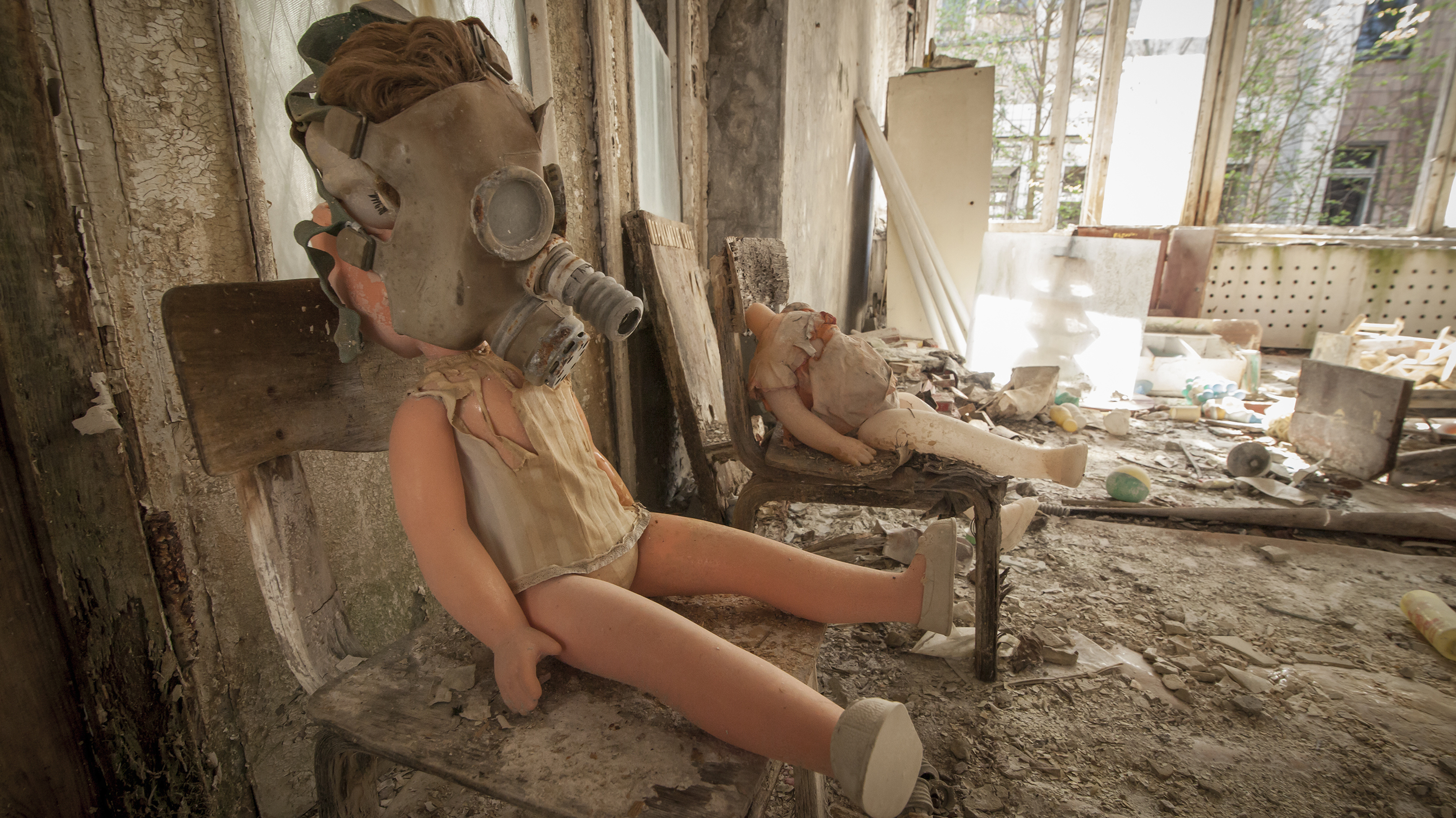
Social networks remember Chernobyl
On the 30th anniversary of the Chernobyl disaster, many recall how it was, how and when they learned about the accident, what they thought and did. The heroes of this video were the first to learn about the disaster:
But most Soviet people first learned about the accident from the Time program - 3 days later:
Messages appeared in the press on the fifth day:
And the Soviet media on April 30, 1986 joyfully reported preparations for demonstrations for May 1: Pic.twitter.com/u1go3ospetun
- MUD ROSISI (@fake_midrf) April 26, 2016
The fact that the authorities in the early days hid information about the scale of the tragedy are written by many. Rumors that creeped around the country then also recall, and May Day demonstrations - including in Kyiv.
Andrey Arkhangelsky on the "elephant":
The local party leadership probably did not know the details and the consequences of the tragedy (April 26) that had just known-but it certainly knew that something terrible happened at one hundred kilometers. The question - to conduct a demonstration in such conditions or not to carry out - was discussed at the highest, union level; And it was decided to conduct it all the same-in order to "do not give a reason to the West" and "not to sow panic."
A whole city with a millionth population was exposed to mortal danger - only for the sake of showing and for reporting.
Today it is customary to say that “the USSR ruined”-some internal “liberals” and, of course, external enemies, the West. In fact, the country "ruined", including this May Day demonstration in Kyiv. In the USSR, an unspoken agreement was observed between the people and the authorities for a long time: “We pretend that we believe the authorities - the authorities pretend that he believes us.” After May 1, 1986, millions of residents stopped believing overnight, ceased to feel the country and power “their own”.
The same topic is developing in the " Vedomosti " Pavel Aptera.
The Chernobyl disaster and the elimination of its consequences exposed the problem of the inefficiency of the Soviet economy and management mechanisms, activated Gorbachev’s desire and his environment for reforms and mitigating nuclear confrontation, political scientist Boris Makarenko notes. At the same time, Chernobyl became an important link in a chain of failures (anti -alcohol campaign, Afghanistan, catastrophes on railways and interethnic conflicts), which undermined the faith of people in the ability of the Soviet leadership to successfully rule the country.
The text of Leibov’s novel , published 2 years ago at the Weekend Kommersant, is also relevant. Leibs 30 years ago was just in Kyiv.
On April 27, an old acquaintance, photographer and Ukrainian patriot called. He reported the news, and we began to catch enemy voices on the air. They still continued to jam, although not as fiercely as three years before. They mumbled muffles, muttered slurred voices. That Sunday, Kyiv hung on phones, swaying. The spatial model was as follows: on the blocked prospectus Victory, the promised bike racket of the world rushed through the Victory. The weather deteriorated, a sharp wind blew, he whistled with a whistle on his bicycle flew through Kyiv to the north, to Polesie. <...>
On Monday, the Soviet government cleared his throat and informed us on TV that the situation was stable. On Tuesday, the situation continued to be stable. On Wednesday, nothing has changed in this regard. Unpleasant things spoke in the voices, for example, Zhores Medvedev spoke there, he advised citizens to drink iodide potassium. However, many people claimed that red wine is suitable for these purposes. The idea of wet cleaning and insulation of the premises also gained exceptional popularity these days. These days, until the wind blew north, the spatial model was as follows: gloomy listeners of voices sat home, the rest of the citizens walked cheerfully along the streets. The listeners of the voices indulged in wet cleaning and isolation, being distracted by sorties in pharmacies for iodide. In pharmacies, apparently, they also secretly listened to the radio: iodide was released automatically.
On May 1, commercials brought people in Kyiv at the Pervomaisky demonstration.
And only on May 2, the evacuation of people from the future zone of alienation (minus Pripyat) began. On May 2-3, an evacuation of a 10 kilometer zone (around nuclear power plants), May 4-5 of 30 kilometers.
~ 100 thousand people lived next to the destroyed block for a week, and you say a "demonstration".
The Soviet government, even after recognizing the fact of a terrible catastrophe, for some time continued to silence its scale. About this - in the material of "Open Russia".
Today is 30 years of accident at the Chernobyl nuclear power plant. What did the Soviet authorities have lost its scale: https://t.co/aqmyqgkh1 pic.twitter.com/tfsgj5Sngl
- Open Russia (@openrussia_org) April 26, 2016
The site " such things " approached the theme of the Chernobyl anniversary of the original anniversary - it arranged a twitter -broadcast "on real time."
Urgent: the explosion occurred on the territory of the Chernobyl nuclear power plant - https://t.co/vit1rv0t7o
- such things (@takiedlaru) April 25, 2016
Firefighters in the Chernobyl region appeared signs of radioactive irradiation - https://t.co/xv6qjs7dqs
- such things (@takiedlaru) April 25, 2016
Explosion and fire at the Chernobyl nuclear power plant did not cause the abolition of lessons in the city - https://t.co/e9bmbljud8
- such things (@takiedlaru) April 26, 2016
And so on. The broadcast can be monitored here . Not everyone liked the idea:
@takiedlaru don't have to do this
- Radmir Ibatullin (@mr_radmir) April 26, 2016
It seems to me that such techniques can be justified when the activation of injury leads to empathy, to identifying with the hero of the text and, thus, to greater sensitivity about his / its problems (for example, such a goal can serve as descriptions of violence about the victims of this violence; see Spotlight Cinema).
Is there such a connection here? I somehow do not see it, given that we are dealing with dry news, the entire effect of which is built exclusively on a throwing heading. I saw that people write that in this way the media “refreshes the interest of the audience” - it is not entirely clear what the mechanism of this refreshing is? I imagine two types of reaction to this news - activation of direct injury to those who survived it; And the experience for the fact that this news acts so, those who do not. By and large, this is a shock for the sake of shock, that is, clickbeit in its pure form.
But most commentators did not condemn the authors of this idea:
I will speak out a little on today's "such matters." In short, the guys are scolded for the fact that they decided to post on Twitter news 30 years ago. And a bunch of people was true that this is true. Although there was an original date from the very beginning - 04/26/86.
What does this story teach us? The fact that the public reads only headlines. And just this is not news. My most popular tweet was written in 2013. This is a fictional news "in Kostroma on the playground, the monkey shot a pensioner from a pistol of the FSO colonel." I received comments about the mess in the country for a few more months.
What else does our story teach? The fact that the only reality in which media can now exist is a continuous experiment. No one says that they should all be successful and perceived by the public with a bang. And the audience, in turn, should get used to this: it was we (we, yeah) put the media people in reality when we need to fight for views and for the minimum number of failures on the page.
However, it is impossible to achieve the purity of the experiment. There were no messages a day a day with a tragedy, and, as you know, even the May Day demonstration was canceled.
But - Thank you: having read Twitter, I saw in a dream a traffic jam traveling on a bus in a dream.
Only those who mistakenly call the media an obsolete word "media" can blame "such cases" in "stuffing" about the "stuffing".
The media could not do that. But there are already no media. Now the media space is a united front of text, visual and audio information, it offers us millions of ways to process and submit information, not to use them stupid
It seems to me that few people understand how cool what the guys did at night. This is the first media perfoman to a shock effect that can show the reader the scale of the disaster.
A wave of dissatisfaction has already risen on the Internet: they say, they say, it is impossible, this is horror and blasphemy.
I believe that this is a real social advertising that works. It is incredibly terribly to see the heading about the explosion in Pripyat and feel that it is close, this is reality.
The project "such affairs" is specifically on the thirtieth anniversary of the explosion, publishes the whole day of 1986 news. Incredibly strong sensations. Incredibly scary. Exactly so that they remember. This disaster is not mythology. This disaster and its consequences could happen to everyone.
Grigory Yavlinsky confirms - “Chernobyl threatens us again” - and here's why:
The opacity of the authorities, the information closeness of the state, the low price of human life, the secret funeral of those who died in military-political adventures, important decisions made without any discussion are a model of relations of man and the state, which is imposed on the country by the authors of the meaningless and unpromising anti-European political course.
To the accompaniment of patriotic rhetoric, the authorities are selfishly, for the sake of their own benefit, in Russia they created a political system in Russia, relating to a person absolutely cynically, without the slightest respect, so that citizens did not trust their state.
God forbid, something similar to the Chernobyl accident will happen and we will all find ourselves in mortal danger, which we will not even know about ... Only the Internet will save. If it is not covered with censorship, as they are already collected.
By the way, there are no messages about today's anniversary on the Rosatom website.
On the official website of the State Corporation "Rosatom" there is nothing about the 30th anniversary of the CHASC Pic.twitter.com/csvqqoitqn
- Mitya Aleshkovsky (@Aleshru) April 26, 2016
"Such things" publish today not only the "online broadcast" of what happened 30 years ago, but also many other materials united by one topic. For example, the unique frames of the photographer Victoria Ivleva , who in 1990 shot the very fourth power unit.
Many mistakenly believe that the reactor is somewhere underground-in fact, the 4th Chernobyl reactor is 35.5 meters above the ground.
And then, when they walked through the room with the control panels, now covered with plastic, through the machine room, past the isoled turbines that were lying everywhere of pipes, pieces of metal of different colors and shapes, the feeling of the complete insignificance of man before the forces of nature began to come. There was dead silence, arrows of sunlight from holes in the sarcophagus and small dust dancing in these arrows turned this apocalypse into some strange theatrical beauty. Never in my life I have never seen such a beautiful and such deadly scene.
The even more deadly scene was ahead - in the central reactor hall, where, as a result of the explosion, the reactor cover, which the guys called "Elena" rose on the rib. We looked at her through the broken glass of the operator. I moved forward a little.
“It’s better not to climb - there are two thousand x -rays,” the dosimeter of Yura Kobzar said quietly, afraid to frighten me away.
I managed to remove a little, but, as it turned out, it is enough to receive a golden eye award on World Press Photo to all photojournalists.
Nearby is the material of Dmitry Sidorov about "that brought the Chernobyl disaster to eschatology, culture and philosophy."
The key phenomenon of the layer of modern culture that arose around Chernobyl was not films and not songs, but the game of the Ukrainian Studio GSC Stalker, in which the plot of the Tarkovsky film of the same name is placed in the setting of the alienation zone of the Chernobyl. Despite the fact that the game was positioned as the main pride of the Ukrainian gaming industry, it found its crazy popularity in the West as an “anthology of Russian life”. And in Russia itself, a powerful cult arose around the world created by the Ukrainians, which gave rise to a real offline subculture of stalkers (every year the Ukrainian authorities delay up to 400 of its adherents) and countless fiction - about 150 books at the moment.
There - about the interpretation of the disaster as the execution of the prophecy of the Apocalypse. Almost apocalyptic paintings - in the article by Ilya Shepelin about life and death in the city of the node of the Tula region:
This is rarely remembered, but huge areas in Russia suffered from the Chernobyl ejection of radiation. According to the State Register, four and a half thousand settlements of Russia are in the Chernobyl defeat zone. Most of all from radioactive clouds went to the Bryansk and Tula regions. Moreover, the Tula region has become one of the unconditional leaders on the natural loss of the population, deaths from cancer and cardiovascular disease. The authorities do almost nothing with the consequences of pollution, but at the same time they reduce the list of benefits for residents of the injured territory and promise to develop agriculture in this zone. <...>
The story of the local priest Father Paul:
Every year, hundreds of names are added among dead liquidators, whose names are now hastily knocked out on Stella, on the other side of the road. But this is a drop in the sea. Well, they raised the question of the Chernobyl benefits before the elections - then it will be dropped. What is next? Look at official statistics: Tula - the first place in oncology in Russia. Here, the oncological center is visible from the window. In front of the temple, all parking spaces are occupied by people who go to oncology, because there - in front of the hospital - all places in the parking lot are already scored. The queue for doctors stretches endlessly there! And then they go to the regional oncological dispensary, there in general people in the wards do not fit.
Another material about how Russia (the then RSFSR) suffered from Chernobyl - on Open Russia:
The absence in the RSFSR of its own Communist Party deprived the republic of the ability to lobby its interests after Chernobyl https://t.co/bw4th43pep
- Roman Popkov (@romanpopkov1) April 26, 2016
There, on Open Russia - conversations with residents of the Bryansk and Kiev regions. The main topic is the same - the concealment of the scale of the disaster.
My small homeland - Bryanshchina -, along with the Kyiv and Gomel regions, was then in the most black zone of infection. I remember how my mother caught western radio stations on short waves at night in at night, in order to at least find out something about what was happening in Chernobyl. And these radio stations mercilessly muffled. I remember this night rustle of a radio broadcast, breaking through the trust and the noise of a distant female voice, red indicators shining in the night on the radio body.
The fact that the leadership of the USSR hid the scale of the tragedy is well known. But still, when preparing this text, the hair became on end. We talked with ordinary residents of the Bryansk and Kyiv regions, "with ordinary Soviet people"-they talked about how the "state of workers and peasants" threw them to their fate on the terrible days of April 1986. This should not be forgotten, it cannot be forgiven. This is one of the last and one of the most serious crimes of the Soviet leadership.
Atomic energy safety is a separate topic.
Chernobyl is the general tragedy of all our huge country, present -day Ukraine, Russia, Belarus.
And every compatriot should know the truth about the tragedy, about the victims, the rescuers, the stretched drama of the Chernobyl. And the state forgets, throws, deprives support, help. And the Chernobyls continue to die.
Eternal memory to the dead, who died from the most severe consequences and diseases.
And for the survivors suffering from diseases, the state should do everything, but it does not. And prefers to forget.
Then the USSR was not ready for the most severe technogenic disaster in the history of the country. Is Russia ready now, if this suddenly happens?
Nikolai Azarov , it seems, is also ready to blame the "Kiev junta" in the Chernobyl disaster:
If such an accident occurred now, then Ukraine not only could not cope with it on its own, but was also doomed to the death of millions of its compatriots.
That is why the incompetent actions of the Kyiv regime to regulate the capacities of atomic blocks depending on the external load cause great concerns.
And Vladimir Milov gives a link to his old article on Gazeta.ru - on the dangers of nuclear energy.
The atomic energy economy in theory is a good, but in practice, a constant problematic child of world energy. It is time to start approaching her rationally, discarding naive children's technocratic enthusiasm and romance. And the rational approach suggests: after 2020, most reactors of the old types of reactors will develop their resource, so you need to close them and look for an adequate replacement for them. Natural gas is not oil: its reserves in the world are enough for any energy scenarios. There are pure coal technologies, there are reasonable solutions in the field of alternative energy. And all this costs cheaper and even in a nightmare will not demand to run to pharmacies and buy iodine there.
However, not everyone agrees with him.
@v_milov @navalny is nonsense. The stories of atomic energy for many years, and there were only three large accidents. There is no alternative to nuclear power plants.
- Christian Larsen (@mudozvonius) April 26, 2016
It is necessary to announce this day by the World Technologist's Day, so that everything is better remembered by what a violation of technological instructions leads to.
By the date, I repeat that nuclear energy is OK, but <idiots> - not approx.
Another word associated with today is "liquidators." " Дождь без политики " рассказывает о курсантах, которые в Чернобыле работали, но статуса ликвидатора не получили:
Сегодня тридцатая годовщина аварии в Чернобыле, и мы хотим рассказать вам историю курсантов военных училищ, которых не записали в ликвидаторы. Вспоминает Б. Калужин, (84-й взвод), участник ЛПК на ЧАЭС. В 1986 он закончил третий курс института химзащиты в Тамбове, после чего решением Генштаба был отправлен в Чернобыль.
«В приказах по частям нас отдавали количеством, а не по фамилиям. Например: "Прибыли в часть подполковник Петров А.А. и с ним 37 курсантов". И попробуй докажи, что ты входил в число этих тридцати семи.
Однажды в палате госпиталя разговорился с «гражданским» больным. И он вспомнил эпизод. Когда они отказались работать в условиях высокой радиации, то на следующий день пригнали курсантов и солдат...
Сергей Гуляев публикует у себя в Фейсбуке отрывки из воспоминаний о Чернобыле:
На крыше турбинного цеха рядом с разрушенным четвертым энергоблоком лежали осколки графитовых стержней, детали реактора. Уровень радиации запредельный. Подобраться на технике к ним было просто невозможно. Находиться на крыше можно было лишь несколько секунд. Забежал с лопатой, зацепил, швырнул вниз вместе с лопатой и бегом вниз. В тяжеленном свинцовом фартуке, спецодежде, шлеме, свинцовой обуви. Адский, совершенно опаснейший труд. Пять минут жизни, пять минут страха, из которых четыре на подъем и спуск и меньше минуты на уборку графита...
Чернобыльская авария и меня тоже краем затронула. На самой станции не был, но радиации, кажется, пришлось тогда хлебнуть.
30 лет назад я как раз служил в армии, и нашу часть весной/летом 86-го использовали как пересыльный пункт для ликвидаторов. Тогда по стране призывали мужиков из запаса и отправляли на короткое время разгребать чернобыльские завалы. Мы их сначала снаряжали, а потом встречали обратно. Они приезжали и привозили с собой миллизиверты, которые у них были, очевидно, везде: на сапогах и хэбэ, респираторах и просто на теле. Они спали в наших казармах и мылись в нашей бане. Они оставляли снаряжение и форму на наших складах, а мы всё это разбирали, сортировали и куда-то отвозили; то, что было самым новым или ценным просто оставляли себе.
Никаких средств защиты нам не давали, и даже простейшие дозиметры тоже не были в ходу. Мы слышали, конечно, и про саму аварию, и про радиацию, но как-то особо по этому поводу не переживали, лишь только увеличивали вечернюю дозу алкоголя. Несколько месяцев это продолжалось.
So far, alive.
Фото и воспоминания "ликвидаторов" - в подборке на " Слоне ". Еще одна подборка воспоминаний очевидцев - как самой аварии, так и ее последствий - на сайте " Такие дела ".
«Мы стояли втроем, разговаривали, как вдруг — мне так показалось — послышался сильный выброс пара. Мы это не приняли всерьез: похожие звуки раздавались и до того дня неоднократно. Я собирался уходить отдыхать, как вдруг сработала сигнализация. Кинулись к щиту, а Легун пробовал выйти на связь, но никакой связи не было… Тут и произошел взрыв. Я бросился к окну. За взрывом последовал мгновенно следующий взрыв. Я увидел огненный шар, который взвился над крышей четвертого блока…»
И, конечно, фотографии Припяти.
Еще один материал на сайте " Такие дела " - интервью с жителями разных стран и континентов, которые родились ровно 30 лет назад, в день взрыва в Чернобыле. Они говорят о том, что знают об этой трагедии, об экологических проблемах, и, наконец, о своих странах и себе. Отвечает 30-летний житель Киева:
- Как вы будете отмечать свой день рождения?
— Я не отмечаю свои день рождения с сознательного возраста, лет с 12-15. Возможно, так сложилось с детства, когда у всех был траур, а у меня день рождения. Это вызывало диссонанс, и я перестал праздновать день рождения. Я провожу этот день как обычно, а близкие стараются меня как-то поздравить, что мне не очень нравится и раздражает. Они привыкли к этому.
Но, пожалуй, самый популярный сегодня жанр - воспоминания тех, кто был в момент катастрофы ненамного старше 30 - студентом или школьником. У каждого свой Чернобыль - но все эти истории чем-то похожи.
26 апреля 1986 года было уже примерно понятно, что меня забирают отдавать долг Родине (про то, что это продлится не два, а три года, я тогда еще не знал), и учиться в скучном институте не хотелось - все равно заберут. Как раз решали, что перед забритием нужно навестить всех бабушек и дедушек, которые как раз жили в Украине - в Харькове и Нежине. Новость про Чернобыль обсуждали как-то мельком, масштабы были совершенно непонятны, предпризывной тур по родственникам отменять не стали, и в мае, по-моему, я уехал - сначала в Харьков, потом в Нежин. И вот там, в Нежине, я увидел по-настоящему испугавшихся людей - им мой приезд из Москвы был прямо бальзамом, они очень были рады, что я приехал, видимо, им казалось, что если меня их повидать в Украину отпустили, значит, все не так страшно. Слухи ходили очень страшные, и на обратном пути в Москву в середине июня попутчики уже вовсю рассказывали о людях, которые в Чернобыле "садились в своих садах на лавки, запорошенные радиоактивным пеплом, и потом умирали".
30 лет Чернобылю.
Для меня в этой дате - три эха, три отзвука.
Память о детстве: мне было 10 лет, когда это случилось, и родители коротко объяснили, что это как Хиросима, только у нас. И я просто не мог поверить не столько в ужасность случившегося, столько в то, что нет никаких врагов, которые это устроили (допустим, сбросили бомбу). Что "оно само". До сих пор не могу.
Книга Светланы Алексиевич "Чернобыльская молитва". Все, кто злобно и радостно тиражирует штампы о "русофобии" нобелевской лауреатки и ее "нелитературности", должны бы прочесть эту ослепительную книгу, которая неминуемо преображает каждого читателя. Там столько боли и любви, что хватит на всех.
И, конечно, чувственный опыт потрясающего фильма Александра Миндадзе "В субботу". Чернобыль в день аварии, увиденный и почувствованный изнутри.
про эффект бабочки - если бы не Чернобыль, киевские школы работали бы в штатном режиме, без увеличенных каникул для младших классов.
меня бы не отправляли к бабке на село,
я бы не сидел в глиняной хате по полгода. у меня не было бы столько позитивных детских воспоминаний про Украину.
в голове была бы только черносотенная Старая Русса с культом императора и КПСС.
в 13-ом году, как всякий нормальный русский,
я бы поддержал Антимайдан и с легким сердцем ушел на РенТВ, когда была возможность.
Мне было почти 7 лет. И я почему-то помню, как мы узнали про Чернобыль. Мы откуда-то возвращались втроём домой - папа, мама, я - и был прекрасный весенний вечер, когда уже тепло и светло, но это ещё непривычно. И в машине работало радио, а по радио были новости. И папа парковался (слова тогда ещё не было этого, а как? заезжал на стоянку?) во дворе. И вдруг он перестал заезжать и они с мамой переглянулись, и сразу, как будто вечер погас. Мы дослушали новости, сидя в машине, потом допарковались, пошли домой. Точно помню тревогу, потому что "они же, как всегда, врут, что же там на самом деле", и папа начал звонить приятелю в Киев и кому-то ещё в Минск, и объяснять мне, что такое атомная станция. А может быть, по радио тогда не было новостей, и мама развернула газету и прочла?
А мы в то лето собирались с подругой отдохнуть на Полтавщине, у ее родственников.
- А что такого? - говорили мы - я, дед, мама, папа, дед, подруга, родители подруги - бабушке, которая сказала, что я поеду на Украину только через ее труп.
Спасибо тебе, бабушка! За один из главных уроков - не доверять государству. Потому что не наше оно, оно - их. "Что хотят, то и сделают"
Господи, прошло уже 30 лет. Ровно столько же было между днем победы и днем моего рождения. Я помню этот день в мелочах. Кузнецовск, Ровенской области. Город атомщиков. В 4 километрах от него – Ровенская атомная, почти такая же, как в Припяти. Потом я уже буду знать разницу между типами реакторов, все эти аббревиатуры – РБМК (это в Чернобыле) и ВВЭР (это наши). 26 апреля. Это суббота. Вот я просыпаюсь, выхожу на кухню, а родители уже обсуждают – скажут или нет. Мама говорит: нет, конечно, Слав. Никто ничего не скажет. В Припяти уже погибли люди, город видел этот огненный шар над реактором. Кто-то в панике пытается сбежать, власти вообще не понимают что делать. <...> Начинается дождь. Он пришел с востока. Всю ночь потом я не могу спать, у меня раскалывается голова, я плачу, пью обезболивающее. И мне в награду разрешают ночью смотреть телек. На спецвещании идет "Шерлок Холмс и Доктор Ватсон. Собака Баскервилей". Все воскресенье отца нет. В понедельник у нашей 1 школы стоят автобусы, а в коридоре у столовой толпа чужих детей. Всем – им и нам – дают невкусный йодовый кисель, какую-то рыбу. Вечером в газете будет короткое сообщение "на Чернобыльской АЭС произошел несчастный случай". Потом дети пропадают, а кисель заставляют пить до праздников. А в этой пуще, у реки начинается та самая украинская весна. Когда мир просыпается весь и сразу, в один день из земли выползают черви и майские жуки, листья наполняются жизненной влагой, небо становится темно-синим, таким ярким и густым, что только напрягаясь можно увидеть в вышине стайки стрижей. Так – говорят – сейчас в Чернобыле. Природа всегда победит человека. Даже, если ради этого, человеку придется умереть.
Мальчик из соседнего двора - Саша Иванов, наглый, самодовольный <придурок>, задирающий девчонок, всегда в классных шмотках, кличка Королевич. Однажды позвонил, позвал погулять. Strange. Нам было по 12. Мама решила, что у меня свидание, и долго заплетала косу, "чтоб пышней". Но я чувствовала, что нет. Мы походили по соседним дворам, попинали снег. Апрель был холодный. Саша сказал: знаешь, какой сегодня день? Я говорю: суббота. Он: а что такое Чернобыль, знаешь? Кивнула. И Саша быстро-быстро рассказал, как его отец-ликвидатор умирал от рака 7 лет. "Он был такой сильный, дольше всех прожил". Потом рассказал, как мама выбивала специальную пенсию после его смерти, и грызла руку почему-то, и на руке остался шрам. И что ему снится зарево, которое без звука висит в небе, висит и висит. Розовое, желтое, растекается, убирает темноту. И невозможно двигаться при этом - то есть можно, но совсем не нужно, зачем. Потом ушел домой. Мы больше никогда не разговаривали, а на выпускном он облил меня газировкой. Hello Sasha. Today is your day. Надеюсь, больше ничего не горит из темноты, только звезды разве что.