
Translated material
All on Mars
SpaceX, NASA, Roscosmos and others: who is going to fly to the fourth planet from the sun
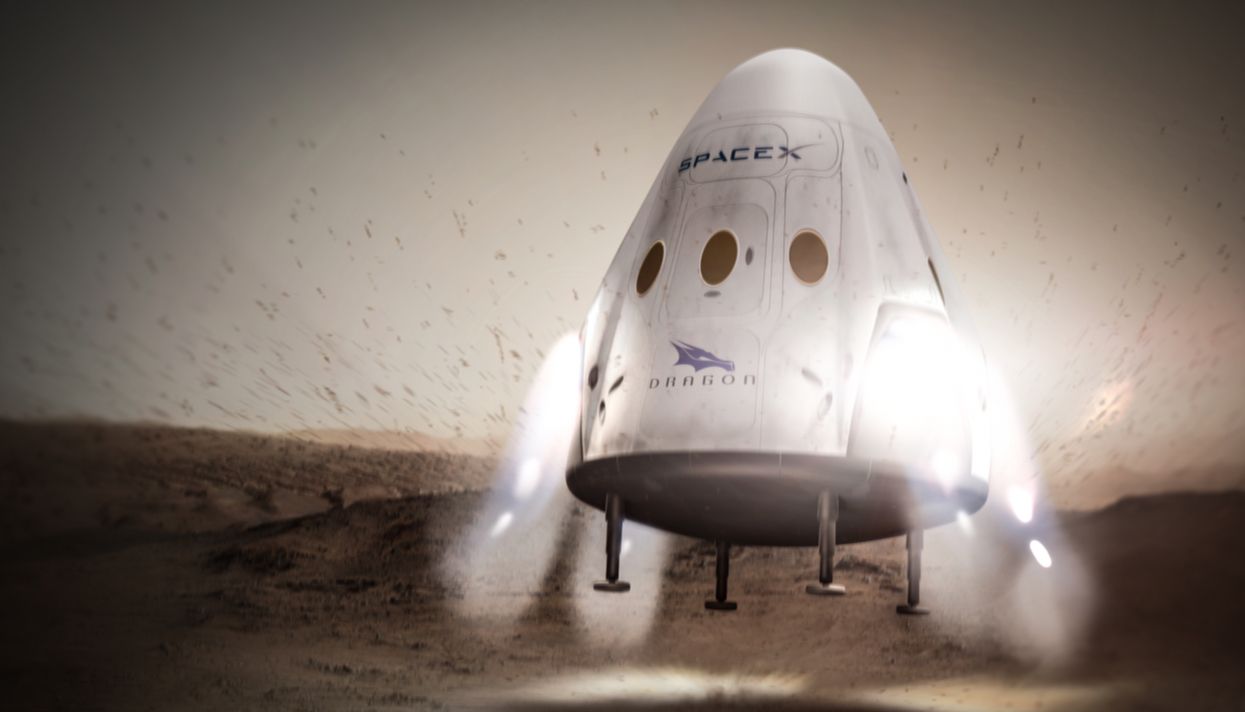
The founder of the private space company SpaceX, Ilon Musk, promised to launch a cargo ship to Mars in 2018. The project can be the first step on the way to the main dream of an entrepreneur - colonization of the planet closest to the land. Before the mask, spacecraft sat on Mars more than once, but so far a private space company was not within the power of this. "Medusa" tells what SpaceX plans are and what other missions to Mars are.
Spacex
Ilona Mask was originally created to realize the entrepreneur's dream of flights to Mars; Commercial launches and delivery of goods to the ISS for SpaceX are intermediate steps in solving an ambitious problem. Before delivering people to Mars, you need to create a fairly powerful missile, a launched module, work out the landing technology, build a spaceship and come up with many other technological solutions. Sending a cargo module to Mars is one of the initial stages of the Mars development program.
SpaceX promise to launch a rocket to Mars in May 2018, when the planet will be closest to the ground. All Mask companies constantly break the deadlines, but in this case, SpaceX is better to adhere to the plan - the next “window” for launch will appear only in 2020. The Red Dragon cargo module will have to remove the Falcon 9 Heavy heavy missile outside the Earth's orbit. In fact, these are three ordinary Falcon 9, connected together; There were no tests of this rocket yet. NASA has already stated that they will work on the spacecraft launching program to Mars with SpaceX. The main tasks of the mission are the study of Mars, the possible sending of the planet soil and checking the technology of landing people on the Martian surface.
NASA
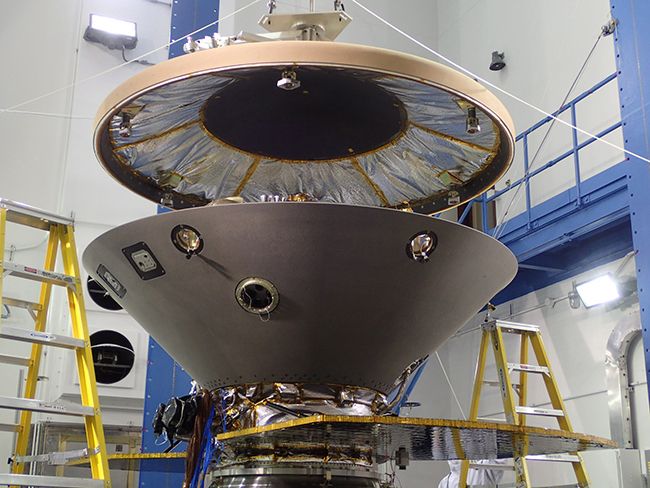
Almost all the main research programs of Mars were organized by NASA, including the most advanced Martian Rover Kuriositi. The plans of the American Space Agency have several missions to Mars at once. For example, right now in NASA there is a program for simulating the flight to Mars, in which six participants live in a special dome similar to a spaceship.
In 2018, it is planned to send an InSight module to Mars - a stationary station, which is intended for a geological study of the planet. Insight is expected to understand how Mars appeared. Initially, they were going to send it in March 2016, but due to a failure in the equipment, the launch was put off for two years until the next convenient “window”. In 2020, the launch of the new Martian Rover, similar to Kuriositi, was appointed. These and many other works (for example, the annual expedition of Scott Kelly and Mikhail Kornienko) are underway as part of a large Mars development program, which was launched in 1993 and involves studying the planet closest to the ground and preparing it for a person’s landing.
One of the key points of the Martian program NASA is the development of a missile capable of delivering large loads. The rocket is called Space Launch System, in October 2015, tests of its first stage were completed. The missile is supposed to be constantly improved until it can deliver a crew of six people to Mars, who will spend about two years there. According to the most optimistic calculations, before the 2030s, landing on Mars will not take place. They want to deliver the astronauts on Mars on the Orion spacecraft, the prototype of which has already been tested in NASA. Test piloted flights on Orion before the 2020s will not take place.
Ek and "Roscosmos"
The European Space Agency and Roscosmos are conducting a joint project to study Mars and the search for signs of life on a planet called Exomars. The project includes two stages - the launch of the orbital module, which took place on March 14, 2016, and the landing of Rover in 2019. Roscosmos is developing a descent module for Rover, the Markhod itself will produce ECA, but Russian devices will be installed on it.
The European Rover will become the first Martian apparatus, which with the participation of Russia will be planted on the surface of Mars. It is expected that it will work about seven months and will pass during this time four kilometers. The place of landing is the Martian plateau of Oxia, where, according to scientists, the most likely to detect signs of life.
A joint project with ECA is the first for Roscosmos for the study of distant planets since 2011, when the Fobos-Gront station was lost. In the modern history of Russia, there was another attempt to send the spacecraft to Mars-the Mars-96 project, also unsuccessful. The interplanetary station consisted of orbital and descended modules, as well as punching probes for the study of Martian soil. On November 16, 1996, the station collapsed in the Earth’s atmosphere five hours after the launch due to a failure in the accelerated block.
India, China and the UAE
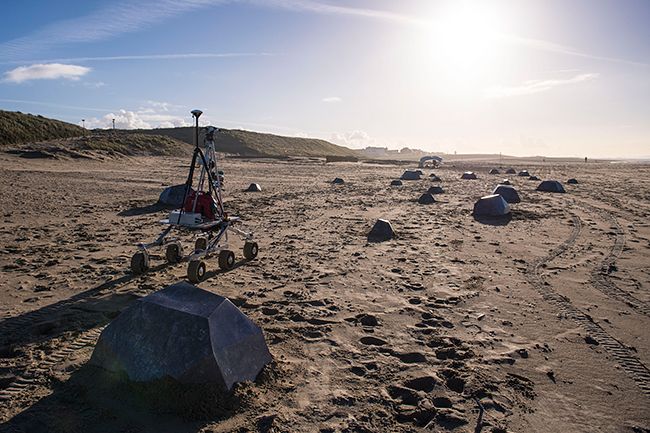
India has already launched one Mangalian research probe to Mars - after a nine -month journey in the fall of 2014, he entered the Martian orbit. Magnalian-2 is planned to be launched in 2018 or 2020, it will already consist of an orbital station and a descent module-probably with a rover. India is the first country to achieve Mars on the first attempt; The landing of a rover, albeit not as difficult as that of NASA, will be a great breakthrough for the Indian space program. Work on Mangalyan-2 is carried out in conjunction with the French Space Agency.
The United Arab Emirates also has its own program for the study of Mars. It is called Mars Hope and is being developed along with American universities. The space station will not land on Mars and will be limited only to the study of the atmosphere.
China is going to bring a sample of soil from Mars by the 2030s. The first step for this will be taken in 2020-this year the launch of a Chinese spacecraft with Rover to Mars was scheduled for this year. China was a partner of Russia in the Fobos-Gront program and developed an orbital module for it, but it was lost in 2011.