
Translated material
White devil
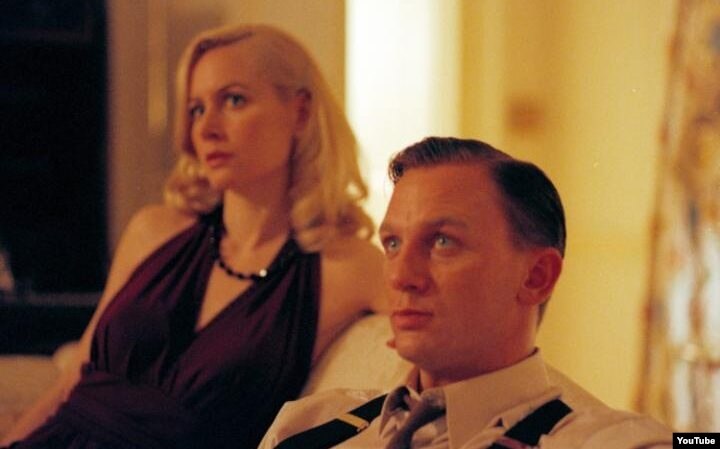
Brave women of the past
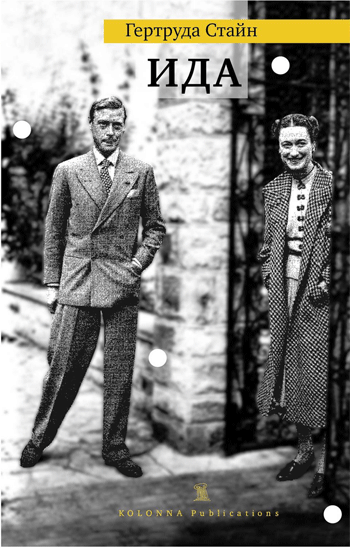
Gertrude Stein. Ida / Preface and translation of Ilya Bass. - Tver: Kolonna Publications. 2016.
In 1612, in London, the premiere of the tragedy of John Webster "White Devil" was held without special success. The author entrusted the free staging of the stormy life of the Venetian lady of Vittoria Korobona with euphemisms, meaning evil, disguised as a charming appearance. The outstanding playwright, doomed to stay in Shakespeare's shadow, Webster considered his main and best heroines creatures equal to men. They withstand the comparison even with the titanic heroes of Shakespeare and Marlo - those who tried to play on the "world strings" ("What is more in it - passion or greatness - I do not know?").
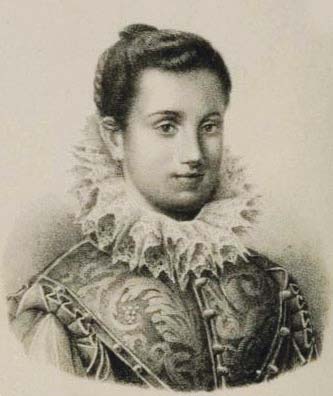
The heroines of Webster are trying to own not only their property and feelings, but - the main thing is to independently dispose of their fate. They do not lose their mental balance, are not prone to crimes and cruelty, familiar to the then stage, except in the order of self -defense. But the heroines, thanks to the sophisticated mind, feel in court like fish in water. Vittoria of Corobon requires legal proceedings not in Latin, but in Italian, so that all those present understand the essence of the crimes attributed to her. She defends herself from accusations of murder and debauchery independently, like George Dimitrov: “Judge for the fact that the prince fell in love with me! / Transparent to judge the river, / that a person is absent -minded and sad / falling into it ... Summarizing my sins, / you will find that dresses, beauty, cheerful morality, / to the feasts of a hardy stomach, only this / crime, which they blame.
And he meets his mortal hour with an open hare, overcoming pain and fear: "I am a living woman, / you won’t kill the imagination: look, / I, dying, do not shed tears. / I am pale - I have gone, but not fear."
The heroine of the poetic novel by Gertrude Stein "Ida" (1941) adheres to similar principles in life: "Do not cry when everyone is crying, that is what a person makes a king." However, the situation, surrounding the author, her heroes and prototypes, was very different from the bloody Italy composed by Machiavelli. The best than F.S. Fitzgerald, escorted by the interiors of that time, is difficult to find.
“In the London Claridge, they served strawberries on a golden dish ... Plaza’s metroater never refused to give five dollars of borrow or borrow Rolls-Royce ... On the doors of Hotel Du Parc, leaflets with the advice of a doctor, printed on dining maps, but people drank champagne in the living room.”
True, Gertrude Stein puts his heroine in a more shaky and indefinite atmosphere. I am surrounded by restless signs - spiders, cuckoo, goldfish, dwarfs and even a man in a hat with orange flowers; The disappearing elderly relatives and outstanding dogs (blind love stands out among them); Polite talkative officers and a fantom-twin sister. All these third -party and otherworldly circumstances do not interfere with the idea of professing such a life philosophy:
- If you wanted to, I have to get it.
- Umbrellas, dogs and husbands are very similar.
- You only need to talk with yourself.
- Make friends with all men.
- Politics are services.
- Never cry.
Not immediately, but over time, the hunter Ida finds the desired prize: "Andrew was the first and ordinary and stubborn." The lover was not one of those who noticed something, they noticed him. "If the war or something, Andrew could still walk every day." Afternoon walks and not binding conversations to nothing, in fact, filled his everyday life. In her attitude to her beloved husband, Ida adhered to the selfish nihilism of the banker anarchist from the story of F. Pessoa: "Andrew was difficult to please, so Ida did not please." Gertrude Styin insisted on the harmonious essence of this union: "Andrew changed the Hyda, and she became more and more, and Ida changed Andrew, and he became less Andrew, and they have always been together."
The flock did not hide that the famous story of Wallis Simpson and King Edward VIII, who renounced the British throne, served as the source of her inspiration. Wallis Warfield is the owner of wonderful purple eyes, the daughter of the Baltimore banker, who was married to an alcoholic pilot and a secular businessman, but possibly suffering from androgens syndrome. She lived in China for several years, but evil tongues claimed that in the development of the local dialect, Wallis did not advance further the phrase "Fight, give me champagne!".
In 1934, she met the heir to the British crown. David, as close acquaintances called the future King of Edward VIII, was a 40-year-old slender bachelor, an athlete, a front-line soldier, a dandy, tended to try on a flirty outfit of the prince-radical (met with "untouchable" in Bombay, replenished the mining cash desks of mutual assistance during the general strike of 1926). I note that these curtsies did not interfere with his meetings with Hitler and Friendship with Mosley and other British fascists, so Prime Minister Baldwin, perhaps, very insightfully insisted on the renunciation of the king in the fall of 1936. It is curious here to recall the prophecy of the socialist Keira Hardy; Here is an excerpt from his speech in the House of Commons, uttered in 1894 just on the occasion of the birth of the future scandalous king: “From the childhood, this boy will be surrounded by flatterers and will learn to look at himself as a higher being. A deep sword will be laid between him and the people. He will be sent on a trip around the world, and then rumors will spread about his morganatic marriage, and the result will be a result, to pay, to pay for which. will have a nation. "
The long-term family life of the Duke and Duchess of Windsor, who followed, was quite accurately predicted by Gertrude Stein in her novel: "Having brought everything in the desired order, she loved to be in one room, and so that he was in another and talk to him so, resting very well."
Accidentally falling into the elevator shaft, the beauty assured that she had lost taste, sense of smell and morality due to this incident
Perhaps it's time to move from prototypes to types and recall Vittoria Corobon again. Rather, that English woman who accidentally fell off the stairs in her imaginary palazzo. Ivlin VO, most likely, deliberately invented this tiny episode for his biography, in many ways of the final, heroine. We are talking about Virginia Troy from his military trilogy "Sword of Honor" (1952–1965). Consciously striving for the typicality of the character, he invented the writer of Everard Sprues and put him into the mouth of the woman who died during the bombing of London to the woman: "Virginia Troy was the last among the heroines of the past twenty years - sophisticated, exposed and convicted." Sprues recalls other literary beauties: Mayra Weivish, Bret Ashley, Iris Str.
Ivlin VO, as well as his hero, Gai Cruchbek, knew and understood these women who attracted universal attention without visible efforts, better than enthusiastic sprues. "As far as it was within human capabilities, Virginia had the ability not to feel shame, but at the same time she had a firm, innate sense of the appropriateness of certain acts ... For her, only this moment and the next five minutes had a matter."
But if you love it properly, then you do it not "because", but "despite". Without disputing the fact that Virginia is a hardy and unfortunate woman, Guy had no doubt that "having got into trouble, she suffers more than weak and sensitive." And the first husband of Virginia was eventually the last companion of her life.
Calling Virginia Troy "last", the literary Parvenu Spruez was mistaken. In 1993, having lost the balance in the bathroom of the nursing home, Margaret Campbell Swini, the Duchess of Argale, died. She lived a considerable condition and a long life, and what it was 82 years old!
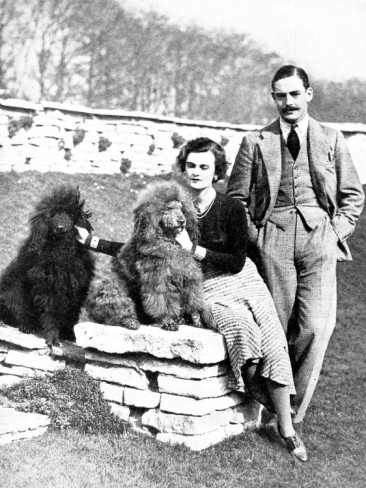
Fans of the young Scottish beauty Margaret Vigam were Prince Ali Khan, Baron von Brabus, artist David Niven, Count Warwick and Duke Kent. Her image was inspired by Porter’s stake, the vendham of Woodhaus and Cecil Baton, and in 1995 Thomas Ades wrote a wonderful opera about her. I was at this opera at the Malibra Theater, so chamber and comfortable that it seems more suitable cats than people. The director Pierre Luigi Pizzi transferred the action to luxurious raspberry apartments, and the duchess and her opponent were young, talented and attractive.
Margaret got married first to Charles Suini, also a military pilot, later - for Jena Campbell, the Duke of Argailsky. By accidentally falling into the elevator shaft, the beauty assured that she had lost taste, sense of smell and morality due to this incident.
When asked about the main thing in her life, she replied: "Podili, only poodles, and three pearl threads!
When the Duke started a divorce process in 1963, it appeared on it a list of 88 lovers of Margaret, including the Minister of War Duncan Sandis, Douglas Ferbenks-Ml., Members of the royal surname, and the most important proof of the Polaroid pictures of oral sex became only in the threads of the pend ADES transferred the scene to the score).
Perhaps Virginia Troy showed foresight, remaining in 1944 in a dangerous London, and Ivlin Vu was a humane talent, sending a rocket to her home. Sadly survive your "strength and glory." In the finale of the opera “Paul the face” between the heroine and the hotel manager, such a dialogue occurs: “Your time has passed. You have nothing left. Everything is spent, Madame. And you must leave. - I was young. I was rich. I was sensual. I wrote songs about me.”
The Duchess of Windsore in the last decade of her life suffered from a loss of memory and lost speech. The Duchess of Argaila died in poverty and oblivion; When asked about the main thing in her life, she replied: "Podili, only poodles, and three pearl threads!" I believe that Gertrude Stein would have agreed, at least, with poodles.