
Translated material
Duke Jazz from Washington
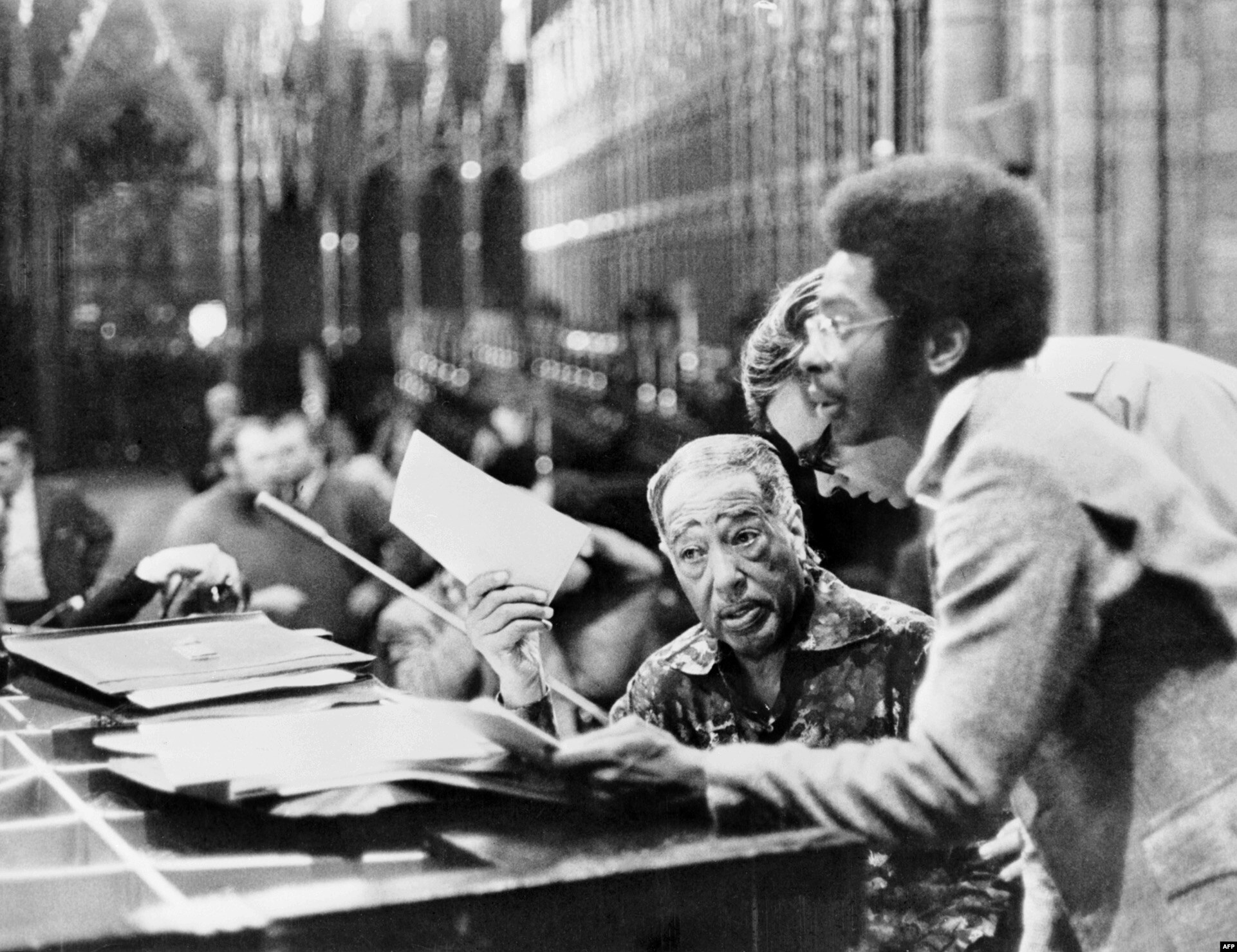
Harlem clubs were his launching pad. He wanted to be a duke and he was him. In life, in music and on the international stage. His name was Duke Ellington!
We left him at the foot of Olympus last week. Muse did their job and he, Duke Ellington, now where it is registered at the very top. But a year ago, we left him in Washington, when he, an elegant super -measures, with wonderful manners, with darkness and an almost aristocratic reprimand, did not finish the last class of the school, but took up advertising signs and fell in love with the neighbor's girl, Edna Thompson. It was 1917 in the yard, the same when the heroine of the past program and the future vocalist of many concerts of Duke - Ella Fitzgerald was born.
It is hardly worth reminding, but this is our ritual that you are listening to the weekly “jazz time” on the waves of “freedom” and from our website www.svoboda.org . The microphone in Paris Dmitry Savitsky.
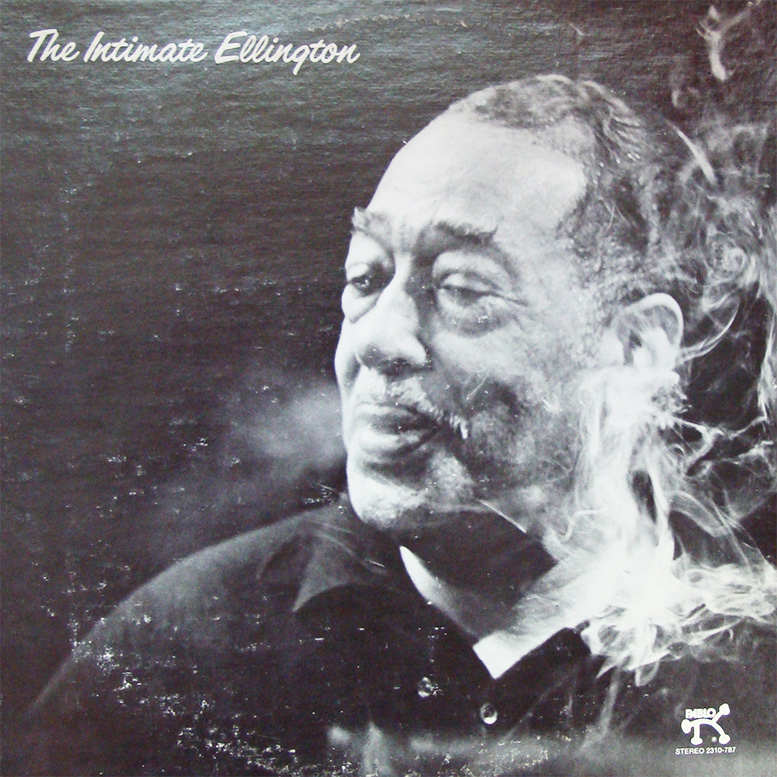
Duke Ellington - Edward The Second - 5:44 (Duke Ellington - The Intimate Ellington - Pablo)
“Edward The Second”, “Edward II” - the play by Edward Kennedy Ellington, who self -proclaimed himself the Duke, Duke. He was Eduard the Second. The first was his father - James Edward.
Total: Duke - piano; Joe Banjamin - double bass and Rurfes Jones - drums. January 1, 1971. New York.
Oddly enough, music, jazz, were not at all a passion or even the most important hobby of Ellington. He wanted to become an artist, but for now he worked as a messenger for the Washington Ministry of Navy and opened an institution to create street signs and posters. That is, so far there were only posters and signs with painting. But he also worked as a pianist at private parties and quickly realized that the guys who call him to play at holidays or parties take $ 90 to themselves, and they leave him 10. Duke instantly realized that all a hundred, or even more, he could earn money if he was an ad in local newspapers. What he did and now he himself sent pianists and small combo for parties. The affairs of the recent schoolboy went uphill. At the same time, one of his posters won a prize and a scholarship for African Americans at the Pratt Institute in Brooklyn, New York. It was an unexpected success!
But Duke did not go anywhere. Firstly, he did not have a school certificate; Secondly, his friend Edna was pregnant.
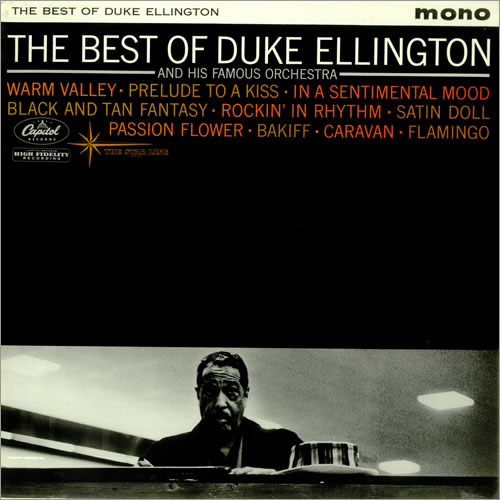
Duke Ellington - Caravan - 4:30 (Duke Ellington - The Best of Duke Ellington - Capitol)
“Caravan”, “Caravan” - Juan Tizol and Duke Ellington. Duke was one of the first jazzmen who stubbornly introduced into the atmosphere “Coton Club”, first of all, the eastern theme. Eastern, as he imagined her. And African, again, as he imagined Africa. But it was rather a Hollywood approach to the “Sinbad-More” or “Baghdad thief”. The real east appeared in Jazz much later - with Jozef Latif, Charlie Mingus, Eric Dolfi, John Koltrane, Roland Kirk and even later with Rabbi Abu Halil, Abdula Ebrahim and Anat Cohen. Duke had an imaginary jazz-folk and the sand of the desert was imported from the beaches of California ...
The neighbor's girl received a richer musical education and she taught Duke to read a note. On July 2, 1918, Edna and Duke signed, and on March 11, 1919 their son was born, the future trumpeter mayorser Ellington.
The birth of his son made Duke forget about painting. The family had to be fed, and the income mainly went from the organization of holidays and parties, from jazz, under which they danced. It is worth clarifying: in those pre -war years and the first military dances were in extraordinary fashion and Duke's affairs went so well that he rented a house on Shermen Avenue and bought a car. But the main reason for the departure to the music was the simple and sad fact that for young gifted African Americans, most paths in society were closed. Show business and jazz, however, were monopolized by them. In those years, jazz, just, was closed by practical, inaccessible to white musicians.
Step by step, Duke gathered his own orchestra. Many of his recruits will remain with him for a long time. Some were not necessarily talented musicians. Others were already stars. For example, clarinetist and saxophonist from New Orleans - Barney Bigard. He was Creole roots. He played in the Duke orchestra - 15 years old.
You listen to your weekly, swinging, in every sense historical - “Jazz Time”. On short and medium -sized “freedoms” and from our site www.svoboda.org . The microphone in Lutetia has your ds.
Duke Ellington was born on April 29, 1899, of course, in Washington, and in New York, and at festivals he played the classics of the 20s: James Pi Jones and WC Handy. And Handy for all jazzfans is the same blues from the town of St. Louis:
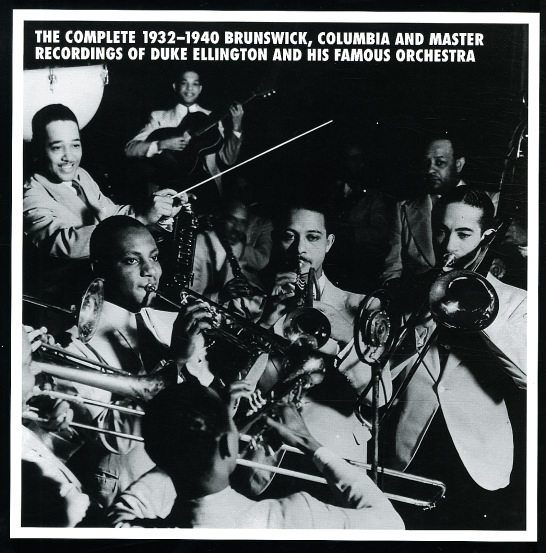
Duke Ellington & Orchestra - St. Louis Blues - 4:25 (Duke Ellington & Orchestra - Complete Brunswick Recordings - Columbia)
"St. Louis Blues, "I hate to watch the sun sits down; I hate to ripen this evening sun falling beyond the horizon, because my baby left the city! If tomorrow I will feel the same as today; If tomorrow I will feel as disgusting as today, I will fill the trunk to the limit and rinse, where I look ... ”... Neither less, nor much great -grandfather of Kroiners - Bing Crosby! Kuti Williams, Arthur Uretsel, Freddy Jenkins - pipes; Joe Nanton and Juan Tizol - thrombones; Barney Bigard-Clarinet and Tenor Sax; Johnny Hodges-clarinet and alt-saxophone; Harry Barney-Bariton-Sax; Duke Ellington - Piano and Leader; FRAD GAI - BANGO; Wellman Brod - double bass and Sonny Grire - drums. New York, February 11, 1932.
The only decent remastering of that era that fell into my hands!
Ellington, despite the undoubted success of his newborn orchestra in Washington, made the only right decision, geographically shifted to New York and became part of the Harlem Renaissance movement. The young musicians of the orchestra met the veteran of Jazz pianist Straida Willy Lion Smis, who helped them climb the stage and supplied money. In June 1923, after a performance in Atlantic City, New Jersey, the orchestra got the opportunity to play Exclusive Club in Harlem. The chain reached out - in September, Ellington and his orchestra received a four -year contract in the club on Broadway. But Ellington was not a leader at that moment. He was Elmer Snowden - master Bango. By 1924, the orchestra developed its own sound - the merit of arrangements and compositions of Ellington. The name for jazz -band was found - “Washington” - and Irving Mills, a music publisher and producer, took up the orchestra’s affairs for 45%. That's where his possession of the share of Ellington's compositions. But in those harsh times, it was still success.
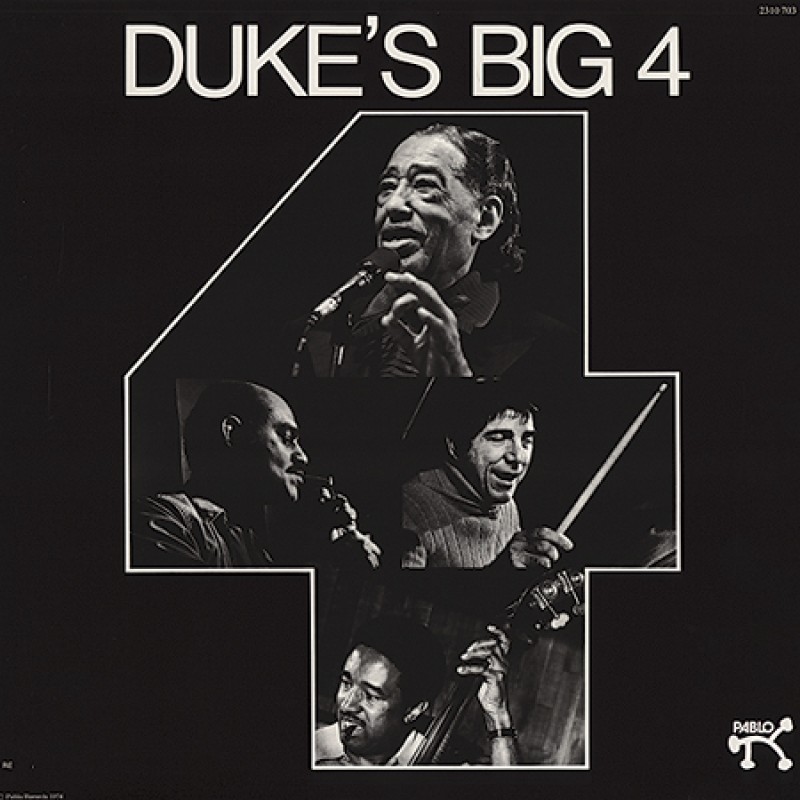
Duke Ellington Quartet - The Blues - 5:28 (Duke Ellington - Duke's Big 4 - Pablo)
“The Blues” Duke Ellington, he is also the piano and he is the leader of the quartet. Joe Pass is a guitar; Rei Brown - double bass and Louis Belson - drums. January 8, 1973, Los Angeles, California.
Duke was not a great pianist. He was not the new James Pi Jones, Fats Waller, Earl Hinse or Bad Powel. This is noticeable in small forms. Duke's talent was different. Without becoming an artist, he drew sound, and for this they needed large canvases. And there was not only color, but there was a temperature - its jumps from fever to frost on nervous soil. Duke and turned around really only in a large format.
In 1931, Irving Mills concluded a contract with the Cotton Club for the “Washington”, which did not prevent the Duke orchestra from playing in the “Palace” and in the paramount and even voice the Comedy of Melvin “Checkk and Double Check”, “Check and Reveal ...” in Hollywood. In 1933, the orchestra first performed in London and Paris. Duke traveled around the world until his death. He played in the simplest popular Dansings, in luxurious and closed for not his clubs, in concert halls, at festivals, for fanatics jazz and for the powers of this world.
In headphones and from a smartphone, on a grandiose stereo for friends, on a simple radio of Riga blood or from a home -made, like a refrigerator or a computer double - you listen to the weekly “jazz time”; On short and medium -sized “freedoms” and from our site www.svoboda.org . The microphone in the town on the hay is your DS.
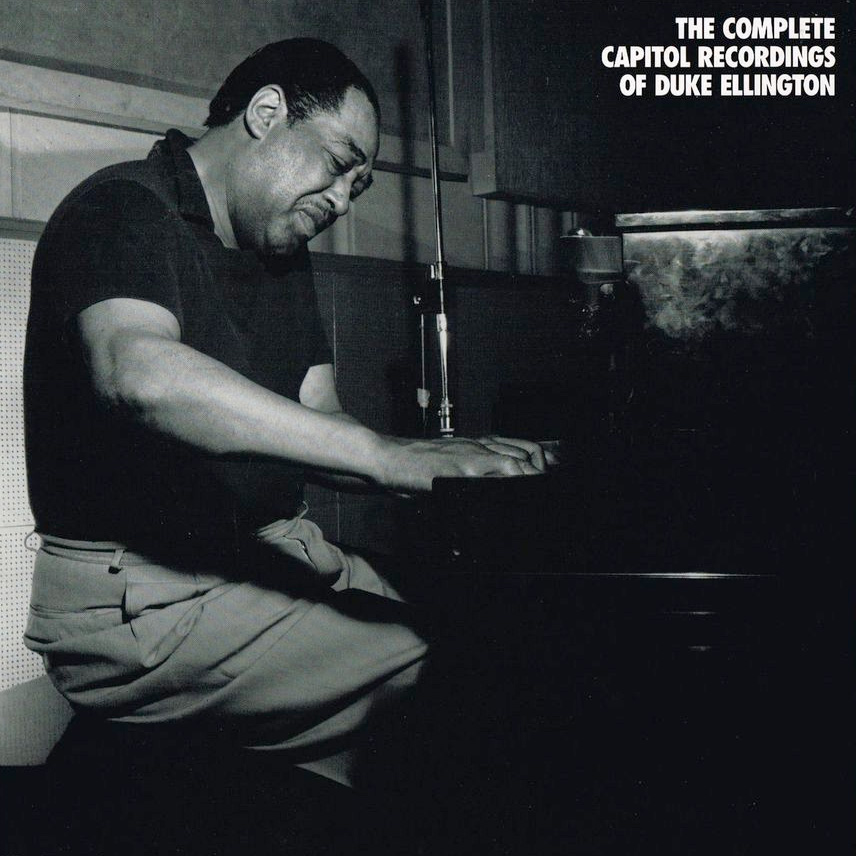
Duke Ellington & Orchestra - Black and Tan Fantasy - 5:09 (Duke Ellington - The Complete Capitol Recordings)
"Black and Tan Fantasy" - Duke Ellington and Trubach Baber Miley. Ellington orchestra, December 29, 1953, city of winds and gangsters, Chicago.
The work of Duke, and by Duke is meant the orchestra of the most diverse compositions, can be divided into four large periods. The first (1924 - 1939) “The Jungle period”, but meant not only the African American roots of jazzmen, but also the jungle Harlem, his slums, ghetto. This area had another name "Er-Controlled Jungle." The sound of the orchestra characteristic of this period was a hoarse with cracks; Mostly thrombons and pipes with surdings. There was also a powerful howl. These are just such plays as “Black and Tan Fantasy”, “Creole Love Call”, “It don Mean a Thing”, “Sophisticated Lady”, “Prelude to a Kiss” and many others.
The second, lasting from 1939 to 1939 to 1945, was the period of the double of Duke, the pianist, composer and arranger-Billy Streikhorn, smuggler Jimmy Blanton and tenor Saxophonist Ben Uebster. They wrote music and led the orchestra. The youngest, Billy Streikhorn, dragged the orchestra to the swing, to where Gudman, LansEford, Dorsi and Basei were already registered. This period is characterized by reefs, the rhythm is softer, and Blanton and Webster were new popular soloists. And then “Cotton Tail”, “Koko”, “Take the A Train” and “Black, Brown & Beige” were recorded.
The third period is a period of exoticism and impressionism. Some jungle plays pop up again, but in general the orchestra sounds more relaxed and languid. This is a period of compositions such as “Tattooed Bride”, “Lady Lavender fog”, “Endless pipe” and several semes, for example, “Suite of the distant south” ...
The fourth period-1955-1974. Ellington is busy updating both the orchestra and sound. This is the synthesis of past periods and the search for new acquaintances. The "new" Duke was triumphantly adopted at the Newport festival of 56. He more often began to solo with his orchestra, but also began to record in the quartets, trio and in duets.
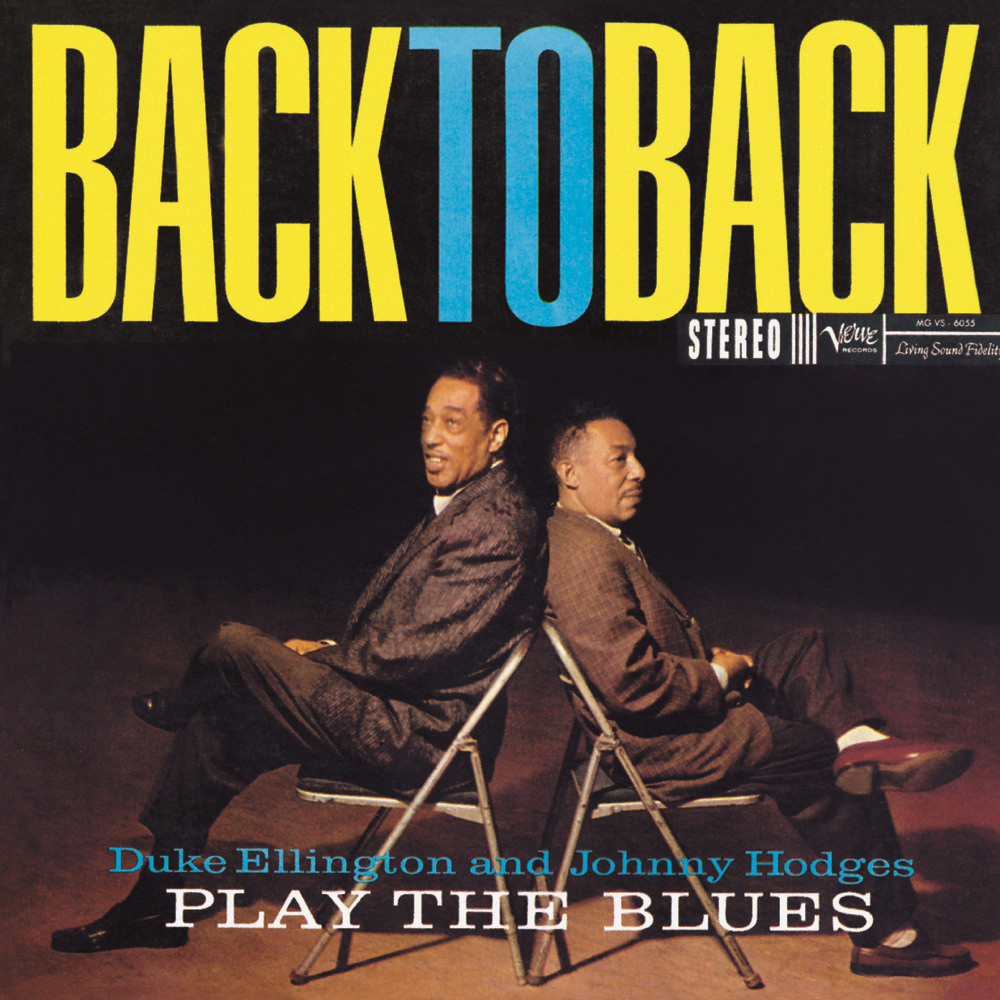
Duke Ellington & Johnny Hodges - Basin Street Blues - 8:05 (Duke Ellington & Johnny Hodges - Back to Back - Verve)
Basin Street Blues is a 1928 composition of Spencer Williams, famous for Satchmo. Harry Edison is a pipe; Johnny Hodges-alt-saxophone; Duke - piano and leader; Leslie Spann - guitar; Sam Jones - Miluns and Joe Jones - drums. February 20, 1959, New York.
“... Duke Ellington,” Bill Crowe wrote, “was a complex, charming person who still discards a giant shadow to the whole world of music. Dozens of books were written about him, including his own autobiography, but still he remains elusive, inexplicable. He retained his nickname “Duke”, who has appeared when he was practically a boy, and began to create an ideal image of elegance, courteousness - with a slight raid of theatricality. And he worked on this image, sophisticated and refined it until the end of his days. A lover of colorful (sometimes to pathetic) phrases and romantic gestures, the count constantly wove the soft chain mail of self -confidence in his abilities and talent and at the same time funded by countless prejudices and Bziks. ”
He forbade eating in his artistic peanut; always and everywhere closed the windows, windows and doors; He did not open telegrams before the concert and left them unopened in the club; It was almost impossible to force him to sit on the plane; If his jacket or blazer was torn off the button, he immediately shot him and no longer wore it, most often he gave them to someone from the orchestra; No one had the right to appear on the stage in something yellow-from socks to a tie. There could not be thirteen musicians in the orchestra. He adored women and often said: “I can tell you that you are an angel!” I see a reflection of your halo on the ceiling. He drove a container made to order shoes. And he was an incredible and exquisite glutton.
I reduced 99% of its quirks.
The finish line of your weekly jazz time. Waves "Freedom" and our site www.svoboda.org . Outside the window of your DS, clean, washed with rains, green to the impossibility of Paris!
Here is the last Duke play for today: "The new world is coming!" 1945 entry.
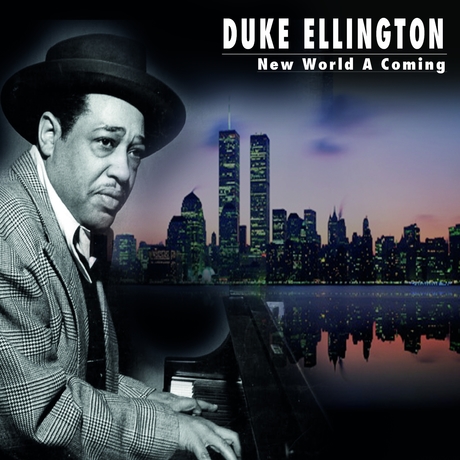
Duke Ellington - New World a 'Comin' - 12:14 (Duke Ellington - Anniversary - Pianist - History)
“New World a 'Comin'”, “The New World is coming”, the spelling of Duke himself, the author of the composition. The composition is in many ways with the "lunar serenade" Glenn Miller. But suppose that this was done on purpose. Like pre -war swing (1939) and almost post -war. Duke Ellington is a piano and his orchestra. The record was made on June 16, 1945. That is, the second world was almost finished.
Like the “jazz time” - the last in this April. Sound engineer - Alexander Arkadyev, author and presenter - Dmitry Savitsky. Until May and his miracles! All you are blessings, Chao, Bai-Bay!