
Translated material
Cardboard and two lenses
Why virtual reality even in the most primitive performance is very cool
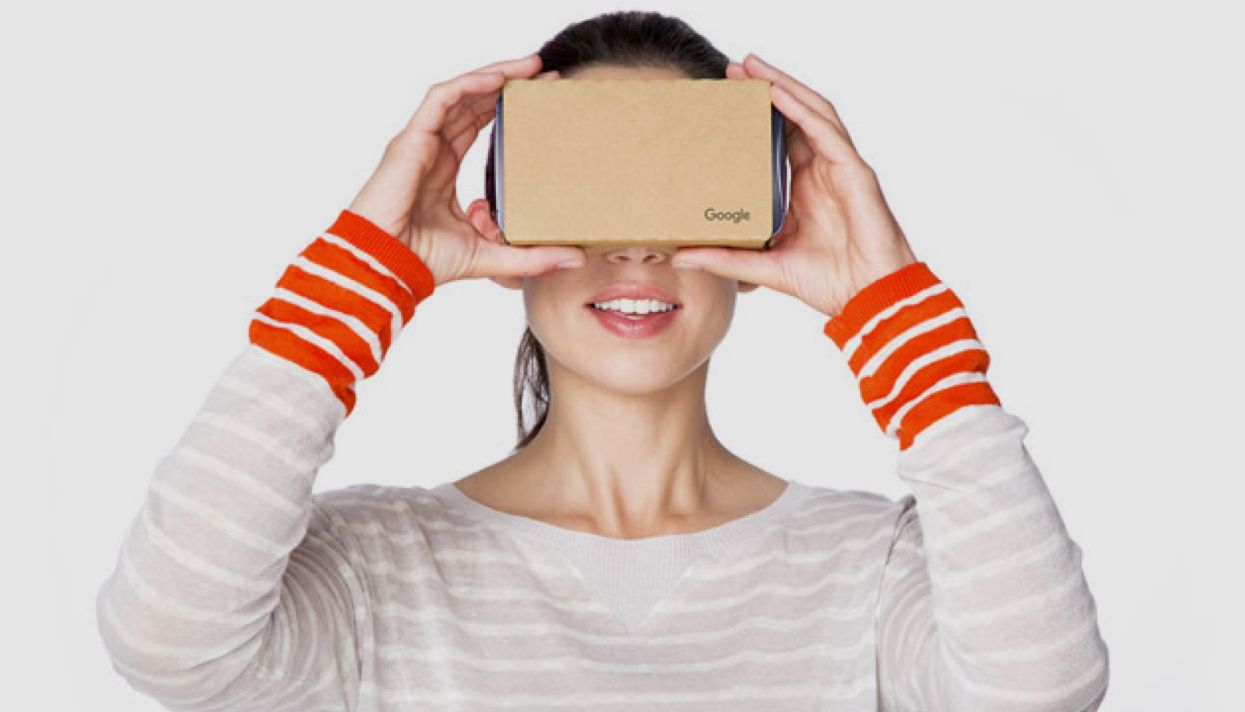
“Real” virtual reality glasses - Oculus Rift and HTC Vive - are just a month as open, but now it is clear that they (and similar devices from other manufacturers) will be the main objects of attention in the next couple of years. Whether they will conquer the mass market is not yet clear, but the developers will do everything possible - from reducing prices to the release of more and more advanced games. Medusa journalist Sultan Suleimanov tested the most primitive thing that is in the world of virtual reality - Google Cardboard glasses, and also looked at what the owners of more advanced devices offer.
The main idea of the Google Cardboard, which has existed for almost two years, is openness. The “helmet” of virtual reality can be made at home, for this you need to cut out of cardboard according to the schemes published on the network and find somewhere a couple of suitable lenses. A smartphone inserted into the box is responsible for the picture (you can take almost any modern model): it displays the image and sound, and also monitors the movement of the head, rotating the camera.
For those who do not want to collect a helmet on their own, Google and its partners released dozens of inexpensive models. Another cheap options can be found on Chinese online stores. Moreover, often they are made not from unreliable cardboard, but cast from plastic and sit comfortably on the head. With the help of one of these “Chinese Cardboard” I got acquainted with the current state of primitive virtual reality.
The first and most simple thing that is available to the owner of such glasses is to watch the 360-degree video “The first person”. Panoramic videos themselves have long been working in a web and smartphones. “Watch on the sides” in them can be using a mouse cursor or phone movements. In the Cardboard, the camera is controlled by the movements of the head, and this leaves a completely different impression.
Take, for example, a recent video from SpaceX with a landing of the first stage of the Falcon 9 rocket on a floating platform. If you look in the helmet, then the first 20 seconds you need to sit, lifting your head high up and peering into the luminous point in the sky.
This sensation-when you are forced to physically lift your head up, and not just twist it left and right-at first enough with more than to be amazed at the possibilities of virtual reality. For those who prefer art, there is a panoramic video from the Sydney Opera Theater.
The effect of immersion in the space in the video can be used not only for entertainment purposes. Nonny de la Pep, which is called one of the leading pioneers in the field of virtual reality, convincingly proved that this is also a good tool for journalists.
De La Peni with the help of 3D models recreated several dramatic scenes that took place in real life-for example, a missile blow to the Syrian city of Aleppo. The user, wearing virtual reality glasses, is on the city street. After a few moments, an explosion occurs, everything envelops smoke, the bodies are on the sidewalks. All this time, the user hears a real audio recording made in this place at the time of a missile blow.
(The video below has Russian subtitles)
What Nonni de la Pep is designed for more advanced virtual reality glasses that follow the user's movements. But for owners of Cardboard there are examples of journalistic work.
A fresh and high -quality example is a 6 × 9 project from The Guardian, placing a user in a single prison chamber.
To fully try 6 × 9, it’s not enough just a video - you need to install a separate application on a smartphone. There are a lot of similar applications for Cardboard on Android (though not all of them are worthy of attention).
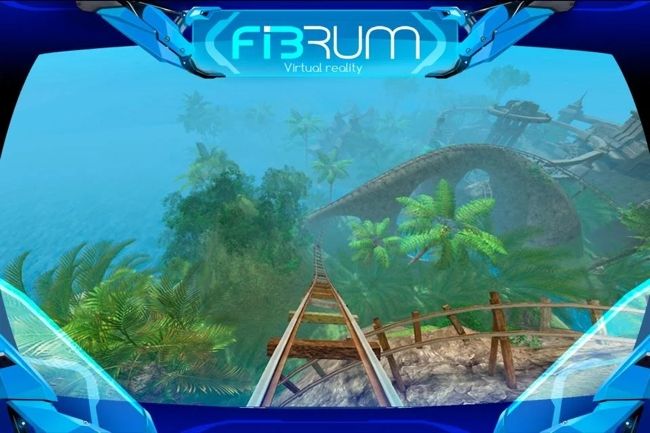
The classic demonstration of the possibilities of virtual reality is “American races”. I tried this application , and it turned out to be not as exciting as it seemed: from a trip to virtual slides, it is more sick of the adrenaline is thrown away.
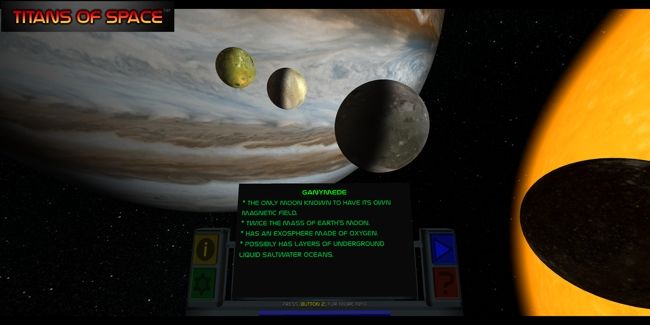
This solar system simulator turned out to be much more impressive. First, a large earth appears on the screen, and behind it is a huge sun, which can hardly be seen entirely.
With games under the Cardboard is more difficult (the head is either spinning from them, or the control is too uncomfortable - because for aiming you need to carefully twist your head), but there is one extremely exciting: Crossy VR . This is a RIMAK of a classic game in which you need to run around a multi -band highway - only now from the first person.
The most striking Cardboard was not games and not journalistic projects, but a kind of social network in VTIME virtual reality. In the application, you first need to create your avatar, and then communicate with other users (it can be both your friends and strangers). Communication occurs with the help of a voice, and that there is a topic for conversation, avatars can move to different locations (in my case it was a sea bottom).
Probably, in words this does not sound exciting enough, but in practice the opportunity to discuss the same virtual world in which you find yourself is really impressive with other people.
Cardboard is the most affordable and most primitive implementation of virtual reality. The more expensive and perfect HTC Vive and Oculus Rift increase significantly by immersion due to tracking the player’s actions (in particular, controllers allow “bring” their hands to the virtual world) and a qualitative picture. With the help of such devices, you can become climbing:
Drive a racing car, holding a controller in your hands:
Or to be in a ghost house and scream with fear, clutching a virtual flashlight in trembling hands:
Finally, the immersion effect that virtual reality glasses give can be used as absurd as possible - playing the employee simulator. At boring work.
Sultan Suleimanov
Riga