
Translated material
Teachers of all universities, unite!

On the legal consciousness of citizens, the collective agreement and the right to work
At Russian universities, teachers continue to defend their rights, insisting on state regulation of relations with the university administration. However, the reaction of the Ministry of Education, formalized in the draft order, which allows employers to unilaterally increase the official duties of teachers and the time of stay in the walls of the educational institution, provoked new acts of protest.
The last picket, when representatives of the University Solidarity union were to transfer photo reports from the flash mobs to the Ministry of Education, in which teachers of several dozen universities took part, was interrupted by police officers.
Reducing financing and strengthening the vertical of power leads to a reduction in academic freedoms and democratic procedures, which could be discussed conditionally. From the very foundation, the Russian University was an institution of state, imperial, and if the Humboldov model (close connection of training and research work) followed, then he never claimed independence. Rather, on the contrary, he always strove under the wing of the state, with the exception of the period of restructuring, which is understandable, since the state ensured stable financing.
True, state universities willingly used a third -party opportunity to earn extra money - on paid students. This led to the fact that there are practically no strong non -state universities that can compete with the country. At first, natural selection was replaced by breeding when federal and national universities were created, then mergers and twilights, an ambitious project "5-100", now the creation of "supporting" universities in the regions, and, as a result, the destruction of the internal balance of educational institutions.
The teachers were not ready for the new reality. An increase in the load, a decrease in salaries, a reduction in bets and the introduction of annual contracts aroused some protest activity. However, the time of issues has passed, and the university administration can act at their discretion.
Openly confronting the authorities, mainly strong teachers are being decided, and it is they who are fired in the first place. The easiest way is the collective upholding of their rights, oddly enough, in a university environment does not take root well. In St. Petersburg, for example, where quite a few unauthorized events are taking place and a strong union of docks is working, even the interuniversity organization of University Solidarity was not able to create, although this is the second Russian city in the number of universities.
How teachers can defend their right to work, Radio Liberty was told by the co-chair of the University Solidarity union Pavel Kudyukin and the head of the legal direction of the Center for Social and Labor Rights Sergey Saurin .

Pavel Kudyukin , co -chair of the University Solidarity trade union:
- The most actively defend their rights, judging by the university solidarity union members, successful teachers who are less afraid of pressure from the administration, because they believe that they will be in demand in another place if they are fired. This happens not only in higher education, as a rule, strong workers go to new "combat" trade unions. And a weak worker will rather negotiate with the employer.
Quite often, they begin to look for help in the trade union when, as they say, it has been. For example, reductions went, and people realized that the old trade union did not protect them, and in Moscow, they say, there is "university solidarity", it will help. Somewhere people come out of general reasons and begin to build an organization in advance. A number of our primates arose on the basis of long -existing initiative groups. Say, at Moscow State University there was just such a group, moreover, complex - teachers, students, graduate students - and it became the basis for the origin of the primary organization of the trade union. A similar situation has developed at the RSUSU.
In universities, democratic procedures are completely turned to their opposite
The trade union became in demand because in universities democratic procedures are completely turned to their opposite. An excellent procedure - a competition, makes it possible to select the best applicants for a professor or associate professor. But in fact, the mechanism of competitive selection turns into a powerful instrument of pressure on teachers. The administration receives a tool for manipulation and often encounters colleagues among themselves, as it was at Kazan Federal University a year ago. Or they say that they will not declare a competition for such a position for the next term, and then the teacher is automatically out of work. On the basis of what is not announced? It seems that the position is not eliminated, there is no reduction.
Now more and more often they are manipulated with the terms of contracts following the results of the competition. Traditionally, having passed the competition, a person worked for 5 years. Now in many universities people are taken for 1 year and even for 10 months to save on vacation pay. In general, a annual contract at the university is a rather ridiculous thing, because a person then can not plan anything. And scientific work requires a fairly distant planning horizon. Because a good teacher should still be a researcher. And we are demanded that we be published in prestigious magazines, participate in conferences, and even preferably in international ones, but at the same time create the conditions of instability when you do not know where you will find yourself in the next school year.
Our employment contracts are an act of unconditional surrender of the employee to the employer
In addition, when you offer the management, and let's fix all the rights and obligations on paper - well, they reply that you are breeding all formalism here, why will we not agree or something?! And until some point we agree. But, when it comes to conflicts, it all turns against the employee. Or vice versa, some conditions in the employment contract are spelled out, quite ridiculous, you poke your finger there-and this is where?! Yes, do not pay attention, they say, formalistic, does not matter. I somehow tried to ask the question: "Do you offer me a standard employment contract. And I can change it? This item is contrary to the law, I must remove it. But I would like to prescribe in more detail." No, no, sign in the form as you are offered, this is a standard form. Therefore, labor contracts with us are not contracts, in fact, but an act of unconditional surrender of the employee to the employer.
And, since they begin to treat us simply as ordinary employees and, moreover, as a consumable, we can only follow the path of normal protection of our rights and interests through clear compliance with legal norms and through self -defense. And this can be done through a trade union organization that just transfers our interests into the right, having fixed them, say, in the same collective agreement or in standard forms of an individual contract.
Union of union of university in the United States is one of the fastest growing
Here, of course, can be discussed about the change of the university model as such. If the Russian University arose as a kind of European University, primarily German, now they are trying to Americanize it, but in a different socio-economic situation. In the United States, most universities of the Major League are private universities, while in Russia leading universities are state -owned, but they are trying to rebuild them all the same according to the American model. And there, by the way, the situation is also not easy. There is an elite group of professors at unlimited agreements, although this layer is constantly reduced. And most of the teachers are people with very unstable employment, among whom trade union activities are now actively developing. The union of union teachers in the United States is today one of the fastest growing trade unions.
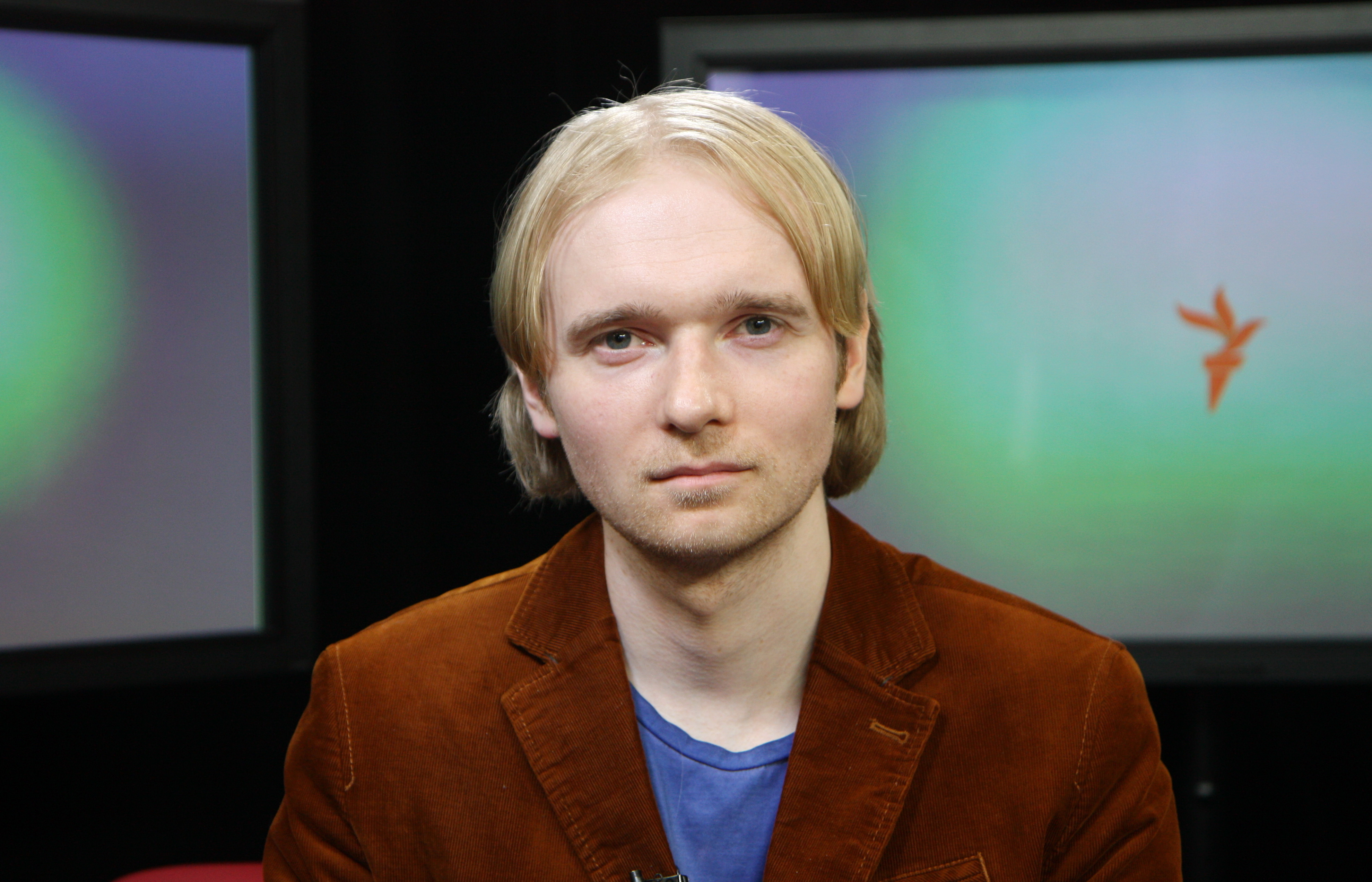
Sergey Saurin , head of the legal direction of the Center for Social and Labor Rights:
- Probably the most correct for the teaching staff is the presence of a collective agreement that regulates all vital issues. The initiator of the adoption of such an agreement may be a team of employees. But there are certain subtleties. The procedure for adopting a collective agreement is directly described in the current legislation and formally even create a trade union for the adoption of a collective agreement is not necessary. The team can simply hold a general meeting of the team, choose representatives who will perform on behalf of this team. If there are more than half of the collective negotiations, for the signing of a collective agreement, they will join the commission on the development of such a collective agreement and will continue to go according to the procedure in order to sign such a collective agreement with representatives of the employer.
While there is no conflict, no one will even look at the right
But the difficulty here is that teachers come to the educational institution in order to engage in exclusively professional activities. They meet there, conduct classes, they may have meetings of the department, but, in addition, they are still engaged in scientific, methodological activities, sometimes outside the walls of the educational institution. And in order to unite, they need some kind of unity factor, for example, a trade union. And where there is a trade union, the prospects for the adoption of a collective agreement are much higher than where there is no trade union.
There is, of course, a human understanding of the proper - how it should occur, and there is legislative regulation in which everything is clearly fixed. We have the right to apply in the case when a conflict arises. While there is no conflict, no one will even look at the right. No one is interested in issued a person’s business trip, he did not issue. And even if the procedure is formally broken, this person will not be punished. And a completely different situation when the conflict arose.
Labor law very clearly regulates all the procedures that must comply with both parties. And if one of the parties does not comply with a procedure, the other side can always take the opportunity to catch on it. In fact, this is often a matter of negotiation. There are success stories of individual teachers whom they really want to see at this university, and are ready to negotiate with them, are ready to change typical forms of contracts, refuse to hire for a year and conclude contracts for an indefinite period. If a person is treated as a one who can be replaced, or he is an undesirable person, as is often the case in the event of a conflict, then naturally, no one will negotiate with him. In order to reduce such situations to zero, special legal regulation is necessary, moreover, very detailed, taking into account the specifics of the work of university teachers. To date, there is no such regulation.
Any law enforcement protection is a judicial, through the labor inspection, through the prosecutor's office, does not remove the conflict
To the question of the legal awareness of citizens. Until now, it has been accepted, from the time of the Soviet Union, when the employer was the state, to trust the employer, because the state will not deceive. The state will not try to catch me on something. As agreed, it will be so. In our case, the employer, especially if it is an employer who has a tooth on the teacher, will definitely try to catch. Therefore, every time the teacher has at least the slightest doubt that something is wrong, it means that something is wrong, and you must definitely try to eliminate it, bring it into line with reality. Suppose that if the teacher does not have scientific activity in the job description, this means that if it comes to the court, that the employer, that is, the head of the institution, and then the Department, does not need these entities for this employee to carry out the relevant work. He can do this in his free time, and during working hours if you please sit and look at the monitor, let's say.
There are two different levels of protection of their rights. The very first, basic level - individual - this is an appeal to the labor inspectorate, appeal to the prosecutor’s office, to the court, if there are documents that prove your case. Such a level of protection, on the one hand, is effective and even, I would say, is effective in the short term. Because here and now you can recover something from the employer, oblige him to do something specific, etc. Moreover, this will be provided with the power of the state.
The second level is the level of collective protection. Why is it needed? Firstly, there are situations that cannot be solved in court in principle. And at the collective level, you can resolve so that the interest of the employees is observed.
In addition, any law enforcement protection is judicial or non -judicial, through the labor inspection, through the prosecutor’s office does not remove the conflict. Moreover, she often, on the contrary, incites this conflict additionally. The employee was fired, replaced, they did something with him. He went to court, defended his rights. Amazing. Restored at work. But the employer still does not want to see him there. And in order to remove this conflict, it is necessary either to remove specific officials managing this educational institution, which is not very likely to get rid of the employee.
And the collective level of protection allows you to somehow level the cause of the conflict. That is, either by negotiations to reach a consensus and come to some mutually beneficial version of the coexistence of the team of workers and leadership, or to put on the leadership of the power of a large team. Because the team is just the same people who perform the main function of the institution. If these people say that, no, we are not ready to work with you under such conditions, then the institution will cease to function and the leadership, as they say, falls off on its own.