
Translated material
"Yeltsin hated me"
Televiations: Sergey Lomakin. Interview of the former leading program "Time"
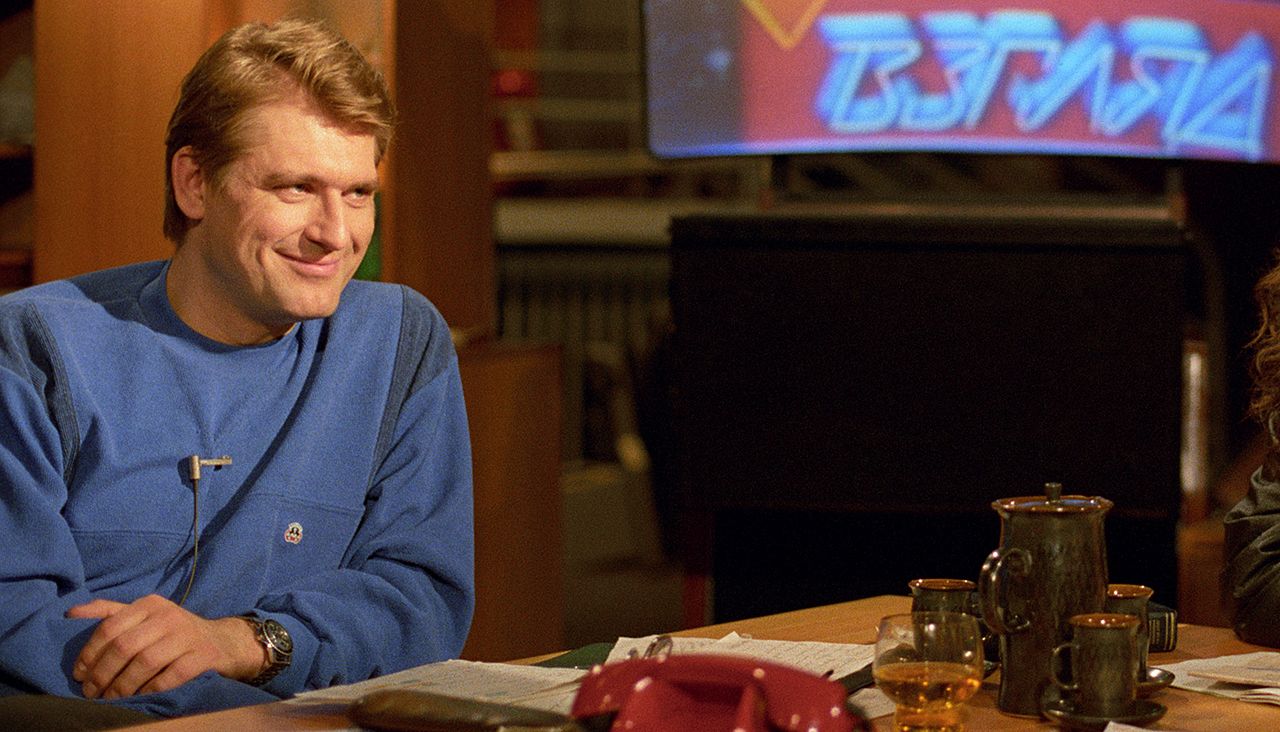
Sergei Lomakin, former host of the programs “Time”, “Gazy” and “120 minutes”, was one of the most charismatic and famous television people of his time and the favorite of the wife of the last Soviet Secretary General Raisa Gorbacheva. Two events became fatal for him: an interview with Boris Yeltsin in 1991 and a press conference of the GKChP in August of the same year. Journalist of Natalia Rostova Lomakin told how these events influenced his career.
- How did you find yourself on television, on this terribly important ideological front?
- It was a long time, now more than 30 years ago. In 1977, I, there is no greener, worked at the News Agency "News" (APN). And he came to television, without knowing anything about him, accidentally - brought my old friend, house neighbor, Andrei Menshikov. He was a television officer to the brain of Kostya, a famous person, captain of the KVN of the Construction Institute, MISI. I was friends with his brother, he knew him since childhood, and now he suggested that I come to central television. I agreed, leaving a very promising and profitable work. APN was to send me on a business trip abroad, not to God the news - to Cameroon, but still it was the first step, the first step [to further trips abroad]. Great luck.
- Did you have epaulettes?
- No, I was not an employee of the KGB, was an ordinary journalist. I was sent to Cameroon with a blue certificate, that is, the APN loser accredited in the country at the Foreign Ministry. The APN representative office in the country had a mansion, on the ground floor there was an office, on the second - the residential chambers of a correspondent. As a rule, the wife of the correspondent worked there as a secretary, a driver, a stenographer, and also received a salary. There was its own garden, its own territory, palm trees, lawn; Gardener, driver. You know, such a Victorian style ... In a word, I knew where I had to go, my colleague had already put me up. But he did not dare to go, and everyone told me that - a complete idiot. So I lived my whole life with a full idiot.
He came to the central television, to the youth edition. It was a special place, here it was possible to realize all the crazy ideas. There was a good editorial composition, there were human bosses, they allowed to work as you considered necessary. There was never work from nine to six in the evening. If it was necessary to work for a week, then the week did not leave Ostankino, and then it was possible to relax.
Until 1997, including Ostankino, I did not go anywhere. That is, I worked there for 20 years in different editions: in the youth, in the editorial office of propaganda, in the main version of the information programs - the program "Time". He was happy to capture the star hour of television - the View program, and indeed the entire television perestroika, worked live, as a presenter, a commentator. In general, all the steps took place, was in all hypostles - a correspondent, special correspondent, editor, commentator, observer, leading, political observer, and department head.
And in 1997, I went to work on the TV-Center, it was then created. Anatoly Grigoryevich Lysenko, my boss and television teacher, invited. I went, created the city television company “TV-Stolitsa” there, now it is called “Moscow-24”. Then, falling under the abbreviation, he left. And he worked as an invited creator of television channels in the regions. With my team, I created companies in Nizhny Novgorod, in Komi, in the Omsk region.
And then there was a period when I created the Country TV channel. It existed for two years, then it was bought by the VGTRK, and now he is in their directorate of satellite channels. He worked for RBC, and with the beginning of the broadcasting of public television - I am on it. So, consider, 37 years old with a small break are given to this damn television.
- The breakup, which was when Gorbachev came to power, led to a complete update of television. There was a moment when you realized that the agenda has absolutely changed? What was this sign for you?
- These were the circumstances for me when I was actually forced to leave television, to say goodbye to the profession. By the will of fate, he was in the program “Time” by the leading, observer, and got into the millstone between Yeltsin and Gorbachev. I covered the trips of the President of the USSR in the country and abroad, covered the trips of Raisa Maksimovna, including, and then I was put up by the GOSTERADIDOMA leadership for an interview with Yeltsin. He was then the holy of the Lord God, we adore. I thought that his rating was then higher than that of Vladimir Vladimirovich [Putin] today. This interview, as I was later told, was made professionally on my part, but for me it ended unsuccessfully; I actually became the enemy of Yeltsin and his team.
And then, less than six months later, the situation in the country changed, a putsch occurred, the side of Yeltsin won, and the side of Gorbachev lost. The country became different, the union was destroyed, and I was out of work. Formally remained in Ostankino, but I was removed from the political recreation, from the leading program “Time”, too. I was a perfect outcast among the authorities, my surname was prohibited to mention. So Boris Nikolaevich and his loved ones took this interview. Apparently, I put him in an awkward position, and this is not forgotten.
- This interview took place on February 19, 1991. You opposed Yeltsin, as I understand it, and your leadership sent you questions that had to be asked.
- This is myth -making, everything is much simpler. By February 1991, relations between the Union Center and Russia were already completely hot. There was a fact of Russia, which pursued a centrifugal policy - and now we will not argue about whether it was right or wrong. Russia wanted to break out of the federal allied embrace. Yeltsin asked for the federal leadership, Gorbachev, about the open air, about the possibility of contacting the nation on the first national channel. And Gorbachev instructed [the head of the GOSTELEDODOM Leonid] Kravchenko. At that time, the VGTRK already existed [legally], but she had no broadcasting, so Yeltsin asked for the Channel One.
Of course, they did not want to give him [the air for] this appeal, it is clear that there was a game without rules. But they agreed that he would not have an interview. And this is a completely different format, a different stylistics. I was put [co -host] on this interview. I asked Kravchenko: why am I, because there is a whole state of political assistants, [Valentin] Zorin and so on? But they all refused any prepositions, all to one. They were smart, and understood that there was no need to fall under the caterpillars of the tank that moves on you. And I was naive, was young.
- In addition, they say you were loved by Raisa Maksimovna.
- Not that she loved, but with sympathy, she treated very well. This is true. I was young, I was not attended by myself. She called me a announcer, although I, of course, was not any announcer. Despite its external gloss and style, for innate elegance and taste, despite their studies at Moscow University, Raisa Maksimovna retained some provincialism. All in the Soviet Union, in Russia, communication with a person from the screen was communication with the gods. Our announcers were everyone. “Anechka”, “Vitechka”, “Ring” were adored in every house. Since I led Time, another “morning” program - it was called “120 minutes” - and other programs, and then there were very few of them, the whole country knew me very well and recognized me.
An exception was no Raisa Maksimovna. She liked me on the air, she treated me with sympathy. This did not give me a reason for some kind of closer relationship, for entering family secrets, but of course I was at home, she often invited me. The seagulls drank. And Mikhail Sergeyevich came to us to participate in a conversation. She was a very nice man, at home, he was radically different from the one on the screen. Two different people! The houses are surprisingly pretty, soft, kind, smart, intelligent, and the role of the first lady of the country imagined differently, believed that the first lady could also turn to the population with some maxims, with political statements. This was not accepted.
In the West, it was adored and loved, because it really has a taste, the sophisticated of the first Russian lady. She was dressed from Dior, in shoes, dresses - looked amazing, it was unusual. But in our audience, in the outback, in our women in Selpov costumes, almost in quilted jackets, this caused rejection. And they could be understood.
- Did Gorbachev know that you would take an interview from Yeltsin?
- Then it turned out that Gorbachev really wanted me to take an interview from Yeltsin. I then asked Kravchenko what it was. “Interview,” says. But then you need to compose questions, and I will ask them? Yes, he says, I will not give you questions, you are a smart person, observer, sit down - get ready.
On the eve of this interview, Poptsov Oleg Maksimovich invited me to him, then already - the chairman of the VGTRK ( he interviewed Yeltsin with Lomakin - approx. Medusa ). “Seryozha, you must let Yeltsin speak,” he said. - Give him 45 minutes. You and I are doing questions for ten minutes, and then we will give a word for treatment. ” No, I say, Oleg Maksimovich, I can’t, I can say - an interview, which means - an interview. Poptsov says: look, three questions to me, three - to you. I know, he says, the consequences will be serious. You will come to VGTRK. Listen, I say, enough fool to fall. And he built an interview as it should have been, in my opinion.
Naturally, I went through all Yeltsin’s performances, they were contradictory. In one place, he says that Russia will never create its armed forces, its army, and two weeks later he says that it will be ... I skidded them to ask questions. And asked. He began to swim. This is difficult for the political leader, and he naturally hated me. When it was all over, [Yeltsin’s chief Alexander] Korzhakov said: “Well, Lomakin, you will remember this interview.” And I reminded.
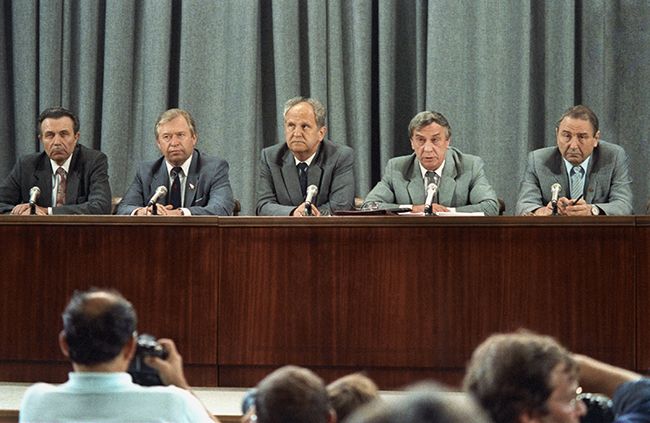
-And you were also remembered by the Press Conference of the State Emergency Committee on August 19, 1991.
-Yes, in 1991, during the coup, I also managed to appear at a press conference. I asked my question [the leader of the GKChP Gennady] Yanaev. He was excited, frapped with this whole situation, his hands were trembling ... And he forgot the question that I [just] asked. "Seryozha, I forgot your question, repeat, please." Seryozha, on you ... And that’s it, I became an accomplice of the Gekachepists. The press conference hit me great. They began to pronounce all the words about me, [the host Alexander] Gurnov in the "Vesti" said that I was a bitch son. And everything was simple. I often dangled in the Kremlin before, and there were not called journalists differently than “on you” and “Seryozha”. This is now Vladimir Vladimirovich calls everyone on you, which indicates a high level of his culture.
- Yes, the press wrote then that you are in conspiracy, that you are on the other side.
- Once again, tank are under these tracks. As a result, I was removed everywhere.
-Somehow explained?
- What to explain?
- That is, the bosses simply took and fired?
- No, removed. I was a political assistant, was the host of the programs "Time" and "Morning". They do not put me on the jurisdiction, they do not put and do not put it. Then it turns out that I have long been not a political assistant, that the order has already been signed, that I only retained the post of commentator.
- Is this Egor Yakovlev at the head of the Ostankino?
- Yes. But he also had nowhere to go, and I understand him well. I was then, at that time, the most unacceptable journalist. Lomakin is a son of a bitch, this is blackness and the main evil of journalism.
- How is Dmitry Kiselev today?
- You see, there is a difference, Dmitry Kiselev - with capital, and I - with only pants. I had a salary and nothing more.
After the interview, I was stopped in the subway, they said at all of what a villain and cattle, and it was publicly done, the audience, the audience was said. How is it, you insulted Yeltsin, you are the shame of the Russian nation, they told me. Every morning, about a month, every day, my wife left the house with a bucket and a rag, because at the entrance they wrote in huge letters: "Lomakin is a traitor." While there was nobody, she washed this inscription.
- A few years ago I watched that interview, and of course there was nothing in it that should have caused such a reaction. She was unfair.
-Today, look at some other interviews-so they are more sharp. But the point is not whether they are sharp or not. I was charged with that I behaved inappropriately, disrespectful towards Yeltsin, asked questions that put him in an awkward position. That is, I had the arrogance to observe the independence of the journalist. Then it was not accepted.
Yeltsin's adoration was prohibitive. And since one hundred percent of the country watched the program, this interview was very popular. I became absolute blackness, and Yeltsin, offended by this absolute evil, is even a lighter person. After all, he fights for us, he fights for the people, he wants the people to live better, and this son of a bitch, an accomplice of partocracy, drives us into the former, communist, stall.
But this is our people, and you do not have to complain here. Our people either love sucking, or hates to colic - the same person. Now so, tomorrow is a kind. Vladimir Vladimirovich, fortunately for our great, has been experiencing all these years of crazy love.
“But, apparently, he will not avoid another either?”
- Our people are like that, this is our psychology. Solder psychology, no matter how we want, love or hate a master. Stalin adored, kissed his legs, heels, and then they began to hate wildly ...
1993. I go to Ostankino. And suddenly a man stops me. Do you say Sergey Lomakin? Yes, I am Sergey Lomakin. I, he says, want to apologize to you. I watched your interview in 1991, not from Moscow myself, but then I wanted to come and beat you to death. I believed that you are a scoundrel and a bastard, who are few. And only now he was convinced of what a villain and bastard Yeltsin, and how you were right then. Apparently, even then you knew what kind of person he is. I reply that I did not know what kind of person he was, and that he simply did his work, his duty. So, as I considered it necessary.
-Was this meeting during the October events of 1993?
- Until October, in early September, probably. After the vacation, I returned. Sorry, he says. Yes, for God's sake! I excuse you, just get rid of this - either love or hatred! The authorities should be treated neutrally, judged by his affairs, and not by what they say.
- But Yegor Yakovlev still left you on Channel One.
- At the end of September, I invited me [then heading the news service of the First Channel Oleg] Dobrodeev. “Seryozha, you and Yakovlev do not rise to remove you from television, you are a professional person, do the right work, there are no complaints, we do not know what to do with you, but we want to save you. We offer to keep a morning program, because in the morning the Kremlin does not watch TV. Will it suit you? " Quite! And thanks to them, so I stayed in the profession. He worked at the morning until 1995.
A year passed, as I started working at the morning, and there was some anniversary of the Time program. We stand, drink. Suddenly through the entire hall, Yakovlev scratches from one corner to me, the kingdom of heaven. In front of everyone, specially, comes up to me. He says: “Sergey, I want to tell you that I am very pleased with your work. I like the way you keep a blow. During this year, you have never allowed any statements, complaints, complaints. I have a proposal - it's time to return to the evening broadcast, I’m waiting for me tomorrow. ”
I come to him. He proposed a daily program called "Details", an overview of the events of the day. Write to me the concept, he says, and after three days I wait. Happiness! Finally, I will be at my work, in my genre! Three days later I come, but it is no longer - they removed it. Remember the film about the suburban area [in Ingushetia]? They should not have been allowed, but let them go and recouped in Yakovlev.
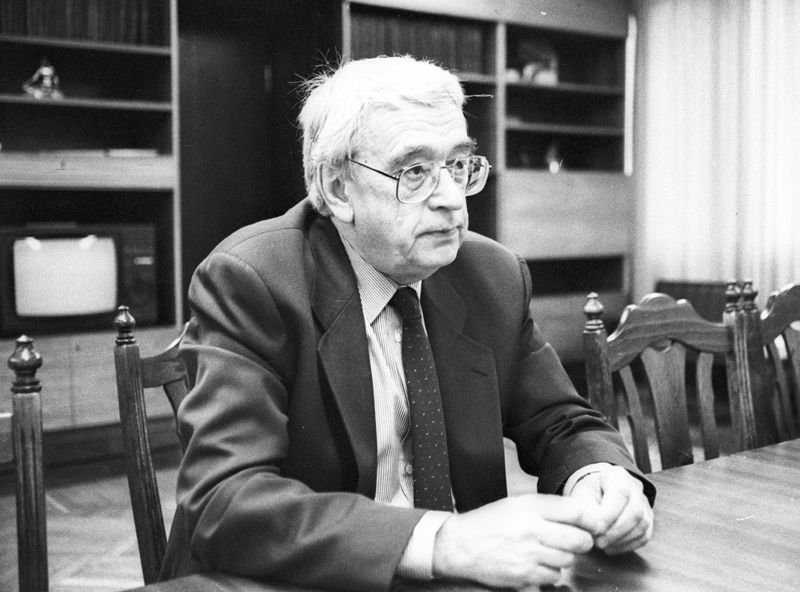
- There was even a presidential decree on the withdrawal of Yegor Yakovlev. Probably, for the first and last time in the decree, the film was called the reason for dismissal.
-Yes. In short, Yakovlev retires, and his proposal is with him. I continue to work on the morning, and then they remove me from it. I always happened like this: a new boss came - they fired from work.
In 1995, ORT was created. [The head of the ORT] Vlad Listyev called me: "Come in, there are questions." I want to, say, make another morning program, can you paint it, as you see? Can. On February 28, in the evening, I gave him this program. “It is very interesting, now I have -“ Hour of the Peak ”, I’ll go home - I will read it, and tomorrow, blood from the nose, I will give an answer.” March 1. And we know what happened then ( Vladislav Listyev was killed on March 1, 1995 - approx. Medusa ).
He came instead of him [Sergey] Blavolin. Formatting of all directorates began. And in the Directorate of Information too. From Ostankin, the entire composition of the editorial office was accepted on ORT. They accepted everyone except me and [Boris] Nepomnya, then - the director of Ita, the information television agency. Two did not accept. I was not very upset. What do I always go as a petitioner? I met only with a close comrade, the kingdom of heaven, with Yura Belyavsky, the editor -in -chief of the newspaper Culture. How, asks, your appointment to ORT? No way, I say. How did you not take it? Тебя не взяли? Wait! У него стояла вертушка. Набирает, как я потом понимаю, Благоволина, они с ним — друзья хорошие. Первая фраза только была приличная, а остальное — идиоматические выражения, мол, Сережа, что же ты наделал. Кладет трубку: «Просит завтра к себе зайти». Так я вернулся назад, на ОРТ.
Из программы «Утро» вообще выкидывали неоднократно. Видели тайный умысел, какие-то силы. В 1993 году, когда обсуждали Конституцию, я стал вводить в программу социологические опросы. Фонд «Общественное мнение» тогда провел опрос, читали или не читали россияне Конституцию. Итоги: читали — 25%, не читали — 75%. И что тогда обсуждаем? Народ ее не прочитал! Тут же [Сергей] Филатов, тогда — руководитель администрации президента, позвонил главе «Останкино», не помню, кто тогда им был. Мол, неслучайно прочитал данные опроса, за ним — какие-то силы. Отстранили на две недели от эфира. Словом, все время я был какой-то персоной non grata. Вроде работающий, но все равно non grata. Ну, не любим мы его!
— Коржаков все-таки мстил?
— У меня нет стопроцентной уверенности, нет информации о том, что мои беды карьерные связаны с ним. Но ведь вполне достаточно, чтобы на самом верху, при руководителях СМИ было сказано: «Вот этот Ломакин — очень нехороший человек». Достаточно Борису Николаевичу было сказать: «Я помню этого Ломакина, он — не очень», и тут же срабатывает наша рабья, холопья психология. Я помню, Благоволин сказал моему товарищу: «Ну вот зачем мне эта головная боль? Кто-то увидит его в эфире, а мне это зачем?» Вот если бы был интерес сохранить человека, который вызывает недовольство… А если этого интереса нет, то зачем? Justice? Professionalism? Человеческие отношения?
— А когда вы во «Взгляд» пришли?
— В начале 1987-го, так что фактически участвовал в его создании, среди немногих людей. Сегодня ведь «Взгляд» — это как то самое бревно…
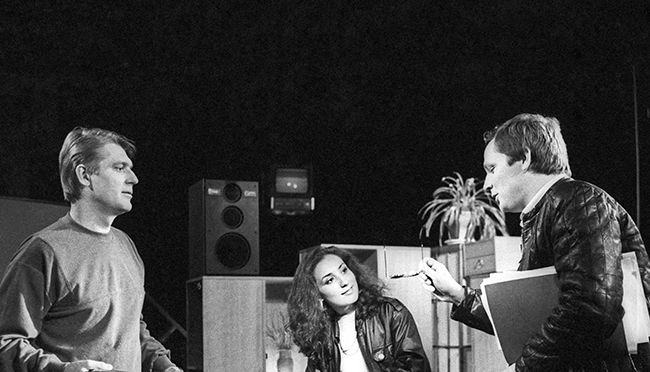
— Которое все носили…
— И с каждым годом их все больше. Выясняется, что миллион человек были к этому причастны. Но есть свидетельства — Лысенко, [Евгения] Додолева, мои… Я был руководителем программы сначала, заместителем Лысенко. А ведущим стал в 1988 году, в феврале-марте. Тогда [главный редактор молодежных программ Центрального телевидения Эдуард] Сагалаев решил поменять формат, сделать программу более политической, не развлекательной. И двинул он тогда в эфир меня и [Владимира] Мукусева. Еще через год стал появляться [Александр] Политковский .
— Это ведь после статьи [«Не могу поступиться принципами»] Нины Андреевой произошло, правильно?
- Yes.
— Когда отстранили других ведущих, и поставили вас.
— Нет-нет, никто не отстранял, хотя мы совершали чудовищные вещи. Когда были выборы в народные депутаты СССР, по Москве шел Ельцин, а его оппонентом был директор ЗИЛа Браков. Тогда на дебатах были сплошные подставные вопросы. Мы вытащили в эфир «Взгляда» [в то время — соратника Ельцина Михаила] Полторанина. На Восток, на «Орбиту», все прошло гладко, а на Москву он сказал про подставные вопросы, заданные Ельцину во время дебатов. Это было в пятницу, а в субботу в Останкино вся площадка ломилась от членовозов. Приехали секретари ЦК, Медведев, члены Политбюро — смотреть программу… Был страшный скандал, нас с Лысенко вызывали на партком, но все обошлось — меня просто отстранили на месяц от эфира, а в редакции на партбюро мне сделали выговор. Так надо было, чтобы меня спасти, все сошло с рук.
— Они все приехали смотреть программу еще раз? Она ведь уже была в эфире?
— Естественно, начальники не смотрели поздно ночью программу, но им настучали, что была провокация. Так что приехали смотреть рано утром в субботу. Отсмотрели — и мать-перемать, нас всех закопать! Полторанина ведь не ущипнешь, он при Ельцине, а вот Лысенко с Ломакиным — ущипнешь.
— Это забавно, в тот момент вы были за Ельцина.
— Да, в тот момент я был за Ельцина. В то время часто приезжали всякие западные телекомпании, которые вели телепрограммы со «Взглядом». Приехала как-то французская TF-2, она сделала телемост во Францию, и эту программу вели мы вдвоем, с ведущим TF-2. Мы интервьюировали Ельцина в эфире, который шел на Францию, а в России его не видел никто. Нам было обещано, что интервью пойдет и во «Взгляде». Я бился за это интервью до слез, но начальники его не поставили. Прошло время, и…
— Что вас так разочаровало?
— Его неискренность. Разочаровала его поездка в Америку. Я не поверил ни слову о том, что это какая-то заторможенная прокрутка кассеты. Понятно было совершенно, что он — пьяный, меня это резануло ( после первой поездки Ельцина в США в 1989 году сначала в зарубежной прессе, а затем в «Правде» и на Центральном телевидении появились сообщения о проблемах Бориса Ельцина с алкоголем; заторможенную речь Ельцина во время одного из публичных выступлений в Америке его сторонники объясняли монтажом — прим. «Медузы» ). Меня стали коробить его резкие выражения, я стал бояться развала страны. Меня стала пугать его параноидальная ненависть к Горбачеву, и не потому, что я защищал Горбачева. Я думал, что она могла привести к печальным ситуациям. Я не догадывался тогда, что произойдет развал страны, но меня это очень настораживало. Горбачев, без сомнения, вероломный человек, он также неискренен, как Ельцин, но он соблюдал внешние формальности. Он не позволял себе так грубо накатывать на Ельцина, как тот накатывал на Горбачева. Мне нравилось, что Горбачев пытался наладить контакт. И у Горбачева, без сомнения, был миллион грехов, уже тогда: и Литва , и закавказские дела, и подставы людей и соратников — все это было. Но он не так рьяно вел к катастрофе.
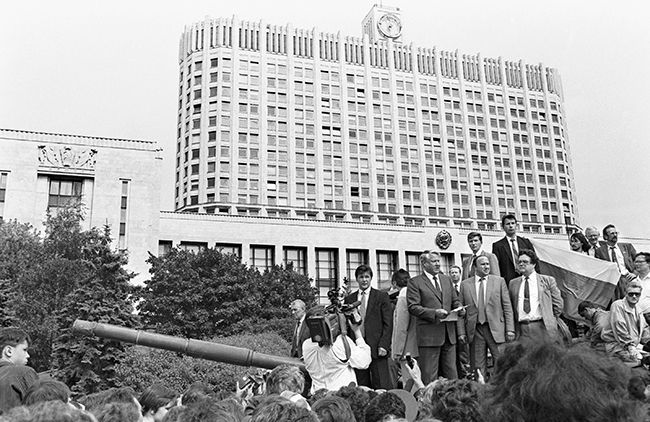
Накал отношений приводил к расколу внутри общества. Знаете, 19 августа 1991 года меня послали на пресс-конференцию ГКЧП, а Медведева послали смотреть, что происходит вокруг Белого дома. Но мне как журналисту тоже было интересно, что там происходит, и мы с моим товарищем из МВД поехали к Белому дому. В нем были многие наши товарищи, я был близко знаком с [Сергеем] Шахраем, с [Егором] Гайдаром, с ними у меня были хорошие, добрые отношения. Поехали ближе к вечеру, уже смеркалось, и мы шли со стороны Краснопресненского моста, а там — толпа. Вдруг напротив меня появляется забулдыга с перекошенным лицом. Он смотрит на меня мутными глазами, и вдруг они начинают проясняться: «Это кто? Это Ломакин! Traitor!" Он говорил так громко, что люди стали поворачиваться и стали на меня двигаться. В этот момент капитан хватает меня за руку, и мы — пулей из этой толпы, по каким-то кустарникам, газонам, скрываясь от нее. И только когда мы остановились, я ему говорю: «Ты чего?» «Серега, — говорит. — Я видел, что тебя сейчас начнут рвать на куски, ты — олицетворение зла. Они увидели не членов ГКЧП, а тебя, и ты — реальное зло. А что должен делать я, с пистолетом в кобуре? Я должен стрелять в воздух. И тогда начнется пальба». Вот мозги ментовские, а? 20 августа стрельба у Белого дома! Что могло бы начаться?
Вот поэтому я толпы и боюсь, она неуправляемая. Я видел эти толпы разгоряченные еще в Фергане, куда ездил от программы «Время». Видел, как убивали женщин, детей, разрывали их на части. На чеченской войне я такого не видел! А тогда мирные жители, с арматурой, с железными палками, избивали таких же мирных жителей. Любой политик должен понимать, что толпа — не средство для достижения целей. А Ельцин использовал толпу, и на этой толпе въехал в политику.
— Когда было сложнее всего работать?
— Когда был безработным. Ничего другого я не умею делать. Конечно, я перебивался какими-то проектами, снимал фильмы, пытался работать в пиаре, но полтора года без постоянной работы было очень тяжело. Это были самые тяжелые времена, в конце 1990-х. Меня выперли с ТВЦ в 1998 году, и я полтора года болтался не у дел.
— А чье президентство было самым сложным для журналистики? Или было сложно всегда?
— При всем моем недобром отношении к Ельцину, мне казалось, что журналисты тогда были более свободны и раскрепощены. При всем негативном моем отношении к системе, символом которой был Ельцин, не было тогда такой твердолобой, оголтелой пропаганды. Хотя пропаганда была всегда. Были люди, которые потом работали по поручению [Анатолия] Чубайса, администрации президента, прочих разных сил. И НТВ работало по поручению известных структур, все мы знаем.
— Каких структур?
— Структур [владельца НТВ до 2001 года Владимира] Гусинского. Структур, которые стояли за Гусинским. ОРТ работало по указанию [контролировавшего его в 1990-е Бориса] Березовского. Хотим мы этого или не хотим, это не свободное телевидение было. Программа [телеведущего Сергея] Доренко тоже была пропагандой, но чуть тоньше, чуть разнообразнее, и не было такой зацементированности. Как-то завуалированно, помягче она была. Словом, это был период, который позволял журналистам варьировать между пропагандой и информацией, по возможности обходить пропаганду. А сейчас, боюсь, это сделать практически нереально, информация равна пропаганде, и ничего не сделаешь с этим. Хотя я и не говорю, что это плохо.
- Why?
— Пропаганда должна быть всегда. Прошел период, когда все журналисты считали, что мы, наконец, избавимся от отделов пропаганды и агитации ЦК КПСС, и все станет хорошо… Ничего подобного! Государство, власть всегда должны работать с пропагандой, иначе это не власть и не государство. Власть излагает разными способами свое видение того, что должно происходить в стране, куда двигаться населению. Это — пропаганда, разъяснение той или иной стратегической линии государства. Но пропаганда бывает тонкая, мудрая, а бывает железобетонная. И запрос на пропаганду всегда остается, никуда от этого не денешься. Однако надо мягче, интеллигентнее, тоньше работать, и в этом — претензии к сегодняшней пропаганде. Зачем париться, если и так пройдет? Тем более, что действительно проходит.
— У вас нет ощущения, что как будто и не было этих 30 лет?
— Конечно, с высоты сегодняшних лет, кажется, что они промелькнули почти незаметно, хотя бодрая жизнь была.
Все интервью из серии «Телезвезды» можно прочитать тут .
Natalia Rostova