
Translated material
Simon Zhavoronkov: Nikita Struve died
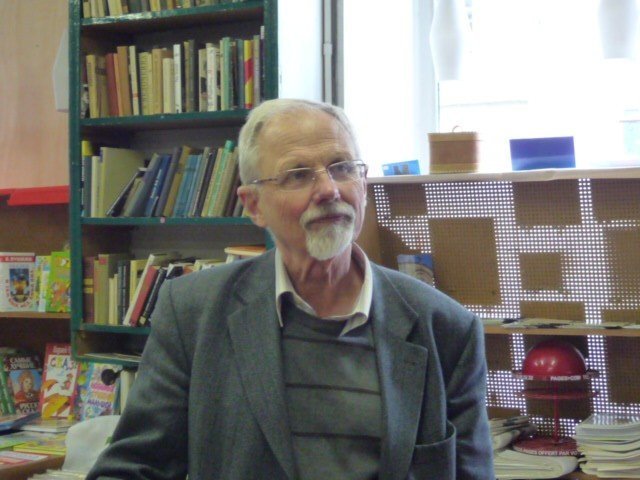
In the 86th year of his life, a publisher, literary critic and translator Nikita Struve died near Paris. This was announced by the historian of Russian emigration Andrei Korlyakov. “Dear friends, very sad news-tonight on May 7, 2016, at the age of 85, the professor and director of the famous Parisian publishing house Ymca-Press, Nikita Alekseevich Struve, died. Eternal memory! " He wrote .
Nikita Struve was born on February 16, 1931 in the Parisian suburb of Bulon. He is the grandson of the famous philosopher, economist and politics at the beginning of the 20th century Peter Struve. He graduated from the Sorbonne and from the 1950s taught Russian at the University.
Nikita Struve headed one of the most famous “Russian” publishers of YMCA -Press, whose books often managed to deliver to the Soviet Union secretly - despite the prohibitions. It was the Publishing House of Struve in the early 1970s for the first time published the “Gulag Archipelago” Alexander Solzhenitsyn and his other books.
For the first time, Struve came to Russia in 1990, bringing with him 40 thousand copies of books and magazines. Later in Moscow, the Russian Path publishing house was opened, which became a kind of continuation of Ymca-Press.
Nikita Struve was also the editor -in -chief of the Russian emigrant magazine, quite noticeable since the 1970s - "Bulletin of the Russian Christian Movement."
In the mid-1990s, Struve transferred a significant part of his huge archive to Russia, which appeared as a result of working with representatives of Russian emigration, now all this is located in the Russian Library Fund “Russian Abroad”.
Nikita Struve is the author of the study “70 years of Russian emigration”, which was published in French in 1996 and later translated into Russian.
In general, Nikita Struve, if formally, turned out to be one of the most striking representatives of either the second or third generation of Russian emigration of the first wave. Struve himself believed that that wave of emigration “in fact, and physically” no longer exists. The statement of Struve made in the 1990s is known that "emigration has ended." The head of the YMCA-Press publishing house decided that it was necessary to work with Russia and its population, and not with new emigrants who left the country after the collapse of the USSR.
Many of the new emigrants, as practice showed, much easier to take the process of naturalization, after a few years, perhaps on television, observing what is happening in the first homeland - unlike a considerable number of contemporaries Struve, who perceive the country from which they or their parents left, until the end of their life. Whether the departures of recent years are emigration or temporary evacuation, it will become clear somewhat later.