
Translated material
New York Almanac
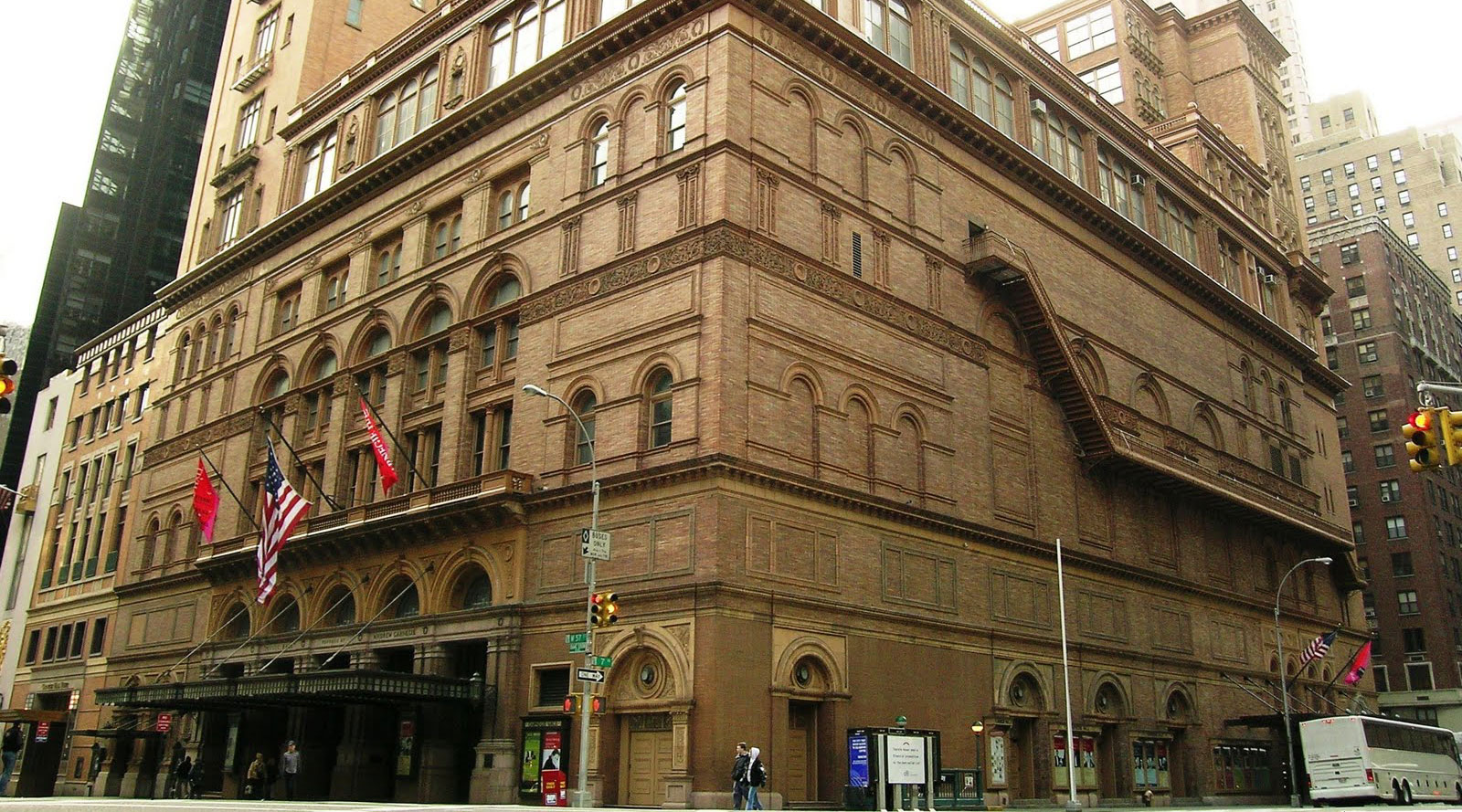
The anniversary of Carnegie Hall. Jansons and 7 Symphony Shostakovich
Alexander Genis: On the air of the New York Almanac, in which we and the musicologist and cultural historian Solomon Volkov talk about the news of cultural life, which they see from New York.
I propose today's almanac to open an anniversary that is extremely important for all New York: 125 years of Carnegie Hall. This is probably the most famous concert hall of America, right?
Solomon Volkov: Yes, and one of the most famous, maybe the most famous concert hall of the whole world, in any case, he is definitely the first three.
Alexander Genis: Even those people who have never listened to music in their lives and never visited Hall in Carnegie, know a joke about him.
Solomon Volkov: How to get to Carnegie Hall?
Alexander Genis: He, they say that this joke is associated with the name of Yasha Heifets, whom the tourist asked on the street how to get to Carnegie Hall, and he, without hesitation, said: “Practice, practice, practice.” This joke was attributed to different people, and Yasha Haifets is one of them.
Carnegie Hall today looks even better than ever, because a big restoration has recently occurred. This is a huge institution, one of the largest houses built at the end of the 19th century. Of course, it is associated with the name of Carnegie, and today, when during the election campaign they talk a lot about the rich, it is worth recalling this. Carnegie, who gave his name to this hall because he built it. It was his private property. Until 1925, Carnegie Hall belonged to the Carnegie family, and they arranged concerts there, and only then they sold it to the city.
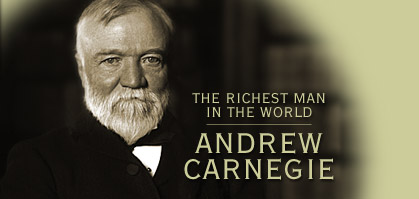
Carnegie is a poor Scottish emigrant, an extremely interesting figure, he started with the lower classes, there was no one than him - but he was terribly rich. Carnegie wrote about this, which was extremely influential then, and even now, too, it is called the "Gospel of the Rich." In this book, he said that the rich should give out all his money, because the life of the oligarch, as we say today, is divided into two parts: in the first half he earns money, and then gives them out. His workers said: “Well, hand out to us now and in cash.” Carnegie answered: “In no case. Each worker preferred to increase the salary, and I prefer to build a library or concert hall, because it will allow these workers to grow up and become other people, to rise above the social step. ” He believed that the cause of the rich was the structure of a social elevator in America. As a result, around the world he was founded by a network of Carnegian libraries - three thousand only in America, and he still helped his native Scotland. You know, Solomon, how much money he distributed - 78 billion in our account, 90% of his condition.
But, probably, the best of what he left to the world is Carnegie Hall. Do you like to listen to music there?
Solomon Volkov: Yes. I will tell you now why: there, if you can utter this, ideal acoustics. Everything is heard there with extraordinary transparency and bulge.
Once again I had a happy opportunity to make sure this when I recently visited Carnegies at two concerts. The Bavarian Radio Orchestra arrived with tour, which is headed by our Riga fellow countryman Maris Jansons. I am connected with Maris not only that we studied together in the same school, but also in the same class, sat at neighboring desks. So our friendship is 55 years old, I think at least. I have a lot of considerations about these two concerts, but I will start with Carnegie Hall as such. I was extremely curious to watch the public.
Alexander Genis: But I must say that the public in Carnegie Hall is very different, this is not the same audience that goes to philharmonic concerts. Carnegie Hall was always a democratic institution, because all the famous jazis - Goodman, Ellington, Glen Miller performed there, rockers performed there and, of course, the Beatles spoke there, that is, the audience there is the most different. Moreover, even we performed there. Remember, when we awarded the Liberty Award for the first time, then we took place on the stage of Carnegie Hall in 1999. I must say that when I finally got on the scene of Carnegie Hall, guessing that they would never let me go there again, I got on stage, looked into the hall and imagined that the musician who plays in such a huge hall should feel, and he was really huge, there are almost three thousand places. This feeling, in my opinion, electrizes any, even the most experienced musician, isn't it?
Solomon Volkov: In general, Carnegie has a certain aura. I do not like this expression "Point prayed."
Alexander Genis: And I love, I believe in it.
Solomon Volkov: I do not like this expression. And that this word expresses, I believe. I believe that a certain aura is being created, that it is somehow formed by the efforts of generations of musicians.
Alexander Genis: Starting from the first concert, which Peter Ilyich Tchaikovsky himself gave.
Solomon Volkov: Of course. And hence the special connection of Carnegie and Russia, which has never been interrupted, in spite of any political difficulties in relations between the Soviet Union, now Russia and the United States, Carnegie always remains the neutral platform on which the interaction and meeting of the cultures of these two great countries is possible.
Again, the audience in Carnegie. Of course, the Beatles performed, but you forget about prices, the prices are still very high. All the time I hear a constant refrain - a graying audience. All the time I have a simple objection to this: if it were really a graying audience, then at some point it would not be a hall, but a cemetery. No, nothing like that. Yes, there are many gray heads in this audience, but these are new gray heads all the time.
Alexander Genis: I do not see anything strange in this, because I think: love of classical music comes with age, it is like the best wine - it should be designed.
Solomon Volkov: The next and next generation of gray -haired visitors come all the time.
Alexander Genis: People discover a high culture. You know, as the Chinese said: at first the artist writes rivers and mountains, then he does everything in the world and only by old age he comes and sees rivers and mountains. So we, we can look for anything, but then we understand that there is a bang, that there is Beethoven, that there is Shakespeare, and we return to the fact that everyone knew. I feel it on my own, because for me big music opened only after 40 years. I suspect that I am not the only one.
Solomon Volkov: So, you see, in this regard, Carnegie is also very representative. Yes, there is a certain part of the Sedovlasai public, which we consider to be a natural public both in the ghostly metro and in the Philharmonic Hall. But there are a lot of middle-aged people and a lot of young people, completely not in some way dressed, democratically dressed, democratically behaved, not feeling some kind of neophytes in this hall. Returning to concerts: two Jansons' programs, and no one once applauded between the units. That is, it shows that the public is not the first time already coming, she knows about concert etiquette.
As for the concerts themselves, I must tell you with complete frankness and impartiality: despite the fact that many years of friendly relations are associated with Jansons, I say with full responsibility that at the moment this Bavarian radio orchestra is the best in the world, and Maris Jansons is a leading modern symphonic conductor.
Alexander Genis: Already good.
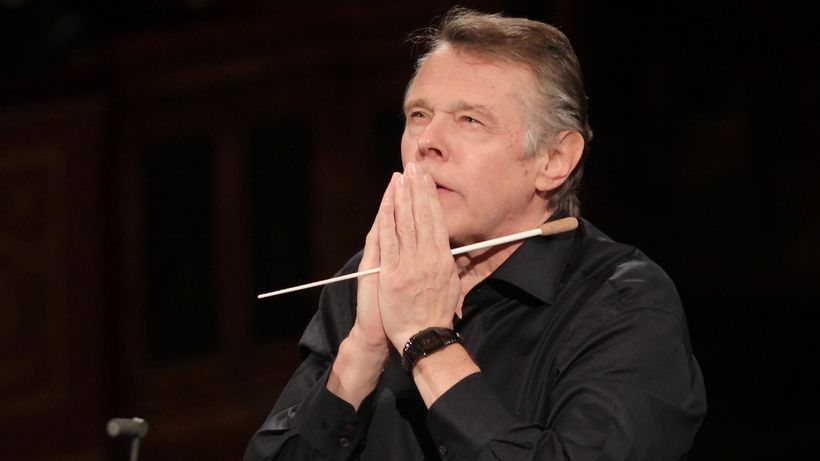
Solomon Volkov: These two concerts made a stunning impression on me. That is, Jansons, who has been working exclusively with this orchestra for many years, until recently he was the head of the Amsterdam concentegabau, thus headed two orchestras, which were part of the official rating in the five best orchestras of the world. But now his orchestra is the Bavarian radio orchestra, which is based in Munich. He himself created this orchestra. I have not heard Jansons with this orchestra here more than once or twice in New York, and each time the degree of interaction between the conductor and the orchestra rises to a new height, to a new step. These are musicians who breathe with the conductor, they make up a single whole. When I listened to them, I recalled the lines of Akhmatova: "Onegin Air Highlight as a cloud stood above me." The sound of this orchestra is an air bulk. It is at the same time something airy, tender, pianissally unforgettable. And in the moment of the eye, without the slightest transition, without the slightest inconsistency, this sound can turn into something massive, jubilant, the spirit intercepts from it. This orchestra is able to cross all possible gradations from Pianissimo to fortissimo. This happens, as if it is not a group of a hundred people, but one soloist plays. At the same time, they look at the conductor without looking up, and they are jigging absolutely enthusiastically, with full dedication.
The orchestrant, in fact, I do not tire of repeating it, a painful creature. In fact, who is an orchestra? This is a failed soloist, since we are talking about it.
Alexander Genis: Yes, you said so more than once. This image always amazes me: the orchestra as a team of brilliant losers.
Solomon Volkov: But here no one feels any inferiority, they are happy to music with their maestro, because they know that the conductor, in turn, gives them all his being, he lives with them, he is sad with them, he rejoices with them. So these were two completely unforgettable concerts. The first concert was with a very curious program, it sounded the work of modern American composer John Corillano “Fantasy on Austinato”, in which a melodic figure of 7 Beethoven symphony was involved. Then the work of Erich Corngold, a famous film composer, sounded. This is also curious: he is the Austrian, the crown, who emigrated in Hitler's time in the United States, became one of the most popular Hollywood composers, but continued to compose in a classic kind. The violin concert was played by one of the very remarkable young virtuoso Leonidas Kavakas. In the second department, 8 Symphony of the Dvorzhak sounded. I know what I was thinking about? Brahms patronized the Dvorzhak, which is not surprising, since the jar worked, relatively speaking, in the Bratsov model of symphonism.
Alexander Genis: Despite the fact that the jar, of course, tried to create Czech national music and fought with German dominance in music.
Solomon Volkov: You just have a very important topic now. When he introduced the national idiom, he deviated from the German model. But at the same time, you know, three famous b?
Alexander Genis: Brahms, Beethoven, Bach.
Solomon Volkov: Some may be to put the fourth b - Brookner there. But it would never occur to anyone to put in this four jar. Yes, a good symphonist, known, but the wrong caliber. So, in the performance of Jansons, this symphony was a caliber of Brahms. All this airiness and this naturalness, softness, liveliness of the embodiment of this national color were unusual. Let's listen to how Jansons does it.
(Music)
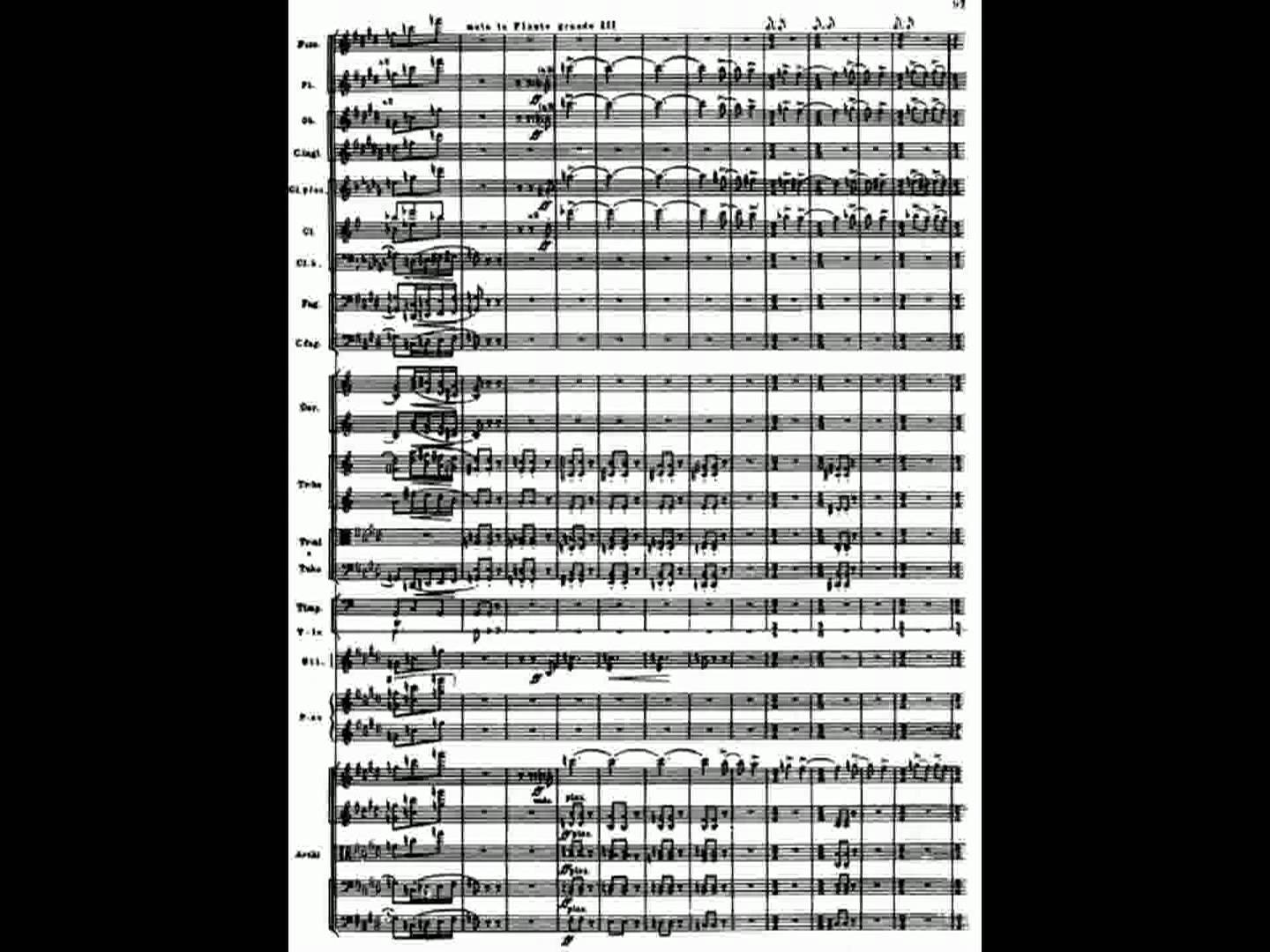
Solomon Volkov: In the second concert, where Maris Jansons conducted, only one work sounded - this is 7 Shostakovich symphony. She was played without a break, there was no intermission, the audience parted with the finals. But she parted only after a 10-minute standing ovation. For me, this concert was extremely important, and not only from a purely musical point of view, although it was an amazing performance, but from the point of view of the symbolism of what happened. Judge for yourself: the symphony, which Shostakovich himself called “Leningradskaya”, about which it was considered exclusively to the blockade of Leningrad during the Great Patriotic War for a long time, sounds in Carnegie the hall in New York. Where with great love for this music was played by an orchestra from the city of Munich.
Alexander Genis: From the city of Hitler, a city that was the first to pick up a Nazi ideology. I was recently in Munich, there is a magnificent Museum of Nazism, which shows what the huge role of Munich was in the formation of the Nazi regime.
Solomon Volkov: But let's continue: this orchestra played under the control of Marisa Jansons, a son who Latvians and Jews, he grew up in this very Leningrad, who is somehow devoted to Shostakovich’s symphony. This conductor became famous in the West in the first place. He conducts Hall with this work in Carnegie, and the Americans, who were sitting next to me and in neighboring lodges, cried! When the work ended, they all jumped up, and some jumped up earlier, the music did not end, they stood up because they could no longer sit in their places from the pressure that is expressed in the final of Shostakovich’s symphony, and there were tears in their eyes. Therefore, for me it was a concert of an incredible symbolic power, incredible symbolic significance. Of course, he coincided with the celebration of the anniversary of the Victory in the Great Patriotic War.
Alexander Genis: 7 Symphony played a huge role in the fate of Shostakovich, and in the fate of Russian music in America. 62 times they played this symphony in the season of 1942-43, when for the first time after the premiere under the leadership of Tuscanini this symphony swept throughout America. At the same time, I must say that not everyone liked it then. For example, Rachmaninov, reacted like this: "Well, good, and now let's go to drink tea."
Solomon Volkov: In this sense, it is interesting to read the annotation in the Carnegie Hall program. Because it is an expression of mainstream consensus. This is that musical American criticism offers a massive listener. The 7 symphony program is discussed there, its open declared program, which, as we know, was posted at one time as a description of the invasion of the Nazi troops into the Soviet Union.
Alexander Genis: The theme of the invasion.
Solomon Volkov: Yes, the “theme of the invasion” is famous, which is known even by those who do not know the music at all, not like Shostakovich. In any case, this is the most famous musical episode in Shostakovich’s work and one of the most famous in the world symphony of the twentieth century. But after this, a different interpretation of this symphony appeared, which Shostakovich first voiced in a conversation with me when the book of his memoirs in the West, prepared for printing, was one of those several places that caused extreme amazement and many had resistance.
Alexander Genis: And distrust.
Solomon Volkov: And distrust, yes.
Alexander Genis: The point is that this topic was created before the war, which changes its meaning.
Solomon Volkov: This is an absolutely undeniable fact, today confirmed by the testimonies of the students of Shostakovich, to whom he played this topic before the war. But the meaning of the appearance of this topic is more important. Shostakovich told me that, of course, this is a military symphony, of course, it is dedicated to Leningrad, but it is dedicated not only to the Leningrad that Hitler tried to destroy, it is also dedicated to the Leningrad that Stalin tried to destroy.
Think about if the composer were as accurate as Shostakovich would really describe the invasion of German troops into the Soviet Union, then remember how it began - immediately, aggressively, bombing at once all cities, airfields, an instant offensive of a huge mechanized macquin. How does this topic begin in music?
Alexander Genis: I completely agree with you. It is from the point of view of music that Shostakovich’s words are just about Stalin and Leningrad, they sound convincing. The fact is that after all, this topic does not immediately become formidable. At first we do not hear anything terrible-the music resembles a bolero, something is slowly growing, something beautiful, and suddenly we hear how the drums make this topic more and more formidable. That is, everything began on a peaceful note, but what turned into is terrible.
Solomon Volkov: This is precisely the explanation of Shostakovich, he said: “This is a creeping attack on your soul from different sides.” And in this he saw the meaning of all this episode. This episode is like a certain machine that is hostile to a person, it gradually captures it and conquers it.
Alexander Genis: As in the “correctional colony” of Kafka, where a person is gradually destroyed by the state of the state.
Solomon Volkov: At first, this explanation of Shostakovich, as you noticed rightly, was perceived with distrust. But gradually this point of view acquires an increasing number of supporters precisely because people begin to listen to music. In this sense, what I started, this annotation in the Carnegie Hall program to this performance is very indicative, it sets out one point of view that this symphony reflects the fascist invasion, another point of view, which is also associated with Stalinism, with the corruption effect of Stalinism on the human soul. And at the end, the author of this annotation says that yes, we can find arguments in favor of both point of view and the other, but also a united point of view, that is interesting. That is, yes, such an interpretation is possible. This is consistent with what Shostakovich himself spoke of this essay: this is about the Leningrad that was attacked by Hitler, but also about the Leningrad, which was attacked by Stalin.
Alexander Genis: Solomon, 7 Symphony was played by the best conductors - Barshay, Bernstine, Kondrashin. What is the difference between the execution of Jansons?
Соломон Волков: Оно отличается именно тем, о чем я сказал, когда описывал тот изумительный инструмент, в который превратил Баварский оркестр Янсонс. Это ансамбль, который может донести каждую ноту, пропеть каждую ноту. Симфония Шостаковича по первому впечатлению может представиться очень громоздкой, и это было одной из претензий.
Александр Генис: Она очень большая - 75 минут.
Соломон Волков: Поэтому ее и играют как целый концерт. Это вызывало претензии, некоторая громоздкость ее, которую можно преодолеть, что Янсонс и сделал. Но еще важнее: у Шостаковича есть куски музыки, которые можно определить как квадратные. И это всегда вызывало к нему колоссальные претензии.
Александр Генис: А что это значит, я не понимаю?
Соломон Волков: Музыка движется квадратами, она не текучая.
Александр Генис: То есть не река, а геометрия?
Соломон Волков: Да, и это иногда чувствовалось даже в самых лучших исполнениях 7-й, которые мне доводилось слышать. У Янсонса этого нет совершенно, все переходит плавно из одного в другое, все течет именно как такая огромная спокойная река. Там могут быть и водопады грандиозные, какие-то бурные потоки, но это все Миссисипи или Волга. Не зря, когда я слушал именно это исполнение в Карнеги Холл, мне пришло в голову сравнение с «Войной и миром» Льва Толстого. Эта симфония — «Война и мир» в музыке, потому что в ней есть и война, в ней есть и мир, причем мир как божье явление, как грандиозная вселенная, которая обнимает все собою, все существование наше.
Александр Генис: Можно сказать, мироздание.
Соломон Волков: Все мироздание - именно. Я почти сорок лет здесь живу, буквально через месяц будет сорок лет, как я живу в Нью-Йорке, и за эти годы отношение к 7-й менялось. Сейчас наконец приходит понимание того, что это сочинение является одним из центральных в симфоническом репертуаре ХХ века - но и не только. Она принадлежит к избранным симфониям всего мирового репертуара за всю историю. В этом качестве она может быть поставлена в один ряд с 9 симфонией Бетховена. Я хочу показать, как эту симфонию начинает и интерпретирует Марис Янсонс.
(Music)