
Translated material
“The whole royal army” - 70 years later
Paramonov: Reading History
Alexander Genis: Trumpf Trump in the pre -election campaign of the Republicans is delighted with some, the horror of others, and surprise - for everyone. No one could foresee the take -off of the magnate, who decided to play politics and so far replayed all his rivals.
To understand the phenomenon and insert it into the corresponding context of Trump, you should turn to American history. Ach has already compared Trump with the famous populist and demagogue Hugh Long
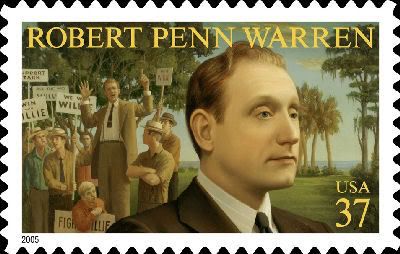
But today we will talk about his artistic embodiment in one of the best novels in all American literature. This, of course, is “the whole royal army” of Robert Penn Warren. The novel was released in 1946, and in 1947 he received the Pulitzer Prize. Since then, this book has been rightly considered classics all over the world, including, of course, Russia, where Viktor Kholyshev translated the “whole royal army” remarkably.
Just when the 70th anniversary of this novel was celebrated at Nytayms, the newspaper naturally held eloquent parallels between the hero of the book, demagogue and populist Willy Stark and Donald Trump. Today - at the height of the election campaign in America and after Trump’s victory in the struggle for the nomination - Paramonov and I recall this book as part of the personal section of Boris Mikhailovich “The History of Reading”.
Boris Paramonov: You know, Alexander Alexandrovich, I don’t even remember if I read the Warren Roman in the USSR, but the film was definitely watched - a domestic three -part television film, and well made. The actors were remarkable: Georgy Zhzhenov in the title role, Mikhail Kazakov - Jack Burden, and first -class actresses - Tatyana Lavrova and Alla Demidova.
Alexander Genis: I had to read as an American actor, or the producer who happened in Moscow shown several acting portraits and asked: who is better for the role of Willy Stark? The American chose Zhzhenov.
Boris Paramonov: Yes, the film was very not enough, looked with pleasure. Three episodes, I remember, were - so I did not leave the TV for all three evenings.
Alexander Genis: Have you watched the local adaptations, American?
Boris Paramonov: I watched the second with a wonderful whisper. We can say that because of him he went, I love this actor.
Alexander Genis: by the way, the ex -husband of Madonna.
Boris Paramonov: Well, thank God that the former, easily escaped. But I must say, Alexander Alexandrovich, he did not make an impression in the role of Willy Stark in the role of Willy Stark. He seemed young for this role to me, and the texture is not the same, Willy Stark should be a large man. I would, if my will, would give this role to Lee Marvin, a powerful wolf.
Alexander Genis: There was another film adaptation, long -standing, 1949, she was awarded three Oscar awards, including the main one for the best film.
Boris Paramonov: I looked at her, just shown these days. I don’t know why the Oscars was awarded to her. A bad film, all accents are shifted, Willy Stark made a dozen crook from the very beginning, completely out of place, the epic scale was completely lost.
In general, this is what I need to say, Alexander Alexandrovich: Robert Penn Warren’s novel is such a powerful thing, this is so self-sufficient literary work that the conversation about adaptations and actors in one or another role somehow does not go here. This is high literature, and only according to literary criteria should it be considered. This is literature, and from the very beginning, setting the extremely high, I would say, a classic scale. “The whole royal army” in no case can be understood and represented as a political novel.
Alexander Genis: It was not for nothing that the opera was written on this book, shifting the novel in knowingly hyperbolic poetics. Do not forget that Robert Penn Warren is primarily a poet, and did nothing equal to this novel in prose, and he is an outstanding poet. In 1986, he became the first poet-laureate of the United States. In 1987 he was awarded the US National Medal in the field of art. When in 1989, Warren died with an 84-chilling old man, he was escorted as the last Mogikan from the great generation of American literature. All this must be remembered, to say Warren - a master of literature, and not Loyo, but southern. Therefore, any conversation about the Royal Rati must begin with the fact that this is a southern novel.
Boris Paramonov: That's right! Of course, this thing must be taken among the great American southern novels. And the first association that occurs when reading Warenn is Faulkner, of course.
Alexander Genis: And yet, in America they often write that “the whole royal army” is a wonderful political novel. What is difficult for me to agree. Perhaps because when I read Warren in Russia in my youth, it did not occur to me to compare this powerful book with real American history, about which I really did not know anything. For us, Soviet readers, Warren wrote a myth about the nature of power, and America itself was a myth.
Boris Paramonov: I willingly understand you. The book of Warren, so to speak, was unlucky in the genre definition, because the basis of the novel was a loud American precisely that the political story was the murder of Hugh Long - at one time Governor Louisiana and the senator later.
Hugh Long was a highly matured part of a parting politician who undoubtedly had a huge political perspective. He did not hide the fact that his final political goal was the White House. He wanted to become president of the United States and seemed to have a chance. And such a charismatic leader is killed on his first serious political steps. Moreover, the murder is some kind of incomprehensible: he was shot by a completely private person - Dr. Weiss, who did not touch the Louisian political machine from any end. Above all this tragic history is a large question mark.
In the case of Long, another very noticeable Oberton is listening. The fact is that Hugh Long was a very bright populist. Consider the political situation in the world at that time - the mid -thirties: the heyday of fascist regimes in Europe, Italy, and especially in Germany. Hugh Long was very suggesting to comparison with Hitler.
Alexander Genis: Warren himself recalled in this regard Mussolini, with whom, by the way, Trump began to compare. If “the fetid slums of Europe could become a nutrient medium for an“ inspired idiot, ”he wrote, talking about the plan of his novel, then a similar situation could be seen at the ruined great depression of the south.
It seems to me that even the portrait of Willy Stark in the novel resembles a double. Here is a quote: “Bags under the eyes, slightly flabby cheeks, fleshy lips, which, if you peered, were driven one to the other, like a couple of bricks, the same tangled strand of hair hanging on a not very high square forehead. Under the portrait it was written in quotation marks:“ I listen to the folk heart. ”And the signature: Willy Stark.”
Boris Paramonov: It is possible that Mussolini. It is important that when he was his governor Louisiana, he pursued just such a populist policy, he was very speechless and inspired demagogues, and poor masses adored him. He pursued a policy of Welfer State in one single American state - here in this Louisiana. And this was an unusual policy. Long were ready to consider a fascist, and they saw a threat in this. Rooseveltovsky new course only unfolded. Louisiana was then a very poor state, so he did a lot for the inhabitants of Louisiana. He built roads, sharply improved public healthcare. People carried him in their arms. But like every demagogue, he loved to portray himself with an outsider and criticize the hystblishment, sometimes very sharply. I raised taxes on the rich, they naturally did not like it. And again - we will remember the then world background: the same Mussolini and Hitler. At the same time, Long himself could definitely not boast of the lily purity of his hands. He was tied to all nodes of party-political vehicles. The intrigue of the novel was built on this: as a young politician Willy Stark wanted to play honestly, but he was not given, and then he himself learned the wolf rules of the political struggle. In the novel of Warren, just all these political moves and hardware-party games appear fully.
Nevertheless, the center of gravity of the novel is not there. Willy Stark could not imagine as a typical American “politician” a. He is in some way an idealist.
Alexander Genis: Oh? In the novel, he demonstrates the whole set of dirty political games from bribery to blackmail and much so on.
Boris Paramonov: So yes. The plot of Willy Stark is more than typical, this is the path of all idealists who thought to benefit people. This is a lesson and the covenant of the great inquisitor: we, fools, are forcibly impressive you. A pure reformer is a contradiction in the definition. A person who has stepped on the path of a political struggle, even if he wants to bless humanity, will inevitably be exhausted in the mud.
And yet, I repeat once again, the scale of the protagonist clearly takes him beyond the scope of the genre. And the reader has the impression that he does not read a political novel, but some of the Shakespeare's plays.
Alexander Genis: Macbeth?
Boris Paramonov: No, rather, “King Lear”. The so -called political struggle causes the whole set of human passions to action. I would say that in politics a person affects holistically: he gives out everything he is capable of. It is like a war, except that they don’t shoot.
Alexander Genis: Why, sometimes they shoot! And just the story of Hugh Long testifies to this.
Boris Paramonov: But the intensity of passions is such that shooting is not needed, people are completely laid out. The political struggle appears to be a metaphor for life as such, life struggle. It turns out that a person who has gone into politics does not put a part of his soul into such a struggle, but all of himself - otherwise nothing will work out.
I, Alexander Alexandrovich, said about Shakespeare. So, after all, another literary parallel arises: the Bible is no more nor less! Willy Stark speaks the tongue and words of biblical characters. The literary level with the appearance of a political novel immediately takes off to maximum heights. And seeing this feature of the novel by Warren, you will never agree that this is a political novel, a novel about the fraud of the American political machine. Willy Stark in the novel did not utter a single empty, unimportant for the novel or just a neutral word.
Alexander Genis: Is it possible, Boris Mikhailovich, in this to see the biblical training of the Americans themselves, not only politicians? Especially when we are talking about southerners. Remember how Faulkner himself wrote about fellow countrymen: they are full of biblical quotes and whiskey.
Boris Paramonov: Of course, and you immediately feel with which people you are dealing with, what this people have increased, what it is, I will say this, the existential structure. Of course, this is a deeply religious people, and religion in America is not on duty words of a rally, but the deep, existential layer of American education.
So it turns out that you read a kind of novel from the political life of the United States, but plunge into Shakespeare. Moreover, to the Old Testament.
I'm not talking about what magnificent philosophy is purely American philosophy! - develops Willy Stark. This is a real pragmatism - and it is clear that William James composed such a worldview, but it has all the Americans under the skin. Willy Stark talks with one decent person who climbed into politics and wants to remain clean. And then he says a wonderful phrase: you will have to do good from evil. Why? But because there is nothing more to make it from.
I would call it the pragmatic theory of morality.
In general, this is the lesson. Reading the “entire royal army”, you are not dealing with the political machine of America and not with American politicians - you are dealing with people who speak the language of Shakespeare and biblical prophets.