
Translated material
Cleaned Georgy Zhukov
What did we learn from the publication of the dossier to the marshal in the "Ogok"
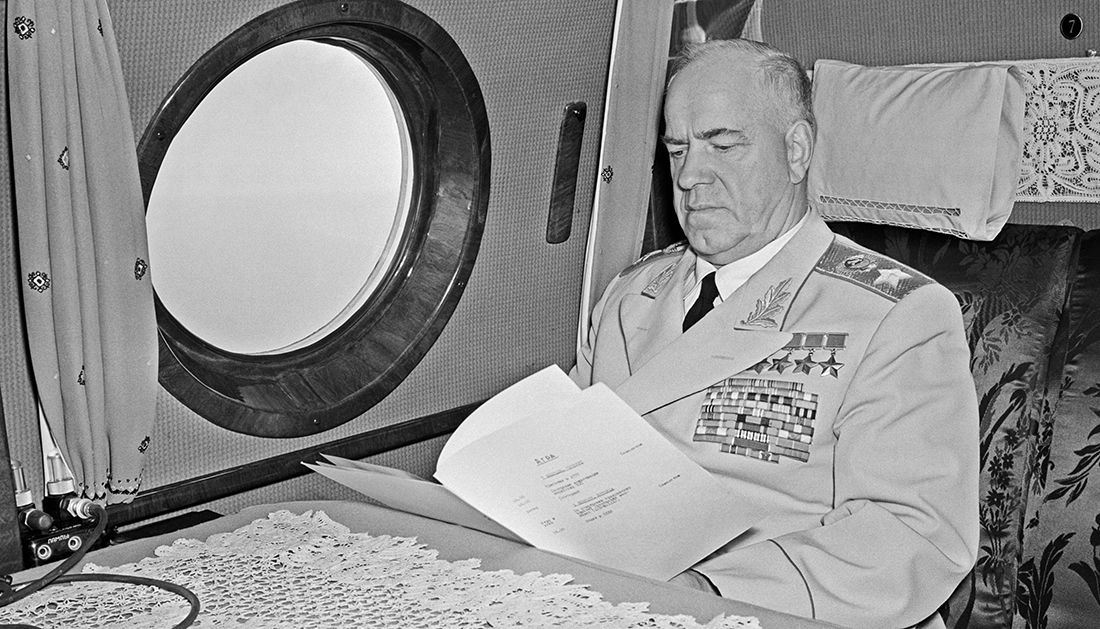
Historian Leonid Maksimenkov gained access to the archival case, which for many years remained secret - the dossier of the Politburo of the Central Committee of the CPSU on Marshal George Zhukov. The declassification of documents of this kind is an important event for researchers involved in the history of the USSR. Maksimenkov spoke about some of his finds in the magazine "Spark". Medusa retells the most interesting of this article.
As reported to Marshal Zhukov
In the dossier to George Zhukov there were two documents, which, apparently, should be considered compromising on the marshal. Those that publish "light" dates back to 1954, when Zhukov served as the first deputy minister of defense.
The first document is from France. Mikhail Shalin, the head of the Main Intelligence Directorate of the General Staff of the Armed Forces of the USSR, reports to the Minister of Defense Nikolai Bulganin that on July 1, 1954, a certain Mr. Motar had come to the Soviet embassy and transferred a “provocative note”. The note said that Marshal Zhukov was negotiating with Western intelligence, going to raise an uprising in Russia and seize power. At the same time, he undertakes to dissolve the Communist Party, arrest its leaders and conclude an alliance against the peoples of Asia.
The second document is from Germany. This is a letter from a resident of Dresden to a certain Madame Lange addressed to the Soviet Prime Minister George Malenkov: Lange complains that Zhukov does not want to pay child support for the maintenance of her six -year -old son. “I ask you to tell me whether Mr. Marshal is a member of the party, because I intend to apply to the Central Committee against this lazy person,” Langa concludes a letter.
Maksimenkov draws attention to the fact that the content of the note from the “Paris” denunciation clearly resembles the accusations with which Marshal Zhukov was expelled from the CPSU Central Committee in 1957.
How a decision was made to publish Zhukov memoirs
The famous memoirs of George Zhukov “Memories and Reflections” were published in the USSR with giant circulations (for the first time in 1969). Dossier documents allow you to better understand how the issue of their publication was discussed at the highest level of Soviet power - in particular, the manuscript was edited by members of the Politburo. Maksimenkov also cites the report of the KGB chairman Yuri Andropov, who reported in the summer of 1968 that the copy of Zhukov’s memoirs fell into the hands of the director of the Flegon Press London publishing house Alec Flegon - and he is ready to give it to the seal. This circumstance significantly accelerated the passage of the manuscript through censorship.
How Zhukov died
The conclusion of doctors about Zhukov’s death for a long time remained a secret for researchers. This is very unusual even by Soviet standards: the conclusions of doctors about the state of such personalities were published immediately after death. According to the documents, the death of Marshal looks quite ordinary; However, this information has received the highest degree of secrecy.
The dossier has yet to be painstakingly studied. Not only in order to know more and more reliable about the Victory Marshal itself, but also to get an exhaustive idea of the morals and traditions of the Soviet nomenclature. Here, discoveries are waiting for researchers literally on each page of archival documents.