
Translated material
Partisans and bears
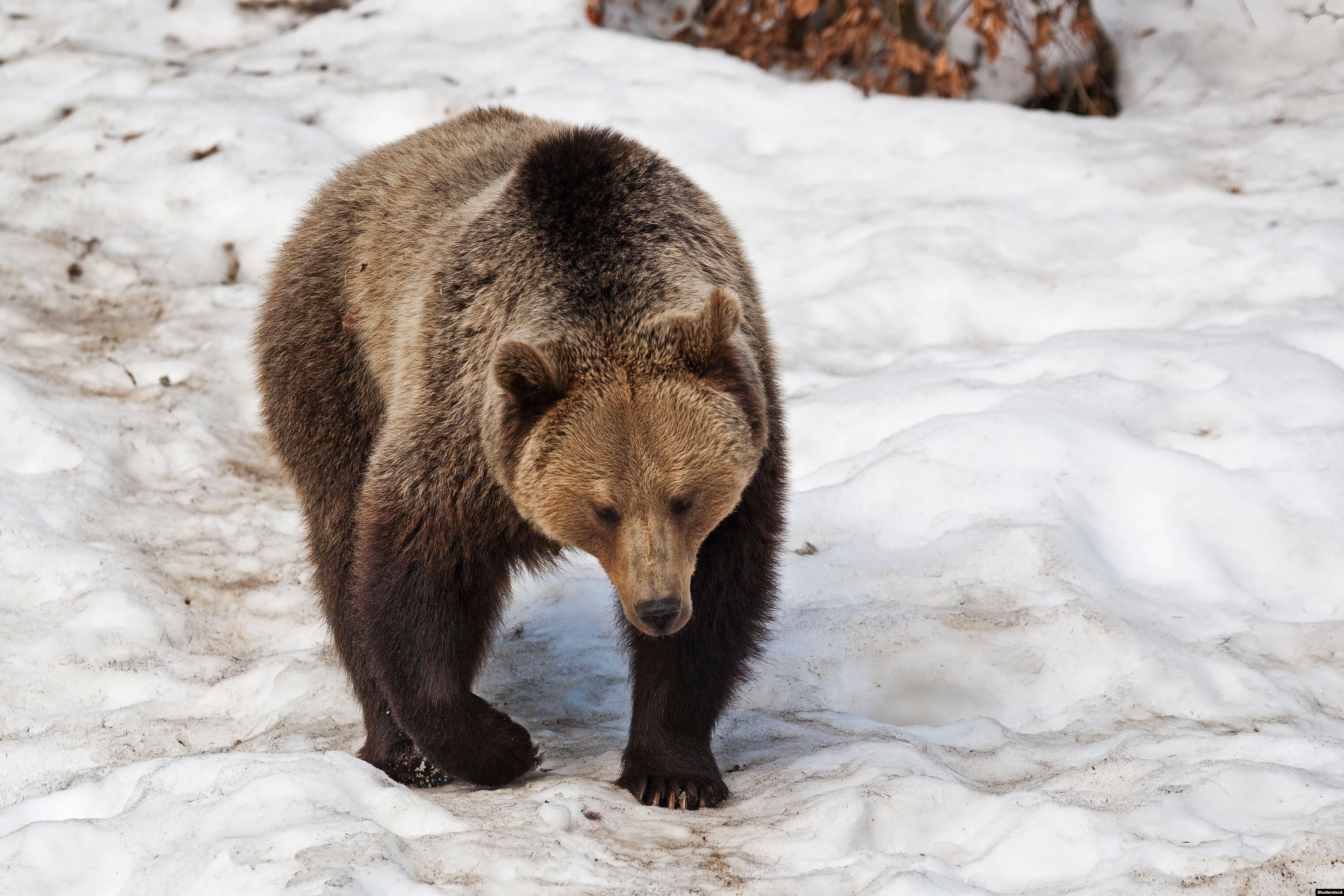
The partisan camp in Slovenia "Kochevsky Rih" is a museum-reserve and a favorite place of life of bears
Not only the Soviet Union, but also Yugoslavia was proud of the partisan movement during World War II. One of the largest partisan camps was located in Central Slovenia, in a mountainous area called the Kochevsky horn. There was a real partisan state with its own money, schools, theater and hospitals. Due to the high conspiracy and complexity of the landscape, part of the camp was only once disclosed by German and Italian Nazis.
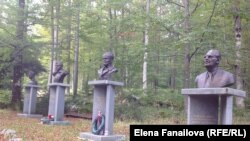
After the war, partisan buildings were preserved in the Kochevsky horn, an alley of busts of the heroes-partisan appeared, the reserve was very popular. After the collapse of Yugoslavia and the branch of Slovenia, this is not so visited, but still a well-known place that causes ideological and political disputes. This region is preferred for habitat bears, whom Slovenia exports to the EU countries under government environmental agreements. Elena Fanailova asked to recall the editor -in -chief of the GOGA publishing house, the poet and translator Christmas tree of Tsiglenychka about the details of the joint trip from Ljubljana to the city of Novy Place, and then to the Kochevsky horn.
- When we rode a car from Ljubljana to a new place, I saw unusual bridges over the highway. It turned out that these are bridges for bears.
- Yes, in a new place I work in a small publishing house. And indeed, there, maybe three or four bridges that are built, so that wild animals can cross them, go through the highway. This is especially important for a beer population that are found in large forests near a new place. We have such a “prales”, untouched by man, Mount Kochevsky horn is called, where there was the center of the partisan movement during the Second World War. This is a place in which it is very easy to get lost, and the poor Germans and Italians, the Nazis, the Nazis, did not understand there. They usually deal with them either bears or partisans. In these forests, a rather large population of bears has been preserved. And people in Slovenia in this area are used to living with these bears.
- That is, no one kills anyone - neither people of bears, nor bears of people?
-Of course, there is some kind of control there, there are people who are engaged in this population: biologists, people who are engaged in the protection of the biosphere, it is really wonderful there. There are wolves, foxes, lynxes ... There is not enough population, it is just a forest that almost no one goes to. There are even places where it is forbidden to walk, completely closed to tourists, for example.
- Because you can meet wild animals there?
- This is more to preserve bears than for the preservation of tourists (laughs). This is specially arranged so that they can live and develop freely there, breed. And then we export them.
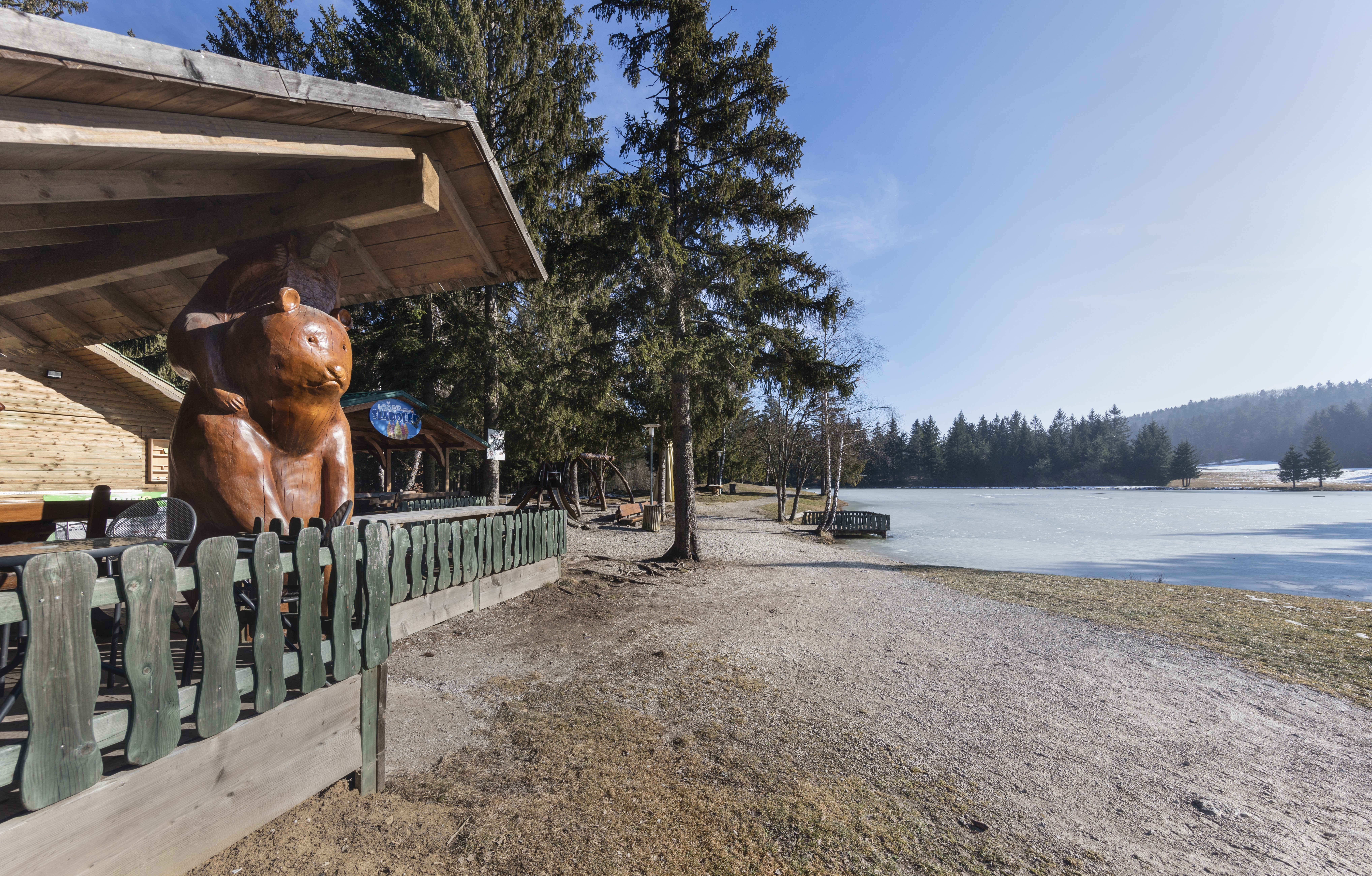
- Slovenia is known as the main exporter of bears to Europe, right?
- Yes, there are projects to preserve the population of the bears, and in France, in Spain, in Italy tried to resume their population, asked Slovenia to give them several pairs of bears. But in most cases, these couples ended poorly. For example, in the Pyrenees, on the border of Spain and France, people are breeding sheep, and of course, there are not happy bears there, ordinary farmers do not understand why they now need to live next to these terrible wild animals. And they are killed there. Of course, there are people who retain their population, but there is a war with farmers who fill the meat with glass, then the bears eat and die tragically. And in Slovenia, somehow after all these years, there are methods of cohabitation.
- Symbiosis of people and bears. How can you live peacefully? There are always fears in people.
- “Of course there, but this is a sparsely populated area. And the people who live there know very well that, for example, it is difficult to drive a bicycle, because the bear is very fast, it runs faster than you are going on a bicycle. For example, it is impossible to leave garbage open, they like to find some desserts that remained from the inhabitants. Yes, there are difficulties.
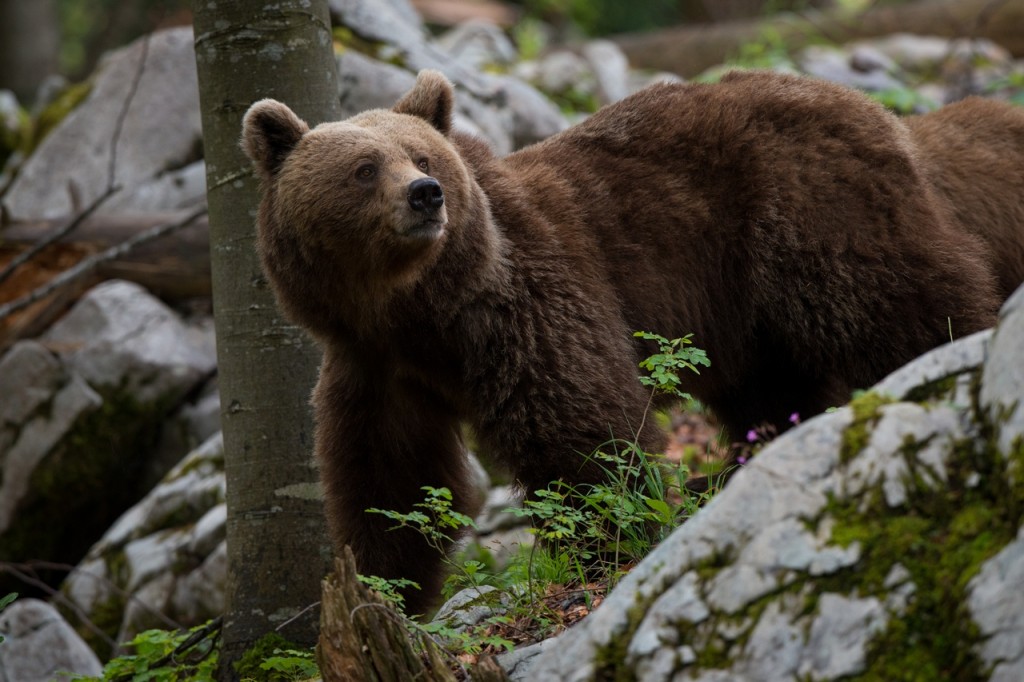
- I was also interested in the story that during the Balkan wars, bears and other animals left the zones of military operations. There are oral stories that in Slovenia a certain number of bears from the regions covered by war from Bosnia, for example, have moved.
- Bears, like people, do not like war, do not like shots. And probably, because of these sounds, they fled to the north from Bosnia, where there are also many large wild forests, in Slovenia. They even went to Ljubljana, to the outskirts of Ljubljana, and to the Julian Alps, where we usually have almost no bears, on the border with Austria. But then they moved, and there were more at that time. I don’t know for sure, maybe this is a legend. But, probably, there is some truth in this.
-And the bears, who reached Ljubljana, were somehow caught, sent to the zoo, took them to the Kochevsky horn and released there in the reserve?
- We have such a large literary holiday in Lububwean, we give a prize for the best Slovenian novel of the year, the "godson" is called. This is on such a small slide almost in the center of Ljubljana, part of the local fleet of the ROSK. The horns is practically a forest. And one bear wandered into this forest, who was searched for weeks, and at that time they were just awarded this prize "The Catheum", all Slovenian writers are gathering on a mug. The Slovenes are still used to living with bears, and we went there, handed the "godson" in this forest, and nothing happened to anyone.
- I am still intriguing the topic "Bears and partisans." We were in the Kochevsky horn reserve, you go there among the forest in the mountains and see the perfectly preserved wooden houses in which the partisans lived, this is a real partisan city, huge. But, as our guide said, we can’t go to one zone, because a bear with the cubs lives there.
- Yes, they settled in one partisan house, where the museum is now. In fact, bears are afraid of people. In addition to mothers with cubs, there is no real danger to people from bears. They are afraid of people and run away, and the partisans with a gun did not think about bears at all. They had more urgent problems.
- Interesting, then the bears left the zone of military operations or remained there and fought a fair struggle for the liberation of their land, helped the partisans?
- They helped, in fact. The Germans, Italians were afraid to enter these forests.
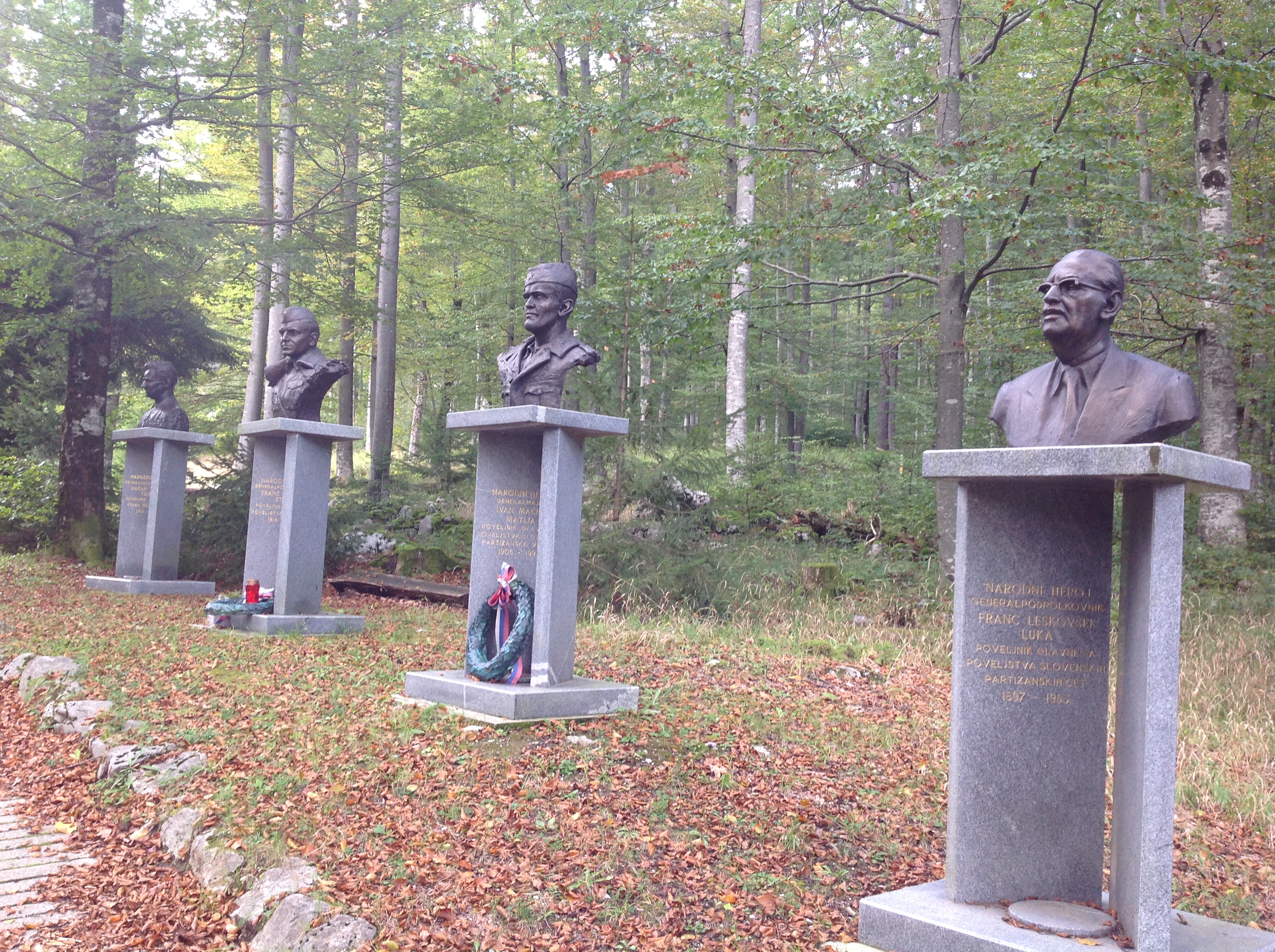
The world and myth of the Yugoslav partisans
- The Kochevsky horn was very popular in Tito, in socialist times. How much are tourists and locals interested in this partisan camp now?
- The Kochevsky horn is a very difficult, tragic story of the Slovenian people. During World War II there was a base where there was a Slovenian partisan government. But after the Second World War, as everywhere in Europe, reprisal began with the traitors, and just in the Kochevsky horn, in these desert places, where there are practically no nobody, that is, there are no witnesses, a huge number of people who collaborated with the Nazis were killed. So this is not only a monument to the partisan movement today, which, of course, is very positive for the Slovenian people, practically it freed Slovenia alone, it was the Yugoslav movement with Tito. But now we go to the Kochevsky horn not only for the sake of partisans, but to bow to the victims of violence after the war. There, of course, there are traitors who performed on the side of the Germans, killed their neighbors, which is terrible, scary, and you can understand the revenge that overtook them.
Now we go to the Kochevsky horn not only for the sake of partisans, but to bow to the victims of violence after the war
But there are many innocent people, almost children, very young soldiers who had no idea what was happening to them.
-In some way, this memorial part is reflected in the museum-reserve or is it only the level of legends and oral traditions about the victims?
- There are memorials, of course, and take their memory ceremonies. As in memory of the partisan movement.
- And these two ideological lines quite coexist with each other, they do not cause contradictions, protests?
-I was born in 1980, and my generation, in my opinion, has no problems with this. But older people perceive this much worse. Slovenia is still divided into people who are more on the partisan side, and who condemn the communist regime, since it may be their ancestors who ended their lives in the pits in the Kochevsky horn.
-Is there any literature on this? Journalists, writers somehow described this conflict or only historians know something about this?
- This is a story that is described not only in numerous scientific work, but also almost every day in newspapers and magazines, and which, unfortunately, became important for Slovenian politics. In my opinion, this is not the most pressing problem now for Slovenia, but politicians love to use it for their own purposes and set up people against another political option.
- It's about socialist nostalgia? Or on which side of politics are called people?
- Especially right -wing parties use for their purposes the killing of innocent people after the Second World War. This is considered the violence of the communist regime. Although I think that in fact, everywhere in Europe this violence after the Second World War was just terrible. Maybe this is not only the fault of the communist regime, it is just a big revenge as a legacy of war.
- It remains only with optimism to look at how bears will survive in Slovenia. Sometimes people are kinder to animals than to each other.
- So far, everything is in order with the bears.