
Translated material
War & Peace Superlite
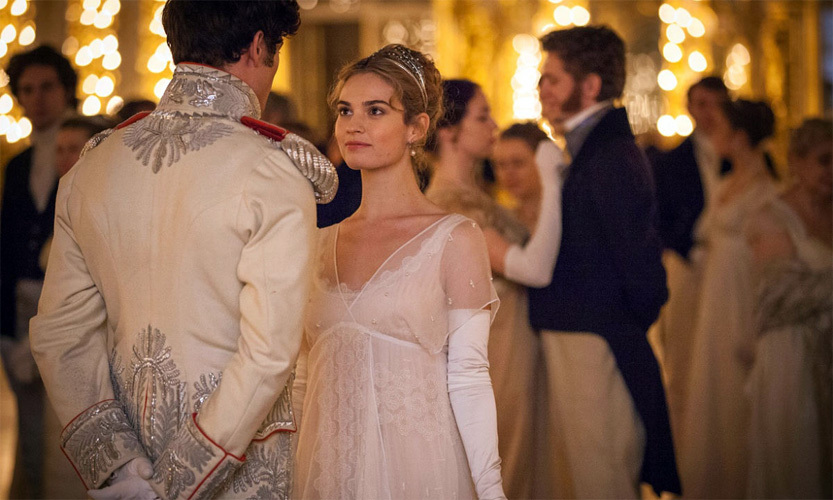
The series according to a classic novel is always the output of the classics from the reservation of high culture to freedom, to the masses, that is, knowable adaptation, simplification and relief. The British series "War and Peace", in my opinion, made this exit with maximum courtesy. Yes, it is Tolstoy for those who have not read the novel or read and forgot, and those who reread it with reverence and admiration every year, you can not watch. But you can take a look to make sure: the pampas of mass culture is not necessarily populated by pasty and jackals, for example, graceful gazelles can be found there.
In addition, the series, filmed by director Tom Harper is rapidly and simple, is also engaged in the fact that it exposes the mechanisms hidden for us by the usual greatness of Tolstoy and the despondency of the lessons in the school curriculum.
In the series, many details important to the novel are simply rejected, the action develops rapidly, some young people fall in love, others have fun, everyone wants happiness, some shoot, some kill. Others get married, give birth to children, and everything ends well in the finale: the war is over, and one glorious man who was all the time confused in stupid ideas, finally became the husband of the one that he always loved - and she loved him, simply did not know that it was love.
Do you say that Tolstoy wrote not about it? And about what else? Of course, about what he survived and what was sure of: marriage to a clean, loving girl is happiness that makes life meaningful. Then he thought that this was not enough, that it was necessary to live not by lies and not resist evil by violence. And in the end, he even fled from that once beautiful girl, but by that time she had changed a lot, giving birth to thirteen children, eight of whom had grown up, five sons themselves acquired beards, wives, ambitions and, together with his mother, wanted the papa to be engaged in their happiness, and not just care about humanity. But the novel "War and Peace" is not written about it. The novel was created in a time when the writer pleased family happiness, not immediately achieved, but all the more highly valuable, if a man is not spoiled by the beauty and success of women, but shy, dependent on the assessment of others and does not understand well how to behave in society.
The British view of Russian life in the series, as it should be, is completely serial, that is, it is a collection of commonly used volatile images related to Russia, where there must be: soul, king, winter palace, Russian romances and gypsies with the exit. But still the space of the series is much more like the Britain that the British themselves portray in the series according to Jane Austin. By the way, the screenwriter of the new War and Peace, eighty -year -old Andrew Davis, also wrote the script for the top series “Pride and Prejudice” - and for the films “Diary of Bridget Jones”, “Dr. Zhivago”, the series “Card House”. And Austin’s main novels - “Reason and Feelings” (1811), “Pride and Prejudice” (1813), “The arguments of the mind” - were written at about the time when Tolstoy’s novel takes place.
There must be: the soul, the king, the Winter Palace, Russian romances and a gypsy with the exit.
It turns out that between the great work of the great Tolstoy and the small, but unfading novels of the British writer, who lived half a century earlier, there is much in common. And Tolstoy’s novel hides under the thickness of psychological sophistication the traces of the prototype - an English family novel, for whose patterns a lot was made in Russian literature. By the way, did you pay attention before that all his heroes are all unexpectedly meeting with each other all the time? Wherever Andrei will go, there he is already waiting for either Pierre, or someone from the Rostov family. The same with Pierre - he constantly turns on his acquaintances, wherever he has appeared: at least on the battlefield, even in burning Moscow. This tightness of the characters at supposedly random intersection of their fates is the property of ancient plot. The genre of a family novel with a continuation, where, after incredible adventures, the main characters will inevitably get used to is that the basis on which it embroiders its complex and much more sophisticated patterns of Tolstoy (as well as dickens and Tekkeraei). The series, simplifying the nuances, demonstrated the original frame. The freedom with which he did this is impressive.
Sergei Bondarchuk shot completely differently. He made a great cinema from a great novel. He had the main male roles were played by proven, solid artists. The real army participated in his battles, the regiments went on the attack. The Russian aristocracy was shown with all faith in secularism and nobility, which was found in the disadvantaged by the beauty of Soviet people. And what about the British? They have a count - count! - Rostov walks in Feske, and not only in his office, but even at home reception. Thank you again for taking it off at a dinner and at the royal ball.
The British do not have any pyte. They do not squat before the monumentality of the characters. They are not pursued by the “image of Andrei Bolkonsky in the epic novel by Leo Tolstoy and the stages of his moral evolution”, which were formed before the exam on the second sleepless night. They just wonder why an adult man is in the grip of prejudices, when a heart impulse is expected from him. What keeps good people from following a feeling, how are they prisoner of prejudice?
But it turns out that this simplicity of the relationship does not interfere with conveying the main meaning of Tolstoy’s novel. It is basic, lower, comprehended by feeling, not mind. War is unnatural, and it doesn’t matter that it is in the blood of young people: they will cross and understand that glory and vanity are bad comforters, and friendship and love are good. Any war is cruel and absurd, the secular conventions are absurd, death comes even to the richest and most successful, and in death the presence of a nearby side of the ridiculous son is much more important than the solemn worship right at the Directory of the dying man.