
Translated material
All power is green
Director Harry Bardin brought a cartoon about the victory of plants over the mechanisms to Cannes. The money for its production was collected by the audience, the state did not invest a penny
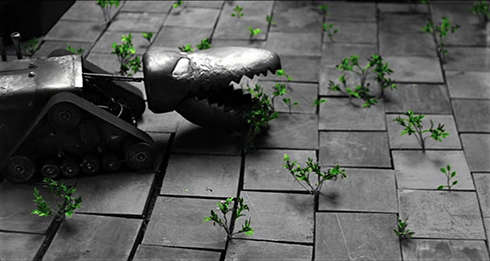
In the new cartoon Harry Bardin, cars are fighting for destruction with green spaces - and oddly enough, they lose
Russia in the official program of the 69th International Film Festival in Cannes is represented by Kirill Serebrennikov with the film “Student” (Section “Special View”) and a short cartoon of the classic of the domestic animation of Harry Bardin “Listening to Beethoven” (the main program “Two Wreak of Directors”). The peculiarity of Bardin’s 10-minute picture is that it was created using crowdfunding.
Return of joy
The word of the world, wordless and understandable to any viewer, despite the views, tastes and age, the short and non-trivial work of Harry Bardin makes us recall the most creative period-the 1980s. In 1983, the anti-utopian “conflict” was born, in 1987-even more stringent “bastards” brought Russia (which few people still know about) the Cannes “gold palm branch” in a short meter. “Listening to Beethoven” is a film about a gray-series of a city in which there is no place for anything and anyone living. Nevertheless, green sprouts are still trying to break through the asphalt plates. Grass, flowers, and just weeds are immediately brutally destroyed. For this, numerous diverse machines work in the city, the main goal of which is the struggle against greens (the mechanisms were invented by the authors of the film with remarkable imagination). It seems that plants have no chance of survival. However, it is worth climbing the sun, how the asphalt cracks under the pressure of the "green".
Before us, of course, is not only the victory of vegetation over soulless machines, but also creativity over those mechanisms (they are usually called), with the help of which the authorities are trying to regulate Russian cinema today
This is exhausted - and is not exhausted - the plot of the cartoon. After all, there is also Beethoven's music: in the beginning - the mourning funeral allegretto from the seventh symphony, in the final - the triumphal “Oda to Joy” from the ninth. Bardin has always been remarkably subtly felt the music, since his cult animated musical “Flying Ship” (the director himself performed the batch of the king) and the parody multiple-fraud “Pyry Paf, oh-oh-oh!” Up to the Tchaikovsky recent “ugly duckling” based on the ballets. Unusual heroes of the new cartoon also move and breathe in the rhythm of music. By the way, he recreated this rhythm for the second time, after the "ugly duckling", Vladimir Spivakov. His orchestra was recorded by the soundtrack for free (all the musicians voted unanimously for this) - thus making his contribution to the budget of the film, shot with folk money.
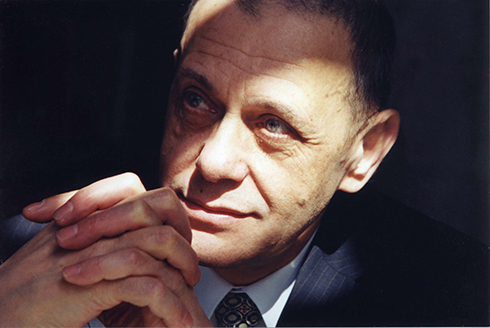
Harry Bardin was already in Cannes: in 1987 he was awarded a short "gold palm branch"
On your own
Before us, of course, is not only the victory of vegetation over soulless machines, but also creativity over those mechanisms (they are usually called), with the help of which the authorities are trying to regulate Russian cinema. It is quite obvious to everyone that the author’s animation cannot be profitable by definition. Especially short, even deprived of hopes for renting in cinemas. Therefore, everyone who is engaged in this ungrateful business appears on a common basis in the Ministry of Culture and expect subsidies from it: without this it is strongly impossible to continue the “glorious Soviet traditions”. However, Bardin went a different way. He completely refused to support the state, deciding to collect money from the audience themselves - on the Planet platform, through crowdfunding. In 2015, his cartoon broke the record “Planet”, collecting 6,150,000 rubles. Among the buyers of the lots were VIP methods (each contributed a million rubles), and ordinary citizens. Who bought excursions, who are copyright sketches, who are artifacts from other famous cartoons of Bardin. Many contributed money disinterestedly. In total, 846 shares were bought. And now - “listening to Beethoven” is ready and goes to Cannes.
Harry Bardin explains how it turned out that the picture was made without state participation at all: “For the previous film“ Three Melodies ”, I got money on crowdfunding-it was a forced measure, there was not enough money, and I, as a producer, had to find them somewhere. I found them with the audience! They gave me 34% of the budget. This time I turned to the audience directly. ”
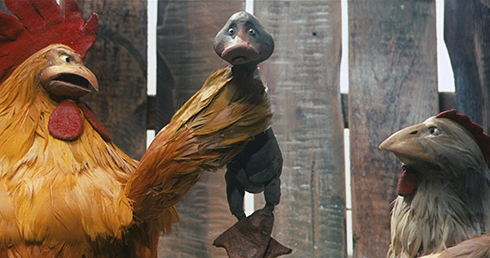
Bardin always subtly felt music: his “ugly duckling” (in the photo) was played under Tchaikovsky, the new cartoon - near Beethoven
Bardin did not have a direct conflict with officials: he protests more against their approach and relations: “The Ministry of Culture helps if you correspond to their ideas about what you should do. And I do not work on order - I do what I want. In addition, I was offended by the situation with the previous picture. I was sick then, lay in the hospital - I did not enter the filming mode and asked for prolongation. I went to the Ministry of Culture, asked to extend the end of the picture for a month and a half. They told me: "Go, do not worry." But when I finished the picture, the Minister of Culture fined me two hundred thousand rubles. On a common basis. The ethical side of my relationship with the Minister did not suit me. I realized that my legs will not be in the ministry anymore. ”
Multipliness and politics
The Cannes Festival is looking for political cinema in Russia - and is extremely rare. The non -trivial success of the Leviathan span, and the lack of films in last year's festival program, has been connected with this, is connected with this. Bardin, of course, clearly expresses his political position - this can also be seen in his new, absolutely transparent cartoon. On the other hand, it is unlikely that Cannes are seriously interested in the specifics of the relationship of the Russian director and Minister of Culture or take a cartoon to the program in peak official instances, for opposition. Another thing is appreciated here: talent, identity, independence - primarily in relation to a creative strategy. But without this, there is not a single Harry Bardin film.
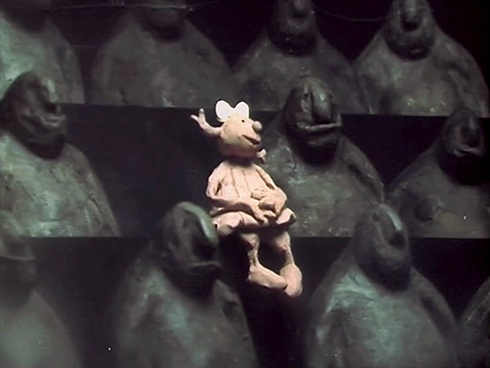
Cult cartoon of the 1980s-"Brack", a saga about a duel of plasticine boxers
According to the director himself, his conspiracy with the audience is a longtime. Crowdfunding only helped to arrange it officially: “I meet with these people on Sakharov Avenue, I come across them on the Internet. The third generation is already watching my films and shows them to each other. Non -standard, intelligent, smart and witty people. This is enough for me. " Yes, today in Russia there are no channels for commercial rental of short -based author's animation. But for some reason it is impossible to doubt that people who invested money and strength in the creation of the cartoon “Listening to Beethoven” will ultimately be able to see him.
These ten minutes are a distinct author's manifesto. Bardin always shot all his best films about the same thing: about freedom. More precisely, about the tragic consequences of its lack
Among other things, these ten minutes are a distinct author's manifesto. Bardin always shot all his best films about the same thing - about freedom. More precisely, about the tragic consequences of its lack. The apocalyptic “conflict” about the war of matches and the paper parable “Adagio” concerned this topic. Household non-freedom of invisible heroes of the “banquet” or the rope family of “marriage”, the doom of the funny characters “Brack” or “Tyap-Lap, Malyars” on senseless work-everything rested on the limitations of a person, often guilty of his unenviable fate (as in wire “extensions”, naturally ended with a barbed wire). However, the audience always remembered Ivan the Durak, who escaped from a shameful earth to heaven along with his princess in a “flying ship”-and about the flight that was waiting for the ugly duckling.
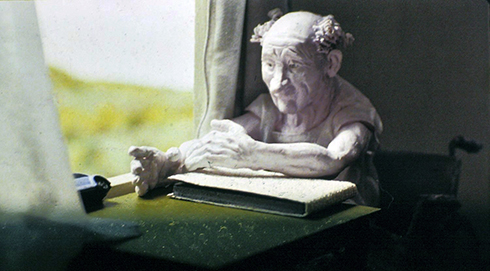
For the first time, Bardin tried to turn to the audience for financial assistance with the previous cartoon, "three melodies"
“Freedom is pristine for me,” Bardin admits. - It needs a thinking person: he wants to live in a free city and a free country. The desire for love and the desire for freedom is the main thing for me, the primary. This is what lives in us and requires a way out. A person cannot be a slave. The desire for freedom is his natural desire. ”
Photo: Kobal/The Picture Desk, YouTube.com