Date
Author
Елена Фанайлова; Андрей Королев
Source

Preserved copy
Translated material
"Hell is a bad taste"
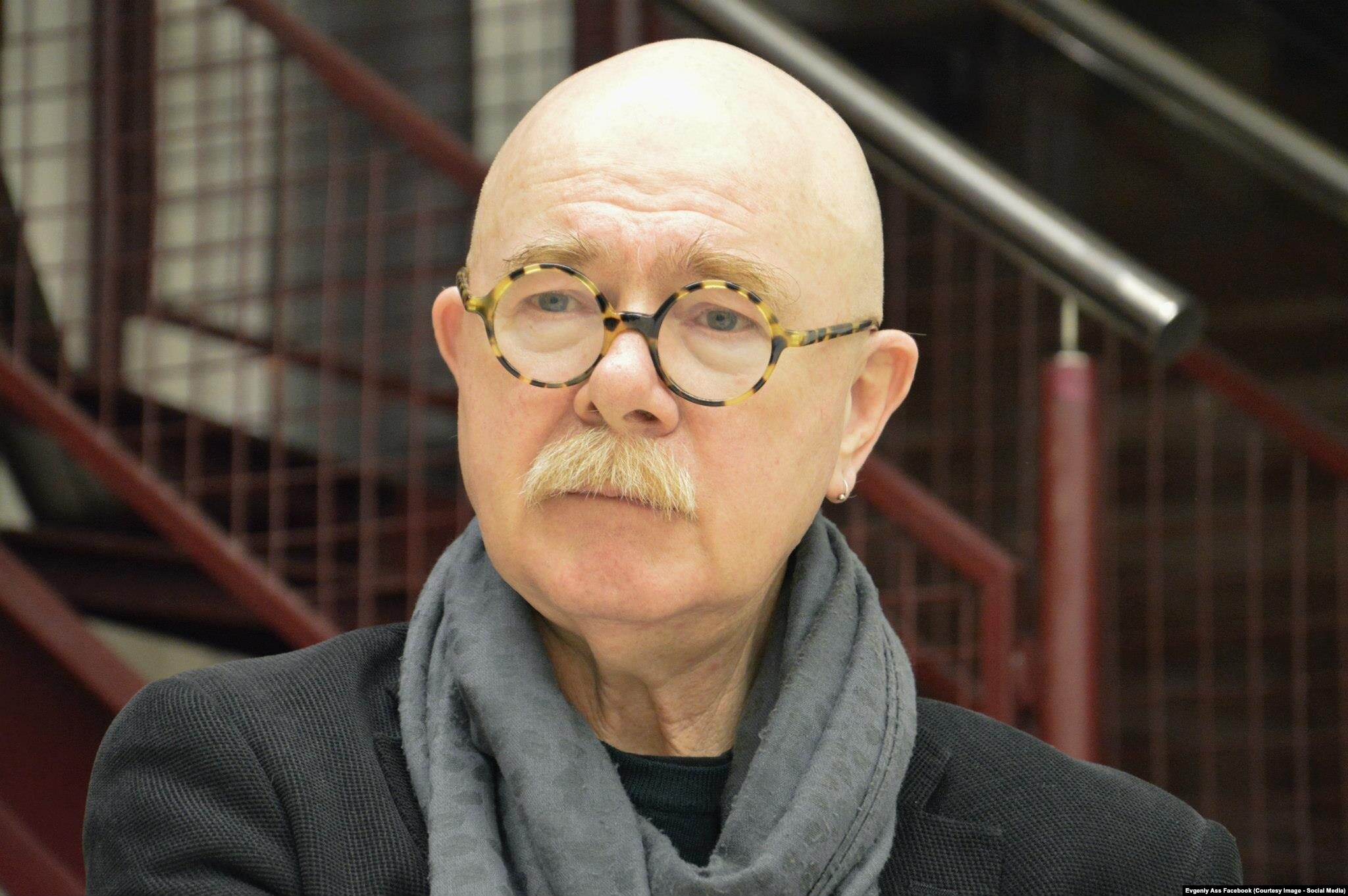
Architect Evgeny Ass - On reputation, prison, professional Westernism and friendly Ukraine
Evgeny ASS - rector of the architectural school march, which, after many years of teaching in Markhi, founded in contrast to the state system of training with English partners (British Higher School of Design and London Metropolitan University). The hereditary architect, the central sphere of interests - the urban environment and design. Member of the European Cultural Parliament. Several times he was the curator of the Russian pavilion at the Venetian Biennale. The co -organizer of the projects “Last address”, the monument to the victims of the Stalinist repressions. The last work in the field of exhibition design is the retrospective of the classic of socialist Realism Gelia Korzhev in the Tretyakov Gallery. A conversation with Evgeny Ace on the reputation costs of the profession took place some time before the appearance of monstrous city sculptures in Moscow. These include the last Evgeny Assa entry on Facebook: “I finally understood that hell is for me: this is not about fire and pain, this is about a bad taste.”
- I meet with the idea that from unwanted contacts with the authorities, including managerial ones, can protect the expert’s reputation in his expert world. What is meant: from too long-state policy in the construction of any exhibitions, from signing well-known letters in favor of the extension of Crimea from Ukraine and so on. Is the reputation really such an unshakable position that helps a person make the right choice, both professional and human?
- I think that the reputation is more likely a consequence than the reason. Still, apparently, initially there is a certain system of values, the idea of what is permissible, what is unacceptable. There is such a theory of levels of moral motivation, and there the reputation refers to the context of shame. The highest degree of moral motivation is a conscience that makes you act somehow in this way, and not otherwise. Although, of course, there is some influence of a reference group, sorry for such an expression is scientific, that is, a group in relation to which you feel your responsibility, belonging to which is important and valuable for you, as rooting in the world, simply because it is with this group that you live in this world. Of course, there is a critical feeling that otherwise you fall out of this context. For me, the primary idea of how I myself understand this problem, and secondly-how can I divide this understanding with my referents.

Architect Evgeny Ass - On reputation, prison, professional Westernism and friendly Ukraine
The text of the copyWidth PX Height PX
The url has been copied to your clipboard
No Media Source Currently Available
0:00 0:15:43 Download the media file- Is there an idea of reputation in the professional environment of architects? Let's just say, did anyone withstand the reputational considerations from, for example, the execution of some city order that contradicts professional standards?
- I would say that architects must be distinguished in a sense from this discourse, because architecture, generally speaking, is historically attached to power and is very closely connected with it. Today, no one will rise to condemn the architects who built beautiful houses in the era of the monstrous rampant of totalitarianism, today the most expensive houses are these. They fulfilled their professional duty, like my father, for example, and in general I worked in these not very pleasant years. And all of us only 25 years as they stopped directly dependent, in direct connection with the state. In fact, the work in the city can be understood in different ways: how to fulfill the state order or as work with citizens-these are generally different contexts.
If you understand this as working with people who use the product of your work, then it looks completely different than if you understand it as working with an idiot-chin. It is terrible to work with officials, but if you think that this is a building or a park in which people will walk, then this somewhat changes the coordinate system. There are some things with which it is impossible to put up with and which I probably would not do. Although in the Soviet years we discussed a lot with my colleagues. For example, is it necessary to design prisons? On the one hand, it seems that this is an absolutely state order, it is terrible, the suppression system.
On the other hand, my son, for example, made a prison for a diploma because there are humanistic ideas about what the conditions of detention can be and what a good prison is. This does not mean at all that you can correct the system of execution of punishments, but at least you can fulfill your professional duty honestly and at the professional level to provide prisoners with several best conditions of detention. This is an incredibly complex dilemma, you can not always find a direct and unambiguous way out of it. I recall the conversation somewhere in the early 70s with one famous architect, whom I, with some radicalism, reproached for the fact that “how is it that you are building houses for the Tsekovsky nomenclature”. And he cynically said so: “Listen, it will someday end, and at home they will remain, and normal people will live there.” What happened, he somehow foresaw this situation: now quite normal people, already far from ration regime, live in these Tsekov houses. How to protect yourself from deliberately vicious contacts? This is intuition, this is a flair, and some are really mechanisms, there are some areas that cannot be, cannot be in. But this does not mean at all that there are no same areas in the field of commercial orders, for example.
- Can I have an example?
- As much as you like. When some oligarch orders something to build something like that, for which he offers to cut down an oak grove of 200 years ago, it must be understood that this is absolutely unacceptable, I must abandon this order-this, in my opinion, is obvious.
About the same nonsense that are offered by the state, I will not do either. For an architect, this is a subtly defined level of interaction. Since I am making exhibitions at the same time, I know exactly what exhibitions I will not do.
- Which?
-There were some proposals related to socialist realism. At one of the exhibitions that we do, in some context there is Stalin behind. I don’t want to, I won’t put Stalin under any circumstances, despite the fact that now many art historians say that this is about art, and not about politics. Nevertheless, there are some points that I can’t step over, to give up the principles, as they say.
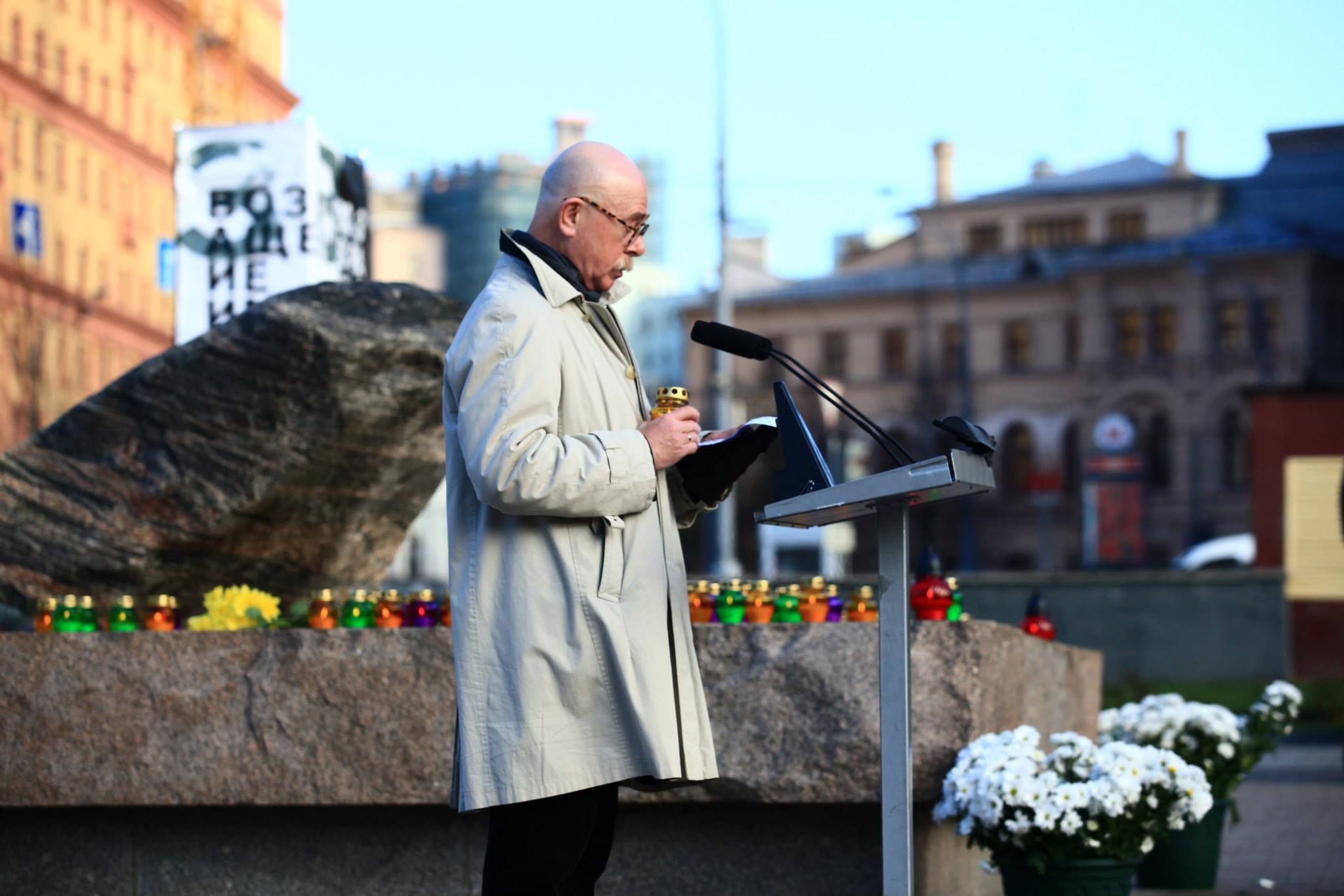
- We are sitting in your workshop, hence the magical view of the Foreign Ministry, and, as you said, to skyscrapers resembling Dubai. You added that it is good that these windows overlook the west, you like to contact the West. Can I develop this joke?
-It so accidentally turned out that I have the windows of the apartment to the west, and when we rented this workshop, I also thought that somehow everything was for a reason. My life somehow turns in this direction. On the one hand, I really like to look at sunsets, this is unique. There are amazing sunsets, fantastic beauty. On the other hand, symbolically, this is some important coordinate system, my compass is turned in this direction, I believe that it is no coincidence that my orientation turned out to be, this is the choice.
- You said about prisons. The approach of Western architects and designers, and people from the world of contemporary art are the same: a prison is something that must have a humanitarian, humanistic meaning should facilitate the conditions of conclusion. And what else in the sense of contacting the West you like in the profession?
- In general, after all, my fate has developed in this way since childhood, since my mother was engaged in Western architecture, she was a historian of architecture and a specialist, in particular, in American architecture. In 1962, these are still the remnants of some kind of thaw, she wrote and published the book “The latest United States Architecture”. Therefore, in my life since childhood there was a foreign architecture, magazines, books. In this case, the view to the west from my window was clear and straight. Since childhood, I have been granted a lot of “harmful” Western through art, the Western system of values that was clear to me, including some abstractionism and so on, completely unacceptable at that time. And the magazine “America”, the magazine “England” later, and so on.
Therefore, I can safely say that I am a Westerner and liberal, thus brought up from childhood. It would be quite stupid to say that prisons in the West are the most important thing, although this is a reflection of a value system in which freedom is the main value: the prison deprives a person of freedom, but not comfort. And in this sense, the greatest punishment is imprisonment. In Russia, among other things, the prison is a humiliation of a person. From this point of view, my attitude to the punishment system is understandable: in a sense it is inevitable, there are criminals in any system, there is a necessary system of their punishment, one way or another, but this punishment is due to imprisonment, and this is important to understand. Now I have one student in a prison project studio, very interesting, because it is a vertical prison-this is a skyscraper, it should symbolically rise in the city. This is also such a part of urban culture, as important as a bank or some office that there will be such a huge, in my opinion, 50-story prison in the center of Moscow.
-Is it possible to imagine that this project is ever implemented?
- Don't know. Academic projects are not subject to implementation at all, these are rather experiments, quite interesting reflections on the topic: what is a prison in the city, whether the prison is the subject of some shy concealment, supplanting to the outskirts, or, as it was historically, almost the center. The prison comes from the word Turm-this is a tower, it is still such a prominent place. Here we are just literally building a tower, this girl is designing a tower. As well as another student, my student is designing a vertical columbarium, such a skyscraper that replaces about a square kilometer of the cemetery. If you can imagine that there may be such a city function as burial in skyscrapers.
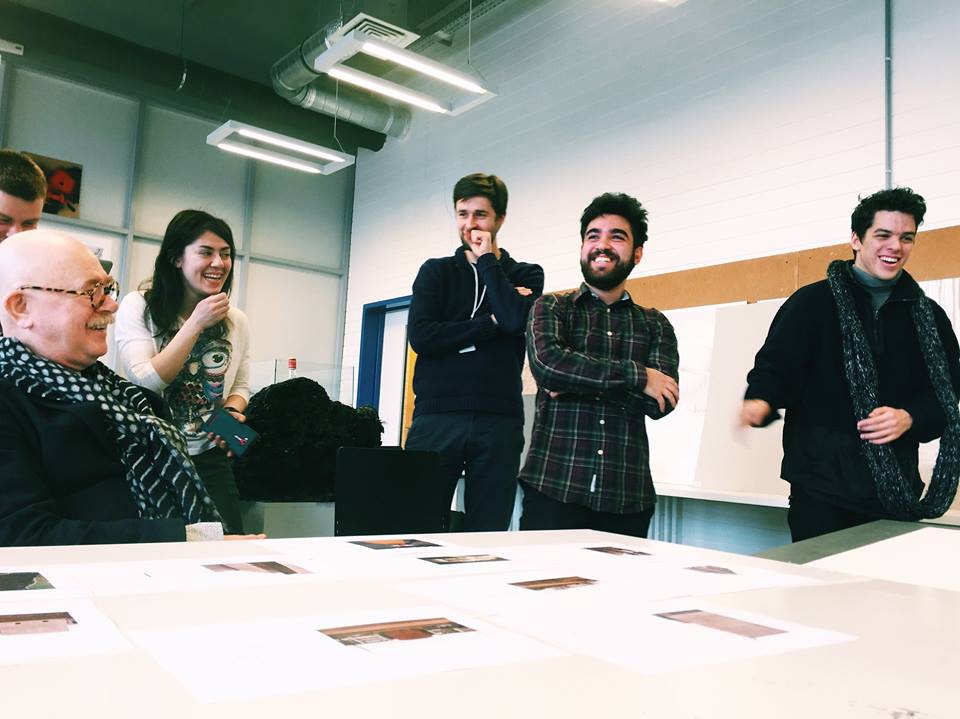
- Marvelous. Do the guys come up with this or on the advice of teachers?
-No, I can’t say that I advised something, this is some kind of process. The studio that I am now called is called “rethinking basic forms”. It is not so easy to explain this right away, it is not only about any basic forms of geometric, but also basic forms of existence. Prison and burial are some basic things for the human community. In this sense, we were interested in discussing just such things. Among other projects there were housing for the elderly, some other things that seem to us essential. We have gone so far in a conversation from the reputation.
- And it seems to me that this is all connected. If you are engaged in such fields, such areas - this is already becoming part of your professional world and part of your renom, such an interest in social problems. I even think that this girl could well be inspired by the images of Pussy Riot , which are in prison, or now by a court of Pavlensky. That is, this is a strange analogy, but some fashionable media people suddenly find themselves in these spaces. I just wanted to ask: do you accidentally have no court in these developments?
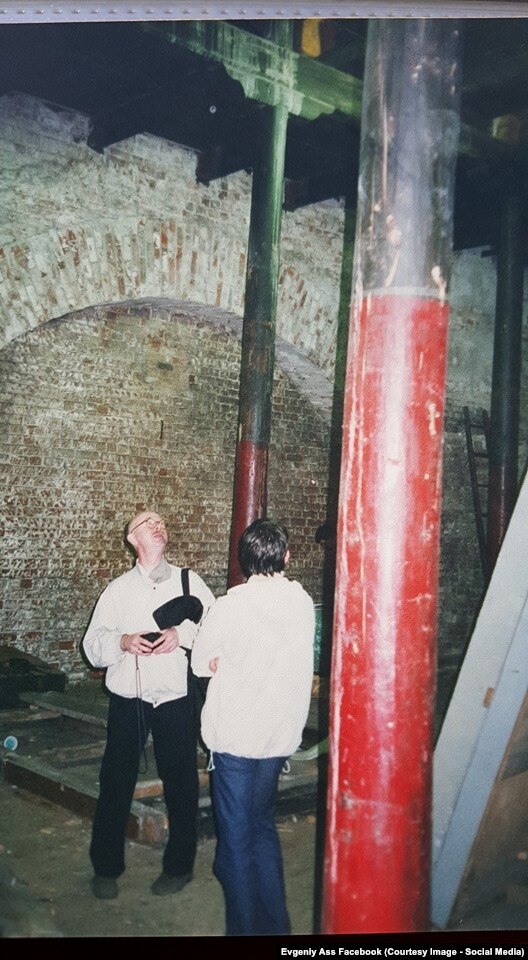
- Not without that. In general, this is interesting, yesterday we just discussed it, because the girl offered a tourist equipment store on the ground floor of this prison, that is, “from prison and Suma” literally. There is a restaurant in which prisoners, that is, a restaurant of prison kitchen and a bag of bags. This, of course, is a joke, but there is something in it.
- I believe that she may have heard about the prison kitchen in the United States, there is such a project.
- And in Italy there is a well -known. There is a school of cooks, in prison they are engaged in cooking and teach prisoners to cook. In fact, heavy existence in this space. Indeed, this is an interesting motive, because the prison today acquires some additional meaning precisely as some kind of concentration of energy, social energy.
- After the “swamp business”.
- That's right. Pussy Riot, Pavlensky, Savchenko, a lot, right a series.
- Sentsov and Kolchenko. All these are pretty loud things.
-Honestly, somewhere in the subconscious it was, it is unlikely that we had in mind the political demarche, here we were interested in a really social role. I have to say that next year we unfold such a program, a project together with the Naumann Foundation, they invited us. As a matter of fact, Sergei Medvedev in the tower came up with the program “Architecture and Institutes”, which will consider the interconnection of architecture with various institutions of power and generally institutionalism of the organization of society.
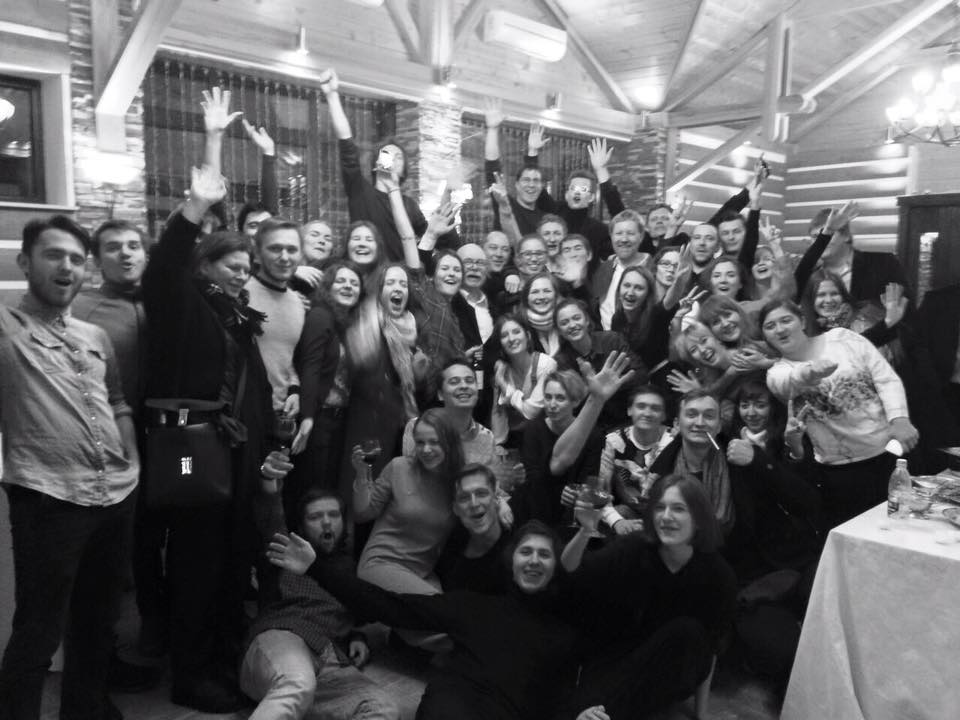
We are very interested in discussing and considering the relationship of architecture with politics and with institutions of power, in particular, courts, prison, all sorts of structures and so on, educational structures and everything related. Especially interesting are the mechanisms of transformation, the transition of different power systems and their relationship with architecture. As an example, take the Reichstag, which was a symbol of Nazi Germany, then reconstructed by Foster: with a glass dome, he acquired a new democratic note in this transparency, in this idea of openness, acquired another completely sound. With this he began Saakashvili in Georgia: with transparent police sites. It is very interesting how different power structures interact with architectural matters and with the meanings that are laid down in architecture.
- You are in Kiev. As a teacher too?
- I am not only in Kyiv, I am in Kharkov, I am in different Ukrainian cities and weights. I was in Kyiv at Gogolfest twice, I am regularly at the Canaction architectural festival. In Kharkov, I collaborate with such a group of enthusiasts who create a school, a new architectural school, partly in a model similar to the one that I made in Russia, in Moscow, a march. At Christmas was there.
-You had some interesting art project there?
-At Christmas, the art project was that we sat on the farm and read the “Night before Christmas” aloud. Aunts came from the village, sang carols, there was a fried goose, vodka and Gogol reading.
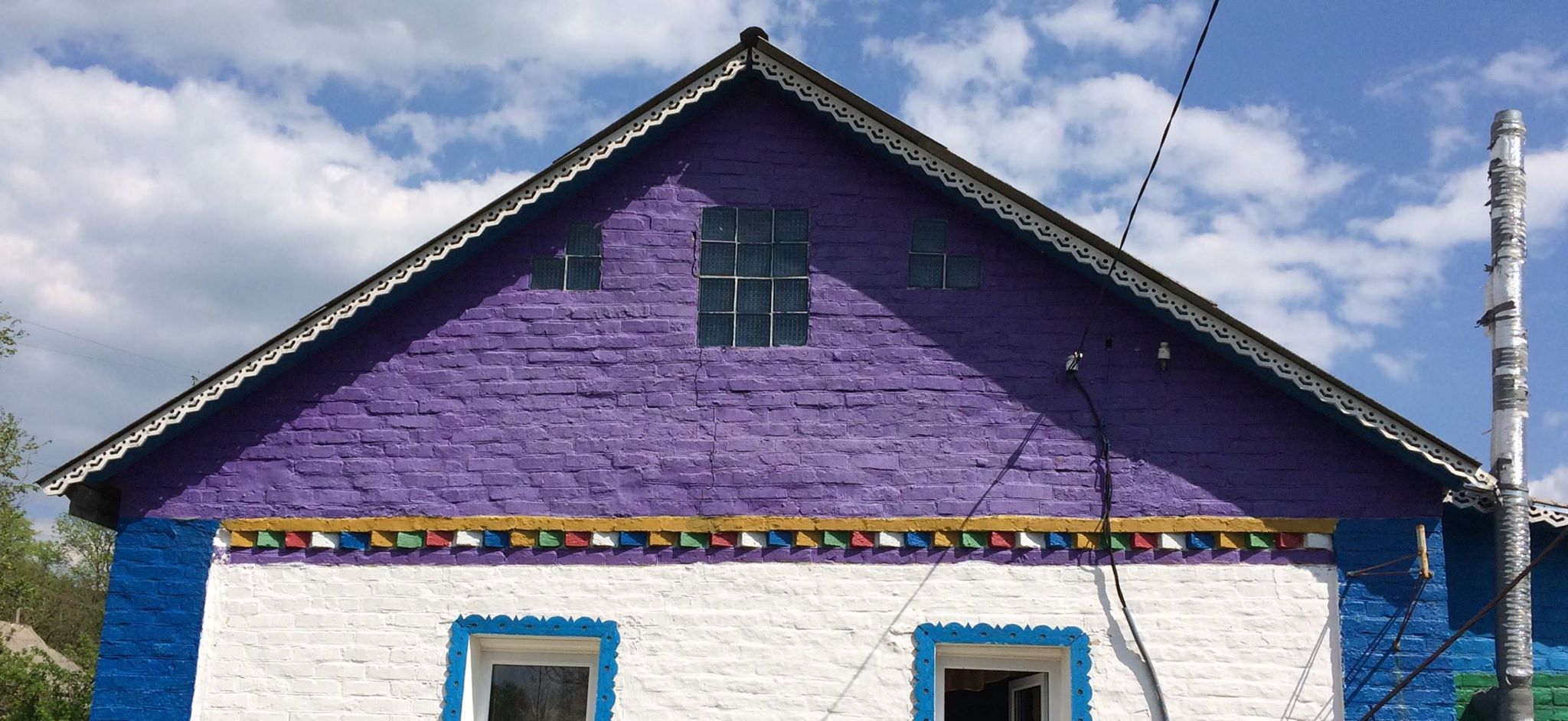
One of our guests was a Spaniard, to whom we found a text on the Internet, and he read Gogol in Spanish. I even have a genius video completely, as he reads Gogol, as he pronounces the word “Cherevichka”. He is a Spanish architect who works in New York, my old friend.
- Tell us how this school will be arranged in Kharkov. On the one hand, in Russia, such a media horror that slept a little about terrible Ukrainians. For Ukraine, Kharkov is the border of the military zone, the mood there are very alarming. Didn't it catch your eye? What difficulties do you foresee on the way of organizing your educational project?
- This educational project is not mine, I am just his consultant. I think everything will be fine. In any case, among colleagues and people of culture, with whom I talked in Kharkov, who, thank God, there, and very good ones, I did not see such a concern, did not feel. Of course, while the front line is still not far and not all allowed, there is some kind of tension. Of course, scary, the very fact that you live next to the front line is terrible. But there is optimism. It seemed to me, on the contrary, that what happened after the Maidan is a feeling of self -sufficiency and national identity. Five years ago, my friends said that “we live in some territory”, now they say that “we live in Ukraine”. This is noticeable. Therefore, in fact, this school arose: something smoldered five years ago, but there was no idea that it could be.
And now this is a completely stable understanding that there will be a new school in Kharkov, and this is serious. What is quite surprising that I could not find in Moscow, they found money, private capital, which is invested in an architectural education. In Russia, this is impossible to imagine.
- In this sense, continuing your metaphor wonderful, is this orientation to the West?
- And where? We are well aware that this whole story of Kyiv happened due to orientation to the West. Due to the fact that they looked at this window, and Russia looked out another window. Therefore, all this horror came out, now not to smiles at all. My school also has a completely obvious orientation. My school was created in contrast to the state education system, this must be perfectly understood. From the very beginning, I set myself the task of no side to contact the Ministry of Education. I must say that in Ukraine, too, has not changed much. The Ukrainian Ministry of Education is not such a big reward, it also needs to be fought, they did not change the programs, there are also a lot of nonsense, as they say, the excesses in the field also take place. But I think that everything will work out there. Там очень хорошие люди, очень хорошие архитекторы, у них работа есть. Я вообще слежу за тем, что там происходит. Конечно, это очень тяжелые и мучительные процессы изживания второго эшелона совковости, который накопился. Сейчас там идет дискуссия по поводу директора главного театра Киева – это же ужас какой-то, откуда они этих упырей находят. Казалось бы, все случилось, дай возможность, но нет, откуда-то всплывают, из недр. Это все очень долго, медленно, мучительно происходит. И людей нет, и кадры другие, и образование. Почему я занимаюсь образованием? Потому что нужны другие люди, другие мозги. Where to get them from? Они должны как-то вырастать, их надо все время тормошить.