
Translated material
12 editions for five years
Accelerations, blocking, dismissal of Glavreds: how the authorities reformed the media market
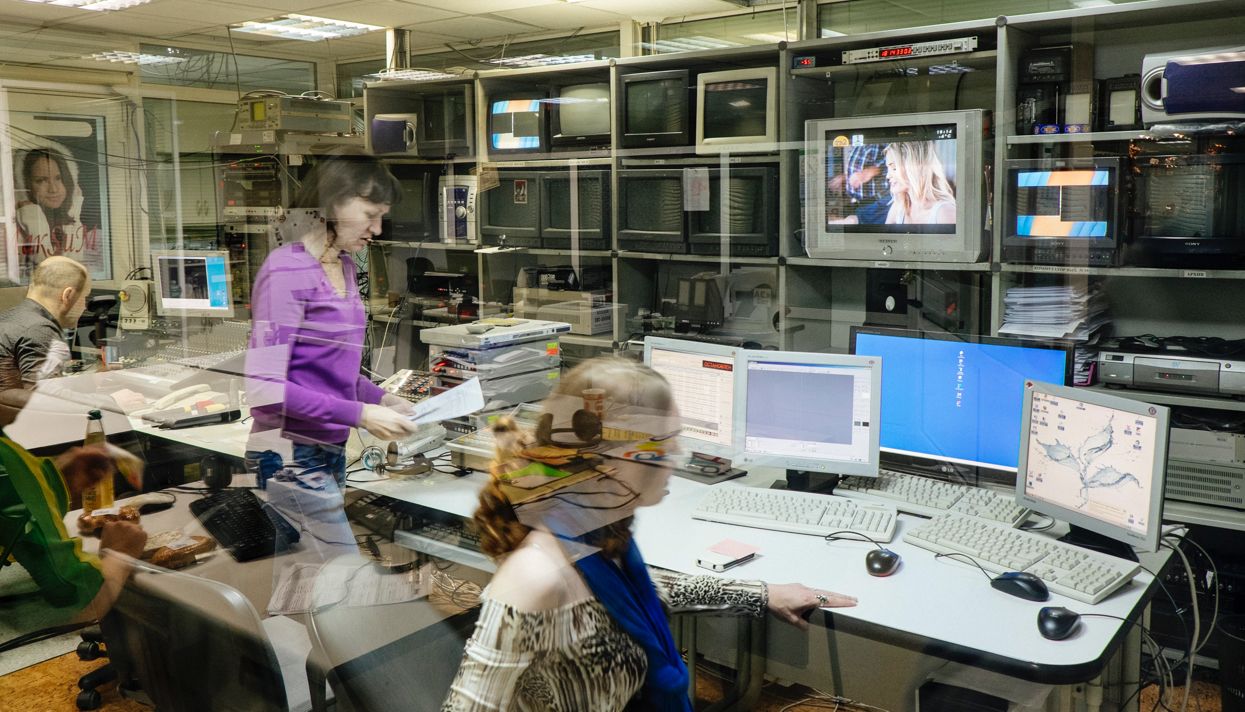
On May 13, 2016, the editorial leaders of RBC, the largest independent media holding in Russia, were fired. The reason for the dismissal of numerous informed sources call the Kremlin dissatisfaction with RBC publications - in particular, investigations about the closest relatives of President Vladimir Putin and materials about the “Panama archive”. Following the media managers, many editors and journalists plan to leave the publication; Others promise to work "until the first note removed." Medusa talks about the most important cases of outright political pressure on the Russian editions: during the time that past the 2011 presidential campaign, there were more than ten of them.
May 2016. RBC
What happened. As a result of the pressure from the Kremlin (a press secretary of the President of Russia Dmitry Peskov denies this), the editorial office of RBC left three main leaders-the editor-in-chief of the United editorial office of Elizabeth Ossetian, editor-in-chief of RBC Roman Badanin and the editor-in-chief of the RBC newspaper Maxim Solus. Following them, many departments and journalists promised to quit. They work in the publication until June 30.
What in the end. It is still unknown. Who will be the head of RBC is unclear. What part of the editorial office he will be able to save - too. As the new head of RBC will build relationships with the Kremlin and the shareholder - the owner of ONEXIM Mikhail Prokhorov - is also incomprehensible. Maxim Solus, departing from his post, recalled that shortly before the editorial collapse of the commercial leadership of RBC, a fraud case was instituted, which reduces the likelihood of a successful outcome for Prokhorov.
January 2016. Forbes
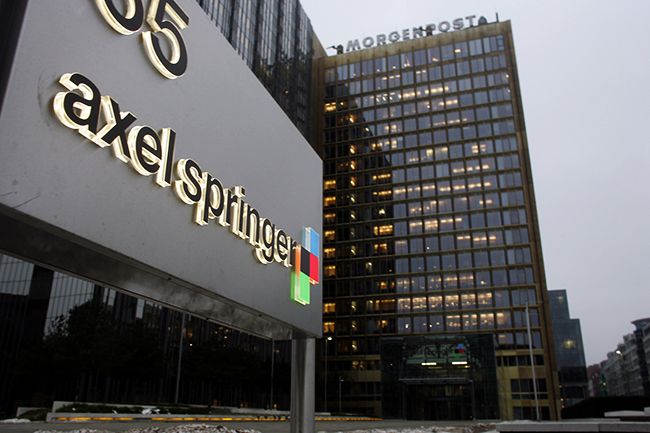
What happened. Due to the law on restricting the share of foreigners in the Russian media, the German concern Axel Springer was forced to start the search for the buyer on Forbes and other assets in Russia. Negotiations were carried out for many months and ended at the end of 2015. Initially, it was assumed that 20% of the Axel Springer Russia shares will remain in the possession of its general director Regina von Fleming, which will allow continuity in relation to the previous shareholder. The deal did not take place, and the buyer of all 100% was businessman Alexander Fedotov . According to Medusa, he immediately began to intervene in an editorial policy and demanded to shoot materials; Forbes editor-in-chief Elmar Murtazaev refused to do this, after which he quickly left the publication “at his own free will”-this happened in mid-January 2016.
What in the end. Murtazaev’s place was taken by Nikolai Uskov , who has no experience in business publications. Uskov immediately stated that his Forbes would not be about politics, but at the same time he would remain “uncomfortable”. What is the Forbes Up, it will become clear in the coming months when several numbers made under his leadership come out.
August 2015. "Russian media group"
What happened. In the summer of 2015, the founder of the Federation Foundation, producer Vladimir Kiselev invited Vladimir Putin to create a “patriotic media holding” in Russia. For this, it was planned to combine “several television channels” and the assets of the “Russian media group” (“Russian Radio”, “Hit FM”, Radio Maximum, DFM, Monte Carlo and the RU.TV music television channel). “RMG”, owned by the IFD Capital holding Leonid Fedun, was going to sell the “State Medical Council” (subordinates to the Ministry of Culture) at a price below the market. Against the sale was opposed to RMG management, as well as musicians and producers. The consortium of managers, producers and artists tried to redeem RMG assets, but he was refused. In August, a new general director came to the group - but a week later, complaining of the intervention of the Ministry of Communications in the editorial policy.
What in the end. In the fall of 2015, many employees, including a significant part of the Russian Radio team, resigned from RMG. Some of them launched the New Radio in November 2015. As of 2016, the sale of RMG did not take place. In April, Vedomosti announced the allocation of a loan of a loan for three billion rubles for the purchase of RMG to the structures of Vladimir Kiselev.
February 2015. TV2
What happened. Since the end of 2014, the Tomsk TV2 television company - one of the oldest independent television companies in Russia - was at risk of closing. In December 2014, the Tomsk Regional Radio Television Transportant Center unilaterally terminated the TV2 broadcasting agreement at the meter frequency. In early 2015, the TV channel stopped broadcasting in cable networks. In Tomsk, a rally was held in support of the channel: the audience tied the closure of TV2 with its independent editorial policy.
What in the end. On February 4, 2015, TV2 employees announced a fundraiser to continue broadcasting on the Internet. On the same day, it became known that the Wednes' Support Fund was allocated by TV2 a grant of 7.5 million rubles. Now the News Agency TV2 exists in the form of a group of Internet sites, and video content is published on the Internet.
December 2014. "Russian planet"
What happened. One day, the investors of the Russian Planet announced the dismissal of the editor -in -chief Pavel Pryanikov and appointed a new leadership. The editorial staff announced that the employees of the “Russian planet” - “weak cosmists” did not withstand the given course, and therefore the publication will be reformatted taking into account the opinions of the owners. Together with Pryanikov, who turned the “Russian planet”, which was financed by the Morton construction company, the main part of the editorial office went into one of the most distinctive Russian media - the publication’s employees found the maintenance of the leading pressure and the attempt to radically change the policy of the publication.
What in the end. Many journalists left the Russian Planet, the publication survived the redesign and turned into a patriotic media publishing articles about Russian weapons, columns of Eduard Limonov and the angry reversal of the opposition. After leaving the “Russian planet”, Pavel Pryanikov with a part of his colleagues moved to “Lenta.ru”, where the editor -in -chief Galina Timchenko was lifted in a similar way, but in the end turned out to be the editor -in -chief of the “such affairs” project.
August 2014. REN TV
What happened. On August 1, 2014, the closure of the “Week with Marianna Maksimovskaya” was announced - one of the last balanced analytical programs on Russian etheric TV (and, according to TNS , one of the most popular programs on REN TV). The reasons for the closure on the channel were not called.
What in the end. After the closure of the “Week”, Marianne Maksimovskaya remained on REN TV as deputy chief editor, but already in December 2014 she left the channel - “Due to the expiration of the contract”. Since 2015, Maximovskaya has been the post of vice president in the Mikhailov and Partners group of companies. The place of “Week” on REN TV was taken by the “Dobrov on the air” program, which talks about the main plots of the week “from the point of view of a normal person”.
March 2014. "Grani.ru"
What happened. On March 13, 2014, the opposition edition of Brani.ru was blocked at the request of the Prosecutor General. The reason was called the publication of calls for illegal activities and participation in mass events, which are carried out in violation of the law. “Brani.ru” became the first edition blocked in Russia; Together with them, Roskomnadzor ordered to limit access to the sites “Kasparov.ru” and “Hedgehogs” - on the same day and with the same wording.
What in the end. “Grani.ru”, the financial situation of which and before blocking left much to be desired, continue to go out on several mirrors. The site hangs instructions on how to bypass the blocking of Internet resources. “Faces” are still published about current events, the topic of the publication is now exclusively political, with a pronounced opposition orientation.
March 2014. "Lenta.ru"
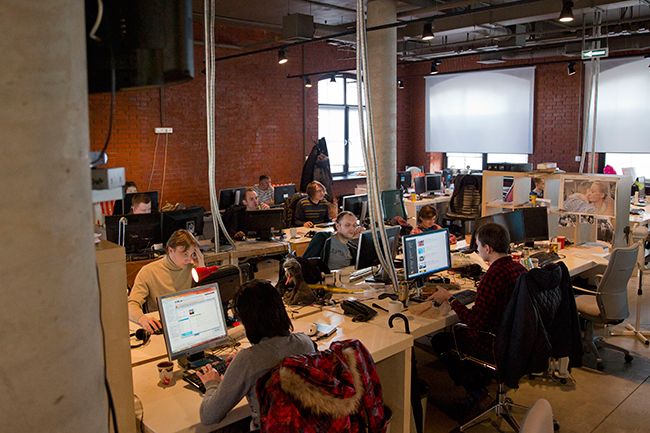
What happened. On March 12, 2014, shortly before the accession of Crimea to Russia, the manager of the company "Poster --rambler - SUP" Alexander Mamut fired the chief editor of Lenta.ru Galina Timchenko. The reason was the warning of Roskomnadzor, issued for published in an interview with one of the leaders of the Ukrainian nationalist movement "Right Sector" (prohibited in Russia) a hyperlink. Following Timchenko, more than 80 tape employees resigned - almost the entire edition. Employees published an open letter in which they called the dismissal of the chief editor with an act of censorship and a violation of the media law. “Lenta.ru” was headed by Alexei Gororevsky, the former chief of the Prochrevskaya newspaper “Gazy”, who was responsible for interaction with government agencies in Ramblera.
What in the end. The reserved employees of Lenta.ru founded the publication N+1 and Medusa, the SMM agency "Shabby cheese". Former journalists of the publication found work in Forbes, RBC, Vedomosti, Arzamas and other projects. Aleksey Gororevsky in early 2016 was appointed Executive Director of Media Group of Companies Rambler & Co. The post of editor -in -chief was occupied by the deputy Gorozlavsky Alexander Belonovsky, who came to Latu.ru from RBC after the reorganization of the previous edition.
January 2014. Rain TV channel
What happened. After the publication on the Rain website, a survey on the blockade of Leningrad, the audience was invited to answer the question "Was it necessary to pass Leningrad in order to save hundreds of thousands of lives?" - Leading operators (NTV+, Akado, Dom.ru and others) began to disconnect the channel from their networks. Most explained their actions by the dissatisfaction of the audience. The Director General of the Rain, Natalya Sindeeva, said that the operators “acted by order” from above, which they recognized her in the course of confidential conversations. She connected the pressure on the channel not with the survey, but with the publication of the plot about the dachas of senior officials.
What in the end. The channel was forced to change the business model, making a bet on distribution on the Internet by subscription. In the spring of 2014, salaries were announced to all employees. The law adopted in the same year prohibiting advertising on paid television channels additionally complicated the work of the rain. At the end of the year, the channel was evicted from the building on Red October. Nevertheless, “rain” continues to work - since 2015, broadcasting has been conducted from the studio at the Flon factory.
December 2013. RIA "News"
What happened. On December 9, by decree of Vladimir Putin, the largest Russian news agency was unexpectedly eliminated. The state, which belonged to RIA Novosti, decided to create a new structure on its base. The head of the presidential administration, Sergei Ivanov, formulated the task of the new media as follows: “To explain to the world that Russia pursues an independent policy and firmly protects national interests.” The organization was called the MIA “Russia Today”, the chief Russian television propagandist Dmitry Kiselev was appointed general director, the chief editor was the head of Russia Today Margarita Simonyan.
What in the end. During the transformation of RIA Novosti, the most innovative and independent of the state media - lost most of the correspondent network, many agency projects were closed, employees were dismissed. Some products (RAPSI, “Inosmi”) are preserved as individual structures. The Ria.ru website continues to work, but rather as an appendage of “Russia Today”. In early 2016, the last editor -in -chief of the former RIA Novosti Svetlana Mironyuk headed the Department of Marketing and Communications of Sberbank.
September 2013. "Gazeta.ru"
What happened. Before the Duma elections of 2011, the post of deputy chief editor of Gazeta.ru left Roman Badanin. He quit after the publication’s leadership decided to remove the banner of a joint project from the site with the human rights organization “Voice”, within the framework of which readers reported violations during the election campaign. The editor -in -chief Mikhail Kotov explained the decision to remove the banner with commercial considerations, saying that the place was released for advertising. The head of the Kommersant Publishing House, Demyan Kudryavtsev (at that time, the newspaper was entering the general holding) said that the conflict occurred due to Badanin’s refusal to put an advertisement for United Russia on the site.
What in the end. After the 2012 elections, the SUP Media holding, which owned Gazeta.ru, completely crossed the entrepreneur Alexander Mamut. In March 2013, Mikhail Kotov left the publication, he was replaced by Svetlana Lolaeva, who had been working in the “newspaper” since 2007. A few months later, the owners of Gazeta.ru decided to replace it with the former employee of Izvestia and RIA Novosti Svetlana Babaeva. By September 2013, when Gazetu.ru was headed by Babaeva, the publication department almost completely changed and many employees who illuminated the election campaigns of 2011 and 2012 left.
December 2011. "Kommersant"
What happened. On December 16, Maxim Kovalsky was dismissed from Kommersant, for many years of chief of the Kommersant-Vlast weekly. The reason was the publication of photographs of the ballot, on which an obscene word was written next to the name of Vladimir Putin. The publication was criticized by the owner of Kommersant Alisher Usmanov and general director ID Demyan Kudryavtsev. Kommersant employees published an open letter in support of Kovalsky, calling his dismissal as an “intimidation action”.
What in the end. The dismissal of Maxim Kovalsky was not the last similar episode in the history of Kommersant Publishing House. At the insistence of Usmanov (and, according to unofficial data, under the pressure of the Kremlin), the chief editors of the Kommersant-FM radio station-in 2012 and 2013 were left twice. In 2012, Kommersant left Demyan Kudryavtsev-since then, permissions in the leadership of the ID have been taking place regularly. In 2014, Maria Komarova was appointed CEO (she was called the prostate of the first deputy head of the Presidential Administration Vyacheslav Volodin), in 2016, Vladimir Zhelonkin took her place, the former head of the Zvezda media group. Kommersant remains one of the largest media holdings in the Russian Federation, however, the Pathers are increasingly accused of editing or removing notes about the opposition, publishing custom -made articles, silence that capable of causing the dissatisfaction of the authorities.