
Translated material
Semyon Schlosman: “A wonderful article” means only that it contains a wonderful result
Semyon Bensionovich Schlosman was born in 1950 in Moscow. He graduated from the Mehmat Moscow State University in 1972, the IPPI graduate school (under the leadership of R. L. Dobrushin) in 1975. Since 1987, I have been working at Ippi RAS, Vedas. scientific. sore. Dobrushinsky mathematical laboratory (No. 4), DOK. physical. sciences. He defended his doctoral dissertation in 1989. He is engaged in mathematical physics, combinatorics and probability theory. Hobbies - music and water campaigns.
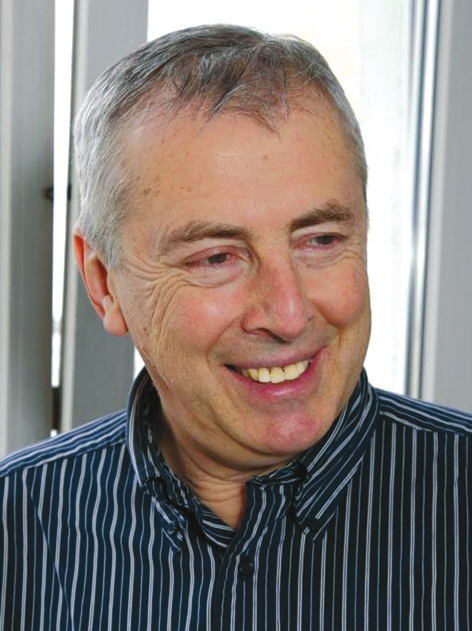

- We talked with Tsfasman [1], and he quoted you: “Mathematical ideas are arranged as follows: a person writes an article. Our colleague Senya Schlosman once told me: we write articles not to read them (it is clear that no one will read), but in order to be sure of the correctness of what was written. "Did you really say that?
“I can’t know if I said that or not, but there is a certain truth here.” Roland Lvovich Dobrushin said that the reviewers of the article are not read like the author. Therefore, a serious mathematician should not count on the reviewer. Friends and at the same time colleagues, who are also very worried about the theme of the article, can read.
- It was not about reviewers. This was an example of an extreme point of view on why you need to write mathematical articles at all. In the context of a conversation about why you need to engage in mathematics at all.
- The following is partly true: you can write a certain statement, make a sketch; The text will turn out to be short, it is relatively easy to read and understand. But the only way to check that what has been said there is also true is to write a detailed evidence. How detailed it depends on the mathematical culture of the reader and writer, some details by all mathematicians fall by default. I was convinced by my example: if I think that everything is, there is a result and it is true, then when you begin to record it, some details arise. And maybe he really, as they say, is “morally” true (I don’t like this word, but I often hear), but in order to make sure, you need to write proof with all the details. Then it turns out that it is a little more interesting, and it turns out even more interesting: some banal exceptions are manifested, which are not visible at first glance and do not come to mind. Now the proof is really thought out and encoded with a pen on paper. But this does not answer all directions of the question asked. Indeed, you can write something, but why publish? Israel Moiseevich Gelfand said that it was necessary to publish without explaining why.
- Israel Moiseevich - what I could observe in medicine - really recorded all the intermediate results. They produced PREPM PREPM - not even an article.
- What I heard refers to mathematical work. This is even understandable: some people write that other people, those who are interested in. Mathematics is a whole Community, a whole world of people. Magazines, or now archives (electronic . - Approx. Ed. ), People read. Some have a good habit of reading them daily: what appeared in mathematics in the past day.
- In mathematics, relevant results appear with such a frequency?
- Relevant - no. Relevant - the concept of relative. But several articles appear every day. Sometimes it is enough to see a list of authors, sometimes a title or an abstract, and sometimes the whole article.
- How do you understand whether you want to watch the whole article or not?
- Well, the whole article - maybe I exaggerated. Again, the story of Israel Moiseevich about how Kolmogorov retell the content and results of a certain book at the seminar. And next week he said: “I told you everything wrong. This is not there, another. It was just quite clearly visible in the room, I lay, leafing through the book and thought: what could have been in it? ” Kolmogorov told what he himself invented - what could be written there.
- And what is more interesting?
- Israel Moiseevich did not say. But from the context it is clear that, of course, the first option.
- If we assume that a relevant article is the one that you read entirely and analyze the evidence, then what is their flow?
- Maybe once a week ...
- And how much write? I will now try to reduce the balance equation. So we will estimate the size of Community.
- It is not known what we will appreciate. How much am I writing? Let's say three articles a year.
-With one or two co-authors?
- Yes. Somehow I have not written one for a long time.
- The soul is one at a time. For fifty carefully read articles - one written. How many, in your opinion, do you think your articles carefully read?
- I flatter myself with the hope that I do not know about the majority. I must honestly, for some reason, I never thought about it. Still, I would not say that the main thing is to know from reading articles.
- Where?
- From conversations or stories about work. If I am interested, then quite often I understand what is written there and how it could be done.
- The same story as about Kolmogorov.
- In miniature. But, of course, there are exceptional cases when I hear about a scientific plot and I absolutely do not understand how this can be proved. Several times I heard or read about some hypothesis, I understood that it was true, and thought that I would not live until those times when it would be mathematically strictly established. For example, there are works of the Field Laureate Stanislav Smirnov (who for some reason does not work at our institute).
- He is quite closely connected with our institute.
- Hope; He is an outstanding mathematician. The results that he received more than once caused this feeling: there are no doubts about the truth of the affirmation by me or many others, but also it is not completely visible how to strictly establish this; I even told him personally. I listened to one report by Smirnov: he told some steps, reached a certain place at which I would stop, because it is clear that nothing would come of it. And Stanislav acted on, and, to the amazement of the public, everything worked out. I can tell you what's the matter. He has complex probabilities in his task. In statistical physics and probability theory there is a place where it is often necessary to establish the fact that the probabilities for which the formulas are written are material and positive. Otherwise, it is never done. And Smirnov writes about the enzymes observed, and there he clearly has complex probabilities. For me, they need to be thrown away and forgotten. And he is not afraid of them. By his nature (and thanks to ignorance), he understands that it can be moved on, and indeed, these advancements have been completely remarkable more than once or twice.
- Such a physical approach to mathematics? A classic example: delta function was introduced, although it is clear that delta-function cannot be. Then they were given meaning to them in a completely different way. And physicists operated with them for a long time ...
- Smirnov says so. He reads physical articles and claims that they should not be understood, but we must meditate on them (he uses this word). Indeed, he realizes this process, and very successfully. His work, in particular, was analyzing in detail - this is a miracle that I want to know in all details.
- And the logical steps are impeccable there?
- Yes, sure.
- And complex probabilities? Are they introduced without any axiomatics?
- That's not the point. The objects that are obtained there can not be called probabilities. But if they (positive) probabilities were, then I could use my probabilistic intuition. And those objects that arise in him, although they are determined by obvious exact constructions, but are not likelihoods. Therefore, I do not know how to think about them. And he treats them as much as it is possible to handle them strictly, and receives the results that seemed unattainable to me.
- Your intuition allows you to think about complex probabilities?
- My intuition inspires me with a dumbfound before this approach. This is wrong, as I see now, but I have not tried it. This is probably a flawed installation.
- There are examples when the article was written, and in sufficient detail, and then readers found a gap. A recent example is the first proof of Whales the Farm Theorem. So, in the process of recording evidence, you can still deceive yourself a little?
- Can. The other day I read about one article by the Lebeg, where he proved a certain wonderful theorem. And then in this evidence it was found - in Russia, in Russia, a mistake from which a whole new branch of science later grew.
Now there is such an activity - to record evidence in a formal language so that the truth of the statement can verify the computer.

-It seems Voivodsky wants to do something like that.
- I read the report of Shafi Goldvasser, who works at the Weizmann Institute on this topic, and there was a completely wonderful idea. The text is processed in such a way that if there is an initial error, then it is distributed throughout the text, and it is easy to find. As it could be, I can’t imagine, but it seems like this: a spoon of tar is put in a barrel of honey and mixed. How is this implemented with mathematical text? But the idea is absolutely wonderful, if only it is possible.
-On the other hand, there are texts that are apparently correct, but significant efforts are required to understand them. This, for example, about Perelman.
- Sergey Petrovich Novikov was reproached for the fact that his outstanding topological articles were written poorly.
- It is difficult to understand, because it is poorly written or because it is non -trivial?
- Of course, it is very non -trivial and is also written by an elliptical language. That is, the steps obvious to the writing are missed, and they are difficult to restore.
- And in such steps, mistakes are sitting.
- In my youth, I wrote works in which it seemed to me indecent to give details. Why write obvious things, since even I understood? And after a while I opened the text and did not understand what was written there. I forgot what I had in mind. And if I do not understand, then the other reader is very bad. And he began to write in such a way that if I open the work in a few years, then I can easily understand what is said there.
- Litlwood has a statement that the reputation of mathematics is based on the amount of his bad work. And there is a note of the editor, necessary, because it is too subtle paradox: the first article about something new is usually written very badly. The structures are not quite natural, then it turns out that it can be made much easier.
- I would not say "bad." Maybe they are hardly written.
- You said that Sergey Petrovich reproached for writing poorly.
- A wonderful article can be poorly written.
- Then you need to separate the article and the result.
- I would say that the expression “wonderful article” means only that it contains a wonderful result. For his topological work, Sergei Petrovich received the Fields Prize.
* * *
- Do you engage in mathematics from physics?
- I only do mathematics. It is different, and there are mathematical tasks motivated by physical issues. When these issues are resolved by a mathematical way, other, purely mathematical issues arise further, which are then also explored. Over time, a fairly large number of people, works and results that were once motivated by physical issues and still have their relation to them, but this area is already developing by virtue of some other motivation. As in purely mathematical areas: some issues are resolved, but others get up in return.
- Are there mathematical areas? Or is there a continuous continuum, and what we call areas largely a consequence of the habit? How were the departments, so the areas remained?
- Perhaps they still exist. They differ in a circle of questions and methods. I don’t know that there is a method.
- Just wanted to ask: what is the method?
- Don't know. There is a discrete and continuous mathematics. The difference is visible with the naked eye.
- The farm theorem is a vivid example of a discrete statement proved, as I understand it, continuous methods.
- Under the "discrete" I meant combinatorics.
- In combinatorics there are producing functions - they are already continuous.
- Yes, there is even an asymptotic combination. When you really recount something and want to observe a large set of discrete objects; And then you are trying to make a maximum transition. You pretend that a large number - it is endless. Then the objects that you tried to list and observe, in this limit are made well visible, and it becomes clear what, in fact, is the matter.
So yes, and no. You can represent the areas of mathematics with an archipelago, where shallows are found during the tide, according to which you can go from one area to another. And during the tide, it seems that one from the other is separated by an essential barrier.
- Should mathematics be clear? To what extent can modern mathematics make an understandable conditional taxpayer?
- Depends on the taxpayer. Some love to entertain them - you can even mathematics. And others want to understand something, but they are afraid that it will be too long and tiring. But even so, it seems to me, you can explain something to mutual satisfaction so that the narrator can think that he has outlined something non-trivial. But, as I was accustomed, I need, telling, each time to keep in mind the interests of the listener. The narrator may not have time to tell what he himself seems remarkable for personal and aesthetic reasons. But he must tell so that the listener benefits. If you stand on this point of view, then you can explain something to a large number of people that the narrator will be interesting, and the listener would be useful.
- On Itis 2012 there were two plenary reports. The report of Alexander Nikolayevich Rybko, about which it was reported that it was based on collaboration with Schlosman, was called the "Middle Field for the General Models of Endless Communication Networks." The annotation began with the words: “The sequences of the Markov processes are considered that describe the evolution of symmetrical communication networks in common with the number of nodes growing to infinity ...” and there was your plenary report “Can a reliable memory be made of unreliable elements?”. And his annotation began like this: “Yes! You can make a reliable memory of unreliable elements! " These are in a sense two almost extreme approaches.
- If Sasha asked me, I would have advised him both the name and the abstract. That t, the speaker made no effort to attract the audience.
- Or he was guided by another audience. But the readers of the TRV-HOW-this is a social group of scientists, but from different sciences, such as biology, you can tell you what you are doing?
- Well, you were on that report and even asked questions.
- Was it it?
- Yes. I can tell you what we are doing with Sasha Rybko. Sometimes I say that we are engaged in the Internet, but this is an exaggeration. Probably, the Internet is much more complicated than that about what Sasha Rybko and I and Sasha Vladimirov are thinking when we solve the problem that I will talk about.
In a sense, large communication networks are similar to the reality that statistical physics describes: there are independent agents in a huge amount that live according to their local laws, and everyone has a goal. There are individuals, there are some local rules, and then some phenomena of a much larger scale occur than individual users. The global properties of the network are the properties of how the agents that make up its components who do not realize this largest network behave. And in statistical physics there is such an important concept as a phase transition. This is a transition from the regime with the same parameters, when agents behave more or less independently from each other, to other global parameters, when it suddenly turns out that the change in the system in one place greatly affects what is happening in another place. Agents seem to be still behaving, they only look at what is happening around, but the action that takes place here is felt very far from here. Roland Lvovich Dobrushin, by the way, said that the revolutionary situation is a phase transition: distant connections arise, society goes into a different state, life goes differently.
Let's get back to the information networks. We realized that phase transitions are also taking place in them. Imagine a large network in which customers are served. They roam on the network from one place to another according to the rules that they are prescribed, and based on what should happen to them: they came here, stood in line; They did something with them, gave out a piece of paper. They should get somewhere with their new status. And so they move on this network independently of each other, stand in lines - such a bureaucratic system.
It so happened that there are half of the cabinet in the other half, but in the other half, there is no empty. We know what should happen naturally: after some time everything will resolve, everywhere there will be the same queues. But it happens differently: they all stand on the second floor in line, after some time everyone moves to the third floor and stand in lines there, and then again everyone goes down. There is a steady oscillatory regime - such a phase transition, when the heterogeneity, which was at the very beginning, is not absorbed over time. This oscillatory regime from the architecture of the network is not visible, it should not happen, but nevertheless it happens.

— Казалось бы, если правила простые, подобного сорта вещи получаются легко. Например, если есть строгий порядок прохождения кабинетов.
- Is it true. Но в наших сетях есть случайность: кто сколько времени проводит в каждом кабинете. За счет такой случайности исходный порядок обычно размывается. Казалось бы, всё должно быть хорошо, ан нет.
— Но если есть строгий порядок кабинетов, то эта толпа так и будет ходить друг за другом, как на диспансеризации в больнице.
— Случайность всё размывает. Конечно, если протокол детерминированный, то начальная ситуация полностью определяет будущее. Но мы рассматриваем более реалистичную систему, в которой не знаем, сколько кому времени понадобится. Именно из-за этого порядок должен размываться и исчезать. Поскольку есть некая неопределенность, она должна накапливаться, и жизнь должна происходить как в центральной предельной теореме: порядок расплывается, и с течением времени неизвестно, кто когда пришел, за кем кто стоял, — всё перемешалось, и у всех кабинетов очереди примерно одинаковые.
— С другой стороны, есть наблюдение, что ровно из-за того, что трамвай едет случайным образом, через некоторое время они начинают ездить пачками. Более быстрый догоняет более медленный, и это не рассасывается. В совсем простых системах на самом деле кажется, что это не очень удивительно, при одномерном движении в одном направлении.
— Наша сеть гораздо сложней, потому что у каждого клиента имеется большой выбор, в какой кабинет стоять. Я говорю про ситуацию, в которой, кажется, по природе вещей должно бы всё прийти в равновесие.
— То есть у Вас есть оценка сложности системы, при которой это становится нетривиальным результатом?
- Yes, that is how. В этой большой системе нет размывания, когерентность начального состояния не забывается. Мы очень удивились, потому что так не бывает. Это странное и неприятное состояние — то, чего хотелось бы избегать.
— Пробки так образуются.
— Похоже, да: где-то пусто, где-то густо — дизайнеру сети, наверное, не хотелось бы, чтобы так происходило. А в нашей модели это явление происходит, но, впрочем, не всегда, а только если в сети достаточно много клиентов. Если их не очень много, то всё замечательно размывается. Очень похоже на фазовый переход, который мы знаем из физики. Там тоже есть параметр — температура. При высокой температуре имеется полный хаос, и одни места системы не знают о других. С понижением температуры происходит фазовый переход, после которого система всюду устроена одинаково. Есть разные варианты у системы, но уж когда она выбирает, то один на всех. Фазовый переход в физике описывается математической теорией, которой я занимаюсь, и такая же примерно картина возникает в сетях.
Это можно объяснить. Если у человека есть любопытство хотя бы к чему-то, то, наверное, когда он открывает журнал «Кот Шрёдингера», чтобы узнать новости науки, он может такую новость прочесть.
— Вам нравится «Кот Шрёдингера»?
- Yes.
— Немного клиповый стиль, когда ничего не написано с какой-нибудь подробностью, Вас не расстраивает?
- No. Мне кажется, что это неплохо, что такие яркие картинки, и, когда переворачиваешь страницу, попадаешь уже в совершенно другую тему и даже в совершено другую визуальную среду. Я его листал, чтобы понять, надо ли мне моего внука уговаривать заглянуть в журнал. И решил, что он подходит для десятилетнего любопытного ребенка.
1. О бубликах, бабушках и корректирующих кодах // ТрВ-Наука. № 4 (198) от 23 февраля 2016 года.
( Окончание в следующем номере)