
Translated material
Juliet of the era of Aquarius
Among the main leitmotifs of the Cannes festival are the problem of “fathers and children”, considered in all kinds of angles
Among the main leitmotifs of the Cannes festival are the problem of “fathers and children”, considered in all kinds of angles
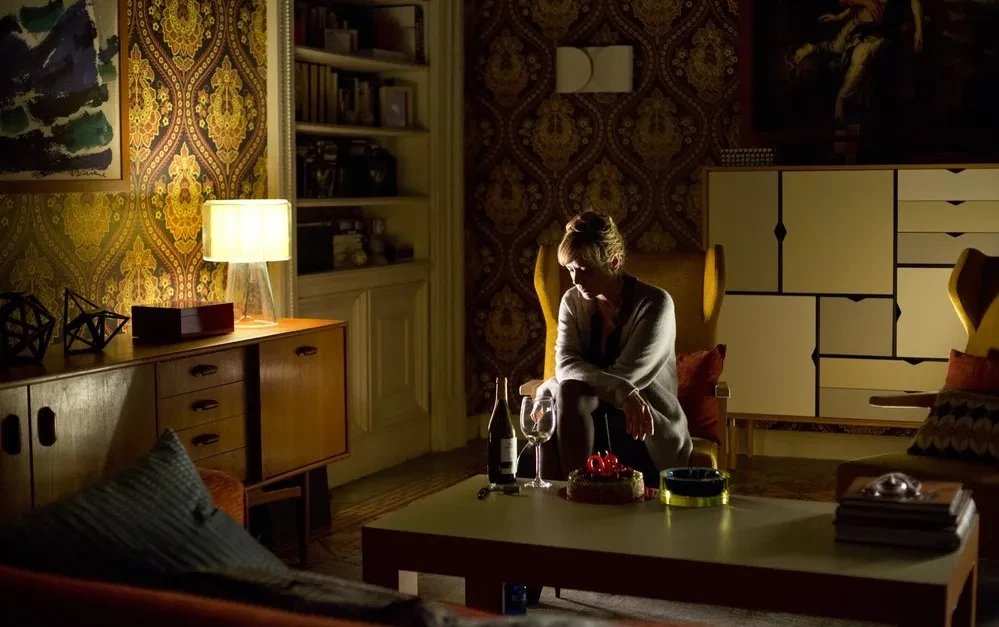
Almodovar's Juliet is a story about a mother trying to find a daughter who escaped many years ago. A dense melodramatic story, shot on the basis of the stories of the famous Canadian writer Alice Manro, enthusiastically flies from the present to the past. In the plot and figurative folds - quotes from Hitchcock, Bunuel and, of course, the Almodvar himself, who was graying and serious, the soldier, who returned to his favorite genre, “Portrait of a woman”, “All about my mother”. The director admits that the injury of the loss of the mother is not cured. Maybe that's why he returns again and again "to the kingdom of women." Juliet, at a lecture on classical literature, explains to the students, which is why Odysseus left the beautiful Calipso (so that young Shalopai imagined the goddess, she compares her with Kim Beisinger). Eternal youth, he preferred the stormy sea. Juliet (Adrian Ugarta plays Juliet in his youth, Emma Suarez - at the age) and he himself enters the fight with fate. Only Fatum will cope with a strong woman. But she resists, and not having the opportunity to see her daughter, with the help of detailed memories, she folds the bites of photographs, “sews” the torn internal connection. Almodovar mounts death with love, a tragedy with a soap opera, showering the heroes with misfortunes: disasters, suicides, coma, destructive storms and shipwrecking, inexplicable partings. The twentieth picture of the director in comparison with the early Almodovarovsky Androginov world, his madness, sexual atrocities, amphetamines are a quiet cozy backwater. The story is simple, sensual and more than predictable. Although the game with color is still found, and love for all shades of a dangerous scarlet is indestructible. Yes, and the climax of intercourse occurs in a train rushing through the darkness, which will stop only death ... beautiful.
In the Dardensky social drama, “Stranger” , just like in Juliet, guilt is shock therapy and the main doping action. Having finished taking patients, the general practitioner of Zhenny (Adel Enel) decides not to open the door to the late call of the next visitor. The next day, the police report that the body of an unknown girl was found nearby. Then Zhenny begins his investigation - cannot allow the girl to be buried as an “unknown”. Jean-Pierre and Luke Dardenov are not very interested in detective intrigue. Again, the focus of attention is a moral choice, again this is a story of confused and trying to “unravel” themselves people. In the ball of “circular guilt” (from the undiscovered door to the call and informed to the police - to bringing to death) only in the heart of the heroine the sick conscience screams (sometimes deliberately deliberately). But her obsessive persistence gradually arouses the conscience of others.
In the Philippine "Ma'rosa" Biriant Mendoza is a hopeless landscape of a slum, dirty, poor manila. The dew and her husband are starting a small grocery store, and in order to make ends meets a few drugs. For which they immediately fall into the police station ... practically not distinguishable from the street crushing in poverty and lawlessness. Here they beat, extort money and sing karaoke. Now four children must collect 100 thousand reais in a poor city in order to rescue their parents. In this corrupt space, there is almost no place for copyright sympathy. A modest non -clockwork film was shot in the style of ultrarealism. Rough, “raw”, television picture. The hand chamber, stumbling, wanders along the gloomy streets, the neon light flashes suddenly, illuminating the faces of the heroes. These faces are the main thing. Like the cohesion of the dew family. There is no division into "fathers and children." Here is the general front of the struggle with any “improvised means” with a monstrously aggressive world.
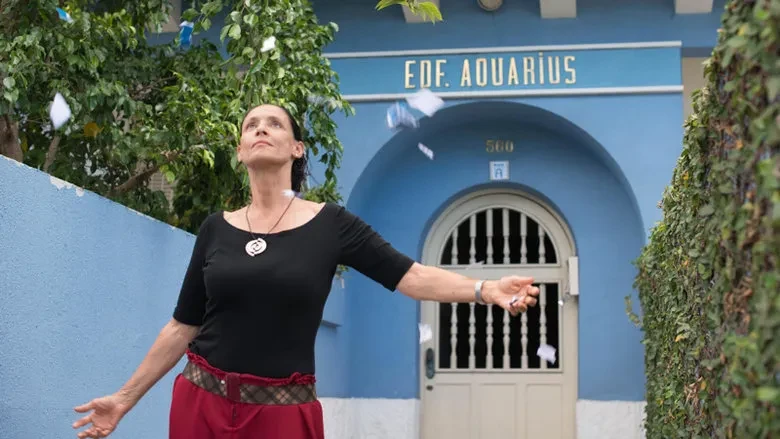
In some ways, Rosa is related- “Aquarius” by Kleber Mendoses. In the coastal Brazilian receiver lives 65-year-old Clara, a former musical critic. Her apartment with windows at sea is in the unique building "Aquarius", built in the Sorokoy. Her life passed here. But today, local developers buy apartments in order to dispose of the building in their own way. Clara is the last resident of Aquarius who does not give the borders of his life. Mendos constructs his optics: through the portrait of Clara, he paints a portrait of a modern Brazilian society. He shoots his cinema in a documentary manner. In the three chapters of the film we learn about the past of the heroine, her family, her amputated chest, her children, nephews, grandchildren. We get acquainted with the apartment where the spirit of Clara is registered: her old vinyl records, photos of loved ones, notes, books, piano. An apartment where the voices of a different era, other music, and other relationships sound. The main luck of the film, its center and magnet are Sonya Braga, national pride, yesterday’s sex symbol of Brazil. Her heroine is from the generation of "children of flowers." She is free, wayward, loves not only the classics, but also rock, can invite a gigolo or arrange a party with dancing ... alone with herself. And when adult rational children convince her to agree on favorable conditions to sell their “cherry garden”, she is pounced on them with rage. This distance of misunderstanding “with its own” scares it more than war with strangers, aliens: warlike developers who go to extreme measures. The Ranevskaya new era should death for his rights against the invasion of new barbarians. Portraiting the mindset of the present Brazil, the director Kleber Mendos does not hide that he himself is decisively configured. Therefore, together with colleagues, they used the Cannes venue as an occasion to draw attention to the main problem of modern Brazil, in which corruption controls the state. At the premiere, the film crew in the evening toilets, with the support of the director of the Cannes Festival Thierry Fremo lined up in front of the large Lumier Theater and took out the posters from pockets and elegant handbags: “Brazil is no longer democracy!”, “A coup d'etat is taking place in Brazil!”, “We will resist!” Among them was Clara-still the irresistible Sonya of the mash. And for some reason, not posters, but the presence of this national symbol of intellectual dignity and freedom inspired, possibly illusory, but hope.