
Translated material
There is one bottom
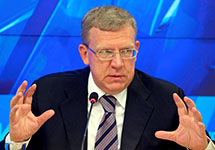
The Russian economy will not grow and will remain "at the bottom" if the authorities do not decisively carry out structural reforms. According to TASS, this was stated by the ex-Minister of Finance, the deputy chairman of the Economic Council under the President Alexei Kudrin.
“Since the old economy model has been worked out, and the new one has not yet formed, even having passed the“ bottom ”, we will remain on this“ day, ”Kudrin said.
The ex-minister emphasized that the Russian economy lacks decisive actions by the authorities. “It seems to me that our economy is now not enough decisiveness. We are delaying important reforms. This will be the reason and delaying the beginning of economic growth,” he believes.
The day before, Vladimir Putin said that the “bottom” of the economic crisis in Russia can be considered passed in 2015. Minister of Economic Development Alexei Ulyukaev noted that the Russian economy has not been in the recession for more than six months.
Prior to this, the Ministry of Economic Development proposed limiting the real incomes of the population until the completion of the exit from the crisis. The macroeconomic forecast project presented by the department is supposed to restrict the growth of salaries in the economy in 2016-2017, followed by compensation in 2018-2019, the rapid growth of corporate profits in 2018-2019, investments from the Federal Antimonopoly Service and the System-Forming and Effective Investment Projects and Reducing Energy Consumption.
In addition to restricting the growth of salaries of Russians, there will be a reduction in real pensions - by 4.8 percent in 2016 and by 2 percent in 2017 with further indexation only by the level of inflation until 2019. This, according to the Ministry of Economy, will increase the number of poor from 13.1 percent in 2015 to 13.7 percent at the end of 2017, with a peak in 2018 at 13.9 percent. The return of real income and the number of poor to the indicators of 2015 is planned only in 2019.
In mid -April, it became known that the Ministry of Finance prepared amendments to the federal budget of 2016. They take into account the price of oil $ 40 per barrel. At the same time, the deficit should remain at the level of 3 percent of GDP, as provided for in the calculations at a price of 50 dollars. For this, 10 percent "optimization of expenses" is provided, as well as attracting income from the privatization of a number of state-owned companies.