
Translated material
Love for extremes
Greece, where Vladimir Putin is going on a visit, is considered one of the most loyal to Russia of the European Union, where “on our side” is both right and left. Is it really so - The New Times found out on the spot
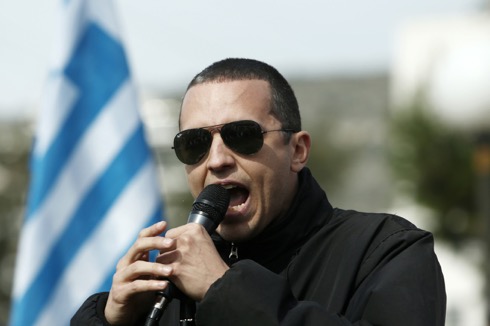
The Ilias Kasidiaris, one of the leaders of the ultra -right party "Golden Dawn", is. He has extensive plans to “strengthen the Russian-Greek Union”, Athens, February 2016
In October 2015, in a smoked and scribbled graffiti, the audience of the Athenian Polytechnic Institute gathered at the “Anti -Fascist Forum” (European Forum for donbass. - NT ). Representatives of 30 left organizations from 15 countries of Europe. The area where Polytech is located was always a stronghold of levoradikalov: until recently, the police were afraid to come here, with which young communists and anarchists were traditionally on knives. The audience united a desire to support the inhabitants of Donbass in their struggle with the "Ukrainian Nazis."
A wide front
At the department, against the background of red flags with sickles and hammers, there were Greek communists, guests from Donbass and a young German in a green T -shirt with the inscription "For Gaddafi" in Russian. Headliner of the event Sergey Marchel, a former Odessa ITishnik, who left Ukraine and now organizes events in support of the Donbass throughout Europe, announced that the participants agreed to create an international anti -fascist forum. “We decided that in all countries of the world it should create their own units to combat fascism so that the entire free peace -loving people live calmly,” said Marchel.
The Greek organizer Andreas Zafiris himself in May 2015 traveled with humanitarian aid to the Donbass. “There ordinary people become heroes,” recalled in a conversation with NT the delighted stamina of the inhabitants of Donbass Zafiris. “60-year-old women told us that they were ready to starve and die, just not to be under the fifth Ukrainian fascists.”
“Since the Americans have a base in Cyprus - and this does not promote Greek interests - why not create the same Russian base on Siros, since there is such an interest from the Russian side”
The Greek delegation was also met with the Lugansk field commander Alexei Mozgov - the case took place two weeks before his death. The cerebral detachment “Ghost” had a cult status among European left, thanks to which the Spaniards, French, Greeks and many others joined its ranks. “But I was surprised to see a photograph of the brain with a portrait of Tsar Nicholas II. It seemed to me that he was a monarchist, ”recalled one of the participants in the trip, who wished to remain an unknown. This Greek visitor was not very embarrassed, since, in his opinion, "to fight with fascism, a wide democratic front should be."
The only question is who to call the Nazis? Because in Greece itself, those whom the Greek left consider the Nazis are also for Russia and Putin.
Towards the "golden dawn"
With Ilias Kasidiaris, we meet at his place of work - in the Parliament of Greece, where he represents the extreme right batch of the Golden Dawn. The second person in the organization, he, like other leaders of the Golden Dawn, is now a defendant in the case of creating a criminal organization involved in political terror, killings and the spread of Nazi ideology. He also spreads the latter on his own body: his swastika tattoo stylized under the Greek ornament fell into the lens of Greek photojournalists. The Golden Dawn has ascended from the neo -Nazi subculture, and although now its members deny the connection of their ideology with classical fascism, continuity is clearly traced in rhetoric and paraphernalia.
Kasidiaris has wide plans to strengthen the Russian-Greek Union. Firstly, he wants Russia to build gas pipelines through the Greek territory and help to extract gas on the Greek shelf. The legend of the energy self -sufficiency of Greece is popular among EU opponents in Greece, however, it is not confirmed by geologists. “Since the Americans have a base in Cyprus - and this does not promote our (Greek) interests - why not create the same Russian base on syrosa (Greek island in the Aegean Sea. - NT ), since there is such an interest from the Russian side,” the deputy says. According to him, such discussions have already taken place under the government of Kostas Karamanlis, which was the prime minister from 2007 to 2009.
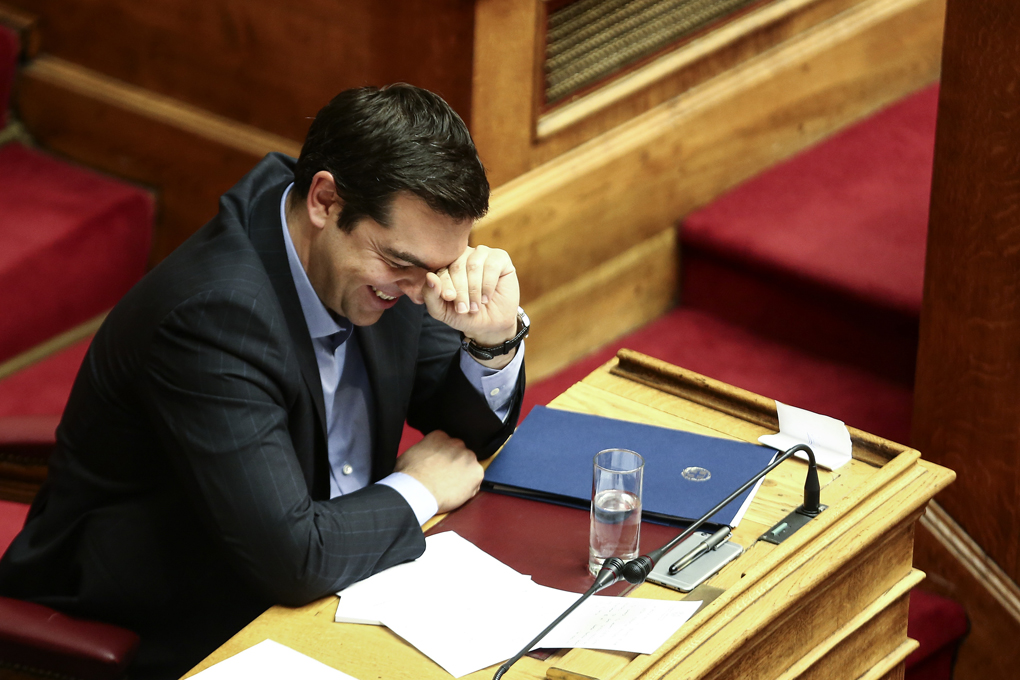
Greece Prime Minister Alexis Tsipras: his initially warm relations with the Kremlin gradually cooled, Athens, May 2016
Speaking about the conflict in Ukraine, Kasidiaris blames in all the Americans, who, in his opinion, arranged the Maidan and led the country to war. In Russia, according to Kasidiaris, his party is working closely with the LDPR Zhirinovsky and the Rodina party, associated with Deputy Prime Minister Dmitry Rogozin. Two representatives of the Golden Dawn participated in the Congress of the extreme right organizations, which Rodina held in the spring of 2015 in St. Petersburg. The event for the most part was aimed at creating a coalition for supporting the actions of Russia and pro -Russian militants in eastern Ukraine. In this sense, it was not much different from the above -described Left Assembly in Athens, with the only difference being that people who were accepted in the neo -Nazis participated in it. Among them was Alexander Milchakov nicknamed Fritz-an open St. Petersburg Nazi, who in the Donbass headed the Rusichi sabotage group, which consisted of his friends Nazis-Noyaizers. Another important contact of the Golden Dawn in Russia is the philosopher Alexander Dugin, a cult figure in neo -Nazi circles throughout Europe. The party, according to Kasidiaris, shares his belief that Russia (and not, for example, modern Greece) is the heiress of the Byzantine Empire. True, Kasidiaris says, with Dugin at the Golden Dawn, disagreements about Turkey: the Russian considers her an ally, and for the extreme right Greeks this is a sworn enemy. In 2014, the professor of Moscow State University Dugin received two prominent Golden Dawn members at the university, who, following the results of the meeting, said that they consider Russia the most important ally in the fight against “American expansionism”.
Pendulum named "Siriza"
However, a man of broad views, Dugin is friends not only with Greek neo -Nazis, but also with their sworn enemies from the extreme left party of Siriz, now ruling in Greece. In 2013, Dugin lectured at the University of Pirere at the invitation of Nicos Croesias, who now holds the post of Minister of Foreign Affairs of Greece. True, the Greek border guards on May 18, 2016 did not want to let Dugin’s country “at the request of Hungary”.
Representatives of Siriza, among which many former communists, the warm relations of the extreme right with Russia cause jealousy and bewilderment. “I do not understand how the party, which openly admires Adolf Hitler, may be a friend of Russia, which has suffered so much from Nazism,” says Panos Trino, coordinator on foreign policy in the leadership of Siriza.
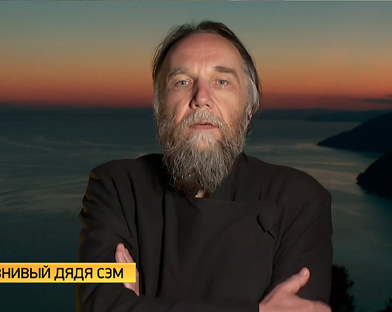
Alexander Dugin attributed an attempt not to let him go to the EU on the intrigues of “Jealous Uncle Sam”, Saloniki, May 18, 2016
When the party came to power in the wake of the economic crisis and the disappointment of the Greeks in relation to the European Union, it seemed that there was no more pro -Russian government in Europe. Still in the opposition, Siriza advocated the abolition of EU sanctions introduced because of Russia's actions in Ukraine. On the eve of the inauguration as Prime Minister, the party leader Alexis Tsipras met with the Russian ambassador. The Minister of Defense in the government of Tsipras became Panos Kamenos, the leader of the Small Right -right Party “Independent Greeks” and a personal friend of the entrepreneur Konstantin Malofeev, who played a key role in the capture of Crimea and organizing an armed rebellion in the Donbass. According to several European and American publications, Kammenos came to Moscow for the wedding of Janis Karageorgis, a Greek shipowner, with whom Malofeev creates a network of television channels in Greece and other Balkan countries.
But initially the warm relations between the Kremlin and the Government of Siriza gradually cooled. Tsipras did not receive Russian loans and contracts, with the help of which he hoped to withdraw the country out of the crisis, and he had to go to humiliating compromises in negotiations with the leading EU countries. “Yes, past governments neglected the development of relations with Russia,” Panos Trinogrates now notes. “But when we say that relations need to be developed, this does not mean that we are going to deviate from our European orientation, to leave Europe.”
By the way, the views on Russia inside the Siriza itself vary strongly. The leader of the frankly pro -Russian faction, Panayotis Lafazanis, held a ministerial post in the government of Tsipras until July 2015, but then left the party and went to the opposition. Then, the Minister of Finance, Yanis Varufakis, left the government, who, on the contrary, repeatedly criticized Vladimir Putin’s policy and spoke about dictatorial trends in Russia.
Tricky does not agree with the position of Varufakis. “If Russia were a dictatorship, then the Communist Party would not be in parliament,” he says. In his opinion, Russia meets the criteria of a multi -party, democratic system. In addition, he adds, Russia plays a key in the role in the fight against the desire of the United States to create a unipolar, closed system in the world.
“I do not understand how the party, which openly admires Adolf Hitler, may be a friend of Russia, which has suffered so much from Nazism”
According to the key Ukrainian theme, Tri -Strand expresses a carefully pro -Russian point of view: Siriza respects the independence and territorial integrity of Ukraine, but it “must respect the feelings of national minorities.” And one more thing: “Ethnic Russians in a number of regions of Ukraine want more autonomy. I think this issue can be resolved democratically. ”
With Crimea, it is even more difficult: the peninsula, the Trutazis argues, was part of the federal structure - as Kosovo inside Serbia and the former Yugoslavia. “The international community should show sufficient flexibility so that such large formations as Kosovo and Crimea do not have a feeling of lawlessness,” our interlocutor believes, adding that we must take into account the “historical injustice” from which Crimea suffered in the past.
But in any case, the Siriza government recognizes Trutazis, will not pedal the Crimean theme, and even more so to recognize Crimea by the Russian one, because the priority is to defend the territorial integrity of Cyprus, some of which was captured by Turkey in 1974. In addition, Greece does not recognize the independence of Kosovo. In this regard, the Siriza government advocates an integrated approach, which would take into account both Cyprus and Kosovo factors.
In practice, this means: Siriza support for the Russian position in Ukraine will be limited only to rhetoric - no attempts to use the right of veto in the extension of anti -Russian sanctions did not undertake Greece and will not undertake.
The degree of Greek loyalty is highly overstated by the Russian political unit.
Photo: Yorgos karahalis/Ap Photo, TSARGRAD.TV, Panayiotis Tzamaros/Nurphoto