
Translated material
Do not become a monster
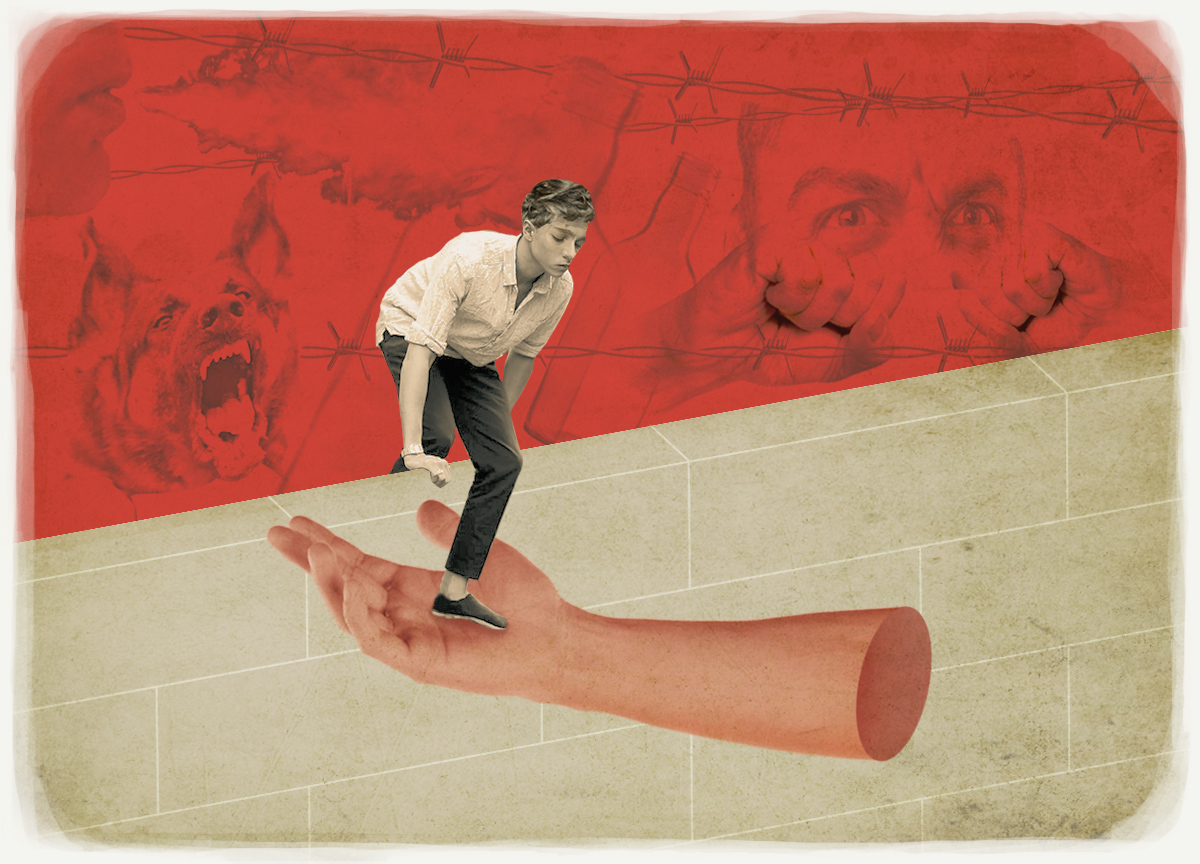
You can be a monster of any size, the main thing is to observe the order so that there is a chance to be released as early as possible
We help the center of sotsadaptation sv. Vasily the Great collected 3 962 777 R required 3 956 089 rThe collection of funds is over
In 1943, Chukovsky wrote a letter to Stalin about the life of children in wartime. Children's behavior inspired him with a "greater alarm." According to the writer, during the war, the children were completely brutalized and got out of control. They beat their parents, enjoying their own cruelty, stole and decomposed other children, all these cases seemed to the author flagrant. Chukovsky, whose poems and fairy tales adorned the life of every Soviet child, called them "dangerous infection" and "socially dangerous elements."
After conducting the “cleaning of schools”, he proposed to occupy children with agricultural labor in the colonies (not Gulag, of course, but those created by Anton Makarenko). Such a manner of presentation can be horrified, but you need to understand that in our country at that time there was no much experience in socializing “difficult” adolescents.
And today it is not much: in Russia there is only one specialized non-state institution, which gives children 14-18 years old a chance to return to a normal life after committing a crime. Since 2004, the Center for Social Adaptation of St. Vasily the Great has been working with minor criminals, and from that moment it is the only alternative to educational colonies.
“A child who committed a crime” and “bad person” is not the same thing. Children's offenses can be explained by the desire of adolescents to assert themselves as soon as possible. With their insufficient social maturity and the absence of life experience, this goal is unattainable.
The center believes that from the very first days of rehabilitation, it is necessary to discuss his future life with the teenager - it is important to help him understand how to apply knowledge and skills gained here in the future. For three years, specialists of the Center have monitored the fate of everyone who has undergone rehabilitation. Over 10 years of the center of 206 adolescents participating in the rehabilitation program, only 28 people committed repeated crimes. This is the uniqueness of the program, which was developed jointly with the Judicial Community of St. Petersburg: it is important not only who you are here and now, it is important that the mistakes of the past will not be sewn into your future.
“To organize, take responsibility, set goals, watch how they can be achieved, show the initiative and be independent - these are things that are absolutely not important in the colony. You can be a monster of any size, the main thing is to observe the order that there is a chance to be released as early as possible. But as soon as the children leave the colony, the rules cease to act. Our work is built differently. We strive for the guys to realize responsibility for their own life, try to understand their interests, ”says Elena Galabionova, psychologist at the Center for Social Rehabilitation.
You can be a monster of any size, the main thing is to observe the order so that there is a chance to be released as early as possibleThis is not to say that with those guys who have committed a less serious offense, it is easier to work. The specialists of the center noticed a different pattern: the responsibility for passing rehabilitation is better aware of those who got to the center by court decision, because their stay here is mandatory.
“It’s very difficult to work with those whom the commission on minors sent here, parents brought or who came by - there are such children with us. Their motivation is very quickly reduced, it is difficult for them to live in the center, because here everything is arranged not as they are used to. After all, before getting to us, they did not know any restrictions and requirements, ”says Galaktionova.
Despite the fact that the parents of adolescents do not live with them in the center, their communication does not stop, and they can increase the efficiency of rehabilitation if they at least stop thinking that "the child is to blame." Parents also need to work on their behavior. It is difficult for many of them to understand that the children have already grown up, that relations with adult children are built in a special way, not like small ones. The second point is fear. Parents follow children, give them money - they are afraid not to fulfill their requirements. Giving in to manipulations, they only exacerbate the situation. And, of course, they are very worried about the negative reaction of society. In the police or commission on minors, they can only pour dirty dirt, and not help. Thanks to the psychological service of the Center, they are aware of these problems and cope with them.
Now in the center there are rehabilitation of 11 teenagers. All of them got here by court order or in the direction of the penal inspection and, together with a conditional term, received a chance to get better-not just stop fighting, swearing, drinking and smoking. They can unlearn from all this in the educational colony. Refracting is to competently dispose of your own freedom. Do not kill anyone or rob in future adulthood.
Refracting is to competently dispose of your own freedom. Do not kill anyone and not to rob in future adulthoodLet's get back to Chukovsky. The apparatus of the Central Committee of the All -Union Communist Party of Bolsheviks (b) after consideration of his letter conducted many checks in Moscow schools. It turned out that the pioneering organization, in fact, ceased to exist, and all the work was reduced to pioneers. And the scale of the Timurovsky movement was greatly exaggerated. And, most importantly, the Politburo was convinced that schools could not cope with young offenders. Chukovsky was right.
Today we can solve the problem that reminds ourselves from the last century. The St. Petersburg Fund has not received funding since September 2014. Four educators, two social workers, the head of the rehabilitation course and the head of the social service are those who gave “difficult” teenagers a chance to correct their lives, to be active in any other but not criminal sphere. So that they receive a salary, you need not so much: remember how much parents gave you for pocket expenses when you have not yet turned 18? Surely it was very little money. 11 teenagers are not so needed now, but the specialists who work with them are vital. Any amount will help them.