
Translated material
The road to Peterhof
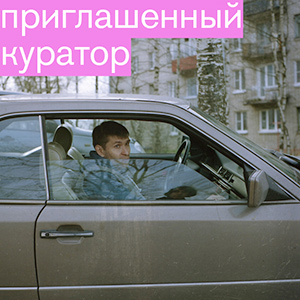
This year, Colta.ru decided to go to the experiment and invited to temporary curators over the section “Photo projects” of young and talented representatives of leading Russian photocurium. We divided the calendar year between six curators and asked them to select the most interesting samples of modern Russian photography for publication.
Invited curators
Katerina Zueva , center of photography named after Brothers Lumier
Nadezhda Sheremetova , "Femicip"
Sergey Lostev , "House of Metenkov"
Daria Tuminas , Freelance Curator, Amsterdam
Anastasia Bogomolova , The Blog This a Photobook
Svetlana Taylor , British Higher School of Design

Third resident: Sergey Lostev. Documentary photographer , curator of the photographic museum "Metenkov House" and the Cultural Transit Foundation . Lives and works in Yekaterinburg.
In 2013 and 2014, one of the curators of a photographic educational laboratory as part of the DNA-Pervouralsk project.
Works with documentary photography and various practices of contemporary art.
Sergey Lostev about the project of the photographer Ekaterina Vasilyeva
Ekaterina Vasilieva works with topics that at first glance seem to be lying on the surface. Her last project - “Russian season” is one of the few, reflecting on the themes of the Russian winter, the state and sensation of this part of the year. It would seem that it could be easier than telling about the time that lasts inadvertently long in our country. So in the new project, the author reflects on the topic of "Russian Way to Europe." For her visual research, she chose a very specific territory - the Peterhof road. Which was laid in 1710 as a tract connecting Petersburg with suburban imperial residences: Strelnaya, Petergof and Oranienbaum. At the direction of Peter the Great, the nobility was distributed evenly along the road on both sides to the estates, and the resulting giant architectural ensemble was to overshadow the road from Paris to Versailles.
As the author writes:
“For me, the space of the former tract fully embodies the paradox of the Russian landscape. Generated by the imperial impulse, the road was built in accordance with the idea of picturesqueness. The majestic ensembles of palaces and the estates of the nobility, extending along the road, were built to delight the eyes of an enlightened observer. At the same time, the existing space was not taken into account - the villages and agricultural lands adjacent to the luxurious palaces of the village turned out to be, in fact, invisible. Over the past three hundred years, the territory of the road has witnessed many historical shifts, each of which left its marks on it. The old was destroyed in the name of an incomprehensible new one, but never disappeared to the end - if you look intently without taking your eyes off, then you can find amazing traces of many traces. ”
Using a visual “cold” look at the landscape, the photographer plays the game with the viewer, leaving characteristic clues in the photographs. The path from Paris to Versailles is transferred to Russian reality, making it clear that we are not so “not Europe”, as it has been heard recently.