
Translated material
Electronic Yugoslavia
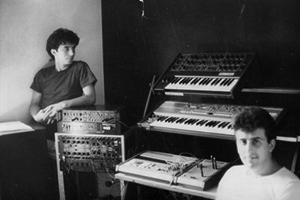
In the electronic living room of the Polytechnic Museum, a series of lectures of the Moscow electronic musician and collector Andrei Orlov continues, dedicated to electronic music of the 70s and 80s, which, for various reasons, turned out to be, as they say, “below the radar” (the previous lecture was dedicated to the Japanese group Yellow Magic Orchestra ). The theme of the meeting May 27 is the electronics of the countries of the former Yugoslavia. Like the last time, specially for Colta.ru Andrey prepared a review and recorded a mix.
 . . .
. . .The Yugoslav electronic and alternative music of the 80s is represented in the western cultural space with almost one name- Laibach , while interesting artists at that time in the country were dozens, if not hundreds. In the large cities of the country-Ljubljan, Zagreb, Belgrade, Rike, Novi-Sada and other musical life at that time was extremely rich and dynamic: especially many new names appeared at the turn of 1983-1984. Musicians, both the mainstream (playing synth-pop, instrumental embedent-electronics, electro-pop), and those who worked in more underground genres received support for the largest recording companies ( Jugoton , PGP RTB ), access to professional studios. Many musicians regularly went to Germany, the UK, brought fresh records and modern musical equipment from there. But, unlike Laibach , the vast majority sang in their native language: after all, at that time Yugoslavia was a huge solvent market, and the artists focused primarily on their own internal audience. This was one of the reasons that in the West, until recently, the Yugoslav scene was seriously not perceived and began to be reduced again only in recent years.
Nevertheless, the main message of the "Yugoslav" compilations and publications in the western blogs of recent years is always approximately the same: "Watch how close enthusiasts behind the iron curtain are close to Western samples" Or "wow, in the East there was also a creative life, despite ...". Here, in Russia, especially for those who still found the USSR at a conscious age, the angle of view on the phenomenon of Yugoslav electronics is slightly different. On the one hand, the Yugoslav groups are really attracted by the unwell “Western”, the notorious “quality”, which contrasts sharply with what was done in our electronics in the 80s, and with the experiments of the rest of the social camp countries-the GDR, Czechoslovakia, Bulgaria, Hungary, Romania, Poland. Compared to other so -called democrats in Yugoslav products, there has always been more persuasiveness, authenticity, style, passion, sex.
On the other hand, it is in the Yugoslav artists that a certain common, difficult to explain component is always felt - a very special and at the same time close to us in spirit. This element is felt both in the melody and in the general sound, and in the presentation. But the most important thing-always, regardless of the genre, you can catch some special “dark” energy: in music there is a certain dramatic rod (which is called, edge ), and therefore straightforward comparisons with the western samples of that time almost always go “by”. Perhaps it is this combination of the Western sound and the vibrations close to our mentality that makes Yugoslav electronics truly unique and exciting.
The review briefly tells about the electronic scene of Yugoslavia as a single country, without special division into the republic, since we are talking about the 80s, before the collapse of the country. This scene is a very diverse and versatile one, but in order to give some representative cut, I had to concentrate on just a few sign names: Denis & Denis , Videosex , The Master Scratch Band , Data , izike , Borghesia , Beograd , Laza Ristovski , Miha Kralj , Mario Marzidovsek .