
Translated material
The European Union will not abolish sanctions against Russia until the full implementation of the Minsk agreements
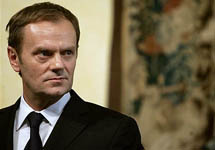
The European Union will not cancel economic sanctions against Russia until the Minsk agreements are fulfilled in full. This was announced on the eve of the G7 summit in Japan by the head of the European Council Donald Tusk. According to him, now the implementation of these agreements is moving much more slowly than expected.
According to Tusk, the European Union, like all G7 countries, still believes that the crisis in the southeast of Ukraine can only be allowed "in full accordance with international law", in particular with "the respect of the sovereignty, territorial integrity and independence of Ukraine."
The decision to extend anti-Russian sanctions will be made within two to three weeks, he added.
Meanwhile, Vladimir Putin believes that there are no insoluble problems in the relations of Russia and the European Union. The president said this in an article published in the Greek edition of Katimerini.
"There are no insoluble problems in our relations with the EU. In order to return to the path of a multifaceted partnership, you only need to abandon the vicious logic of" Game for the Gate ", in fact, take into account the opinion and interests of each other," the president’s article says.
Putin also noted that Russia proceeds from the need to “build a fair and genuine partnership and dialogue” with the European Union on a wide range of issues - from simplifying the visa regime to the formation of an energy alliance.
“Nevertheless, we still do not see from our colleagues the same readiness to follow this mutually beneficial path,” Putin emphasized.
The sectoral sanctions of the European Union, adopted due to aggression of Russia in Ukraine, came into force on August 1, 2014 . They were introduced for a period of 1 year. Restrictive measures affected the banking and oil sector, the defense and industrial complex, dual-use products and technology. In particular, a ban on the supply of equipment for the oil industry, on technological cooperation with Russia in the development of Arctic shelf and shale deposits was introduced. The EU also introduced the embargo for weapons with Russia and the export of dual -purpose technologies.
In September 2014, the European Union strengthened sanctions against Russia . The sanctions list included new companies, and the period for which it is allowed to attract credit funds was reduced from 90 to 30 days. In June, foreign ministers of countries - members of the European Union extended the effect of sanctions against Russia for six months, until January 31, 2016.