
Translated material
If you have little "Game of Thrones"
Ten books in the fantasy genre. List from Galina Yuzefovich
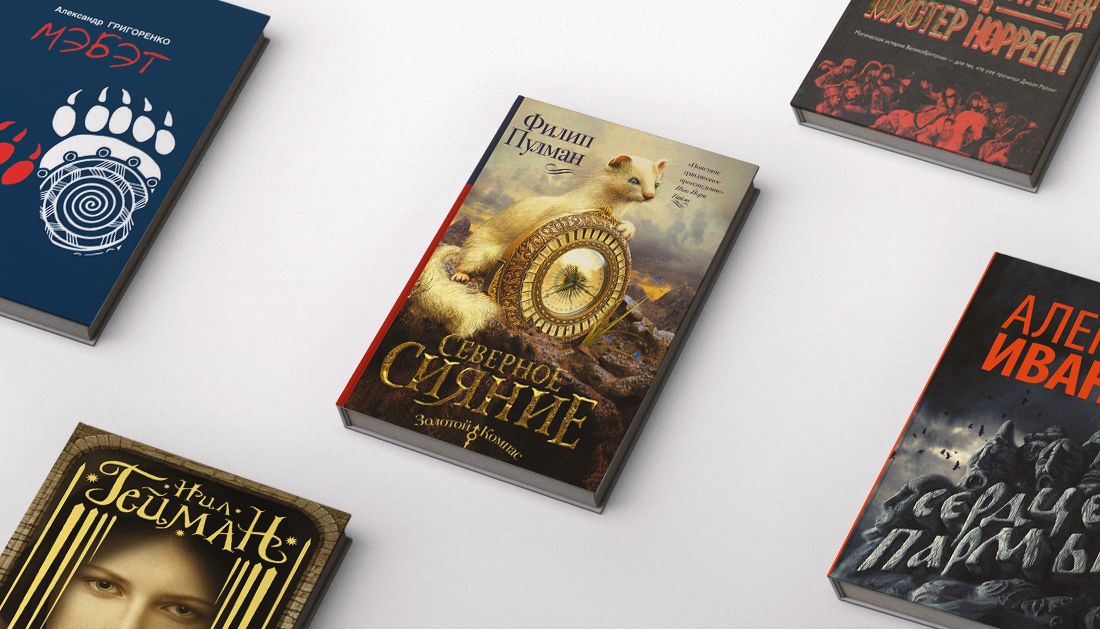
A weekly literary critic Galina Yuzefovich tells at Medusa about interesting and important books. This time we will talk about fantasy - about 10 books of different years (both foreign and domestic authors), which you must read.
The popular love for the series “Game of Thrones”, shot according to the novel by science fiction writer George Martin, has reached such a degree of boiling that the reader today is ready to take up almost any book on the cover of which the word “fantasy” is listed. If you have already mastered the main hits of the genre like the “wizard of the Earth More” Ursuly Le Guin or the “chronic of Amber” Roger Zhelyaz, now is the time to move on to things, perhaps less famous, but no less exciting.

Mervin Peak. Gormengast. SPb.: Symposium, 2004. Translation from English S. Ilyin
This trilogy is approximately the same gold classic of the genre as the “Lord of the Rings” by J. R. R. Tolkien, but in our country it is much less known, and completely in vain. Gormengast Mervin Peak is a rare example of fantasy, in which there are no elves, no dragons, nor magic. If the action in it did not take place in another world, in the principality, which, from time immemorial, rules the powerful house of the bundles, the novels of the peak with a small stretch would go beyond realistic - at least in the sense in which the “process” of Franz Kafka is realistic. The huge Gormengast Castle - the Citadel of the Golden - in some places luxurious, sometimes sinister and abandoned, is so great that it becomes the whole world for its inhabitants. Submitted into endless (and meaningless) rituals, for a long time they do not notice the intrigues for a long time that an insidious washing is entangled in their dwelling-in the past a rootless punch boy, and now a ruthless gray cardinal with a mentionless orphan (not without him, washing, participation) of the young heir to Golden-Titus.
The viscous and slow, in some places possessing a pronounced taste of the nightmare and, as if deliberately devoid of any spectacular kunshtukov inherent in fantasy, “Gormengast” nevertheless has the ability to delay, involve the reader into the text, make it not so much a witness as a participating in everything that is happening (and it is precisely for this, in fact, they read fantasy). The first part of the trilogy (“The Titus of the Burders”) tells of the elevation of the washing. The second (actually “Gormengast”) - about its confrontation with the grown up title, and the third is “the loneliness of the title” (in it the title leaves the ruins of the gormengast destroyed by the flood and goes to a certain uncomfortable city) - you can skip with a pure conscience: it, which, is essentially, is a confused draft, capable of passionate. What the most loyal fans of the cycle.

China Meville. City and city. M.: Exmo, 2013. Translation of Yaropolsky
The novel of the Englishman China Meville is an example of hybridization of fantasy and detective, so there is no need to count on trolls and gnomes here either. Its action takes place in God's forgotten outback of Eastern Europe - in the depressed town of a gorchel, lost either in the Balkans or a little north. On one of the Grachel wastelands, the disfigured corpse of a young woman was found, and commissar Tyador Borlu has to reveal this crime.
However, both the reader and the hero understands that the murderer’s trace leads beyond the gorge: the girl did not die here, but in the much more brilliant and prosperous city of Ul-Kom-the eternal rival of the gorge. The only problem is that both of these cities occupy the same place in space. From birth, the residents of the gastle learn not to see everything that applies to ul-coma, and vice versa. The colors and mechanisms popular in one city are strictly prohibited in the cities of different architecture and fashion, and the most terrible crime is there and here - this is the creation of gaps, an illegal door between the two cities. However, this time the case is clearly more serious: it is not just about the next gap-the ancient balance between the prayer and the ul-komo is broken, some power seeks to change the usual state of affairs, and the murder is only the first in a series of riddles to solve the commissar Borlu and his ul-comic colleague KUSIMA Dhatta.
The gloomy, alluring and bizarre atmosphere, which Mieville skillfully overshadows in his novel, will remind the reader at the same time both the classics of the American Noir and the Gothic novels of the 19th century. As for, in fact, a detective intrigue, many corphyory of the genre envy her. Despite the mystical temptations that arise along the way, China Meville is faithful to the principles of a classic detective and allows it in a perfectly realistic way-of course, if with such an entourage the word “realistic” generally means anything.

Suzanne Clark. Jonathan Strande and Mr. Norrell. M.: AST, 2006. Translation by M. Klevetnko, A. Konopleva
The world, invented by the Englishman Suzann Clark, would be very similar to England at the beginning of the 19th century, if it were not for one significant detail: in the relatively recent past, witchcraft really existed in this alternative England, and the most famous sorcerer, the mysterious King of Voron, even ruled the northern regions of the country, while maintaining close contact with elphas and fairies. However, now the witching tradition has won and no one practices magic-so the rationally thinking inhabitants of London think until two sorcerers are announced in the country at once-young and old, gusty self-taught Jonathan Strande and Bednight-Book Mr. Norrell. Their friendship, and after the rivalry, extending from the fields of Napoleonic battles (is it necessary to say that magic immediately finds military use) to the ghostly palaces of the world of fairies, and becomes the subject of this long and unusually inventive novel. Even if you watched the series of the same name, do not deny yourself the pleasure of familiarizing yourself with the original source: firstly, many important storylines are not included in the series, but secondly, despite the impressive volume of the novel is much more dynamic.
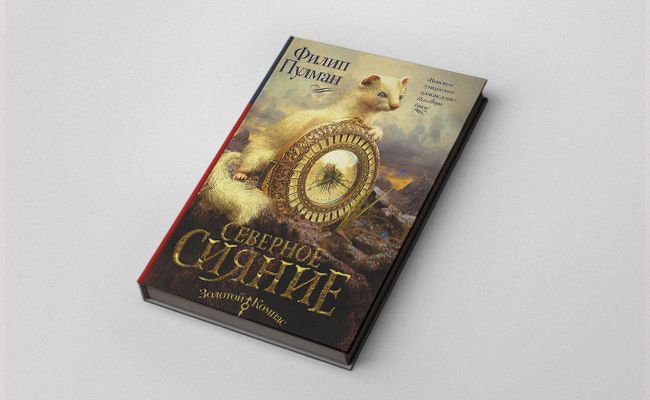
Philip Pulman. Northern lights. M.: AST, 2015. Translation from English V. Golyshev
Actually, the Philip Pulman trilogy is intended for teenage reading, but experience shows that adults read it with no less-and sometimes with much larger-enthusiasm. And this - do not consider for a spoiler - no doubt that a book that is able to plow a serious furrow in the reader’s soul.
A girl named Lira Belakva is an orphan: her house is Oxford College (in a world very similar to ours, but with airships instead of aircraft and other signs of Steam-Panku aesthetics), her family is teachers and servants of this college. In the world of lyre, people do not have the habit of keeping their soul inside-each person’s soul (here is called Damon) has the appearance of some animal or bird and lives outside, accompanying its master as a friend, adviser and interlocutor. Lira along with her Damon Panteleimon climbs through the fences and plays with the city poor, as long as strange things do not begin to happen around her: someone is stealing children in Oxford, and one of the missing is the best friend of Lira ... From this point for the heroine, a dizzying path begins, leading her first to the extreme north, in search of each other, and after the border of the usual world, towards miracles, tests, losses and losses and losses and losses and losses and losses and losses and losses and losses and losses and losses and losses and losses Even a pair of small armageddons.
If the novels listed earlier could not boast of a special biological diversity, then this time everything is in perfect order: in the trilogy of Pulman, all conceivable and unthinkable magical creatures act in the range from reasonable white bears to witches and angels. However, this is definitely not the main advantage of the “northern radiance”: a magnificent, exciting and truly heartbreaking story of Lira splashes out far beyond the limits of teenage fantasy, turning out both the history of one small human soul and an epic story about the whole universe as a whole.

John Crowley. Small large, or parliament of fairies. M.: Exmo, 2004. Translation from English by L. Brilova, S. Sukhareva
John Krauli’s novel is difficult to compare with anything: he is one of a kind and does not look like anything. A romantic fairy tale, arranged according to the principle of many hidden stalls embedded in each other? Exquisite allegory in the Renaissance spirit? Complicated family saga? Yes, all this, too, but also - and this, of course, is the main thing - tons of fluid, non -verbalized, truly magical substance, a kind of sparkling ether, filling the novel from the inside and constitutes its main charm.
The young and simple -minded clerk of Smoki Barnabar falls in love with Elis Drynkuoter, the daughter of a famous children's writer, and after his beloved goes to the family estate of Drynkuoter Edgewood. However, what at first seems to him just a home - albeit very large and unusual, in reality, contains many other houses - inside Edgewood lurks and breathes a whole enchanted world! Uncoming his countless mysteries and an attempt to grab the tail spilled in the Edgewood air, but the magic constantly eliminating from a direct gaze, are able to capture the heroes for many years, and the reader - for all nine hundred pages of the novel.

Neil Gaiman. Nikoge. M.: AST: Mainstream, 2015. Translation from English N. Konch, M. Melnichenko
Once Richard Meyheu, a colorless urban mediocrity, did not make a typical noble act for him: he helped a strange girl named the door to escape from two hired killers. Perhaps he would prefer to quickly forget about this incident, but after a couple of days in Richard’s life, outlandish changes begin to occur: friends and colleagues cease to notice him, and even mentions of a person with such a name and surname disappear from the documents. And then, imperceptibly for himself, Richard falls into the sub-tondon-the gloomy underbelch of the bright upper London, where all things are pulled out, which does not have a place on the surface. So, for example, it is here, it turns out that the famous London was duckling, which became out of use after the construction of urban sewage. Now, in order to return home, Richard will have to not only learn how to survive among very repulsive creatures, but also enter into a risky duel with world evil.
The fairy tales of the Neil Gaiman are always an incredibly cool world, and “Niko” (perhaps the most pure model of the fantasy genre in the whole work of the writer) is no exception. In a word, excellent reading for people who seek in the book primarily asylum from the everyday life and routine of real life. What is important, equally well read at twelve and forty years old.

Mikhail Uspensky. The adventures of Zhikhar. M.: Exmo, 2013
The fantastic pseudo -folklore cycle of the Krasnoyarsk Mikhail Uspensky is our answer to the “flat world” of Terry Pratchett, only noticeably shorter (only three novels) and with a great emphasis on the language game. The main character is a classic Russian hero named Zhikhar, simple -minded, kind, quick -tempered and, of course, prone to drunkenness and other outrages. In the first novel of the cycle (“Where we are not”), on the instructions of the wizard-nucleus of Belomor (the enlightened reader recognizes in this hero the famous domestic folklorist scientist Sergei Yuryevich Neklyudov) goes to the struggle with the inappropriate time. In the second (“who to send”) will return to the native polythery the frustrated death, and in the third - perhaps the best novel of the trilogy - “Time it” will first drink all its fame in the tavern, and then go to win it in the second circle.
Reading Assumption is extremely pleasant (a rare case when from jokes is equally funny and the so-called “naive reader”, and intellectual-humanitaria), although there are many complaints about the plot, there are a lot of complaints about the author. Verily tearing from the start, each of the novels of the cycle disappointingly quickly breaks up into many witty inserted short stories, lateral branches and hilarious puns. However, in this plot unfinished there are also your advantages - you can read in any portions and, in fact, from any place.
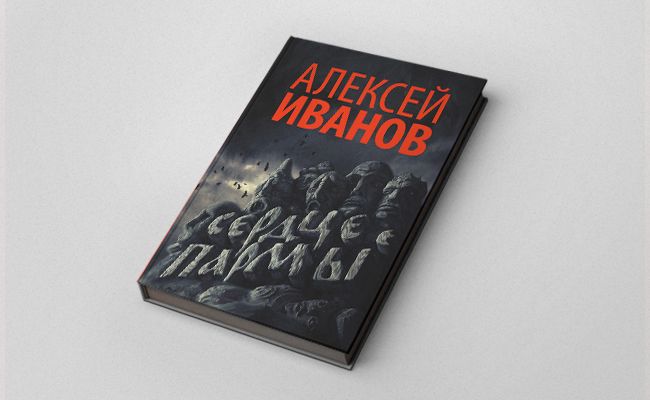
Alexey Ivanov. Parma's heart. M.: AST: Editor Elena Shubina, 2015
The novel, who glorified Permyak Alexei Ivanov, is quite skillfully pretended to be a serious historical prose: the 15th century, the development of the Urals, the conflict between the central and regional authorities, the baptism of Permyakov, the Cherdynsky principality, Ivan III ... however, it is worth a little scrape and it turns out that from the real history, Ivanov retained only a thin shell, filling it with boiling brew of the most fantasy. properties.
Summary shamans rush into battle on combat moles, and blood boils at the hooves of angry animals. Princess Teche, the wife of a completely Russian and Orthodox Prince Michael (by the way, a real historical character), will turn and conjure and conjures. The sworn enemy of Mikhail, Vogulsky Khumlt (sorcerer) and the leader of Asyk cannot die without fulfilling his mission, and his purpose - to expel all Russians from the Urals. He dreams forever to defeat the local forest evil by a demonic archbishop of Ion. And above all this bloody, terrible and amazingly living world, a curse of the Golden Baba, a sacred idol, once stolen from his native sanctuary, accidentally wandered into this inhospitable land with Novgorod ears ...
Linguisticly complex, metaphorical and, for all that, the absolutely exciting novel by Alexei Ivanov - perhaps the best text in the genre of the so -called Russian fantasy. Well, what is the basis of it is quite a thorough historical substrate, so from that-even the famous arthur’s novels of the classic Fantasy Terents Terents White have some kind of real basis.
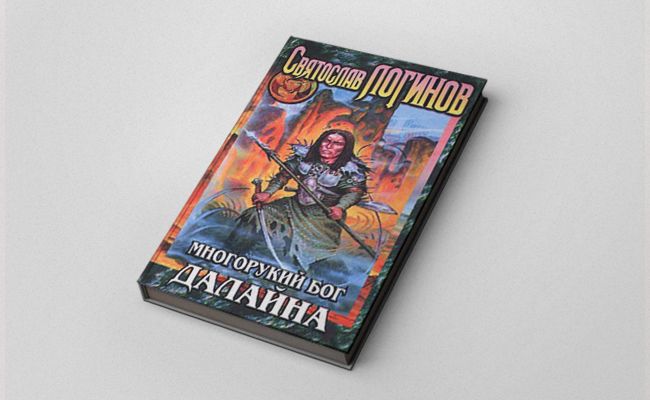
Svyatoslav Loginov. The many -armed god Daline. M.: Exmo, 2012
The longtime, mid-90s, Roman Svyatoslav Loginov-from among books that have a cult status within the boundaries of the fandom (community of fantasy lovers) and almost not known beyond its borders. Meanwhile, the fictional world constructed by Loginov is definitely the most delightful and crazy of all the fantasy writers ever invented.
Daline, a quadrangular pool, a container of a fetid poisonous mucus and the habitat of a terrible sea snake Yorool-Guy, On the surface of the Daline there are islands of sushi-oroikhones, also composed of square cells. People live on Orokhons - they are at war with each other, breed cereals and mushrooms, and also hunt for edible animals. However, people's lives are subject to constant danger: Yorool-Guy is thrown out of time to time to the surface of the oroikhon, destroying all living things. This war also has its own rules: the snakes cannot advance deeper into the sushi further than one square, and one time in a generation among people is born Ilbech-a person who can lift new oroikhona from the bottom of the sea, thus reducing the living space of Yorool-Guya ...
Schizophrenically verified, most similar to the computer game of the era of early Tetris, Loginovsky Daline, however, turns out to be a field where serious and extremely convincing passions are raging. Epic -scale conflict, the canonical story of the snake and snake, as it turns out, goes well with mechanistic and meager surroundings - moreover, it acquires new shades, including very piercing.

Alexander Grigorenko. Mabeth. M.: ArsisBooks, 2012
Alexander Grigorenko took up the strange thing and seemingly obviously doomed: in his small novel “Mabeth”, he tried to recreate (or rather, invent) the epic of taiga Nenets. However, what happened at the exit least of all thinks about boring and thorough ethnographic prose, which at best suggests arrogant and fit anthropological interest. With all the abundance of difficult words and exotic concepts, “Mabeth” is a universal and extremely rigid existential drama, simply placed in the decoration of the magic north.
The main character of the novel - actually Mabat - differs from his relatives from childhood: blue -eyed and fair -haired, he lives without looking back on customs, relying only on his own unbending will and unprecedented, not in any human framework for not fitting luck. Without conspiracy and matchmaking, he marries the most beautiful girl of the taiga, without demand he beats the beast in other people's hunting grounds, together with his son goes to the wrong war and won. Mabat is not disturbed by either illness, old age, or weakness ordinary for a person - love, friendship, hatred, resentment.
Everything changes when Mabat is born a grandson - a bright -eyed, fair -haired and unusual, like himself. Love makes Mabat vulnerable, his armor impenetrable, his armor gives a crack, and the ubiquitous rock immediately rushes into the formed gap. Now, in order to pray from the gods several miserable years of life and get a chance to grow an orphaned grandson, Mabat will have to go to a terrible shamanistic journey around the afterlife. Двигаясь по смертельно опасной Дороге Громов, он узнает истинную (весьма обыденную, надо сказать) природу своей удачливости, взглянет в глаза всем, кого обидел, предал или бездумно обрек на смерть, получит их прощение и — совершенно не в духе европейской литературной традиции — сумеет примириться с неискоренимой слабостью человеческой природы.
Galina Yuzefovich
Moscow