
Translated material
Contacts that are not
From Gennady Rozhdestvensky to Vladimir Yurovsky - concerts where a forgotten classic is being revived
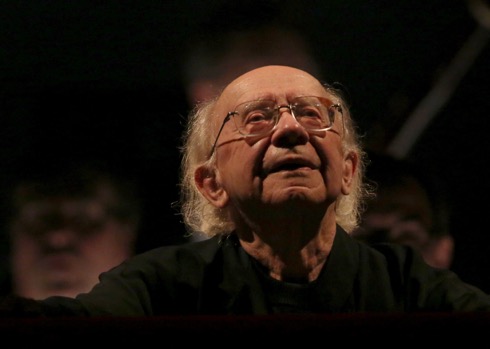
Gennady Rozhdestvensky celebrated his 85th anniversary, but is not going to retire-the anniversary became the reason for the next series of educational concerts
One of the most authoritative conductors of Russia, Gennady Rozhdestvensky just celebrated the 85th anniversary-as usual by a series of concerts, each of them offers the public something sensational. This is the music of well -known composers, which is almost no one more performed (for example, Mozart's early Masses), and the works of the authors, whom the general public does not know at all. And there are words that explain to the listeners why it is so important for them to find out this music. In our concert practice today, where Tchaikovsky and Rachmaninov are still leading, such a unique tradition has almost the only successor-the former assistant of Rozhdestvensky, 44-year-old Vladimir Yurovsky, who recently opens his subscription.
The narrowness of the repertoire is not only a Russian problem, but it is with us that it is especially acute. You can understand the organizers of concerts who think about the box office and offer the public well -known works. However, as a result, even the music of a hundred years ago, they do not know and are called new listeners and other musicians. Meanwhile, the public lacks serious music and a serious conversation about it, this was confirmed by last year's subscription of the Jurovsky “War and Peace”. His other concerts ended closer to midnight, and there were hundreds of listeners, whom this did not stop. The programs were submitted to Yurovsky so that the music did not take away strength, but, on the contrary, gave them, and the audience diverged in a rare enthusiasm.
Conducts and tells
For the third season in a row for the spring concerts of Rozhdestvensky, almost without a break, the summer subscription “Vladimir Yurovsky is conducting and telling” the summer subscription. The coincidence is probably random, but remarkable - the continuity between one and the other is becoming more and more obvious. Both belong to the rare type of conductor, for whom it is more important not to delight the audience, but to interest it, share the discovery, involve music in the process of knowledge of music-little-known or, conversely, well-known.
In a well -compiled concert program, where some works “rhymes” with others, music does not always speak for itself, sometimes she needs a word. However, the word of the host has a much less weight than the word of the musician who wants the public to be as interesting to listen to the program as he will come up with, prepare and fulfill it. That is why every concert of Rozhdestvensky has become an event for several decades: his preamble are real works of art, and it is a pity that only a few of them are published by a separate book.
Each Christmas concert has become an event for several decades: his preamblers are real works of art, and it is a pity that only a few of them have been published by a separate book
The example of Rozhdestvensky, who had chosen the path of the enlightener more than half a century ago, Yurovsky followed from his first concerts in Moscow in the early 2000s: few, who had not yet won the public, would risk offering a program where there would be not a single popular essay. Like Rozhdestvensky once, Yurovsky risked and won over and over again without going to meet the listener, but inviting him to a difficult and invariably exciting journey. Three years ago, when the summer subscription of Yurovsky first took place, it became finally clear that the educational line of Rozhdestvensky had a successor.
In the world when there is no war
Rozhdestvensky could go down in history with a 1982 concert in the Great Hall of the Conservatory, where the works of the Moscow Troika sounded - Schnitsky, Denisov, Gubaidulina. This one of this unusual music for a wide listener could be enough, but Christmas, without unnecessary Front, but without false modesty, spoke in detail about each of the semi -opal authors, whose works were rarely performed in such halls.
It seems that in the era of the Internet there is no longer a truly rare music, nor forbidden risky topics, but the example of Yurovsky makes us ask if this is so. Some of his comments, sounding in large concert halls, sound almost shocking. And this despite the fact that in the fall of 2011 the maestro was appointed artistic director of the State Orchestra of Russia named after Evgeny Svetlanov, by status - the first in the country. It is important that this happened under the Minister of Culture Alexander Avdeev and could hardly have happened at the current one: Yurovsky, who left the USSR at adolescence, as a person and as a conductor formed in Europe, where he heads several orchestras. In the terminology that today is again in use, he is a cosmopolitan, an anti -Soviet and almost a foreign agent. Nevertheless, the historical appointment occurred, and Yurovsky began to spend more and more time in Moscow, gradually transforming both the state order and the capital's musical life.
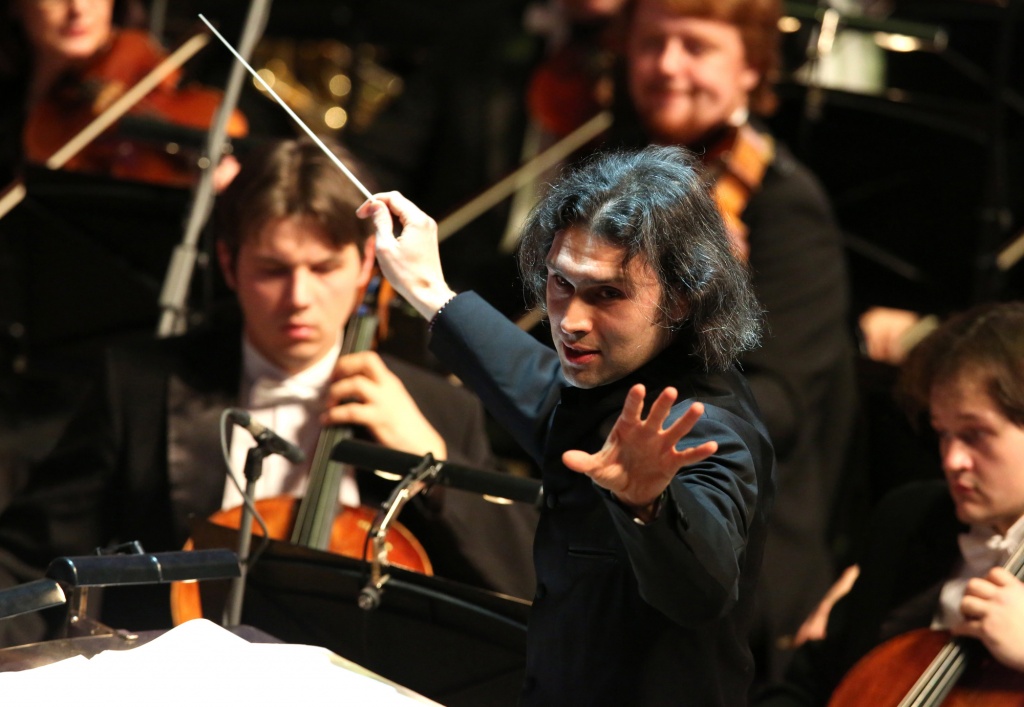
** Vladimir Yurovsky begins his summer subscription with rare music by Prokofiev, Shostakovich and Slonimsky **At the end of the second season, working with the orchestra, in June 2013, Yurovsky, with the support of the Moscow Philharmonic, conducted an experiment - a cycle of summer educational concerts. He was especially remembered by his story about the unfulfilled performance “Boris Godunov”, at the beginning of the work on which Vsevolod Meyerhold was arrested. However, then the speaker’s oratorical gift has not yet appeared in full force. This happened in April next year, when the London Philharmonic Orchestra under the direction of Yurovsky performed Britten's Military Requiem. A month before Crimea was annexed to Russia, a law on the promotion of homosexuality appeared a little earlier. In this context, the introductory word was perceived and continues to be perceived as a civil feat. Here is his fragment:
“Until 1967, there was a law in the UK, pursuing any act of homosexuality as a crime ... Britten wrote not only a requiem against the war. Britten wrote a requiem against any persecution of people for the fact that they are different. For the fact that they think differently, for the fact that they feel differently, for the fact that they are differently created by nature ... Britten in this essay asks the most important question: who are we, people, such as to judge other people? Do we have the right to do so? We devote this detail to all those people who were unjustly and untimely given and continue to give their lives today in the world when there is no war. ”
No less directly, Yurovsky spoke in the comments on the concerts of the “War and Peace” subscription, dedicated to the 70th anniversary of the end of World War II: he also spoke of the responsibility of the musician, whose art is especially necessary for the society of a sick country, and that the new war is ripening where they shout “We are for peace” loudly. This was the most directly related to the performed music: in the cycle of four concerts, the conductor included the opuses of authors from ten countries raised by the war, and each program was compiled with impeccable logic. However, an unprepared listener-and there were a lot of such people, Yurovsky’s concerts became fashionable-a three-hour program of music of the twentieth century would simply demolish the roof. This did not happen precisely thanks to the conductor, who enthusiastically explained why Schönberg or Lutoslavsky needed to understand the musical image of the military era. All four programs were compiled on the verge of the possibilities of listener perception, but no one left dissatisfied.
Another space
The current Summer Subscription of Yurovsky is a kind of respite after a oversaturated last year: three concerts - three names, Shostakovich, Prokofiev, Slonim (June 4, 5, 6, a Tchaikovsky concert hall). This is also a continuation of the Rozhdestvensky line, whose recent subscription concerts were devoted, including Prokofiev and Shostakovich. Moreover, if the Opera of the Living Classic Slonim “King of Lear” will sound at all for the first time, then Shostakovich’s music to the play “Hamlet” and the film “New Babylon”, as well as Prokofiev’s music to “Egyptian nights” are known precisely from the long -standing records of the same Rozhdestvensky. True, from music to “New Babylon”, Rozhdestvensky recorded only the suite, and Yurovsky will present it entirely, accompanied by the black and white film Kozintsev and Traubberg, dedicated to the fall of the Paris Commune.
On May 30, in the Tchaikovsky concert hall and June 2 at the Moscow Conservatory-two more concerts of Yurovsky, whose programs could be compiled by Christmas: this is a number of Stravinsky’s works, and Fuga Bach-Vern, and Offertorium Gubaidulina, whose Russian Premiere of Rozhdestvensky presented at the very concert of 1982, when the work of the Moscow Three reflected the work of the Moscow Three The current state of modern music. More than thirty years have passed, but Rozhdestvensky does not hide the fact that he does not see the change of generation by Schnitsky, Denisov, Gubaidulina. However, for a significant part of the public, their dissonances still sound as a revelation. Amazingly, but the fact: for several decades the situation has not changed, and the music of the twentieth century at the beginning of the XXI continues to insult the hearing of the conservatives and cause their misunderstanding. Meanwhile, a year and a half ago, at the Festival “Another Space”, the program of which was Yurovsky, Schnitsky and Denisov represented the classic of the avant -garde, starting the panorama of relevant music, and not closing it.
“And who are we to judge others? Do we have the right to do so? We devote this requisition to all those people who were unjustly and untimely given and continue to give their lives today in the world when there is no war ”
Opening new names for many, Yurovsky this year performs a number of works of 73-year-old Alexander
Vustin. Without five minutes, a living classic, a composer with exclusively individual handwriting and an impeccable reputation, of course, could have been interesting to Christmas. However, the master emphasizes dozens of bright names of our time, thereby unconsciously continuing the tendency with which he fought for many years. There is nothing surprising in the fact that over time, those who once pierced the road to a new one become the conservatives; But such conservatization is especially characteristic of Russian society, and the stagnation of a concert repertoire is only one of its indicators.
When ten years ago, Rozhdestvensky was asked about the worthy attention of young conductors, he called the names of Vladimir Yurovsky, Paavo Yarvi and Simon Rattla. Today they are over forty, in fifty and sixty, respectively. In an interview with recent times, Maestro prefers to celebrate his students and assistants, highlighting Philip Chizhevsky and criticizing him for the “avant -garde roll”. Meanwhile, it was Yurovsky today - the first, direct and obvious heir to the best traditions of Christmas: in the compilation of programs, in brilliant preamble, and in attention to undeservedly forgotten scores of the past, and in interest in new music. Alas, in the world of Russian academic music, only a few performers are still able to divide this approach who have enough courage to select an unpopular repertoire and readiness to acquaint ordinary visitors of concerts.
Photo: Vyacheslav Prokofiev/ITAR-TASS