
Translated material
Profit on a horse
How the world industry of horse races works
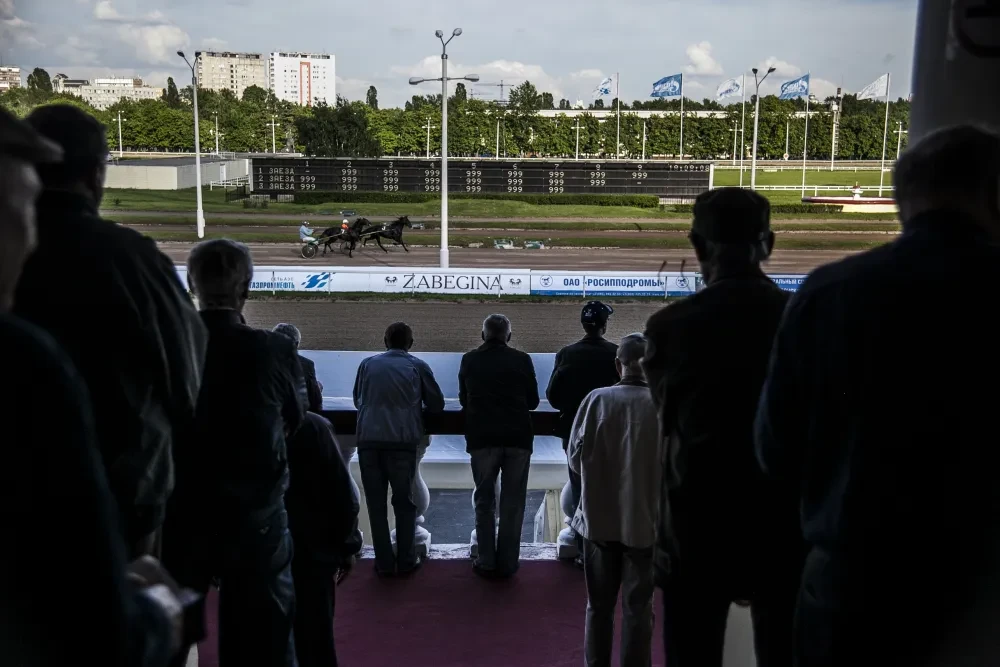
Horse races are an important part of the world industry of sports betting. In 2015 in 2015, 45% of the total income from bets on all sports, global gross income from races on races were 16.3 billion euros. The best horses are the horses of a thoroughbred riding breed - their average speed during the race reaches 60 km/h, and the cost of especially valuable individuals is calculated by millions of dollars. In terms of the scale of the betting market, Russia is far from world leaders: the average prize fund for one run is 300 euros, while in the UAE - almost 108 thousand, in South Korea - 70 thousand, in France - 26.5 thousand euros (data for 2014). A significant lag is also observed for all other indicators reflecting the level of development of horse -drawn -in -planting in the country.
The turning point in the Russian industry came at the end of the zero: after the legal restrictions introduced in 2009, the horse -owned business totalizer actually turned out to be outside the law, which reduced interest in equestrian sports among the population and hit the state of domestic horse breeding as a whole. The industry, the main source of financing of which was traditionally a horse -sports totalizer, was on the verge of bankruptcy, and the Central Moscow Hippodrome, which occupies 40 hectares of land in the center of the capital (capacity - 3,500 seats) began to bring losses.
“The betting market in Russia is very small, as such, the population is missing, and the proceeds barely allow hippodrome to exist,” said Oleg Zhuravsky, president of the National Association of Russian Bookmakers. Representatives of the Central Moscow Hippodrome stated that the closure of the Totalizer, on the order of the tax service, deprived the enterprise about 40% of the income. Then the legislative environment changed, and after a three -year break, in the summer of 2012, the totalizer at the Moscow Hippodrome resumed his work.
In 2015, the profit of the totalizer amounted to 25 million rubles, most of which was supposed to go to the needs of the reusners.
Earlier, in 2011, by decree of the President of the Russian Federation on the basis of the Federal State Unitary Enterprise “Central Moscow Ippider”, Russian Hippodrome OJSC was created. The new organization created for the development of the National horse -breeding industry included 27 Russian hippodrome. At first, the Rosippodrome was unprofitable, but in three years the revenue of the state -owned company tripled, and the net profit for 2014 amounted to almost 11.5 million rubles. In 2012, the post of chairman of the board of directors of the OJSC was taken by the head of Gazprom State Corporation Alexei Miller. Government discussions about state support for horse breeding have not stopped since then.
On the year, officials consider the opportunity to endow the “Rosippodrome” by the exclusive right to accept bets on the totalizer, allow state -owned companies to charge deductions from bookmakers and remove restrictions on advertising of the equestrian totalizer. In April, Alexei Miller supported the initiative in April: in a letter to the Government Prime Minister Dmitry Medvedev, he proposed to allocate 310 million rubles from the budget annually for the restoration of infrastructure and the development of the national totalizer.
Against the state monopoly for the totalizer is the FAS. However, it may turn out that private bookmakers are not very interested in jumps - this is a highly -risk sport, forecasting the results in which requires special knowledge and relevant analytics.
In the revenue of the bookmaker "Betting League" on rates related to equestrian sports, it accounts for no more than 1%.
The totalizer is functioning according to the risk -free economic model - exclusively the bets of the players themselves are at the stake, while the bookmaker acts as a side of the dispute and is forced to carry financial risks.
Not all experts share the idea of the totalizator as the only way to earn money for the horse industry. Hippodromes can be an attractive object of commercial real estate and bring good profit to its owners, as the research of NAI BECAR, conducted at the end of 2014, shows. The main obstacle to good financial results is the lack of a culture of visiting races and conducting high -quality leisure on the territory of the hippodrome, NAI experts say.
Hippodrome revenue is made up of several components - these are the income of the horse -sports complex (KSK) and the hippodrome itself, as well as income from commercial real estate. KSK, together with the revenue from the sale of tickets, can occupy about 20%. Up to 70% of income to hippodromes is provided by commercial infrastructure: business center, trading galleries, hotels, cafes and more. And finally, about 20% of income of the hippodrome can bring a totalizer.
Today in Russia there are about 50 large hippodrome, of which about 70% are in working condition. However, according to experts, in terms of infrastructure quality, they all noticeably lag behind world analogues. The largest (6000 seats) and a modern complex in Russia are considered to be Kazan Hippodrome, but it also does not withstand international competition.