
Translated material
Doctor of his body
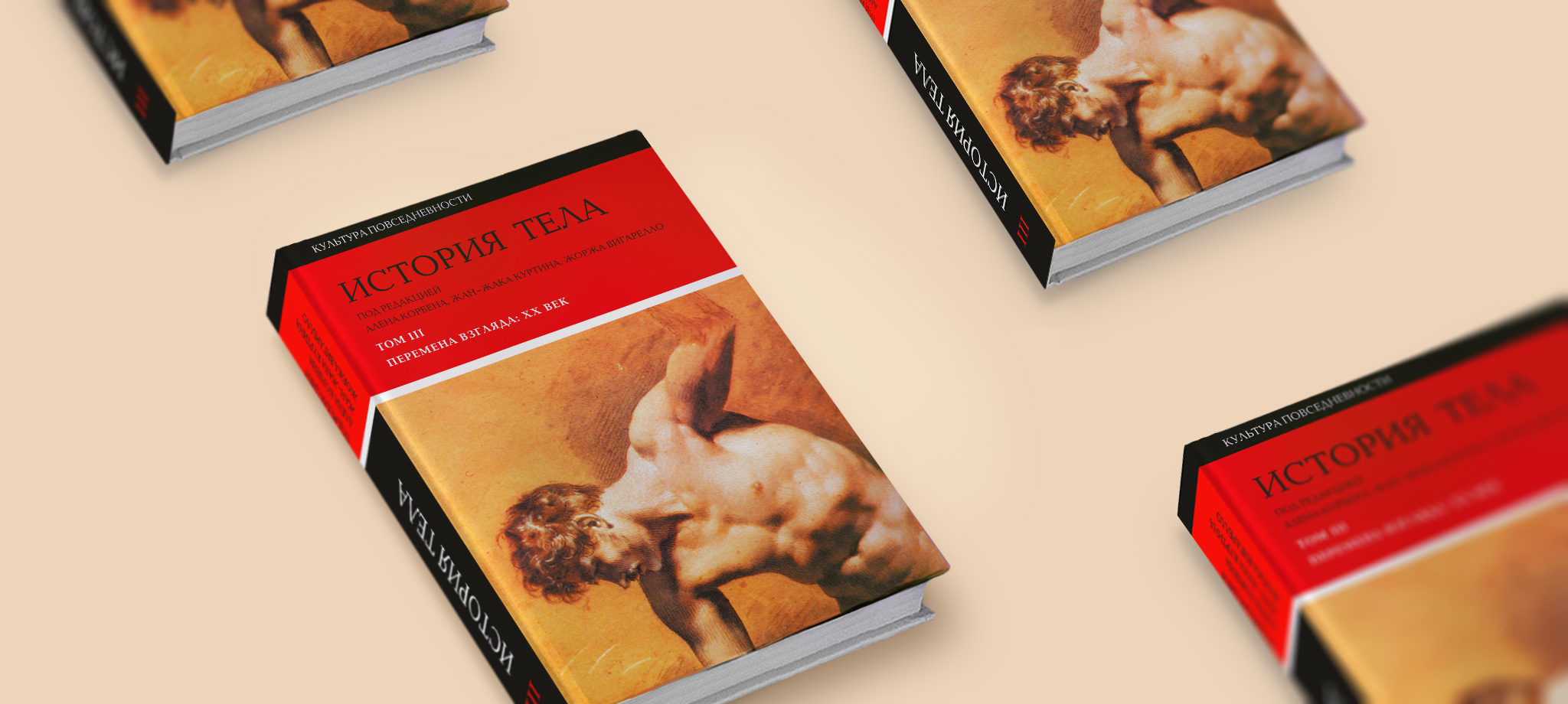
As the 20th century, he radically changed the perception of the body - when the disease does not make a person outcast and gives him the obligation to control his health himself
The three -volume “History of the Body”, written by French, British and American anthropologists and cultural historians, published in the publishing house “New Literary Review”, considers bodily practices and the representative of the body in Europe - from the Renaissance to our time. The third volume covers the XX century in which the human body has become perhaps the main object that undergoes unprecedented suffering and at the same time enjoying unprecedented attention. Parallel processes occur: crowding out and at the same time acceptance of bodily anomalies, the transformation of an individual, unique body into a slight element of mass, into the food of war and political repression - and along with this, sexual and creative emancipation, the “professionalization” of a sports and cinema body, creating its cult. The third volume of the “body history” tells how the 20th century radically changed the perception of the body.
The XX century created the theory of the body. This happened primarily thanks to psychoanalysis, from the moment when Freud, observing the bodies demonstrated by Charcot in the clinic of Salpetrier, unraveled the nature of the conversion hysteria and gave the basis for future research: through the body the unconscious speaks. This first step was crucial, the issue of somatization was raised, and the road to understand the image of the body in the upbringing of the subject was opened, that he will receive the definition of “I-Kozh”.
The second step can be considered the idea that the body, as Edmund Husserl defined it, is the “original cradle” of any meaning. In France, his ideas fell on good ground and through phenomenology and existentialism grew into a concept developed by Merlo-Ponti Maurice, about the “embodiment of consciousness”, its disclosure in time and space as the “axis of the world”.
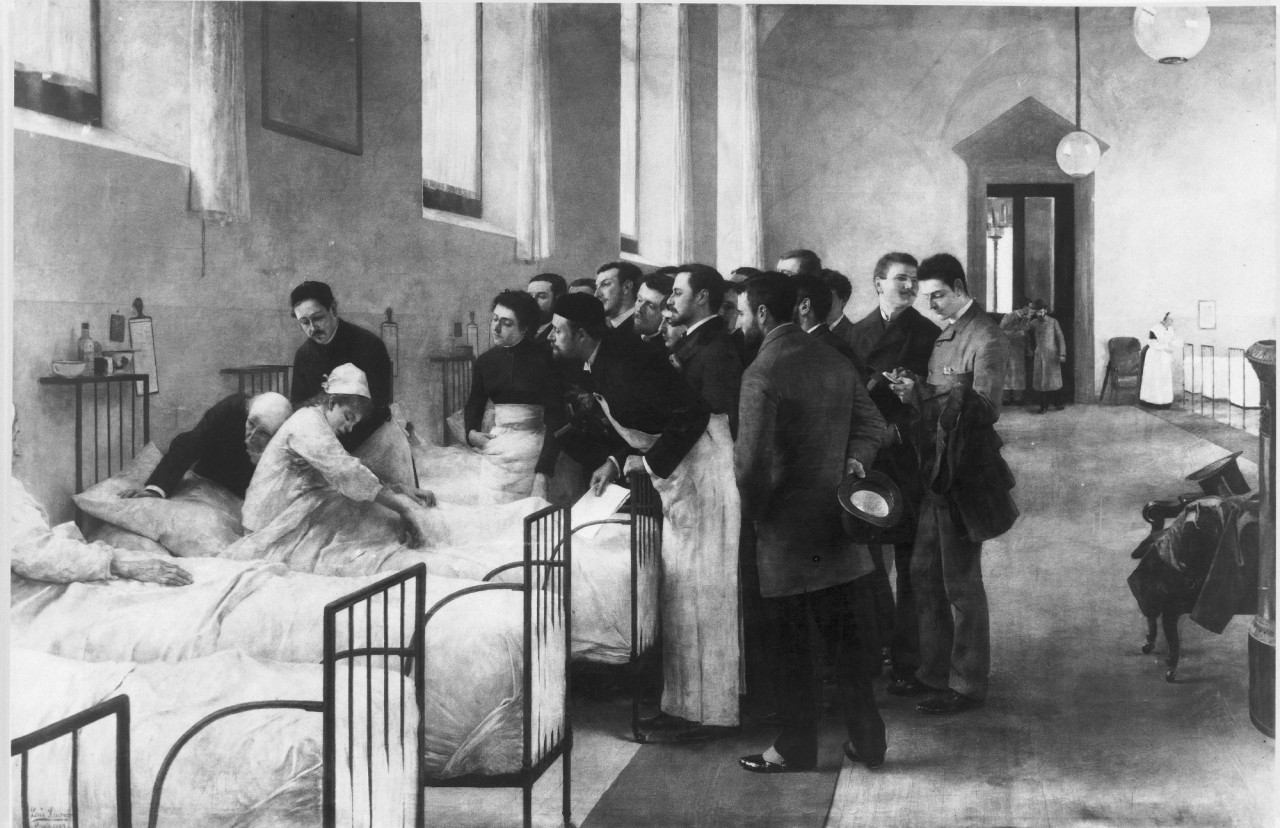 Jean-Martin Charcot in the clinic Salpetrier Photo: Wellcome Library, London
The third stage of this opening of the body is associated with the area of anthropology, with the amazement that Marseille Moss experienced, seeing during the first world war that the British infantry marchs differently than the French and digs the trenches in a special way. It is impossible to fully imagine how much the concept of “body technique” is “traditional methods through which people in various societies use their body”, as Moss formulated this, having analyzed their surprise - will become food for all historical and anthropological reflexes of that time in this score.
The XX century created the theory of the body. This happened primarily due to psychoanalysisThus, the body again turned out to be associated with the unconscious, tied to the subject and is included in social cultural forms.
With the permission of the publishing house “New Literary Review”, we publish an excerpt from the book “History of the Body”, which tells how the perception of the disease has changed in the twentieth century.
Our XX century is charging in merit to the victory over the disease. In fact, he rather blurred the idea of her and changed the way of her experience, which destroyed the disease as such. “We no longer know what it means to get sick,” the philosopher Jean-Claude Bon said in his work. Previously, the disease proceeded in real time, and the body played the role of the scene where a magnificent drama was unfolded.
For a long period of time, the family reigned in the family, when all its members showed concern about the disease, while hoping to heal the patient. The main episode of this drama was the “crisis”, a favorite topic of medical literature, a key moment when the outcome of the disease was determined. In a safe version, the crisis was resolved due to the abundant secretion of sweat and urine, after which there was a rapid weakening of the fever. “The patient feels better and, tired, falls asleep,” they wrote in the textbooks.
Closer to the end of the 20th century, the descriptions of death and illness, accompanied by a sense of renewal, as well as gratitude to nature and, in some cases, become increasingly rare and detached, as well as descriptions of the happy period of recovery of the patient.
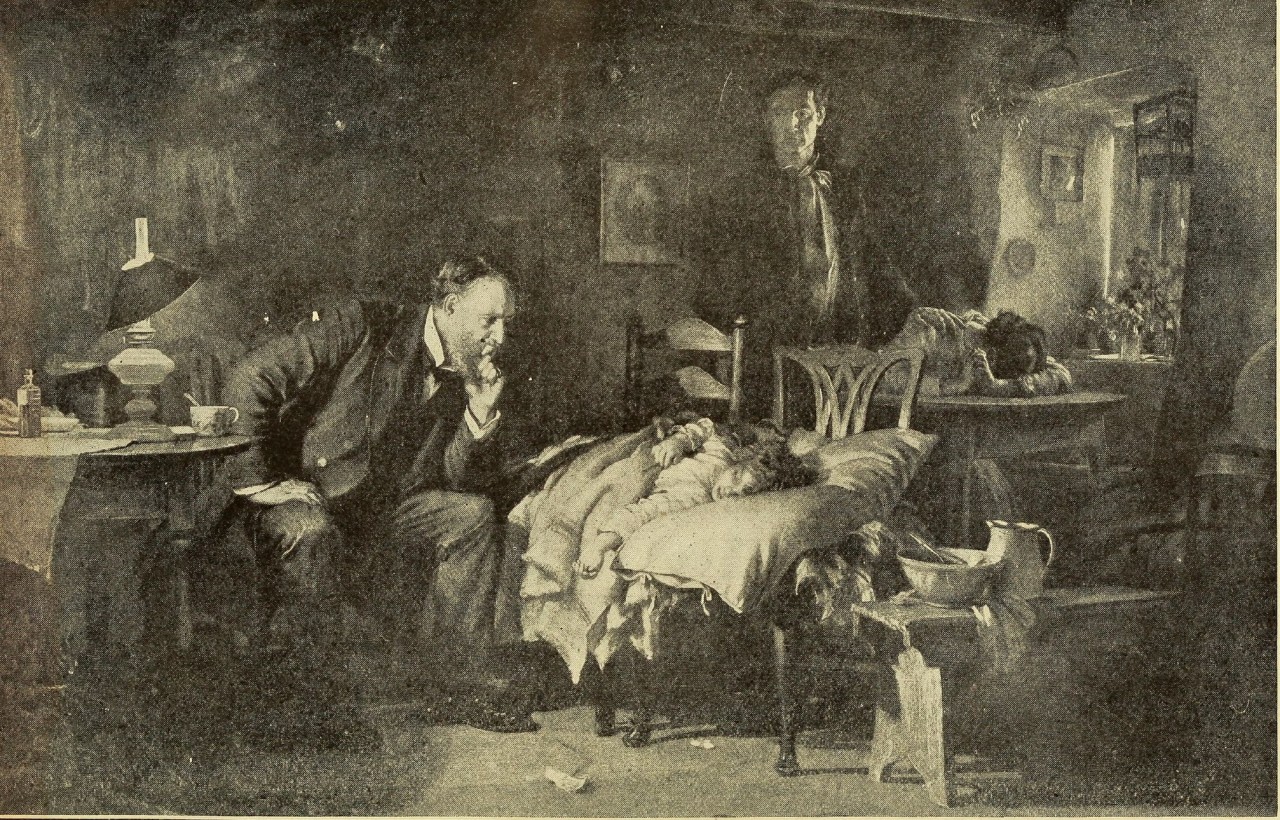 Good doctor and his little patient. Illustration from the book, 1906 Photo: Internet Archive Book Images
Nowadays, the systematically used antibiotic treatment, necessary for quick access to work, reduces the recovery time. Antibiotics deplete the body - such is a modern common opinion, people do not want to consider that the disease in itself undermines the strength of the body.
Doctors, on the one hand, are extremely concerned about the stress that they observe in society, but nevertheless, this does not prevent them from offering more and more potent treatment products that allow patients to return to their labor front as soon as possible - to school, to the factory or to the office.
Modern children began to hurt less often, they do not know what measles, whooping cough or pig is - these diseases prevent mandatory planned vaccination. Mothers spend much less time at their cribs. Thus, the experience of the disease as a personal history is postponed and transferred to the end of life, turning into vague anxiety about the upcoming health problems.
The concept of the disease was blocked in terms of its localization in space. City hospitals gradually ceased to be potential foci of infection. The number of beds intended for hospitalization of patients is reduced. The hospital, which once hid from the outside world behind the high walls, now opens its doors for the residents of the city, becoming part of the trading street, on which patients are peacefully adjacent to doctors.
Modern children began to get sick less often, they do not know what measles, whooping cough or pig is - these diseases prevent mandatory planned vaccination Attempts to organize a day hospital, as well as help at home two hundred years after the revolutionary demand to abolish hospitals strengthened the idea of fraternal coexistence and even the equality of patients and healthy. From now on, health and illness are not two opposites, but coexist in different proportions in the body of a particular person, where the disease becomes nothing more than a hypostasis of a healthy state, one of its components.
Georges Kangil, the founder of modern epistemology, in the final of his dissertation of 1943 about “norm and pathology” and shortly before his death emphasized that the disease, in fact, is an inevitable test, the purpose of which is to test and strengthen the protective forces of the body. The disease does not make a sick person an outcast of society, on the contrary, it characterizes him in a certain way.
Along with this, health care becomes gradually and concern for the disease. If the main word of the 18th century was “happiness”, and the XIX century was “freedom”, then the main word of the 20th century is “health”. Having approved the right to health in 1949 and recognizing it as the subject of concern of all states, the World Health Organization in the 20th century gave the world a new human right. Currently, it is mentioned in almost all national constitutions. The definition of health, given a WHO, which refers to the highest level of health, both physical, mental, and social, has become a textbook. Having put forward a positive determination of health in contrast to the idea of health as a lack of illness or any restrictions known to medicine, this organization proposed a new, but difficult to achieve an ideal.
An increase in the number of factors included in the definition of health and implying the full coverage of the biological and social spheres of human life makes this happy state an unattainable object of possession and elusive privilege: now it is not just about health as a humble organs silence, as his surgeon and psychologist Rene Lerish defined it, but about the excessive, “great health”, about which Nietzsche wrote. Health has become a true state and at the same time utopia of the body, the goal to which the social and international structure strives for, a more fair and more correct universal world order.
The new definition was aimed at placing health in an area that goes beyond medicine. But de facto, the right to health was monopolized by the community of doctors who had clear ideas about what is meant by this right. Medication began in the middle of the 19th century and was supported by state power. This made doctors indispensable intermediaries in the control system of the human body, which prescribed a number of obligations in accordance with the main stages of its socialization: entering school, military service, travel, choosing a profession.
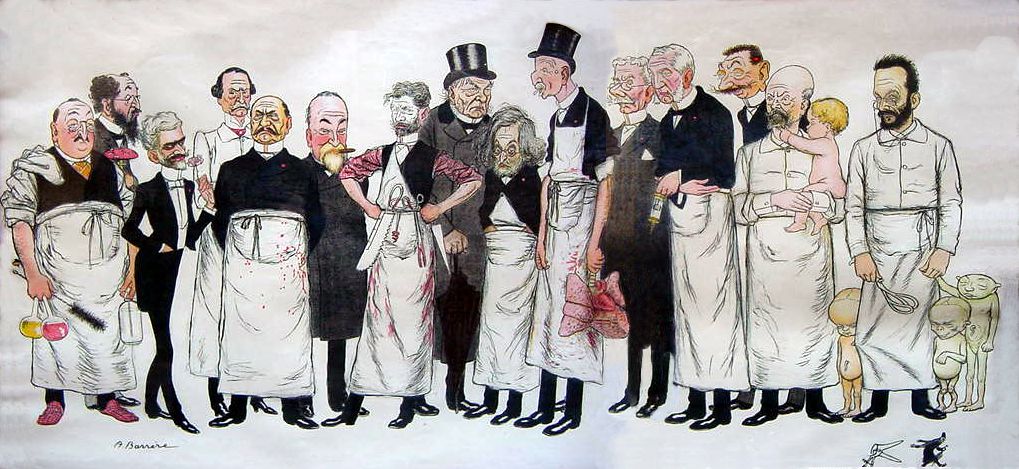 Professors of the Faculty of Medicine of Paris University. Caricature of Adrien Barrera, 1904 Photo: Wikimedia Commons
In 1902, a law was adopted in France, which marked the beginning of the 20th century. This law obliged the population to undergo anticipotal vaccination and report a number of contagious diseases. In order to protect public health, the state has created an organization that cancels compliance with some private freedoms (for example, the right to refuse vaccination). We are so accustomed to this that we do not immediately understand that in the event of forced vaccination, the body is subjected to violence, while all other types of enslavement is outraged as a shameful heritage of the past.
It is here that the paradoxical history of the body in the twentieth century draws its source. It has ceased to be fashionable to expose its illness, the former exhibitionism is reduced to the framework of decency. Now we must make efforts to ensure that our body looks healthy. At the same time, all the art of medicine, and especially preventive medicine, is from now on to violate this visible body calm and identify in everyone and everyone hidden health disorders. Medicine is looking for alarming symptoms, invents methods of detecting diseases and regular medical examinations, the frequency of which increases in case of possible hereditary diseases.
The development of preventive medicine nullifies the experience of the disease. This trend is even more enhanced by prognostic, the latest direction of preventive medicine, which is engaged in the study of genes. Nowadays, the doctor tries not only to give a forecast for the coming days, but also to predict the future.
Is it necessary to limit the use of antibiotics, whether to agree to the introduction of genetically modified organisms to the diet, whether to increase the circulation of biological substances, tissues and organs, whether to reduce the minimum weight of the premature babies, which can be saved, allowing embryos to spare organs (therapeutic cloning), prohibit alcohol and tobacco? Many options for solving these problems involve the adoption of simultaneously an urgent and uncertain direction for a policy that would immediately move from the prevention of the disease to its prediction and take precautions, or if even more precisely, would lead, mating all the time frames, to the fact that the border between the state of health and the disease would be blurred.
Modern cultural people are offered to calculate the possible risks of diseases, they are called to be aware of their body, just as they used to be called to give a report on their emotional experiences.
It has ceased to be fashionable to expose your illness, the former exhibitionism is reduced to the framework of decencySince the Western state has established the order in which it takes into account resources and determines the sphere of duties of the human body, it also seeks to optimize its functioning. The intervention of the authorities in the healthcare area testifies to the "state administration of private life", which Michel Foucault spoke about, but also inspires people to take care of himself. Should a good citizen be guided in his behavior by dictating to him science?
In the XX century, the disease dissolves in the boundless space of the body. Along with this, the modern era is characterized by the loneliness of individuals who are faced with the fact that they can no longer accurately determine, nor name the disease and melting the power of death in it. This was recorded by anthropologists, belonging to the disease to the category of “misfortunes” and thereby preparing the ground for future comparative studies of various crops in terms of this expanding section. The triumphal victory of the 20th century over diseases, which everyone vying was celebrated, in a certain sense was a pyrrhic victory.