
Translated material
Success of colonization
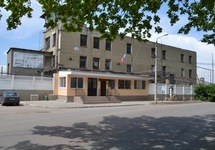
From the colonies of the annexed Crimea to the penitentiary institutions of Russia, about 7 thousand prisoners were moved, according to unconfirmed data. According to Gromadska Radio, this was stated by lawyer Roman Martynovsky, an expert of the regional center of human rights and the Ukrainian Helsinki group. Reliably, the lawyer added, it is known about the transfer to the Russian colony of 2200 Crimean prisoners.
In total, the human rights activists, Martynovsky said, have information about 27 Russian penitentiary institutions, which contains convicts who were transferred from Crimea. However, specific information is only relative to 16 colonies. “For other 11 institutions, we do not have data. We only know that there are our citizens there, but the exact number has not yet been established,” the lawyer noted.
The reasons for the transfer of convicts from Crimea to the Russian colony may be different, Martynovsky continued. So, there are no female colonies on the peninsula, as well as medical correctional institutions. However, the expert emphasized, he and his colleagues repeatedly recorded cases of sending to Russia for refusing to accept Russian citizenship.
Meanwhile, the lawyer noted, the abandonment of Russian citizenship gives the Ukrainian convicts more chances to be deported to retire to their homeland. Most prisoners want to return to Ukraine, Martynovsky emphasized. Firstly, the Russian colonies are more stringent conditions. Secondly, many convicts before the capture of Crimea remotely received higher education in universities in the country - after the annexation, their training stopped. “Also, prisoners, being in Russia, are deprived of the opportunity to receive information and read literature in Ukrainian,” the lawyer said.
As Kommersant transmitted on May 26, the Russian Ombudsman Tatyana Moskalkova accused Ukraine of unwillingness to take her prisoners from Crimea. “We suggest,” the official noted. “They committed crimes as citizens of Ukraine, in the territory of Ukraine earlier, and today there is no reason to maintain them in the territory of another state. But such a reaction has not yet come.”
Meanwhile, according to Interfax-Ukraine, the first deputy minister of justice of Ukraine Natalia Sevostyanova expressed surprise in connection with the statement of Moskalkova. "For two years, we are negotiating with the Russian side, we are trying in every possible way to take our prisoners," she said. However, Russia, the official continued, in all ways prevents the transfer of convicted and official documents on their readiness to transfer them to Kyiv from Moscow.
“We will do everything to pick up everyone and everyone who is there (in the Crimea. - Ed.) In conclusion,” Sevostyanova emphasized. “Simply, unilaterally we are ready to take everyone and provide them with much better conditions than in the Russian Federation.”
The problem of the Crimean prisoners moved to the Russian colonies previously reported by Russian lawyer Dmitry Sotnikov, who defends the Euromaidan-Polizk Alexander Kostenko. In March, Sotnikov said that together with his general regime in Kirovo-Chepetsk , three citizens of Ukraine are contained in the Crimea , and after the annexation of the peninsula refused to accept Russian citizenship: 28-year-old Viktor Sklikov from Nikolaev, his peer Vladislav Burlak from Kharkov and 50-year-old Grigory Larionov, whose place of residence was not specified.
After the refusal of prisoners to accept the citizenship of the aggressor country, Russia in violation of international principles of justice "brought their sentences in line with the Criminal Code of the Russian Federation" - that is, Sotnikov explained, repeatedly condemned for crimes, the accusations in which they brought them to the Ukrainian colony. When an amnesty was declared an amnesty in Ukraine, Scabs, Burlak and Larionov demanded to apply it to them, but the Russian authorities refused them, citing the fact that now they have not Ukrainian, but Russian sentences.
It was also reported that the General Consul of Ukraine in Moscow Gennady Breskalenko for four days sought a meeting with Larionov and Maidanian Kostenko. As a result, a meeting with Kostenko was provided with a diplomat, while Larionova was put in a schizo on the day of the consul’s visit under a far -fetched pretext.