
Translated material
Ulyukaev announced the readiness of the Russian Federation to soften the product embargo on one condition
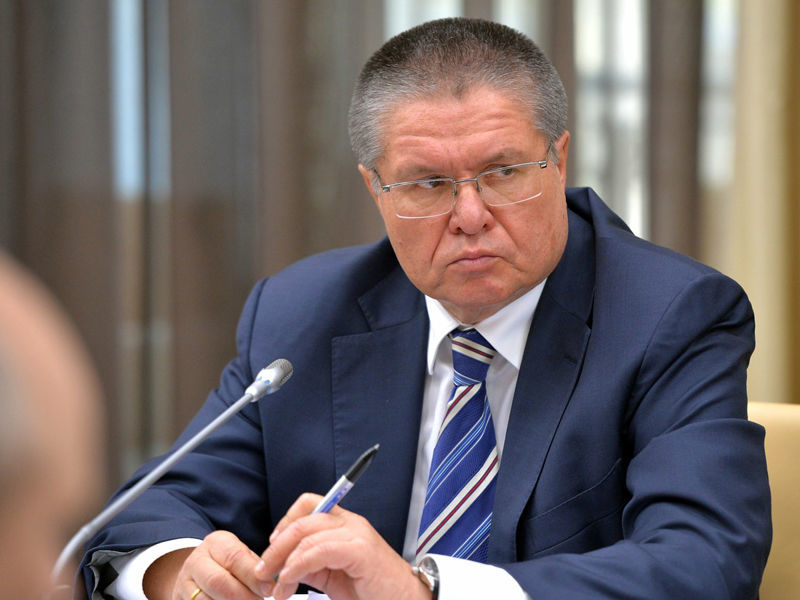
The authorities of the Russian Federation are ready to reduce sanctions goods and mitigate the grocery embargo in relation to Western countries, if the European Union, for its part, decides to revise anti -Russian sanctions and their phased cancellation. Such a statement was made by the head of the Ministry of Economic Development of Russia Alexei Ulyukaev, RIA Novosti reports.
“I think that he (the list of sanctions goods - approx. Newsru.com ) can be reduced if the sanctions regime is softened. First, the action is counter -action,” the minister explained.
In a conversation with journalists, he explained that in the event that European colleagues make the relevant decisions in June regarding the second half of 2016, in December - relative to the first half of 2017, then the Russian authorities "will adequately evaluate and go towards."
“I think, what, if the regime of sanctions is changed, then the counter -sanctions regime will be changed,” the head of the Ministry of Economic Development summed up.
The words of Ulyukaev were heard shortly after the German Foreign Minister Frank-Walter Steinmeier, who recently warned of strengthening the renewal of restrictive measures against the Russian Federation recently, recognized the phased relief of sanctions.
The Minister of Foreign Affairs of Germany believes that it is possible to gradually remove restrictions from Russia in case of progress in resolving the situation in the Donbass. The statement of the German Foreign Minister was made during a speech at the "Potsdam meetings" of the German-Russian forum in Berlin.
A new round of discussion about sanctions against Russia followed after the liberation of the Ukrainian pilot Nadezhda Savchenko and transfer it to Ukraine. European officials and diplomats welcomed this step, noting that it will contribute to the implementation of the Minsk agreements and solving problems in the southeast of Ukraine diplomatic means.
At the same time, the chairman of the European Council Donald Tusk said that the sanctions of the European Union against Russia will be extended until the full implementation of the Minsk agreements. In addition, the G7 leaders in the declaration following the summit in Japan advocated the preservation of sanctions against Russia introduced after the annexation of Crimea.
The validity of the EU economic sanctions imposed on the Russian Federation in 2014 expires on July 31. The issue of their extension will be discussed at the Summit of the European Union on June 28-29. In anticipation of the discussion regarding the extension of restrictive measures, Russia has made several steps and statements, which, apparently, should syntilize the attempt to resolve the conflict in Ukraine. It is not only about the exchange of Ukrainian pilot Savchenko for Russians Evgeny Erofeev and Alexander Alexandrov, who were convicted of war in Kyiv. The Kremlin also said that they approve of the desire of the President of Ukraine Petro Poroshenko to return the Donbass on humane grounds. At the same time, the claims of Kyiv to the Crimea in Moscow are still not accepted.
At the same time, Russian President Vladimir Putin at a press conference in Greece said that the pardon of Savchenko and her exchange for Erofeev and Alexandrov was not related to the Minsk agreements. "This has nothing to do with the Minsk agreements. In the Minsk agreements, we are talking about held in the Donbass and in Ukraine, exported from the territory of the Donbass," the head of the Russian Federation explained. Earlier it was reported that the agreement on the exchange of Savchenko allegedly reached "during a telephone conversation between the leaders of the Norman Four countries. Later, a high -ranking source in the Russian Federation refuted this information.
Last Friday, May 27, Russian Prime Minister Dmitry Medvedev instructed to prepare proposals to extend the grocery embargo until the end of 2017. "The appeal to the president and the decision -making decisions of the government will be prepared," he explained, "he explained.
The ban on the import of some types of products into Russia has been valid since August 2014 in relation to countries that have introduced economic sanctions against the Russian Federation. In 2015, it was extended for one year. From January 1, 2016, the Russian Federation introduced restrictions on goods from Turkey. At the same time, the State Duma discusses the issue of introducing millions of fines or criminal liability for the sale of "sanctions". In early March, the Rosselkhoznadzor reported that since the beginning of the year, more than 80 tons of plant products that fell under the food embargo have been destroyed in the country.
Analysts have repeatedly noted that the authorities did not calculate the economic consequences. The sanctions war was underway under the slogan of supporting the local manufacturer, but the effect was lower than the expected, and domestic farmers did not receive the main support from the embargo, but from the devaluation of the ruble, which made imported food unavailable to the bulk of Russians.