
Translated material
Containing a promise is good
A few days ago, the nostril in the nostril fails in the functioning of two art institutions at once - the State Center for Contemporary Art and the Gallery "Electrozavod" . The cultural community of the city reacts to these events mainly on Facebook posts, but also the signing of the petition in the hope of saving the first of two. In our opinion, not so much these closures themselves, but the reaction to such is an important symptom that outlines some qualities of this community and, as a result, the product produced by it. Obviously, the only tone that sounds in a multi -naked - the tone of excited indignation - does not imply any other position, except for the fact that these finals are evil. We, without ado, say right away: in our opinion, these finals are not only a productive, life -giving good, but also a necessary condition for updating the artistic situation.
For all the difference in the statuses and sizes of two institutions, we will try to find something in common here and bring out patterns. Strictly speaking, the difference between them within the framework of our reasoning is nominal and to thematize the current state of the Russian artistic environment is insignificant. GCSI is the only institution in the country in the field of contemporary art, which consistently carried out research and exhibition activities; The Gallery "Electrozavod" is one of the few self -organized institutions in Moscow, guided by artists. The GTSIS lasted 24 years, the "electrical engine" - almost four. In the case of GCC, we are also talking about active organizational work (opening of the Center’s branches in the country's cities). GTCSI by order of the Ministry of Culture is attached to Rosiso as a structural unit; The Electric Plant moves out of the occupied gallery of the premises at the electric factory and is now in search of another space.
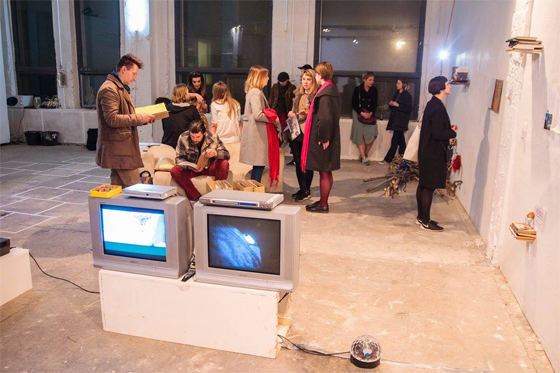 © Gallery "Electric Plant" / Facebook
Sentimental indignation, manifested by actors involved in the artistic environment and sympathetic about both events, symptomatic. In the first case, for each convenient reason, the heavyweights that stand on the liberal positions from the environment of the Council are outraged by the regrouping of the channels of material support from the state; In the second, young (together with some heavyweights) representatives of the environment of the Council are upset by the fact that the usual place of subbotnik cultural pilgrimages will now be somewhere else and, obviously, some other. As you can see, in both cases we are not talking about a complete termination of work, but about a tangible shake, after which - Tabula RASA, instead of muscles of the conditions of presence. The fact that this is alarming among representatives of the community indicates how relaxed (with constant intrusive statements about the opposite of the artistic environment) in the last decade, work has been taking place on the production of a cultural product. In other words, the environment of contemporary art is not only not ready for changes as an immanent modus of its own activity, but, obviously, it would have done a lot so that there are no such changes. The problem is that the stability and irremovability of the system and its components (are we talking about the representatives of the environment that have a power resource inside it, or about structures that form a system, as such), is directly related to the quality of art and theory produced by it. This quality, with the tightness of the environment (which is below) inevitably decreasing, at best, is doomed to move within the boundaries of an extremely narrow backlash, having neither internal necessity nor the task of going beyond these boundaries.
Sentimental indignation, manifested by actors involved in the artistic environment and sympathetic about both events, symptomatic.
A few community, dealing with contemporary art in Russia, as if retrospectively practicing the guilt of its presence in the homogeneous Soviet reality, is distinguished by pronounced victimism. This victimity, similar to the victimity of the tantrum, does not allow at least two things: an unbiased analysis of their own status and activity; awareness of oneself as a subject of action. As in the case of the HCSI and in the case of an “electric factory”, we see an appeal to a certain outwardly given frame (in the case of a gallery, this manifested itself at the very beginning when choosing the name, which, however, is equally manifested in all the spaces formed in the territory of reference industrial clusters), which gives and takes away the status and the right to work, and, ultimately, itself, itself The existence of institutions. It is characteristic that such passionar reactions make up the autonomous value of the cultural activity itself: both pickets and rallies do not need as a result, so the discourse around Russian contemporary art is not captured by the production of the product, but the appearance of production and the retention of this procedurality. Just as the very presence at the opening of the exhibition or inside the curatorial group becomes self -valuable and in this is closed, so the institution of the institution (the status of the GCSI; the location of the gallery) replaces the product manufactured inside it. If the situation was different and the artistic environment was focused on the quality of the product, and not on the phenomenon of its production itself (the phenomenon, of course, is designed autonomously from the actual problems of contemporary art, led, rather, the opposition in relation to the existing being of an unhurried or academic artistic environment), the accents would obviously be displaced in the field of not reaction, but meaning. The act of activity replaces its content and is fetishized; The distinction between “your” and “strangers” becomes a system -forming principle, which is directly related to the unpopular art of the muddy.
Regarding the latest thesis, there is no one to object: this is a state policy that does not support contemporary art, and a powerful return to the public cultural discourse of Soviet nomenclature art, and a general decrease in the level of humanitarian education in the country. All this is so. But we are unlikely to be mistaken if we say that the artistic environment itself strongly supports its own ghettoiding. Studies of the HCSI and publications like the "artistic magazine" is frankly laboratory; Young artists often declaratively declare their own distinction from the field of perception of the potential viewer and the conceptual framework, involving the initial inclusion of the viewer in the discourse (the exit to the fields, like what is happening these days , does not ask a question about the language in which the chained dialogue would be possible). Such behavior does not contain a promise of death where representatives of the market, private initiatives or the state itself take up management and popularization of art; Otherwise, in the case of eloquently observed today in Russia, contemporary art not only doomes closes on itself, losing the levers of control and management, but, as a result, begins to slowly rot in the stuffy atmosphere of closed windows.
Three thousand are an extremely eloquent figure for the city of twelve million inhabitants and with a couple of serious institutions of contemporary art.
It is obvious that such self -removal into the ivory tower must entail not only the loss of communication with the world external to the artistic environment, but also the loss of this world of understanding. The petition to preserve the GTSI was currently signed by a little more than three thousand people - we will not be mistaken if we say that the vast majority of them are representatives of the environment or directly with representatives of acquaintances. Three thousand are an extremely eloquent figure for the city of twelve million inhabitants and with a couple of serious institutions of contemporary art. And with all reservations on this subject we emphasize once again: in our opinion, a similar situation is a direct consequence of the policy of the very environment of modern art and the product produced by it.
Taking into account all of the above, it is possible to say with confidence that at the moment any, just any - up to the closure of the Moscow Biennale and an even more problematic situation with the financing of contemporary art - changes in the update, which have been established in the last 15 years, will lead to a refreshing wave of update - precisely because artists, curators, theorists and critics may finally have to finally have to finally have to finally Ask ourselves: what are we doing wrong? No matter how unpleasant it is to raise the question of the status and quality of your own activity and begin to exist in the world of competition for the right to do what you are used to; to get out of the stuffy space of personal relations and go into the space of professional relations; to formulate the strategies of their own work, so that there is no place to determine the artist produced by the artist, but, of course, vice versa; take responsibility for everything that at the moment art is not possible to achieve in the conditions known to us, and put not a sentimental-unproving, but mature question about the reasons for this; Finally, to stop feeling internally (not outwardly) at the moment inherent dependence on systems serving art and try to build a system that can work autonomously. It is precisely in order for this to happen that it is necessary that all the non -viable beginning break, and the observers, having drained the tears of indignation, finally looked around on the other -formed wasteland.
The editors urgently recalls that her opinion does not always coincide with the opinion of the authors.