
Translated material
Shout your mother
Everyone nostalgic in the film “On the Needle” should pay attention to the cinema with the shameful title “Slaughter haircut”, the director and chief actor in which Robert Carlisle performed. There are no races in Vienna in the film, but there are hairdressers, an imperious mother and a lot of blood.
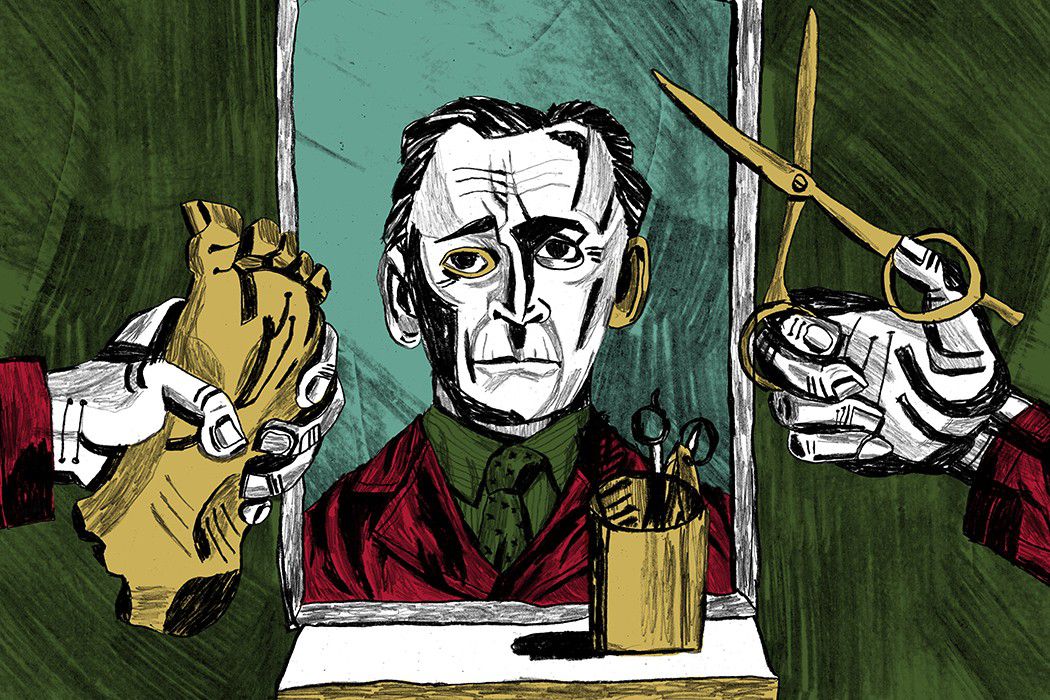
For some reason, domestic film distributors like to adapt the names of foreign paintings-supposedly for a better perception by our viewer. Only now the directors, giving names to their films, put the keys to the meaning of the meaning, the main ideas-in general, something that initially sets up the viewer (reader, listener) to a certain wave and gives information to reflection.
The “slaughter haircut” is a name that has nothing to do with the “Legend of Barney Thompson”, the full -length debut of the Scottish Robert Carlisle. Robert is an actor, his filmography has more than fifty paintings, and we all know him as an amazing Begby psycho, one of the heroes of the cult “Trainspotting”. In Legend, he also played the main thing - the role of the forty -year -old hairdresser Barney Thompson. The monologue with which the film begins demonstrates a rather fresh personality of a typical loser, which is nevertheless distinguished by great vanity.
At first glance, having hastened, you can place Thompson somewhere between the city legend of Suini Todd and gaining popularity of Lestier Nigaard. But if Barney has a resemblance to one of the film recordings preceding him, then this is certainly Norman Bates (only without an intrusive craving for the murder of pretty blondes, causing a sexual attraction in it).
The father left in childhood, involved in abnormal relations with a comprehensive mother dominant by him (by the way, this is his only relationship, not counting the lengthy one -sided friendship with Charlie's neighbor), Thompson slowly faded away for decades. Moreover, he did this in front of the eyes of customers and employees of a small hairdresser in Glasgow, moving further away from the privileged place by the window, losing all his clients along with interest in life. But suddenly fate gives this sluggish lover of westerns an unprecedented opportunity to rise when, it would seem, everything turned against Barney.
And at that moment, the plot of the picture really becomes a legend, almost the Homeric story about the initiation of Telemak: the murder of grooms (hairdressers who conspired to deprive him of his position) in order to maintain the right to the throne (the coveted hairdresser at the window). In parallel, a comic confrontation between several police officers who conduct the struggle for the successful completion of the investigation of the serial killer, as a farewell gift of the relatives of the killed people of the dead, as a farewell gift, develops. The tension between the guardians of the law is worthy of quarrels of the Olympic gods in their attempts to distinguish between the spheres of influence on human affairs. The most phantasmagoric detail in the picture is a bureaucracy, acting as a distant relative of ancient Greek rock or will, which subordinates even the gods.
The conflict is tragicomically discharged by the “Mexican confrontation”, the involuntary participant of which is Thompson himself (must be a true pleasure at this moment as a western fan).
In cinema, the judgment is widespread that all movie historians about maniacs owe “psychosis” Alfred Hitchcock. The story of the shy Norman Bates (suffering from a bifurcation of personality after, out of jealousy, he cut his beloved mother and her lover) into the cliche of the Corror genre, in any case - in America. But one way or another, world cinematography either focuses on American cinema or enters with it a hard confrontation.
Supporting the tradition of psychoanalytic thoughts who want to analyze the character of a serial killer (or any other psychopath) seek the causes of sexual deviations and perversions in the childhood of the subject, especially in his relations with parents. Relations with the fathers of the heroes of films are much more likely to succeed than with mothers (the exception is Michael Powell's “peeping” - another classic film about the formation of a serial killer from perverted consciousness).
Analyzing the collective image of a maniac, we can talk about his “feminization”, in any case, it is sometimes very difficult to determine exactly his internal gender. It can be not only in the power of a maternal dominant image, as in the case of Bates, but also impotent. Most often, the violent murder of a beautiful girl replaces him sex, because he can get direct satisfaction only from violence. Leaving psychoanalysis to the side and turning to film traction, we will see that this kind of substitution is associated with a long ban on the image on the screen of a sexual connection between a man and a woman. It was the violence against the girls that were called upon to replace sexual contact, so for several decades beautiful girls in the cinema beat, tormented, pursued, shredded and dissected to the delight of the viewer.
Nevertheless, it will not even be important for us that the gender uncertainty, usually characteristic of the serial killer (in the case of Barney Thompson, no directorial indications of this is given), but causing her root cause: an unresolved problem in relations with his mother. It is known that the painful process of the formation of each individual passes through the stage of denial of the authority of the parents (or one of them). No serial killer can boast of the successful passage of this stage of growing up. Bates’s mummified mother “controls” them from the basement of their house, and together with Jason Wurchiz in the hut lives the head of his deceased mother. There are many such examples of such examples, but the main thing here will be not the idea that anyone who has not overthrew the authority of the mother in adolescence, can potentially give up corpses from graves and sew costumes from female leather (as happened with Ed Gain). But the fact that the authority of someone else in his own head will finish, displacing you from there.
The “killer haircut” should be watched even for the most wonderful change of Thompson, who - although not of his own free will, but thanks to a successful coincidence - tore with his infantile attachment to his mother. In his case, more than one person died for this, someone was even cut into pieces. And you try to do without bloodshed.