
Translated material
Baltops-2016 began on the Baltic.
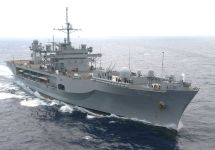
In the southern part of the Baltic Sea off the coast of Sweden, Denmark and Poland, sea exercises began under the leadership of NATO Baltops-2016, the press service of the Ministry of Defense of Estonia reports . The exercises will begin with a two -day work conference, which will gather commanders of the naval units participating in them.
In the current exercises, Sweden, Finland, Denmark, Norway, Belgium, Italy, Estonia, Latvia, Lithuania, France, Germany, the Netherlands, Poland, Portugal, Spain, USA and the UK. More than 4.5 thousand people, 50 ships, as well as 60 aircraft, helicopters and unmanned aerial vehicles will take part in the maneuvers. Actions will be worked out at sea, on land and in the air.
The main actions will unfold in Estonia, Poland, Germany, Sweden, Finland, as well as in the Baltic Sea. In particular, the joint actions of the naval forces, aviation and air defense will be worked out, and anti-submarine and landing operations will also be carried out.
To participate in Baltops-2016, the flagship of the sixth fleet of the USA Mount Whitney arrived in Tallinn. A ship of this class arrived in Estonia for the first time.
In addition, two B-52 strategic bomber arrived at the base in the UK. Aircraft will take part in training for the development of operations of mining from the air, for "air interception", as well as direct aviation support.
In addition to Baltops-2016, American bombers will take part in the exercises of Saber Strike 16, which are organized by the European command of the US Armed Forces. These maneuvers began in Latvia, Lithuania and Estonia on May 27. They will last by June 22. These exercises conduct a total of 13 states.
Baltops exercises are held for the 44th time. For the first time, these maneuvers took place in 1971.
During the Baltops-2015 exercises, several incidents occurred with the participation of the Russian military. On June 10, two frigates of the Russian Navy were harassed by the Canadian Fregate Fredericton in the Baltic Sea, on board the country's Prime Minister Stephen Harper. For some time, the distance between Russian and Canadian ships decreased to 7 sea miles (13 kilometers). Then Fredericton headed south to Poland, while Russian ships unfolded to the east-yugo-east.
According to the captain of the Canadian frigate, the maneuvers of the Russians "were not annoying or threatening," so that the Fredericton sailors continued their teachings without fear of clashes.
On June 11, 2015, the Russian strategic Tu-95 bomber flew 150 meters over a group of four NATO ships in the Baltic Sea. “We cannot call it safe and professional,” the Pentagon official noted about the span of the bomber. He did not pose a direct threat for any of the ships of the Tu-95 group, he noticed, he, but the plane flew below the usual, and the NATO military were "on the verge of feeling strong discomfort."