
Translated material
Brigades in a row
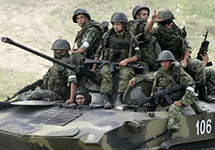
Russia will strengthen the grouping of troops in the western strategic direction in connection with the increased activity of the NATO bloc in Eastern Europe. As Interfax reports , a source familiar with the situation announced this.
“In parallel with the formation of three new divisions (two as part of the Western Military District, one within the boundaries of the Southern Military District), two separate motorized rifle brigades are redeemed from the central regions of Russia in addition to the western border of Russia,” the agency’s interlocutor said.
According to him, from Yekaterinburg to Klintsy (Bryansk region), the 28th separate motorized rifle brigade will be relocated. From Samara to Valuyki (Belgorod region), the 23rd separate motorized rifle brigade is relocated.
“Of course, these measures can be considered as an answer to the growing activity of the North Atlantic Alliance near the borders of Russia,” the agency’s interlocutor emphasized.
Earlier it was reported that the grouping of troops in the Western strategic direction by the end of the year will be strengthened by the formation of three new motorized rifle divisions with locations in Yelna (Smolensk Region), Voronezh and Rostov regions.
At the end of May, NATO Secretary General Jens Stoltenberg said that in 2016, NATO defense expenses in Europe will increase significantly due to the “threat of Russian aggression” and the migration crisis that covered the continent. "The forecast indicates that in 2016, defense expenses with European allies will be increased for the first time in many years," Stoltenberg emphasized.
In 2015, European NATO members spent 253 billion dollars on defense, and the United States - $ 618 billion. Based on the recommendations of the alliance, spend 2 percent of GDP on defense, European countries should increase expenses even more. Currently, they are approximately 1.43 percent of GDP.
According to FT, a number of block countries have already announced an increase in defense costs. So, Latvia will increase the military budget in 2016 by 60 percent, Lithuania - by 35 percent, Estonia and Poland - by 9 percent.