
Translated material
Bodia-positive and family values
The novels of Irwin Welsh and Anne Tyler about modern America. Reviews of Galina Yuzefovich
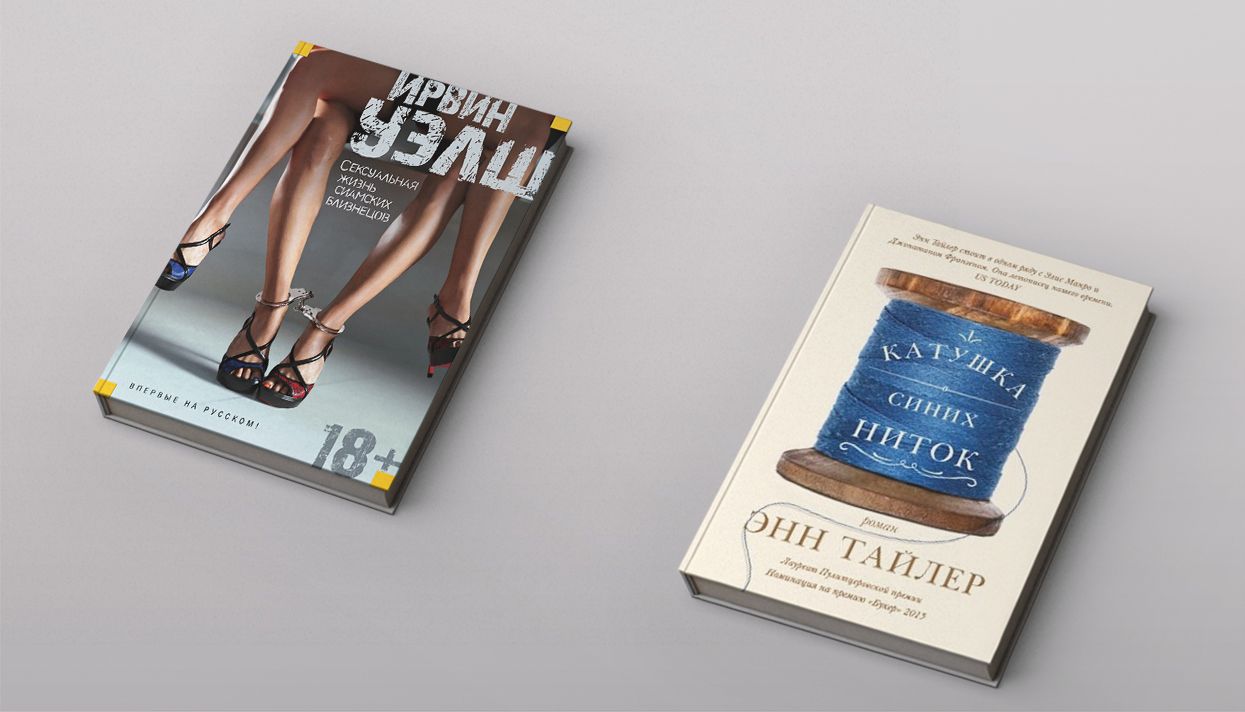
A weekly literary critic Galina Yuzefovich tells at Medusa about the most interesting book novelties published in Russia. In the current review, there are two novels about modern America: “Sexy Life of the Siamese Gemini” Irwin Welsh and “Blue Little Coil” Anne Tyler.
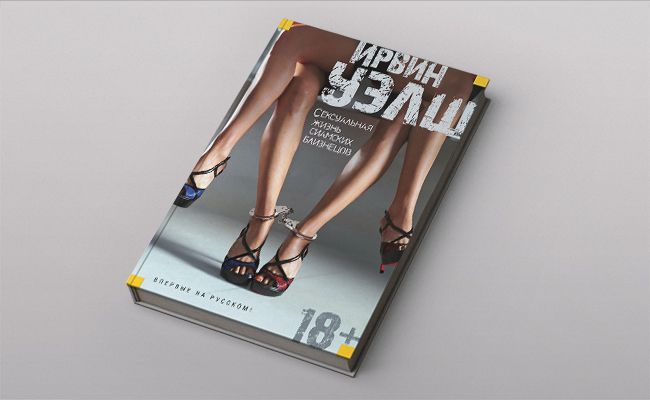
Irwin Welsh. Sexy life of Siamese twins. Translation from English by M. Shera edited by D. Simanovsky. M.: Foreigner, ABC-Atticus, 2016
The key property that distinguishes an important American novel from an important English (and, by the way, that promotes it with an important Russian novel) is the relevance of the topic. If in order to get, say, the British Buker Prize, the writer is preferably in an exquisite form to speculate of timeless and essential, then in America the explanation is more likely to expect from him, “what will happen to the homeland and with us”. It is this property that often complicates the understanding of important American novels abroad - or at least distort their perception (of course, the most characteristic example is through the social and even partly the political novel “Freedom” by Jonathan Franzen, who reads as a good family saga). However, the “sexual life of the Siamese twins” by Irwin Welsh, such semantic aberrations are most likely not threatening: it is about things relevant not only for America.
Once a rainy night in Miami, a fitness coach and, as it is customary to write in the relevant areas of the Internet, “stubbornly phytonyashka” Lucy Brennan (34 years, 170 cm, 50 kg) performs a noble act: disarms a criminal trying to shoot two homeless griefs. The random witness of her feat is an ugly fat woman named Lina Sorenson (31 years old, 157 cm, 91 kg), who takes what happened on the phone - and thereby offers Lucy to the peaks of fame. The reader is already waiting for the rhyme “roses”, namely, the story about how a person changes popularity that suddenly collapsed at him (throughout the first fifty pages everything seems to be going on), or at worst a strong criminal drama - but in vain. The tie turns out to be precisely what is a tie, a formal occasion to reduce two heroines together, between which relations arise, very difficult at first and very harmonious at the end. In his usual manner-a lot of obscene vocabulary, aggression and electricity-on the example of Lucy and Lina Welsh talks about the values of the Body, about the dangers of insanity on a healthy lifestyle, about the dangers of obesity, about the conventionality of gender roles, about same-sex relationships and violence in the teenage environment.
In a word, an exemplary, just a reference American novel about important-with a clear political correct message, which, thanks to the non-banal composition, does not sound cloying or false. And although the first (dramatic) part is much more lively than the second (romantic), and many fitness are of questions and doubts (Happy ends and healthy lifestyles are definitely not included in the sphere of the personal competence of Welsh), due to the boiling energy, which is in excess, the novel does not fall apart into the components and, as they say, “holds the form” well.
The only thing that gives rise to some bewilderment is the origin and background of the author. Irwin Welsh, as you know, is not an American, but a Briton, and in an effort to sow a reasonable, good, eternal, was never seen before. His gloomy “Scottish” novels from drug addicts took place according to the department of rigid counterculture, but this time Welsh, like a repentant sinner, literally preaches love, family values (albeit in a few non -traditional - lesbian - variant) and a reasonable attitude to his own body.
There is a temptation to assume that Welsh has changed - aged or just formed. However, in this external transformation I see something else - at the same time more simple and more complex. It is impossible not to notice that by changing the topic (heroin to healthy lifestyle), Welsh retains the general message: his densely “sitting on fitness” Lucy looks no less crazy and socially dangerous than his former heroes - urban “scum”. As for the change of the novel Lockyshn (Florida instead of Edinburgh), then, in my opinion, in America, Welsh simply falls into a much more organic cultural space for itself. What seemed to be a challenge in Britain and did not fit into the traditional cultural framework in America acquires a much more respected and traditional sound. Yes, a social statement on an important topic. No, not counterculture and certainly not shocking. If you like, enlightenment and a responsible conversation about the painful phenomenon of public life. Well, an extra reason to think about how context formates the text for reader expectations.
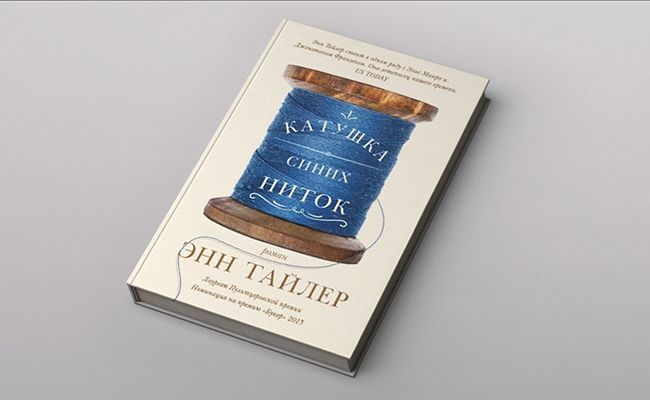
Anne Tyler. Coil of blue threads. Translation from English by N. Lebedev. M.: Fantom Press, 2016
Ann Tyler’s “Blue thread coil” is the very case when the Russian reader is most likely to see in the text the exact opposite of what the American reader saw in it. In our country, this novel has every chance to be read as a comforting, slightly sentimental and kind family story for ladies' reading, while in America the book Tyler was perceived as bitter and almost shocking social drama.
Whithenki, who loves and devoted to each other, Red and Abby, their children (two sons and two daughters) and numerous grandchildren - look and prefer to perceive themselves as the standard of a happy American family. They differ in amazing cohesion and mutual trust, they spend a lot of time together - they work in a family company, often run to each other for no reason, constantly call back and even on vacation to the sea annually drive the whole family. No troubles (however, not too frequent) are able to shake their mutual love. Independent energetic old people, beautiful daughters and daughter-in-law, successful sons, a strong business, a cozy old house, healthy grandchildren and, of course, a faithful labrador dog-what else to wish for? However, what at first seems to be a sugary family idyll upon closer examination turns into its frightening ghost.
No, nothing sensational - no horror of family violence, no skeletons in the closet, no dirty secrets. Carefully and almost imperceptibly shifting the perspective, Tyler shows one after another those things that are simply not customary to talk about aloud - neither in the family of huts or in any other family. This is precisely the existential horror, skillfully and gradually heated by the writer: family happiness is impossible - he simply does not exist, and everyone who takes the opposite is lying either to themselves or to others.
Married love between Red and Abby died for so long that it was not known whether it was at all. Children - at first glance, are so loved and happy - always suffered either from the inattention of parents, or from their obsessive and rude invasion of the intimate zone. Ecumenical responsiveness of Abby, a social worker about profession and vocation - turns into stale and blindness to loved ones. In directness and openness, the eda brings cruelty and indifference. The waywardness and egoism of the eldest of the sons - Denny - hides a deep children's injury. The helpfulness and friendliness of the younger-a technique-stem-masks uncertainty and alienation. Amanda’s ambition is the result of tragic loneliness ... Ordinary, recognizable problems - seemingly nonsense, but in fact the sentence to the family as such, the foundation of American society and the primary principle of modern civilization as a whole.
Anne Tyler is a living classic of modern American prose, a Pulitzer laureate and the finalist of the Buker Prize - without sudden movements, without pathos and unnecessary affecting, makes the reader see something inexpressibly frightening and depressive behind the glossy facade. Rather, as in a well -known optical illusion, it allows you to see both the devil and the angel in the picture at the same time. And from the fact that every detail, every trifle in the world created by Tyler looks so lively, so warm, recognizable and universal, becomes truly terribly. You have nowhere to go, your house burned out, your brothers and sisters are strangers to you, and mom and dad turned into straw stuffed animals. And the worst thing is that you know this, but, of course, if you want, pretend further. In fact, much more comforting and kinder.
And three more important American novels:
- Jeffrey Evgenidis. The middle gender. Translation from English by M. Lanina. M.: AST, Corpus, 2013
America of the twentieth century through the eyes of Greek emigrants.
- Jonathan Franzen. Freedom. Translation from English by D. Goryanina, V. Sergeeva. M.: AST, Corpus, 2011
A family saga explaining what happened to America after September 11, 2001.
- Philip Mayer. Son. Translation from English by M. Alexandrova. M.: Fantom Press, 2016
The bloody Texas frontier as a universal model of American history.
Galina Yuzefovich
Moscow