
Translated material
A meaningless breakthrough. How the victory of General Brusilov brought closer to the Russian Revolution
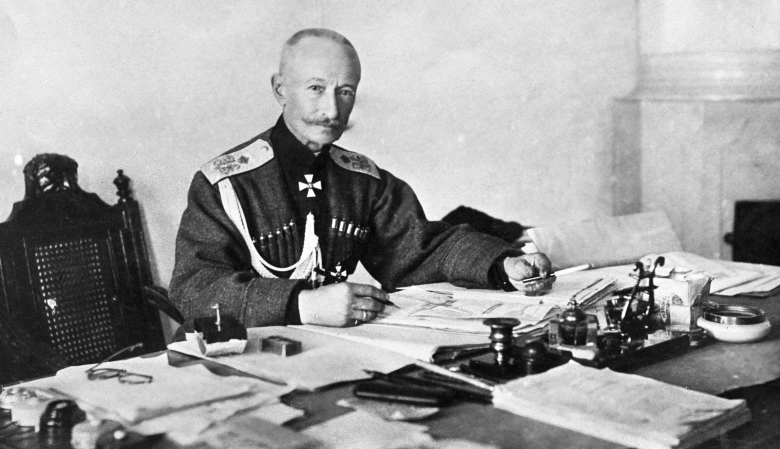
Brusilovsky breakthrough was the largest success of the Russian army in the First World War. But he served as one of the main reasons for her decomposition and disaster that happened to her and with the whole country in 1917. This year marks exactly a hundred years with that memorable offensive, which began on May 22 (June 4), 1916.
Initially, it was assumed that the Southwestern Front of General Alexei Brusilov, advancing against the Austro-Hungarian army, would apply an auxiliary blow to Lutsk, while the main blow against the German army would be inflicted on the western and northern fronts. The idea of a distracting strike on Lutsk belonged to the chief of staff of the Supreme Commander-in-Chief General Mikhail Alekseev, while Brusilov developed a breakthrough plan in an operational-tactical sense. But soon it was his front that became the main one.
The front of the Austrians consisted of 2–4 fortified stripes, removed from each other by 5-6 km. Each strip had a depth of up to 1 km and consisted of 2-3 lines of trenches and resistance nodes that were very developed in the depths and were in the artillery connection among themselves. There were reinforced concrete fortifications, prickly wire and minefields.
Austro-German intelligence managed to open the Russian group in time and even find out the day of the attack, but the command, starting a general offensive on the Italian front in mid-May, ignored reports of the threat from the Russian army. In Vienna and Berlin, it was believed that in 1915 the Russian army was thoroughly defeated and is now not capable of a big offensive.
Subscribe to read the whole
Make a subscription Redefine.media to read Republic
Subscribe [you can pay for a Russian or foreign card. The subscription is extended automatically. You can unsubscribe at any time.]
Where are the money subscribers going