
Translated material
Why Mohammed Ali is the "greatest"
The main achievements of the most famous boxer in history
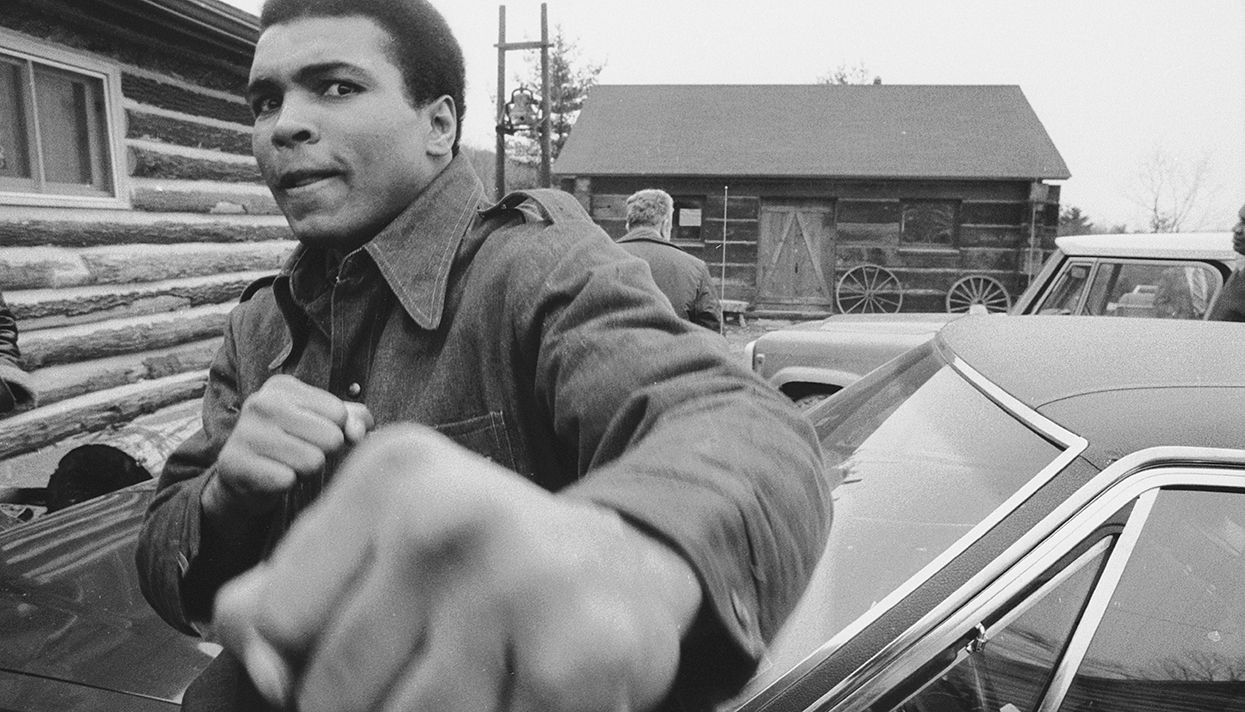
On June 3, Mohammed Ali died, one of the greatest athletes of the 20th century. At the request of Medusa, journalist Andrei Melnikov talks about the boxing career of Ali, his main battles and why he really deserves the title “The Greatest”, which the athlete he himself appropriated.
For a very long time, Mohammed Ali called himself the “greatest,” and among the fans of boxing there were always few people who were ready to argue with this statement. In his free from fighting and training, Ali tried to change the world and achieved a lot. Once in the United States, many hated Mohammed for the fight against racism and a refusal to fight in Vietnam. Now all over the world it will be difficult to find a person who would not want to admit to him in love or at least express respect. But Ali is no more. On June 3, he died in the Phoenix hospital.
Ali lived for 74 years, and almost half his life fought with Parkinson's disease, which was diagnosed with him back in the mid-1980s. By and large, before the whole world, he appeared the last time 20 years ago, when he lit the fire of the 1996 summer Olympiad in Atlanta. Even then, it was hard to look at Ali: at some point it seemed that the great athlete in the past could not cope in order to set fire to a piece of material impregnated with a combustible mixture, which then rose along the cable to the 201996 torch. Ali coped.
“I calculated that I missed 20 thousand strokes, but I earned millions and managed to save a lot. Maybe I speak slowly, but I think well, ”Ali said and asked him not to regret. While he was healthy, he managed to make and say as much as few people had time for ten lives.
"Fuck like a butterfly, sorry like a bee"
Now even those who have never seen a single boxing battle know this phrase. He was not just faster than his opponents: he moved, unexpectedly changing directions, beat abruptly, strongly and from any position, felt a distance and predicted the actions of the opponent.
He became the champion of the world in heavyweight in February 1964, even under the name of Cassius Clay. He took the title from Gromila Sanny Liston, who, by the way, was not only a overall and powerful athlete with a killer blow, but also a boxer with a very decent technique. Now it will sound strange, but the favorite of the battle was precisely the leafon, and in Ali, almost no one, besides himself, did not believe. Neither the victory of the applicant at the 1960 Olympics in Rome, nor 19 fights won in the professional ring for fans and experts then seemed serious arguments.
Already by the third round it became clear that the leafon could not get his fast opponent. Ali, on the contrary, could, and got the farther, the more. True, in the fourth round, Mohammed something caught his eye, and during the break he even wanted to star from the battle. The coach managed to convince him to continue the battle, his vision returned for the fifth round to the applicant, and after the sixth leafon simply did not reach the ring to continue the battle.
The renaming of the Cassius of glue in Mohammed Ali occurred between the first and second battles with the leafon. Ali contacted the nationalist organization of the American blacks of the “ nation of Islam ”, which is why he made a lot of enemies, and at the same time made preparations for revenge with the leafon very nervous. The favorite of the bookmakers was again Sunny, for whom everything ended quickly and sadly. Already in the second minute of the battle, Ali caught Liston to blow on the right, the referee, trying to take Mohammed to his corner, got a little confused, but in the end recorded a knockout. Ali’s blow was how fast and imperceptible that many still suspect that Liston simply passed the battle.
“Well, they will put me in jail, so what? I have been in prison for 400 years "
In 1965, the United States launched a war in Vietnam, and Ali immediately outlined his position on this issue. The meaning of his comments came down to the fact that the Viet Kongians did nothing bad to him, they did not call a “niger”, so he would not fight against them in the interests of the whites. At the beginning of the war, the pacifists in the United States were a minority, therefore, Ali had less supporters in this matter than opponents.
On the eve of the war in Vietnam - in 1964 - Ali was recognized as worthless to the service: passing the test for IQ, he noted 14 points and, not at all embarrassed, said: "I am the greatest, not the smartest." When the war began, the army authorities lowered the “intellectual barrier”, after which there were no obstacles to calling Ali.
They called him in 1966. It is unlikely that Mohammed would have been sent to the front line: during the Second World War, the American command had the experience of using another great champion-treasure Joe Louis, who traveled to military units and performed before the soldiers, raising their moral spirit. But Ali went on the principle.
During the acceptance of the oath, he refused to fail, without responding to the name of Cassius Clay or in the name of Mohammed Ali. The court fined him for ten thousand dollars and sentenced him to five years in prison. Mohammed did not have to serve the deadline, but the American boxing commissions deprived him of the opportunity to conduct battles. Then Ali was selected from the champion's title.
This story cost him three and a half years of a boxing career. When Mohammed returned to the ring in October 1970, he was still very good, but the years of downtime could not but affect. And ahead of Joe Freyser, who became in the absence of Ali the world champion, loomed ahead.
"Joe Fraser is so ugly that when he cries, tears turn around and flow down the back of the head"
Ali did not get as many strokes as from Freyser. For three fights with Mohammed, Freyser fell less, but he also had to endure numerous insults from the great opponent. Ali was generally a master of telling his opponents of muck, and then he was much more ruthless than when he went to the ring. Perhaps it was he who began on an ongoing basis to warm up interest in his battles by boorish tricks at press conferences and other events.
It was the first battle with Fraser that showed how dear Ali was a break associated with the rejection of military service. The sense of distance and unique flair were still with him, but the speed to realize these qualities was not always enough. Mohammed began to miss blows that he had not missed before, and in a duel with a world -class boxer this could not but affect. Ali lost on glasses, in the last (15th) round, he went forward, ran into a blow and ended up in the knockdown. He got up and finished the battle on his feet, but there was no talk of victory.
When Ali and Fraser met for the second time, Joe was no longer a champion, losing the title in a duel with George Forman. Ali by that time had somewhat adjusted his tactics of fighting. For example, in unpleasant situations for himself, he entered the clinch, not allowing the opponent to develop success. All this allowed Mohammed to take revenge, although Fraser after the battle complained about the unjust judges and dirty methods of Ali.
The third fight of Ali - Fraser, who took place in the Philippine Manila, is often called not only the best in the career of Mohammed, but also one of the greatest in the history of boxing. As one of the football commentators would say, "the waves of attacks rolled one after another." After 14 furious rounds, Fraser completely swam his left eye, and his coach, looking at this, stopped the battle. The man from the Ali team claimed that Mohammed was so exhausted that he could not have reached the last round. It is impossible to confirm or refute this. Ali himself said that he was never closer to death than in that battle. But in his case, this does not mean that he could not spend another round.
"Even if you dream that you win me, wake up and apologize"
The most famous battle of Ali, perhaps, should be recognized as a sorrow with George Forman, known as the "fight in the jungle". The film “Ali” with Will Smith is partially to blame for this, where this fight is one of the key events. The promoter Don King organized him in Zaire, persuading to fork out the local dictator Mobutu. Only $ 12 million was allocated for the prize fund.
Ali again had to prepare for the battle as an outsider. In 1973, Foremen Zhelov defeated Freyser, who had a first defeat in his career two years earlier. Mohammed took a revenge from Fraser before a fight with Forman, but this did not particularly affect the opinion of bookmakers and journalists. They believed that Ali had no arguments against the physical strength and shock power of Formen. They said something similar and before the battle of Ali with the leafon.
Mohammed could no longer box as a leaflet. This time he prepared a trick that no one was waiting for. Ali stood his back to the ropes, provoking Forman to constant attacks. It seemed that it was impossible to withstand such blows in such quantities, but some of them passed by, part of Ali blocked, and those that nevertheless reached the target, Mohammed softened the body movements.
Despite all Ali’s skill, this tactic in a battle with a monster like Formen was risky. Mohammed risked not in vain. By the eighth round, Ali decided that his opponent had spent enough strength, went on a counterattack and finished the battle with a clear blow to the right.
“Do not consider me an outsider until I turn 50,” Ali said after a battle with Forman. Until 50, of course, he did not finish, but managed to lose and return the title of world champion again. In December 1981, Ali lost to Trevor Berbik, after which he finally left the ring.
“Live every day as if this day is the last, because one day it will be true,” Ali once said. This can be considered his main advice.
Andrey Melnikov