
Translated material
Was the "gas waterloo" took place?
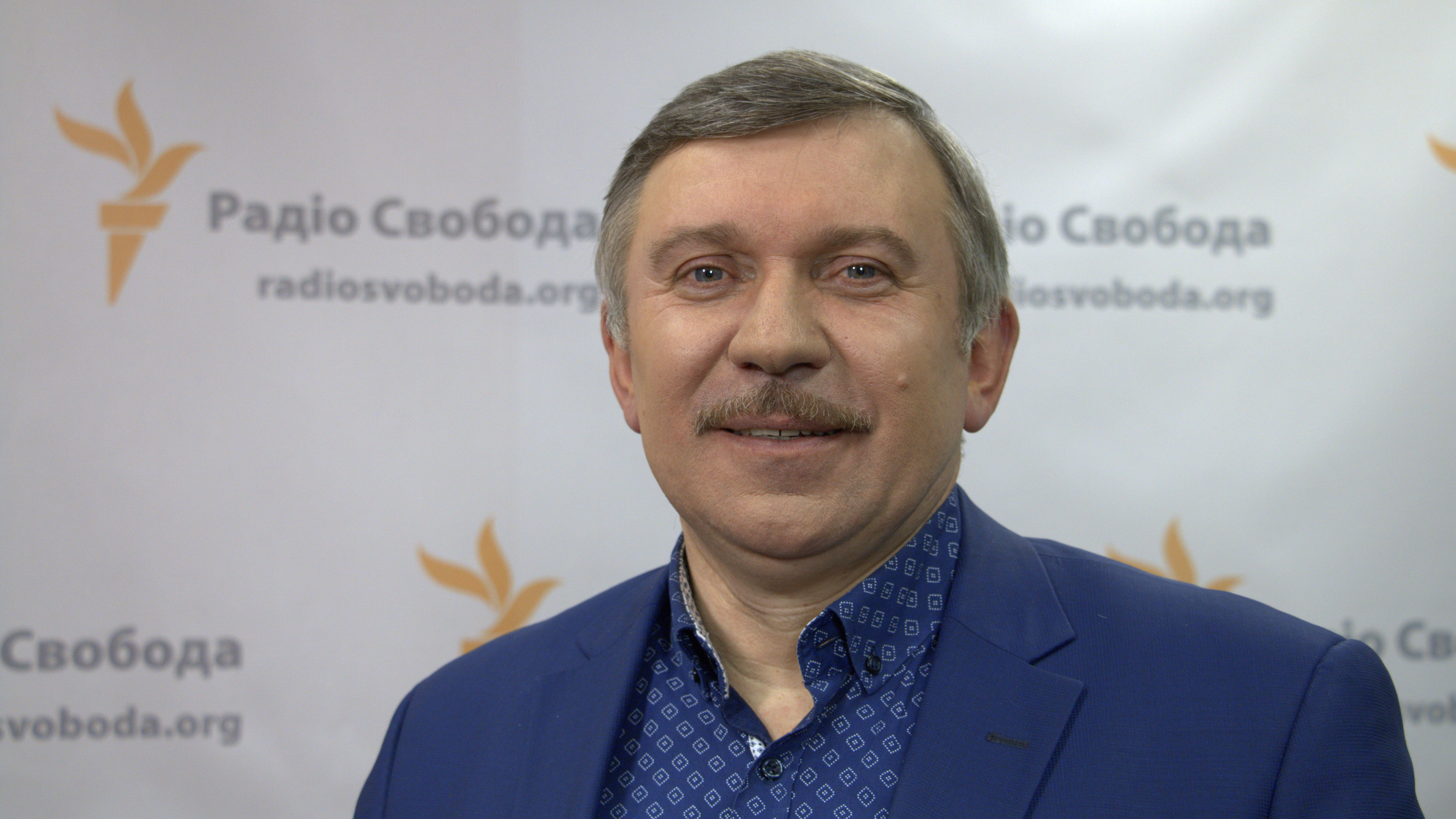
Vitaly Portnikov: Does Ukraine really do not depend on Russian gas supplies? We invited to the studio of the famous Ukrainian energy expert, the president of the Globalistics Center "XXI Strategy" Mikhail Gonchar .
The famous Russian journalist Julia Latynina in Novaya Gazeta summed up the results of these years after the Maidan, and she was attracted by what was concerned with the energy. She said that this is Waterloo, which Ukraine arranged for Gazprom. Do you agree with such an assessment?
Mikhail Gonchar: This is a hyperbole, but it is not far from the truth. If this year is passed without importing Russian gas, then yes - this is Waterloo. But so far, since December last year, there was not a cubic meter of imports. Moreover, we went through the most peak cold - January, and calmly did without imports. Of course, it must be borne in mind that December and February were warm, General Moroz this year, like in the past, was not an ally of the Kremlin. Nevertheless, the fact is evident: the dependence on the import of Russian gas is minimized. If the Groysman government is enough not to resume imports, then this will be a complete victory.
Vitaly Portnikov: What is terrible in the resumption of imports if Russia looks one of the competing subjects in gas supplies to Ukraine?
"General Frost" this year, as in the past, was not an ally of the Kremlin
Mikhail Gonchar: The question is in price. Despite the fact that Gazprom practically lost the Ukrainian market in numerical terms, in a monetary measurement at the peak of gas prices, he annually received $ 12-14 billion from the Ukrainian market. For comparison: the same amount came from gas exports to Germany.
Vitaly Portnikov: But at a different price.
Mikhail Gonchar: Yes, another price, more volumes. The price for Ukraine has always been higher than for Germany - this is one of the paradoxes. The Ukrainian market is located closer, it is a neighboring market, the German is more distant, and nevertheless ...
The so -called European price formula, at which Gazprom has always speculated, is actually one of the beautiful propaganda phrases. In each case of a particular country, the price is different. Now, despite the practical loss of the Ukrainian market, Gazprom continues the policy of overstating the price of gas proposed for export to Ukraine. In such circumstances, of course, Naftogaz is more profitable to import gas from Europe, which is being done.
Vitaly Portnikov: As an expert, you can explain why Gazprom had to cut a chicken that carried such expensive eggs?
Mikhail Gonchar: We understand that Gazprom General Manager is sitting in the Kremlin, his surname Putin. Gazprom is just an instrument: what will be ordered, then they will do it. Naturally, Gazprom as a business structure is unprofitable. In fact, the loss of the Ukrainian market is not limited to losses of Ukraine only, this also leads to losses for Gazprom and in Europe, because now many people understand that Gazprom manipulates numbers.
Despite the practical loss of the Ukrainian market, Gazprom continues to overstate the price of gas prices proposed for export to Ukraine
Now another interpretation of the events that occurred in 2006 and in 2009 - this refers to gas crises. If earlier in Europe, which did not want to understand who was right, who is to blame, Ukraine or Russia, the responsibility was equally assigned to both directions, now everyone with great suspicion is looking at the Russian side: it was the initiator of gas crises, and it is the use of gas weapons against Ukraine that the Kremlin is ready to go in their gas relations with other countries of the European Union. It’s just time for them. Usually in Germany they say that there were no precedents. Naturally, they could not be, because gas weapons were used primarily in the post -Soviet space. But this does not mean that it cannot be used in Europe. You can, simply current conditions inappropriate: in conditions of low prices and warm winter, gas weapons are ineffective.
Vitaly Portnikov: You used the expression "gas weapon" several times. It was really the case throughout the 1990-2000s. Why is it impossible to reformat relations in a changed situation? If there is no need to purchase large volumes of gas, then, by and large, what used to be a weapon becomes raw materials. And we do not see this.
Mikhail Gonchar: Because the Kremlin was stuck somewhere in the 90s, in gas thinking, and Gazprom with him. They do not see the realities of the European gas market, do not see the integration. They tried for a long time to ignore the third energy package, its implementation , tried to teach Europe that it was not worth doing that it prevents mutually beneficial gas trade, they continue to impose on the Nord Stream 2 unrealizable to Europe.
Just in this sense - why is losing? Because the European gas market is not only integrated due to the unification of legislation, it becomes infrastructural more integrated. If there is a gas shortage somewhere, and somewhere there is its surplus, then it is easy enough to transfer the necessary gas volumes from the places where it is in abundance, where it is not enough. And Gazprom is trying to dictate, despite these realities, its own rules of the game, still tries to stubbornly implement these bypass gas pipelines, bypassing transit countries. The supply of gas in the European market is increasing, the first deliveries of North American liquefied gas began, it becomes more closely in the market, nevertheless, Gazprom stubbornly continues its old strategy. Then the question arises: they do not understand realities? Partially - yes.
Vitaly Portnikov: Or do they still think about something else?
In conditions of low prices and warm winter, gas weapons are ineffective
Mikhail Gonchar: At the same time, they think about something else. It is not for nothing that it was Russian experts who dubbed Gazprom pipeline projects with pullbacks. This is the main business motive in the implementation of these projects.
Vitaliy Portnikov: If these are "traffic jams", then why is Germany support them?
Mikhail Gonchar: Gas corruption - transnational phenomenon. If we look at the primitive schemes of the late 90s and 2000s, which were known as Transgaz and Rosucranergo , then we will see there not only Russian-Ukrainian surnames, but also a number of European surnames. The nature of the gas business is such that there is a manufacturer, there is a transiter, and there is a consumer. The manufacturer - Russia, the transiter has traditionally been Ukraine, and the consumer in Europe. You do not have to be brilliant to come up with a three -component scheme, when resource and financial flows include the interests of various players, on which certain solutions or sanctions on certain actions depend. From here we see the effects of the Schroeder and Berlusconi type, which actively lobby for the streams proposed by Russia.
Vitaliy Portnikov: Ukraine can also boast of its Schrareds and Berlusconi, which is worth the only group of Rosucranergo. And how did it happen that people who are the most prominent representatives of this group, such as the former Minister of Energy Yuri Boyko or the former head of the presidential administration Sergey Levochkin, have not disappeared from Ukrainian politics? Boyko is headed by the Opposition Bloc fraction, Levochkin is one of his most prominent representatives, and the trating opportunities are lost without fourthly ...
The Kremlin got stuck somewhere in the 90s, in gas thinking, and Gazprom with it
Mikhail Gonchar: They were players, but they were never playgrounds . The playmaker was outside Ukraine. If we are talking about the corporate structure of Gazprom, if we see the documents, we will see that Rosucranergo is one of the Gazprom accounts in the Swiss canton of the Central Executive Committee. This is such a subject that has signs of an independent subject, but in fact it is an absolutely controlled, affiliated structure of Gazprom. If we introduce this into a political context, then, undoubtedly, Putin and Medvedev were such a gas playmaker at different times, they were both involved in this scheme.
Let us recall the 2004 year, the famous summit of the presidents of Ukraine and Russia in Yalta, where at the end of July the Rosucranergo scheme, which earned, was approved at a bilateral level. And a year before, Russia interrupted, in fact, the direct gas relations of Ukraine and Turkmenistan, having redrawn all the volumes of Turkmen gas to Gazprom. That is, it was a certain combination that aimed at interrupting the unnecessary direct gas relations of the two countries and then propose a solution to the problem for the intermediary fully controlled by Gazprom.
Vitaly Portnikov: How did it start? From the agreements of the Prime Ministers Leonid Kuchma and Viktor Chernomyrdin, as far as I remember? These were almost 1992–93. Then a low gas price was offered.
Gas corruption - transnational phenomenon
Mikhail Gonchar: The low gas price was explained by the fact that the 90s is a period of low oil prices. Moreover, if we recall 1997 or 1998, the situation was about the same as now, when Germany received gas cheaper than Ukraine. I may remember inaccurately, but the order of numbers is correct. Germany received gas at 60 with a small dollars per cubic meter, and Ukraine - 83.
Vitaly Portnikov: Do I understand correctly that this scheme was held by the entire period of the reign of Leonid Kuchma? Kuchma was a guarantor of its existence. Leonid Kuchma left the post of president, Viktor Yushchenko appeared, and then, it turns out, did Rosucranergo appear? Is this such a victory of the "Orange Revolution"?
Mikhail Gonchar: July 2004 - Kuchma sanctifies the appearance of this scheme in Yalta. The main playmaker outside of Ukraine. Yes, the presidents changed, there was Kuchma, then Yushchenko, then Yanukovych, and there was "Rosucranergo.
Vitaly Portnikov: It seems to me that this intermediary was not at the famous moment when the prime ministers of Russia and Ukraine Volodymyr Putin and Yulia Tymoshenko agreed on a contract without intermediaries. Then Julia Vladimirovna will serve the prison term for this contract almost all the time of the reign of Viktor Yanukovych. So what was it for a contract? Is the intermediary left?
The presence of an intermediary or his absence is just an element of a certain game
Mikhail Gonchar: Yes, that intermediary was left who at that time did not suit the Ukrainian side. The presence of an intermediary or his absence is just an element of a certain game. If you need an intermediary, then he will be used, if you can achieve the goal and establish relationships without an intermediary, thereby guaranteeing the achievement of the task, then you can do without it. The intermediary, in this case, "Rosukrenergo", as the tool can be postponed to the side. He was put aside, because, obviously, there was a desire of Yulia Tymoshenko to remove Dmitry Firtash from the gas flow scheme in Ukraine.
Vitaly Portnikov: She did it.
Mikhail Gonchar: Yes. But it was not possible to remove the Rosucranergo as such, because she is a resident of Switzerland, not Ukraine. Her subsidiary "Ukrgazenergo" managed to defeat quite simply, because it was registered in Ukraine.
Despite the fact that Rosukranergo was thrown back at the time when Yulia Tymoshenko was the prime minister and clearly demonstrated its presidential ambitions, it is obvious that in this game the Russian side at first relied on Tymoshenko’s presidency.
Then, when the situation turned out in a completely different way, the Rosukrenergo tool was returned to the game, but not in order for gas to be supplied and everyone would receive its dividends, presenting a certificate of shares of a bearer in the canton of the tsug, and in order to break the 12 billion cubic meters of gas, which Vladimir Putin provided with a generous hand as a bonus by Julia Julia Tymoshenko, and then the Russian side through Gazprom allowed Rosukranergo, entering into a conspiracy with a number of people of Naftogaz, to play all this back.
This moment shows how closely corruption interests were intertwined both at a political and corporate level. Of course, it is no coincidence that all financial flows were displayed in Canton Tsug.
Vitaly Portnikov: Was Tymoshenko’s contract still beneficial or disadvantageous to Ukraine?
The Russian side, imagining that it is beneficial for Ukraine, tried to gain control over the gas transmission system
Mikhail Gonchar: He was beneficial for exactly one year. Subsequently, the mechanism was laid in the contract, and since 2010 the formula began to work in the form in which it was laid in the contract. In 2009, when the contract was signed, significant bonuses and discounts were proposed for the formula, so while Yulia Tymoshenko remained the Prime Minister, everything worked. As soon as this scenario would not have turned out, in any case, in 2009, a high price would work, because a pressure lever on the new president of Ukraine was needed. It worked.
We remember the Kharkov Agreement of 2010, when Viktor Yanukovych, as president, began to ask for the Russian side: "Give a cheap gas," and the Russian side said: "And you - the fleet base until 2042." There was such an mutual understanding on the gas-Flot transaction, which then cost the Ukrainian side expensive. Of course, the Russian side, imagining that it is beneficial for Ukraine, tried to gain control over the gas transmission system.
Gazprom General Manager is sitting in the Kremlin, his surname Putin
The issue of control over all gas transmission systems that are in the space between Russia and the European Union is radically important in the context of the Russian energy strategy for expansion in Europe. We need complete control, because full control means a complete monopoly of gas supplies to Europe. This is also an obsolete concept, however, the inertia of thinking continues, and from here it is such an emphasis: if it is not possible to build a “south”, Turkish, Bulgarian flows, then at least the “northern stream - 2”.
But if the prospect of obtaining control over the Ukrainian gas transmission system is opened, despite the fact that it is called private scrap metal in Russia, then they will undoubtedly use this option in order to subsequently receive full control over the entire gas transport space, manipulate directions, volumes and prices of export to Europe. They believe that in Europe the demand for gas will only increase in connection with the decline in production in the North Sea: they will not leave Russia anywhere, they say that Europe will not leave for gas. And this is a great misconception.
Vitaliy Portnikov: It seems to me that Gazprom did not notice the Slantsev Revolution at all. Alexey Miller spoke very contemptuously about her publicly. It seemed to me that this is a sincere faith that the future behind the pipeline gas or all sorts of nonsense that the Americans are engaged in.
The issue of control over all gas transmission systems in the space between Russia and the European Union is radically important in the context of the Russian energy strategy for expansion in Europe
Mikhail Gonchar: This is just self -confidence. In 2008, Miller promised that Gazprom’s capitalization will be a trillion dollars, gas price - a thousand dollars per thousand cubic meters, and oil price is $ 250 per barrel. None of this happened. Therefore, they blinked the shale revolution. Now we see that the export of liquefied American gas to Europe begins, and if you look at the conceptual documents of the same Gazprom or the Ministry of Energy of Russia in the mid-2000s and their projection for 2015, Russia should already export about 60 billion cubic meters of Russian gas in a liquefied form in the United States. There is none of this. This suggests that the Russian gas industry, in fact, is mediocre by the general manager in the Kremlin, who sees only personal self -interest.
Vitaliy Portnikov: I understand correctly that the contract that we are talking about now no longer works, Ukraine does not buy gas from Russia - thus, all relations of Russia and Ukraine rested on mutual claims in arbitration? The question arises: what will happen if Ukraine loses these claims?
Mikhail Gonchar: Arbitration decisions, as a rule, do not lead to the winnings of one side and the total loss of the other. Why is the Stockholm arbitration, as a rule, is elected a place of proceedings between business entities? Because the peculiarity of Swedish economic law is such that not only the spirit and letter of the contract, as in the case of English law, but also the market environment, market terms, and contracts are checked for compliance with these market conditions.
I'm not sure that, as they say now, 2017 will bring a decision. It is possible that this will be delayed for a much longer period, until the time the contract is valid, and then the arbitration will make a decision.
Arbitration decisions, as a rule, do not lead to winning one side and the total loss of the other
Colossal mutual claims, each side has its own interpretation, its own truth, and the truth is one ... Therefore, arbitration is an unprecedented business. And you do not have to say that one side is doomed to success, and the other to a total defeat. Although a number of things suggests that the Ukrainian side, Naftogaz in this case, has a preemptive position. Например, если мы возьмем транзитивный контракт, то там четко зафиксировано: обязательства "Газпрома" (причем это записал сам "Газпром") – транзитировать в год не менее 110 миллиардов кубических метров. Да, нет условий, транспортируй или плати, тем не менее, обязательство зафиксировано. "Газпром" никогда его не выполнял.
Виталий Портников: Я правильно понимаю, что в любом случае реальным выходом из ситуации может быть политический выход, что рано или поздно, если отношения начнут нормализовываться, все эти взаимные иски могут быть решены?
Политические решения не приводили к положительным результатам, наоборот
Михаил Гончар: Теоретически – да, это возможный вариант. Но я хочу напомнить, что политические решения (а они, как правило, раньше имели место в российских газовых отношениях) не приводили к положительным результатам, наоборот. Схема "Уралтрансгаз" – это была плохая схема, но схема "РосУкрЭнерго" стала еще хуже. Прямой договор после "РосУкрЭнерго" еще более усугубил ситуацию. В конечном счете, как ни пытались на политическом уровне премьеров и президентов решать эти вопросы, они не решались. Поэтому логично, что через много лет, через целый ряд политических решений все пришло именно к правовому решению через арбитраж.
Мне кажется, что в этих условиях, в условиях российской агрессии против Украины (и даже если мы заглянем в какой-то поствоенный период) политическое решение будет очень сложным.
На мой взгляд, вердикт стокгольмского арбитража послужит либо основанием для соответствующих шагов обеих сторон, либо основанием для политического решения, которое уже не будет базироваться на каких-то видениях той или другой стороны, а уже будет четко очерчен коридор, где может быть найдено это решение.
Виталий Портников: Есть большая энергетическая страна, у которой огромные запасы газа, и она должна быть заинтересована их продать. И есть страна-транзитер, которая стала транзитером еще в советские времена, у нее есть крупнейшие в Европе трубопроводные системы, из нее идут ветки на юг, на север, куда угодно. Вместо того, чтобы находить механизм взаимовыгодного сотрудничества с этой страной, все время дают совершенно другие сигналы: "мы должны у вас все забрать, мы должны делать так, как мы хотим, мы вам дадим газ по такой цене, потому что вы никуда не денетесь".
Энергетические ресурсы и топливно-энергетический комплекс России являются основой ее экономики и инструментом проведения внутренней и внешней политики
Михаил Гончар: Вы правильно это подметили. Я всегда говорю так: давайте вспомним, с чего начинается энергетическая стратегия Российской Федерации, ее преамбула, ее первые предложения в редакции 2003 года, в период раннего Путина. Там очень четко записано: энергетические ресурсы и топливно-энергетический комплекс России являются основой ее экономики и инструментом проведения внутренней и внешней политики. То есть на энергетические ресурсы во времена президента Путина (да и раньше, во времена Ельцина, тогда это было просто менее проявлено) в Кремле всегда смотрели как на товар, который надо продавать.
Но не просто продавать… В приложении к новой редакции энергетической стратегии России, которая должна быть принята до 2035 года, есть основные тезисы, и одно из предложений – что не стоит рассматривать энергоресурсы с узкой точки зрения получения дохода экспортером. Почему Европа опасается российских энергоресурсов? Потому что это не просто экспорт газа или нефти – это параллельно экспорт коррупции.
Виталий Портников: Мы видим результаты этого экспорта во всем – и в том, что происходит вокруг санкций, и в том, что происходит вокруг Донбасса. Это метастазы, которые проникли в саму ткань европейского организма.
Mikhail Gonchar: Absolutely. В этом смысле, если мы посмотрим на то, что происходит сейчас, если мы возьмем экспорт российских энергоресурсов… Да, это по-прежнему основа развития российской экономики. Правильно говорят, что это всего-навсего шестая часть ВВП – это с формальной точки зрения, с точки зрения получения доходов от экспорта нефти, нефтепродуктов, газа, угля и немножко – электроэнергии. Но на самом деле в России задействована целая цепочка. Если мы посмотрим налогообложение, получение налоговых доходов, начиная от скважины и заканчивая пистолетом автоколонки… Если теперь на мировом рынке все пошло вниз, то, соответственно, не просто меньше поступлений от торговли, но точно так же это уменьшается по всей цепочке.
В этом смысле Россия будет получать эффект бумеранга от той политики, которая проводилась на протяжении последних десятилетий, когда энергоресурсы были не просто товаром, а и оружием, инструментом воздействия за пределами России. В этом смысле, если мы посмотрим сейчас реалии европейского нефтяного и газового рынков, то они отнюдь не благоприятны для России. Не в силу того, что кто-то хочет сделать России плохо… Просто мир стал другим, рынок усовершенствовался, технологии усовершенствовались, экологические условия стали более жесткими.
Почему Европа опасается российских энергоресурсов? Потому что это не просто экспорт газа или нефти – это параллельно экспорт коррупции
К примеру, сейчас Россия получает серьезные претензии, по крайней мере, ЛУКОЙЛ в прошлом году получил достаточно серьезные рекламации от европейских потребителей по поводу снижающегося качества российской экспортной смеси "Urals" . Why is this happening? Потому что объем добычи более легких, менее сернистых сортов сибирской нефти становится все меньше, а более высокосернистых – Татарстан, Башкортостан, Удмуртия – становится все больше, сернистость возрастает. А в Европе все более жесткие экологические требования – чтобы серы в топливе было как можно меньше. И эти жесткие требования постепенно усиливаются к 2040 году, предпочтение отдается более легким сортам нефти, казахстанской, азербайджанской, ближневосточной добыче.
Российский экспорт нефти жестко завязан именно на европейский рынок. В России нет глубоководных терминалов на Балтике и на Черном море, которые могли бы принимать супертанкеры для того, чтобы делать рентабельным экспорт, например, в Азию, где хорошо принимается высокосернистая нефть. Там нет таких экономических требований, но не факт, что они не возникнут. Но даже если бы были супертанкеры, через Босфор на Черном море они не пройдут в силу естественных ограничений.
В этой ситуации параллельно со снижением объемов переработки нефти в Европе, со снижением импорта Европейским союзом нефти, российская сторона попадает в сложное положение (я уже не говорю о цене). В данном случае речь идет о серьезном сокращении поступлений не только вследствие действий ценового фактора, но и вследствие того, что качество российской нефти хуже, соответственно, цену будут предлагать все ниже и ниже. Таким образом, движитель агрессивной политики России, ее внутренний движитель, коим всегда были энергоресурсы, начинает давать сбой.