
Translated material
Kits without dogs
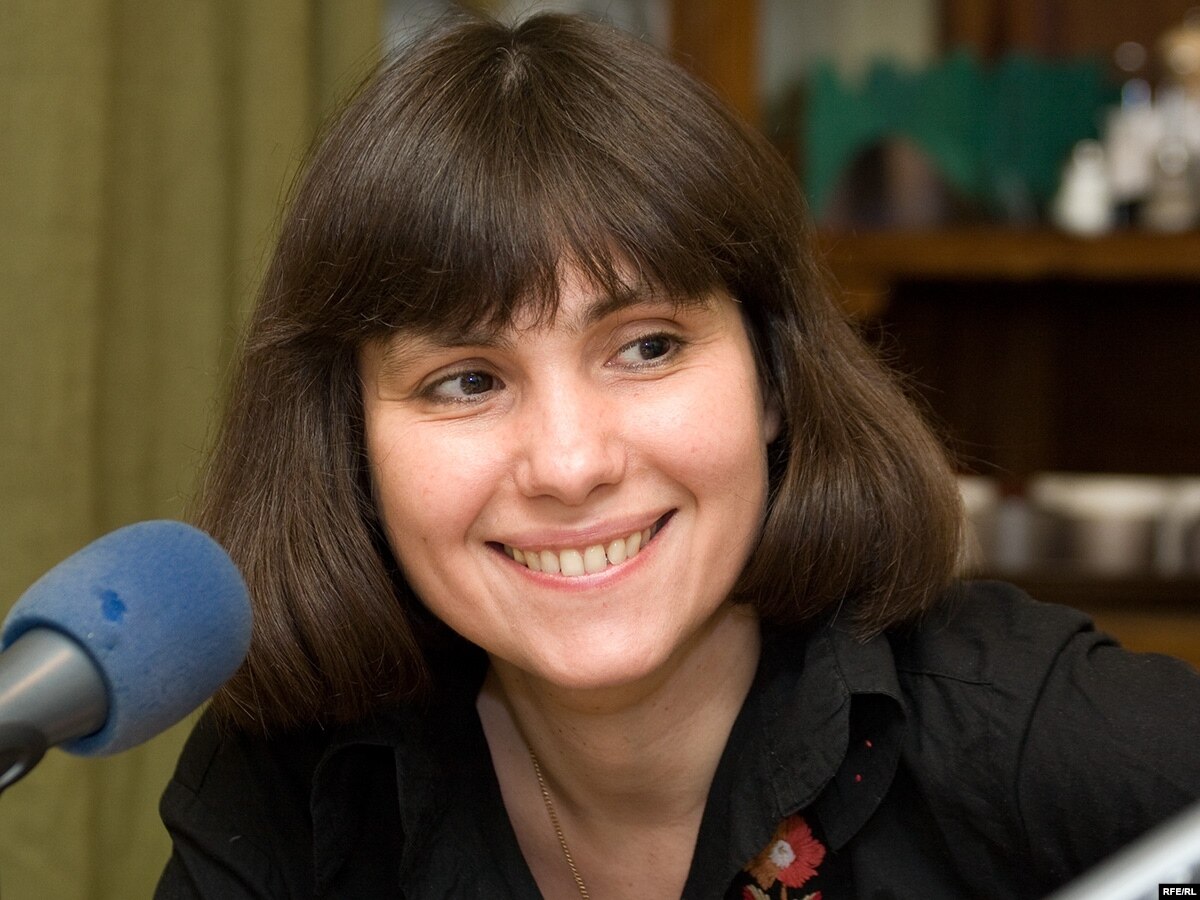
Marina Davydova - about the freedom of the Vienna festival and the campaign against the new theater in Moscow
In the neighborhood in the capital of Austria, two festivals are hosted - the annual Vienna festival Wiener Festwochen and the Feelrussia festival organized by the Ministry of Culture of Russia. The Kalinka Folk Dance Ensemble, the Bis-Cvit folk instruments ensemble, was brought to the Russian festival and showed a collection of 20 stories about Russia from Radical Chic silk scarves. On Wiener Festwochen, the performances "The perfect husband" Konstantin Bogomolov and the "Three Sisters" Timofey Kulyabin were shown .
“The true contrast in Vienna turned out to be the contrast of the new Russian theater (and art) and that Kalinka Malinka, which came from an impromptu stage and which was brought here for a considerable money of Russian taxpayers,” writes Oleg Tabakova, program director of Wiener Festwochen . Her letter is the answer to the message of Tabakov, admiring the Vienna Premiere of the "perfect husband." “This is not just success, but successful success. It gives the strength to do its job and go to the way that we go. And this happened largely thanks to your artistic will, happened in one of the most important centers of European culture. Such things are not forgotten,” Oleg Tabakov Marina Davydova wrote.
Although the Wiener Festwochen program this year is a theater critic from Moscow, and two Russian performances were successful, the festival is not at all focused on Russia. Here is a large program of symphonic concerts, a retrospective of films by Susan Umbable, Opera Vainberg “Passenger”, an exhibition of the Israeli video artist Sigalit Landau, and with Marina Davydova, who created this complex, working mechanism for more than a month, we talked after the Viennese premiere of the grandiose, ongoing 24 hours of performance by Yana Fabra "Mount Olympus".
- Marina, a few years ago I was at your lecture "On the New Theater", then you said a thing that I remembered forever: "You can distinguish a new theater from the old one as a cat from a dog. You will never confuse the smallest decorative dog with a cat." Now my friends and I discuss the performance or the film: was the dog or a cat? In Vienna, you collected exclusively cats to the festival. A difficult task. How do you deal with her?
The question is not the presence of a large number of dogs, but in the presence or absence of interesting cats
-I do not perceive this as some kind of task. At festivals of this level, if you use the ironic terms, which you remembered, as a rule, are presented cats. I almost never saw the dogs here. But the cats are also different. Therefore, the question is not the presence of a large number of dogs, but in the presence or absence of interesting cats at the festival. I wanted to show with the help of this program how the space that is described by the word "theater" has changed. After all, it describes not at all the reality that 30 years ago. There is an active expansion of the theater into the adjacent spheres, and the further, the more. And I wanted everything that is described by the word "theater" today, a wide variety of theatrical forms, searches, directions to be in the program. Journalists invariably begin to ask me about some national accents in the program, although I tried many times to convince them that I was doing a program about the theater, and not about any national theaters, on the contrary, the national in the theater is not very interesting. For me, this is a single space.
- There are no more Russian productions?
The campaign of the late 40s began with theatrical critics
- No, there are only two of them. Here it should be noted that the Vienna festival historically always looked towards Russia, unlike Edinburgh or Avignon, who generally forgot about the existence of our country for a long time. At the Vienna festival were Andrei Mighty, Ivan Vyrypaev, and Lev Dodin, and Evgeny Grishkovets. So, believe me, I had no intention of making a Russian program. I generally detailed this thinking in the framework of national categories. If I saw three Portuguese performances during my wanderings that would shock me, then there would be three in the program. But in this case there are two of them, as much as Russians. It does not seem to me fundamental, because the timely theater is this cat, which lives where it wants.
- Yes, and not only the theater. In addition, the Viennese festival is not a purely theater festival - this is cinema, concerts, and exhibitions.
Wiener Festwochen is an outpost of advanced left thought in Austria
- Well, yes. These are all communicating vessels. At some point, Romanian cinema becomes interesting, suppose, at this moment, in this vessel, it flows more than the substance that can be called modern cinema. And then it can bell into France, for example. Similarly with the theater. Until recently, there was no such thing - the Belgian theater. And now the most important events of world theater life are taking place there. Unlike England, for example. You just have to follow this.
- Among your cats there is a huge kitty - this is the performance of Jan Fabra "Mount Olympus". I watched him in Rome, prepared in advance for the fact that I would not sleep, and really did not sleep a single minute. Both the huge hall was full at the beginning and at the end of the performance. I don’t know how I succeeded, how we all succeeded, and how Jan Fabra succeeded. How did the Olympus perceive in Vienna?
- Just a plump success. I think Yana Fabra's prey here is my main victory. I worked these two and a half years in very comfortable conditions, no one crushed me, complete love, mutual understanding, wonderful relations with everyone in the office. And only about Jan Fabra came up to me both the financial director, and almost the entire accounting department with a request to remove him from the program, because he spoiled the whole picture to them. There are restrictions here. On the one hand, there is a budget from which you will not jump out, although it is large, more than the fact that we have received a total of the 17 years of the NET festival, say. On the other hand, the total number of tickets is known in advance, which the festival should offer the city. The city may not buy all tickets, but we (the festival) must offer them to him.
- And how many places in the hall, where did the fabra play?
- There are 800 seats in the hall, but any other performance can be played several times except the performance of Jan Fabra. Therefore, on this performance, which has been spent quite a lot of money, you offer the city 800 tickets. This ratio for the local rules is catastrophic. But when in the final the financial director and the quartermaster saw what began to happen in the hall, this one without exaggeration of euphoria, they recognized their complete defeat. It really was the unique case when you need to forget about all the rules.
- We have such a conversation of the conspirators who saw this performance, but it is unlikely that many of our listeners will be able to see it. Although it showed in different cities, but still it is 800 people. Why did you decide to choose it and insisted on your own?
- You have already said about the duration of this performance, which goes around the clock. But the duration in this case is part of the artistic plan. It is no coincidence that Dionysus in the final suggests that this performance should not have the end, bearing in mind that this is a process that should last endlessly. Formally, this is a performance based on a variety of ancient myths that we all read in childhood, but in fact (for me, in any case) it is an attempt to implement theatrical and vital utopia. This is the territory of boundless freedom, endless experimentation, endless clarification of relations with the past of mankind and with its present. Revision of the past and present. This is an attempt by a very sober, very merciless look at man as such, at his nature, at his history. And in this sense, this is the quintessence of modern European thinking - it is very sober, analyzing itself, merciless to itself. And that is why it leaves hope for progressive movement. This is an attempt to abandon cliche, from the borders into which life drives us, an attempt to go beyond these borders, and as soon as new boundaries appear, to go beyond these new boundaries. I am talking about the meaning of the presentation, but in fact, of course, it is completely amazing that for more than 24 hours twenty -odd performers they fantastically play, sing, dance, but still run, jump, jump through iron chains, that is, perform physical exercises. This is a mix of the theater, dance, circus and even sports, and if we talk about what feeling I experienced at this view that I have never experienced at any even the most beautiful performance ...
- Ecstasy?
- Yes, ecstasy. But I will try to understand the nature of this ecstasy. And in Berlin, when I watched Mount Olympus for the first time, and here in Vienna, I had the feeling that I was running, jumping, screaming, pronouncing monologues, lying in the mud and doing everything that the artists on stage did, 24 hours with them. That I took physical participation in everything. This is the feeling of a person who watched the performance is absolutely unique, because no matter how well everything is played in another performance, you always know that they were trying to clap them gratefully, and then I clapped it for myself for an incomprehensible reason. I had such a feeling.
- This is the victory of each viewer at least over his daily routine.
- Yes. This is some kind of amazing unity of the hall and scenes, unique, rare. It happens, probably, in football competitions, but there is no aesthetic dimension in it. And here, if you imagine a sense of euphoria, which covers you simultaneously from listening to beautiful music or a play that has been seen and from the fact that your favorite team won, if you combine it, then the cumulative effect will be equal to what you experience the Fabra play.
-And yet this is the festival not only theatrical. Yesterday, for example, I watched two films by Susan Umbable, which I had not seen before. A wonderful idea to make her retrospective. Why did you choose the umbrella?
-When I make a program, when I collect a certain number of performances that seem important to me, representative, I never come up with the theme of the festival in advance. I just later look at the already selected performances, and the topic itself appears. You just need to learn how to watch correctly. And when I gathered most of the program, a topic that I would not want to call feminist appeared. We have some kind of unpleasant train for this word. But if you simply say: suddenly it became clear that in the modern theater you very often meet such a feminine view of reality, which is still different from the male. It is not opposition to him, no, he’s just a little different, some kind of displacement. Remember the performances of Angeliki Lidell, Keti Mitchell, for example. And then, if something sailed to me, confirming this thought or, more precisely, this feeling, I immediately grabbed something for it. And the films of Susan Umbable here were just very helpful.
- I even became a victim of a female view of the world during the Carousel performance - when a woman forced me to undress, take an iron and stroke her T -shirt, and then beg her back.
- Nine "carousels" performs their solo around the topic of pregnancy - this is also important to emphasize. They could choose any topic, but referring to the feminist plot, I asked them to focus on something related to the features of female psychology or physiology even. In fact, this physiological aspect is very important. A man cannot experience these amazing feelings when another person suddenly begins to live in him. My husband once told me that for him someone settling inside you is some kind of Kafkian plot. And for a woman, this is most often joy and happiness. It was then that I realized how different a man and a woman look at some simple things.
- Two Russian performances: “Perfect husband” and “three sisters”. Why did you decide to bring them to Vienna?
This is an attempt by the Ministry of Culture to crush the theater community for yourself
- It was important for me to open those names that have not yet been here. Kirill Serebrennikov was here last year, Dima Krymov in the year before last. Bogomolov was, but did not come with a Russian performance, but which was done in Latvia, so in a sense he was here for the first time, as well as Timofey Kulyabin, on whom I have high hopes. From the performances of Kulyabin, I chose the one that I consider the most powerful today, "three sisters." And the performance of Bogomolov is the one from which, it seems to me, it is necessary to start acquaintance with this director, very rapidly developing, evolving. Say, the “brothers Karamazovs” is a little risky to carry, and after the “perfect husband” arrives, it would be possible after some time already the “Karamazov brothers”. Here in the art of programming, too, there are small secrets, you do not always need to bring the most new production.
- Since we started talking about Russia, I will ask you that now the Russian theater public is most worried about the situation in GITIS, where the theater critic Grigory Zaslavsky is appointed the acting rector. I know that this story also bothers you.
This purpose takes place as part of the campaign to destroy what can be called the modern Russian theater
- Like any person who graduated from GITIS. Not to mention the fact that almost all the authors of the theater magazine, with whom I deal, is the overwhelming majority - GITIS graduates, including the young growth of theaters. GITIS for us is not just some place in which they teach is what we are connected with life. The first spontaneous reaction to this appointment was loud and even loud, because a person who has now become the acting rector has a very, softly, difficult reputation in the theater world. He does not hide this, he says in an interview with Novaya Gazeta: I am better than my reputation. That is, he himself admits that his reputation is not so hot, to put it mildly. You see, the theater world is difficult to arrange, this is the kingdom of ambitions, there are many small personal conflicts. But you can hardly find such reputations as Zaslavsky. But the point is not even that. The story with the appointment of Zaslavsky is not about personal conflicts. This appointment is quite obvious as part of the campaign to destroy what can be called a new or modern Russian theater. This is a campaign that the Ministry of Culture sequentially carries out: it is just right to recall the collisions (otherwise you can’t say) to the Golden Mask, and the story with the magazine Theater, and an attempt to destroy the "theater.doc", and the story in the "Tangaiser". It is known that Grigory Zaslavsky took part in many of these campaigns. There were campaigns organized by the Ministry of Culture, which are not related to the theater (such as, for example, the actual destruction of the Zubovsky Institute in St. Petersburg), but to which the current acting It also was directly related. This is recorded in his own articles, in his statements, in transcripts, this is an objective fact. He was part of these campaigns. And he served himself this purpose, which, of course, is perceived as part of the campaign against the living that there is in this institute, what could be attributed to the emerging new theater. We are all particularly worried about the Theater Faculty. It is difficult to call a normal situation in which the current acting Objectively, there is a conflict with the overwhelming majority of theatrical critics of Russia, which were included in the Association of Theater Critics. He called its members a bunch of villains. How will he interact with the theatrical and critical world at the same time? This is completely unclear. And all this is very reminiscent of the time of the fight against cosmopolitans. By the way, the campaign of the late 40s began with theatrical critics. Because theatrical critics in any country are an advanced detachment, they have their own conservative part, but in general these are advanced, thinking people. And officials obviously see in Zaslavsky a man on whom it is possible to bet from the inside of the theater world. Once again: in our environment, performed by ambitions, painful, envious, of course, a million conflicts arise - this is true, they do not disappear, they continue to smoke somewhere, but we need to open their eyes and see that the story with GITIS is not about small conflicts at all - it is about another at all. This is an attempt by the Ministry of Culture literally crush the theater community.
- You mentioned the problems of the magazine Theater, which you are heading. The magazine is alive?
No one hides ideological reasons for the zero support of the festival, an extremely successful
- The magazine is alive. But "theater.doc" is also alive. This does not cancel anything, because - what is alive? Is the magazine "Theater" surviving, is the "theater.doc" surviving, is the NET festival survive? Yes, we still survive, but we survive, but not live. And you are very tired of this. Last year, the Ministry of Culture abruptly stopped supporting the NET festival, which had previously given a penny. But still gave. And suddenly everything stopped. Sharply, right away . Никто не скрывает идеологических причин нулевой поддержки фестиваля, чрезвычайно успешного. Ведь если считать КПД NETа, то оно выше любого другого фестиваля: просто посмотрите, какие копейки нам давало государство и какова было отдача. То есть понятно, что это не связано с эффективностью нашей работы – это связано исключительно с идеологическими вещами.
– А у венского фестиваля все деньги государственные?
- Yes, sure. Большая часть – это деньги города. Это фестиваль не страны, а именно города, они всегда это подчеркивают. Потому что Вена и Австрия – это не совсем одно и то же. Есть красная, левая Вена и довольно консервативная страна. Поэтому Wiener Festwochen – это такой форпост передовой левой мысли в Австрии. Самое удивительное на этом фестивале, что тут практически нет ничего австрийского. Деньги австрийских налогоплательщиков сознательно тратятся на то, чтобы что-то приехало издалека, чтобы жители города и страны увидели, что происходит в мире. Это самый международный фестиваль из всех, какие я знаю.
– Фестиваль закончится, и вы покинете Вену?
– Я заключила контракт два с половиной года тому назад, эти два с половиной года сейчас истекают. У меня уже другие планы, связанные с другими странами, другие предложения, о которых я предпочту рассказать чуть позже, когда фестиваль закончится. А в Вене произойдет тотальная перезагрузка, придет новый интендант, он приводит с собой совершенно новую команду, фестиваль очень сильно изменится структурно. Он вообще будет в 2017 году не вполне театральным. То есть принцип ротации работает тут безотказно. Но при этом люди старой команды работают интенсивнейшим образом, и я не слышу никакого злословия в адрес новой команды. Я не могу себе представить в России, чтобы вся команда какой-то крупной институции знала, что она должна уйти и должна прийти новая команда, и относилась бы к этому как к чему-то само собой разумеющемуся. При этом, когда я спрашиваю: "А куда ты пойдешь потом работать?", человек обычно говорит: "Я еще не знаю. У меня есть проекты, я за них отвечаю, я должен довести их до ума. А о том, что будет потом, я подумаю потом".