
Translated material
Colta.ru
The Kinotavr Rodnyansky, the laboratory festival, for ten years of existence, not only tracked-formed at least two waves of domestic cinema. There is no better way to legalize them than to collect cinema almanes. The “short circuit”, which opened the festival seven years ago, became a kind of manifesto of “new quiet”-Khlebnikov, German Jr., Vyrypaeva. "Petersburg. Only by love ”, obviously, was supposed to help the so -called new female wave, which swept the Kinotavr a couple of years ago. This, of course, is not just about the cinema made by women - it would be stupid to determine the whole direction according to the gender principle. “Women's Wave” is something like a verbose, emotional answer to the dramatic silence of the zero-sincere, not hermetic, but emphasized open cinema, speaking loudly about things that the masculinity tells. An open form, which is trained in order from the time of the notorious “Paris, I love you” - a choral recognition of love to the city - here they refreshed not without wit. One of the producers was Sergey Selvanov - a well -known discoverer of the names and a robber of Almazov. But around him, the round dance is led by not harsh authors like Boslov, Mizgirev and Bakuradze, but sensitive and witty girls - from Renata Litvinova, an experienced ambassador of the world of feminine fantasies, until the recent graduate of VGIK Aksinya Gogh, who had not yet removed the debut full meter, but glorified in professional circles at least the two original ones short films.
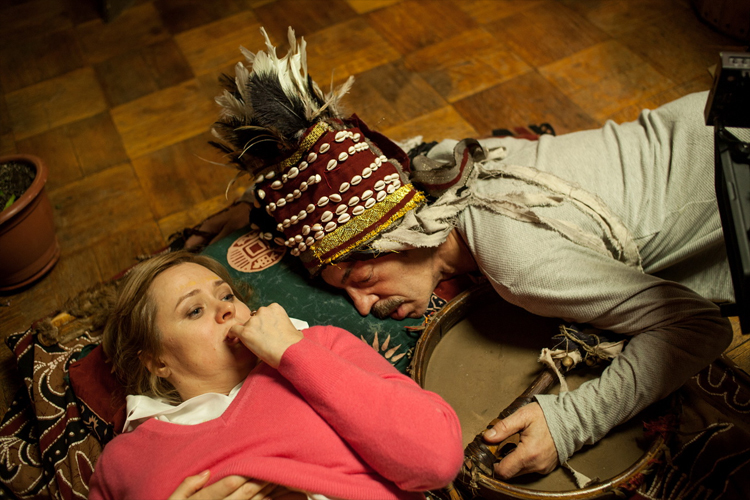
Let's say right away: Almanac did not become a program statement. But - another plus of any representative sections - revealed an important structural problem. In the ability to tell fascinating stories, most Russian authors ignore such an important thing as the search for their own cinema. A powerful self is expected to distinguish only the well -known original Litvinov, whose short story shockly completes the collection. Relatively fresh St. Petersburg souvenir export - Joseph Brodsky is subjected to ironic processing in this fragment. A symbol of a heap of different quality of initiations to the poet, shot in recent years, is a movie in the movie-the painting “Dreams of Joseph”, which is shot by a certain emotional Italian Maria-Luiza. The heroine of Litvinova, the experienced goddess of the episode, and her three daughters, the family, who has been playing the “four age of the same woman” and regularly called in this quality on “Lenfilm” (mainly because the old fan of the mother of the family, works in the studio as a second director) come to work in the mass. One of the best scenes-the heroes of artists passionately and pathetically read Brodsky on camera-as it is customary to read more than the hater of collective farms Yevtushenko. Litvinova discusses about the subject with the same branded sarcasm with which, on the day of the film showed the opening ceremony (inaccurate quote: “I will not wait to find a new Tarkovsky in this competition, placers of diamonds”). The branded Litvinsky Patrota, General plans, a peppy plot hysteria (sisters envy each other, mother arranges a scandal of a sociopatical grimer)-this is the only short story made by a strong author's hand with a well-recognized directorial handwriting.
 © Film Company STV FROM FROM Renata Litvinova “Dreams of Joseph”, movie almanes “Petersburg. Only by love "
The same can be said to some extent about the Aksinya Gog segment - confidently inherited by the Litvin temperature femininity and even developing it in something of its own. Last year, the Kinotavrov competition of a short meter showed her Vgikovsky diploma “The Journey of Fedor in Moscow of the 21st Century” - an example of a rare magical realism in our latitudes with moments of pure cinemagia like streets, which cars rode exclusively back. About the same city of the Svivorot-Golder in its short story, “Selfie” appears Petersburg-the place where the manneric depressive heroine in Anastasia’s hilarious performance arrives in the Pronina to get drunk with a stranger, and at the end of this compulsory program of teenage sprouting, herself to succeed. The randomly met a hangover punk changes her views on life and ways to leave her - but you will not run away from fate. All the heroes at the GOG suffer slightly Gothic, simultaneously ironizing over the gloomy themselves - is this not a portrait of an exemplary St. Petersburg mentality close to reality? Apparently, the director could make the novel much darker - but, I suspect, this prevented the desire of producers for audience accessibility and a common major.
The rest of the five episodes, spectator cinema varying degrees of success look confirmed. Avdotya Smirnova predictably leads here with the next joke from the life of an educated and shy heroine Anna Mikhalkova, who came here from the comedy “Kokoko”. In the arsenal of armor-piercing means to keep the audience attention-the best things of the century, from dogs to Mikhail Boyarsky as a charlatan-Shaman, attracting love to the heroine.
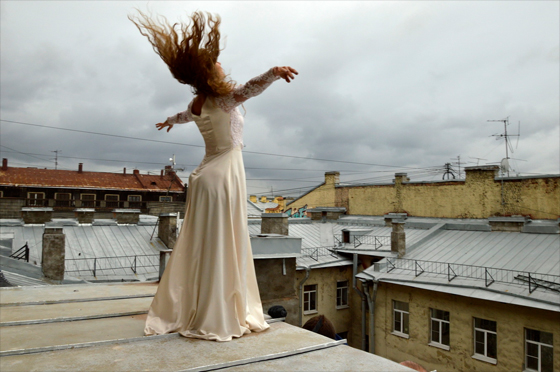 © Film Company STV Frame from the novel Aksinya Gogh "Selfie", Kino Almanas "Petersburg. Only by love "
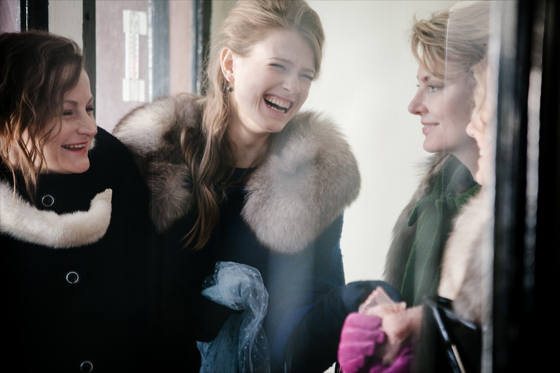
The withers to the withers with Smirnova have been markedly strengthened by Oksana Bychkova - the author, who not only with the maximum success, who knows how to make a movie about living people and cause unchasted audience sympathy for them, but also phenomenally working with artists (romantic duet of Alexander Paly and Nadia Lumpova in the story of the novel of a compassionate philologists with the deaf -hay charismatic). The main editor of the new Russian cinema, Ivan Lebedev, deserves a special mention in the role of Pope the heroine and at the same time himself. The permanent co -author of Smirnova Anna Parmas, who became humblely funny video of the Leningrad group, adjoins the composition on the rights of an invited star - and in the copyright, he suffers rather a defeat. The steam benefit of the star of “Interns” and “Simple Things” by Svetlana Kamynina in the role of a forty-year-old pregnant liberal and the main character of the Zvyagintsev “Elena” Nadezhda Markina in the role of her mother-Stalinist, due to acting, can not help but keep by the screen. But what is done here in a moderate way is difficult to say; Perhaps nothing.
The same story with the best, probably from the plots presented in the almanac, written by screenwriter Natalya Nazarova. The only pride of the heroine working at the construction site, played by the brutal Grand Dama of the comedy Anna Ukolova, is a child singing in the choir of boys. The problem is that the child is not as a boy as the mother would like. Comedy about near -cultural and winding stamps - the thing itself is so rare that it would be worth praising the author only for this. The author, but not the director (the same Nazarova): in the directorial, the plot is not meaningful at all, in the serial manner the film shot looks like an unpretentious video of an excellent story.
In the short story, Natalya Kudryashova, who thundered last year on the Kinotavr and Berlinal with the film “Pioneers-Heroi”, understanding the phenomenon of the unsatisfied pioneer heroism of the last Soviet generation, not only the director's decision, but, alas, and history as such. The film tells about the guide (Polina Kutepova), the intelligence, in the school English drumming the same dreary stories to visiting Americans. The next group, which, among others, has an emancipated American teenager and a mysterious American Indian, unexpectedly demonstrates a greater love for an unfamiliar city than Petersburger herself. As a result, the heroine from a grinning machine turns into a living person. I am now telling not so much about the film as about his plan. It can be seen that it was conceived - right on the textbook - “Arca of the heroine”, the story of one glorious change from the dead to the living. There is, alas, some speculation of the made (as in the mentioned “pioneers-heroes”): the author is smarter than the director, although they, apparently, are the same person.
Bottom line: There are still many good artists in our cinema. Everything is in order with smart screenwriters. In general - many excellent students. The authors are still critical. As the press conference showed (a quote from a grateful viewer: “I would go to this film with five friends and a bottle of champagne”), the viewer is quite listed. People trying to enter what is happening in modern Russian cinema into a kind of cultural context - alas, no.