
Translated material
Small person grown in the retort
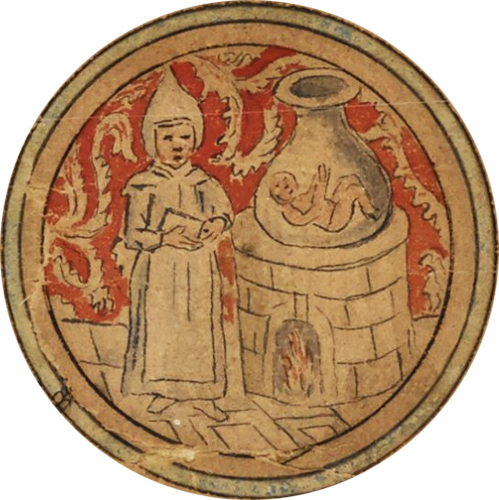
At first there were just rumors about the meeting of scientists in Harvard, who was closed to journalists, where 150 best geneticists of the world gathered. All of them, retold these rumors New York Times , asked not to communicate with the media and not write anything on Twitter. Then, in the early days of June, the meeting participants, led by Professor George Cherch from the Harvard Medical School, published something like a manifesto in the journal : they are going to synthesize the human genome from scratch.
The project will be called HGP - Write : H means “ Human ” (“Human”), G - “Genom”, P - “Project”, and “ - Write ” correctly translate as “recording” in the sense that carries this word on the voice button.
Just HGP , without "- Write " - this is Human Genome Project at a price of $ 3 billion, a complete decoding of the human genome that was conceived in the 1980s, was launched in 1990 and officially completed in 2004. We can say that the goal was not so much to decipher as to learn to read DNA fluently. In 1984, that is, literally on the eve of the start of the project, the whole world was read by the viral genome (it was the Epstein -Barr virus, which causes people one of the herpes one) a length of 172 thousand letters of the genetic code. There are three billion such letters in human DNA (that is, 20 thousand times more), and since last fall, your three billion letters are proposed to read for a thousand dollars for several days . In a word, in the reading, progress visible to the naked eye happened.
And now genetics intend to retrain from readers to writers. And write your own, processed and supplemented, version of human DNA.
How fast? After 10 years. At whose expense? It is still unknown. Scientists did not write a appeal to the president as Einstein Roosevelt in 1939 regarding the atomic project, as well as contact the Ministry of Health (his role in the United States is played by national health institutes) or the Ministry of Defense (where there is a whole department of advanced projects, DarPA , which supports more radical ideas of biologists). Professor Church and his team create their NPOs with the immodest name “The Center for the highest achievements in engineering biology” and are going to ask the first 100 million dollars this year.
In March of this year, Craig Venter presented a “minimum bacterium” - an organism with a synthetic genome that has nothing superfluous in DNA.
In the manifesto, DNA synthesis from scratch is called the “logical continuation” of the idea of editing the genome. In 2012, genetics invented - more precisely, spied on bacteria and were able to adapt to their needs - the CRISPR - CAS 9 method, which allows you to cut the DNA thread with high accuracy anywhere and be inserted there. But CRISPR is still a kind of collage: we just take and shuffle the scraps of newspaper headings and part of the cards. The collage technique leaves us less freedom than the technique of drawing, and the “recording of DNA” is closer in this sense to drawing - the stroke behind the stroke.
As in the case of reading, to write DNA-that is, to collect chains from individual genetic “letters”-scientists somehow already know how to. Church is one of the founders of GEN 9 , which constructs genes to order (typical packaging for such a purchase-an adenoassed virus, a relative that causes the flu: “ordered” DNA is built into its own so that the virus can deliver a synthetic DNA to a target cell). On the site you can find a list of sentences: the cheapest that you can order is a DNA fragment of 300-600 letters, the most expensive is from 4 to 10 thousand letters, and this seems to be the upper ceiling for the “recording mode” set to the stream. It is important that the method allows you to record any text in DNA - at least the chords of your favorite song, encoded with letters A , C , T and G.
Is it possible to create a genome of an entire organism? Can. The first cells with a synthetic genome (they can be considered with reservations the first living beings created from store reagents) were born in 2010 thanks to the biologist and entrepreneur Craig Vender. In March of this year, he presented the “minimum bacterium” of JCVI - SYN 3.0 - a cage with a DNA of 531 thousand letters, which contains 473 gene. The “minimum” she, in the sense that the Venter team tried to throw out everything “optional” and leave only what is necessary to maintain life. In addition to the actual DNA genes, it contains a lot of regulatory areas that themselves do not encode anything, but can affect the generation of genetic garbage, for example, crushed scraps of ancient genes, which have long become non -functional under the load of accumulated mutations. If the gene is still somehow possible to distinguish from Negen, then an important non-leading area from garbage is already more difficult. In addition, part of the genes, that is, encoding areas, can also be thrown away without lethal consequences - and there are quite a lot of such genes in the typical microorganism: be it not a bacterium, but a peacock, it would be left not only without tail, but also without legs with wings. Let alive.
The most popular method of editing the CRISPR genome is something like a collage: we create new meanings from scraps of ready -made newspapers and postcards. And the “recording of DNA from scratch” is closer to drawing the bar behind the stroke.
Is it necessary to be afraid that from human DNA, too - following the example of the “minimum bacterium” - will be thrown out all superfluous to grow a generation of improved children in a test tube? It is very unlikely: the technology of editing the human genome like CRISPR for the fourth year has existed for the fourth year, but ethical considerations are still reliably inhibiting their use for any Eugenics.
Synthetics in different interviews, without saying a word, explain their motives with a quote from the Nobel laureate in the physics of Richard Feynman, “What I cannot create, I don’t understand that.” An attempt to construct a complete human DNA from spare parts - at least an exact copy of the already existing, without any amendments - will greatly clarify the understanding of how it is arranged.
The plans of the authors of the project are not related to the cultivation of children, but with the breeding “in the glass” of some special cultures of human cells that could greatly help doctors. On such cultures, for example, they work out the effect of drugs before they are offered volunteers from among incurably patients.
Examples of such manipulations are given in the manifesto: the gene TRNA was removed from everywhere (more precisely, ignored it during the assembly of synthetic DNA, this is much easier than the total cleaning of the existing genome) - they received a cell, immovable to any viruses in general. They edited all the entry of the P53 gene before assembling - turned the cage into invulnerable to cancer.
The most useful in practice of the expected products of this technology is stem cells , which were promoted ten years ago as a magic wand that could almost return to people lost arms and legs. These cells have not yet decided who to be, and they are an ideal material for pushing the body, in which some tissue begins to refuse. A synthetic genome could make their use several times more targeted and safe.