
Translated material
How the ancient calculator works
Scientists read the "Instruction" to the anti -kiter mechanism
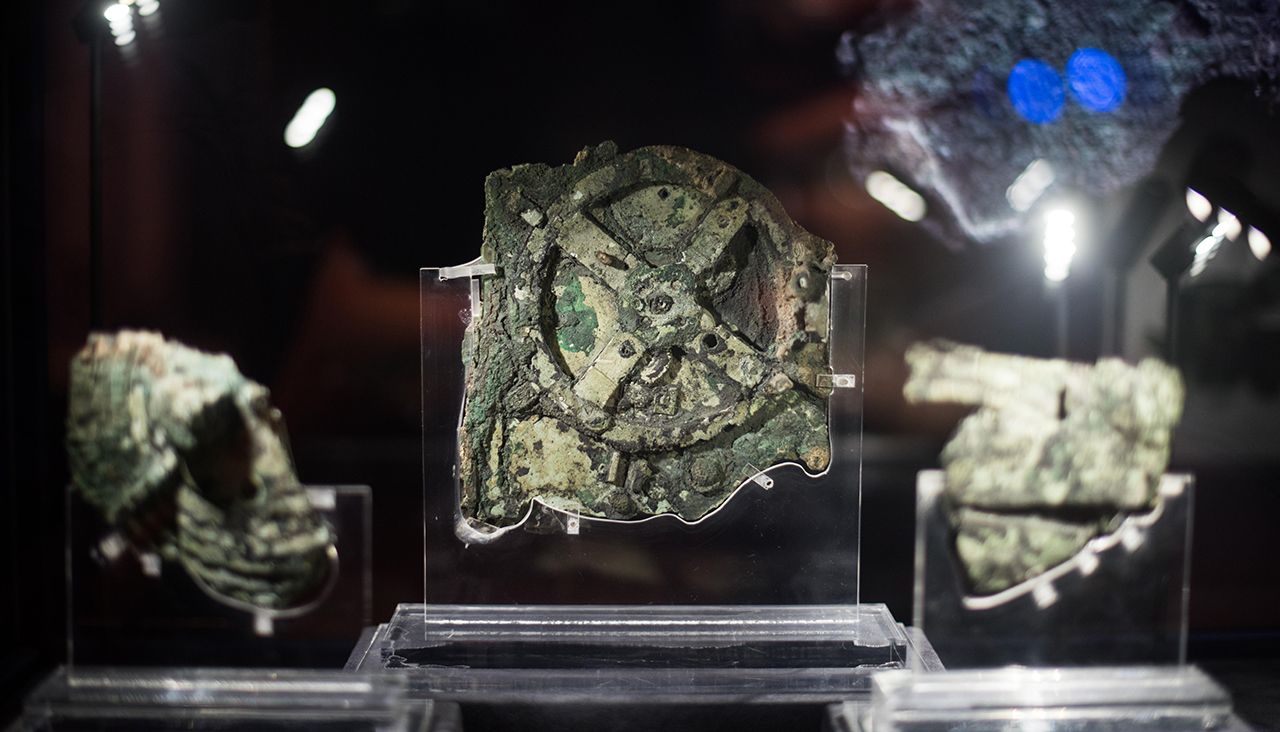
On June 9, 2016, the presentation of decrypted and translated texts engraved on an ancient astronomical calculator - the so -called anti -kiterent mechanism took place in Athens. Contrary to expectations, on bronze plates dated to the second centuries BC. e., there were not so much recommendations on the use of the device as the reasoning of the general property about the device of the observed sky. At the request of Medusa, journalist Julia Stutina tells the details of this story.
The results of reading the texts of the mechanism will be published in a special issue of the interdisciplinary magazine Almagest, published in Athens. Presentation of texts is part of the preparation for the Odyssey exhibition, which will open in the National Archaeological Museum in the Greek capital in the fall of 2016. The anti -kiteric mechanism will be one of its most significant exhibits.
The mechanism that had no analogues was found in 1901 during the examination of the ancient ship, sank near the island of Antikiter (about half a way between the southern tip of the Peloponnese and the northwestern coast of Crete). Compared to bronze and marble statues raised from the scene of shipwreck, the mechanism looked unpresentable: it was a lump of sticky and deeply corroded bronze parts. Actually, the details did not see immediately and by accident: in one place, the lump cracked, and the teeth of a small gear were exposed on the break.
They seriously began to engage in the find in the second half of the 20th century, involving the entire arsenal of the latest technical means in turn as they improve - from x -ray to computed tomography. Over the past ten years, the United Research Group The Antikythera Mechanism Research Project ( AMRP ) is engaged in the study of the mechanism, which includes Greek, British and American astronomers, archaeologists, historians and other specialists.
It was possible to find out the purpose of the anti -kiteric mechanism for a long time: this is a device for calculating and demonstrating astronomical phenomena: phases of the moon, the time of ascent of stars, sunny and lunar eclipses. There are inscriptions on the surviving fragments of the mechanism, some of which were read immediately: for example, the names of the months and signs of the zodiac. But most of the texts were on the surfaces, eaten by corrosion, and it took ten years to read.
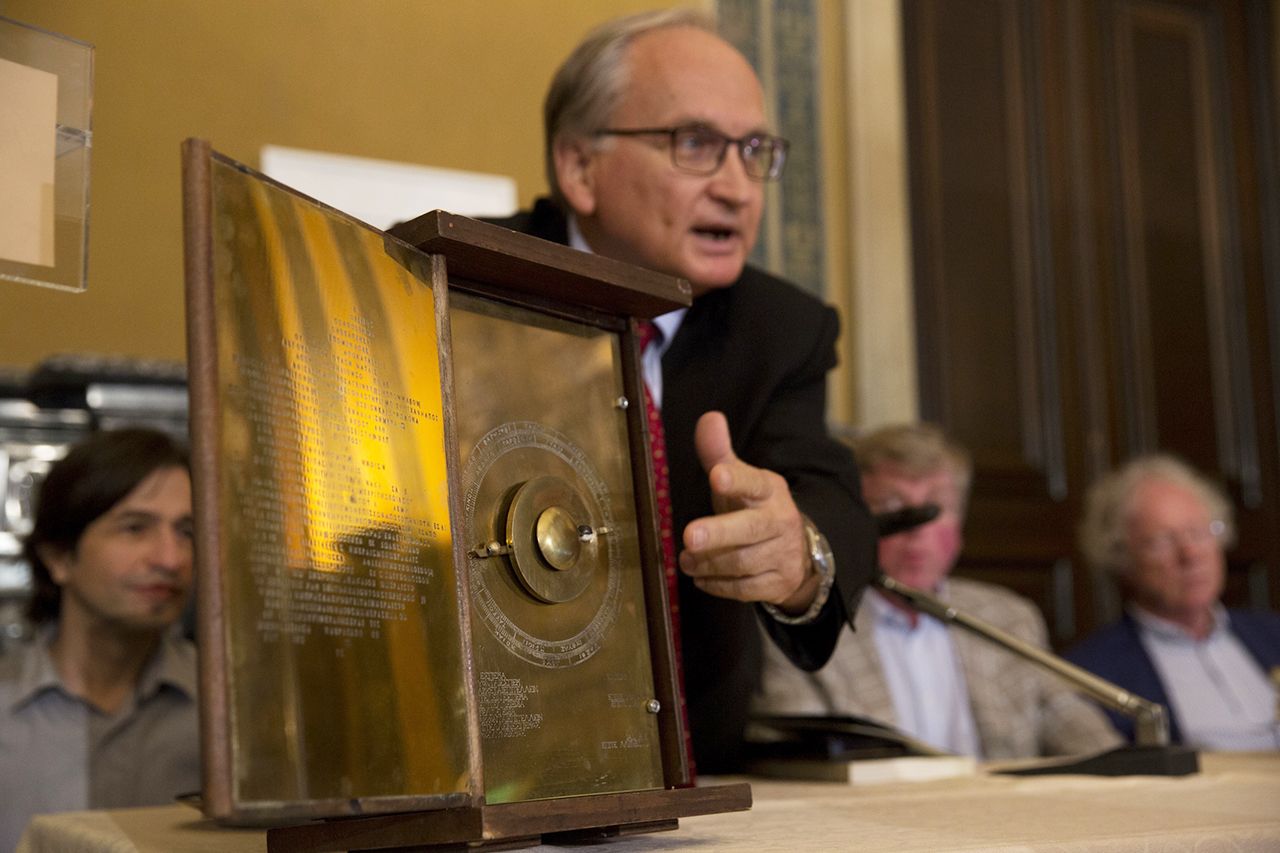
In an interview with The Smithsonian magazine, the American participant in the AMRP project, Alexander Jones, explained that scientists managed to read 3400 signs, many of which barely reached a millimeter in height. Jones believes that about 20 thousand signs were recorded on the tool. The inscriptions, apparently, were made by two people working in the same workshop. Calculations for astronomical events were carried out at a latitude of 35 ° C. Sh., So the mechanism most likely was not created in mainland Greece, which mainly lies north, and not in Egypt, located much south, but, for example, on the island of Rhodes (36 ° C.S.). If it were possible to prove the Rhodes origin of the mechanism, it could be associated with the outstanding astronomers of antiquity Gipparh (190-120 BC) and hemin (I century BC), which worked on this island. In favor of the Rhodes version, the mention of the game mechanism in honor of the god Helios held on Rhodes also testifies to the Rhodes version. It is interesting that among the events listed in the texts of the mechanism, games are also mentioned in honor of Zeus, arranged in Dodon, in the north-west of Greece: it is possible that the customer could be from there.
The greatest surprise by researchers were presented with inscriptions describing various eclipses. The author of the text accompanied them with a description of the winds, as well as colors of the sky and luminaries. These observations have no astronomical and prognostic meaning, but they correspond to the tasks of “great astrology”, that is, predictions on the luminaries of the fate of countries and peoples. The Greeks borrowed this idea from the ancient Babylonians and developed it in the Hellenistic era. According to Alexander Jones, by the time of the creation of the mechanism, the Greeks began to "replace astronomy with calculations and predictions ... The theory replaced observations." In the final comments on the publication of newly read texts, the authors write that the tool illustrates the "Hellenistic cosmology, in which astronomy, meteorology and fortune -telling by lamps are intertwined."
The researchers of the mechanism were surprised by another circumstance: the inscriptions on the rear handbrake of the tool do not contain instructions for the operator, they describe what the viewer should see. And this should be a prepared viewer, who is well imagined, for example, astronomical cycles. Who was this viewer? Was he a priest, teacher or rich patron saint of sciences and arts? No one has an answer to this question.
Another issue has not yet been resolved: who and where to take the anti -kitere mechanism on a unfortunate ship, which sank, most likely, in the first half of the 1st century BC. e.? Wide dating is given due to the abundance of different ages raised from the hold of the ship: for example, one of the bronze statues dates from the beginning of the 4th century BC. e., some household items - the beginning of the 1st century BC. e., the latest coin-70-60. BC. e. The tool was probably older - the first half of the II century BC. e. There is an assumption that the ship is driving trophies from Greece to Rome for Sulla or Caesar.
Researchers do not cease to hope that the missing fragments of the mechanism are still on the seabed. In 2016, the next season of underwater excavations at the crash site will take place , and maybe something will be able to find something. But if this does not happen, the astronomical calculator will remain the only monument of ancient technology and science - and the illustration of how these areas of knowledge were non -linearly.
Julia Stratotina