
Translated material
Memory. Mikhail Koltsov
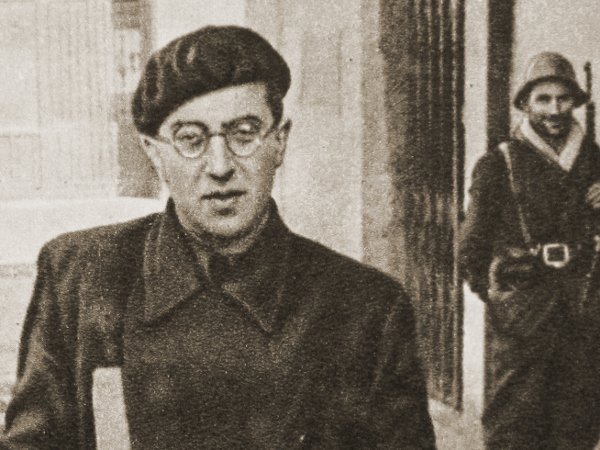
On June 12, 1898, Mikhail Koltsov, the founder and editor of the magazines "Spark", "Crocodile", "Abroad" was born.
Personal business
Mikhail Efimovich Koltsov (Mosey Friedland, 1898-1940) was born in Kiev in the family of the artisan-seeker Efim Moiseevich Fridlyand and Rachili Savelyevna. After his parents moved to Bialystok, he studied at a real school, where a handwritten school magazine was published with his younger brother Boris: his brother painted illustrations, and Mikhail was an author and editor.
In 1915 he entered the Psychoneurological Institute in Petrograd, but did not graduate from his studies. He began to be printed in newspapers since 1916. Since the beginning of the next year, he collaborated in Petrograd magazines.
He was an active participant in the February and October Revolutions. In 1918, on the recommendation of A.V. Lunacharsky, he joined the RCP (b).
In early 1918, he headed the newsreel group of the People's Commissariat of Education. Since 1919 he served in the Red Army, collaborated in Odessa newspapers and in the Kyiv army newspaper Red Army. Since 1920 he worked in the press department of the People's Commissariat of Foreign Affairs.
From 1922 to 1938, Mikhail Koltsov was a special correspondent of a number of periodicals, including the Pravda newspaper, often went on foreign business trips.
Koltsov often performed with satirical materials, worked a lot in the genre of political feuilleton. The head of the “Journal-Gazeta Association” founded by himself, initially, before the reorganization in 1931,-the Joint-Stock Company “Spark”, which existed from 1925 to 1938.
From 1934 to 1938 he served as the editor-in-chief of the Crocodile satirical magazine. He was also one of the creators and the editor -in -chief of the satirical magazine "Eccentric", in which he led the constant section "Calendar of the Eccentric". He collaborated in the satirical journal "Hippo".
After the outbreak of the Civil War in Spain of 1936-1939, Mikhail Koltsov was sent there as a correspondent of Pravda and at the same time an unspoken political representative of the USSR authorities under the republican government.
Arriving in Madrid in August 1936, Koltsov under the name Miguel Martinez soon became the main political adviser to the General Staff of the defense of Madrid and was in the center of the most important political and military events.
On August 27 and 28, the first air raids of Italian aviation to the capital of Spain took place. Then Koltsov wrote in his diary:
“Tomorrow, or rather, today, on the historical day of August twenty -ninth, 1936, in response to the inhuman bombing of the peaceful European capital of the Government of France and England, they will send an ultimatum to the fascist powers that support the rebels against the legitimate Spanish government. ... All of Europe, the whole world in a single impulse, in an instant and formidable rally, is repulsed by the Militarist block of the Nazis. The beast is pinched by the tail ... "
However, on August 31, he wrote: “Nothing happened. No one declared an ultimatum to anyone. On the twenty -ninth of August, it passed as an ordinary weekday. ” And further: “The suppression of the rebellion resulted in a civil war, the civil war is turning into a fight against foreign intervention, with the invasion of foreign fascist troops. Is this really so? I do not believe myself. "
In Spain, Koltsov actively participated in the events as the organizer of the resistance to the rebels. The Spanish newspaper reports served as the basis of his book “Spanish Diary” (1938), where Koltsov spoke about the legal part of his work from the first person, and about the secret of the Mexican communist Miguel Martinez.
At the end of 1937, when the defeat of the second republic became obvious, Mikhail Koltsov was withdrawn home.
1938 became very saturated for Koltsov. He was elected as a deputy of the Supreme Council of the RSFSR, a corresponding member of the USSR Academy of Sciences. Koltsov’s main book was published - Spanish Diary. An enthusiastic article about her was written in Pravda Alexander Fadeev and Alexei Tolstoy.
On December 12, on the instructions of Stalin, Koltsov made a brilliant report at a meeting of writers about a short course in the history of the party.
On the night of December 12 to 13, Koltsov was arrested as amended by the newspaper Pravda. The immediate reason for the arrest was a letter to Stalin of the Secretary General of the Interbrida in Spain Andre Marty, where he accused Koltsov and his civil wife Maria Osten and espionage in favor of the Nazis.
On February 1, 1940, the Military Collegium of the Supreme Court of the USSR Mikhail Koltsov was sentenced to death on charges of "anti -Soviet and trocial activities." The very next day, the verdict was carried out. He was buried in Moscow in the Donskoy cemetery.
What is famous
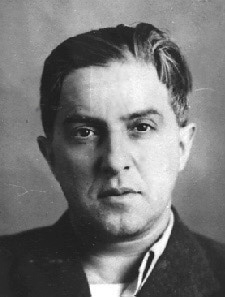 Mikhail Koltsov, 1938. Photo of the NKVD
The “Master of Soviet feuilleton” Mikhail Koltsov was the most famous journalist of the USSR, journalist No. 1. The whole country was read by his reports and feuilletons, they were reprinted by many newspapers of the world.
Koltsov also created and led Zhurgaz - the “Journal and Gazeta Association” - the prototype of modern giant media holdings. Zhurgaz issued four dozen periodicals, including the Literary Gazeta, Abroad, Soviet Art, Drive, Soviet Photo, Women's Journal and others.
What you need to know about
When he was the editor, “Light” in 1927, Koltsov invented and implemented a unique literary project-the collective romance-commercial “Big Fires”.
The essence of the project was that the writers and journalists participating in it consistently wrote one chapter on the principle of the famous poetic game Burim, which were immediately printed in the magazine. The last chapter was written by Koltsov himself.
The creation of the novel was attended by 25 famous writers of the 1920s, including such classics of Soviet literature as Isaac Babel, Alexei Novikov-Priba, Boris Lavrenev, Konstantin Fedin, Alexey Tolstoy, Mikhail Zoshchenko and others.
The author of the first chapter was Alexander Green, who offered a detective story about mysterious fires in the fictional Soviet town of Zlatogorsk.
In the future, each of the other authors wrote one chapter in which he proposed his development of the plot.
The novel turned out to be interesting, but it seemed unlikely to release it with a separate book - after all, in the event of an arrest of at least one of the project participants, his publication became impossible. As a result, six authors turned out to be repressed.
A separate book “Big Fires” were published only in 2009 - with the preface of Dmitry Bykov and the illustrations of Alexander Egorov.
Direct speech
The writer Vsevolod Vishnevsky for the help of the USSR of Spain: " We gave Spain tanks, we gave Spain aircraft, we gave Spain Mikhail Koltsov . "
German Slavist and litcritus Wolfgang Cossack about the ring: "He showed himself to be a master of feuilleton, figurative, compressed, exciting style, which irony, paradoxes and hyperboles brilliantly strengthened the political orientation of his works."
Political observer Heinrich Borovik about the book of Viktor Fradkin’s book “The Case of Koltsov” : “I don’t know how you, readers, but I hardly have to read the book more tragic, leafing through the document more terrible, to witness human cruelty more meaningless”
The last speech of Mikhail Koltsov in the Pers of the Court Secretary of the Court : “All of them (testimonies) by himself are fictitious for 5 monthly beatings and mockery of it. His testimonies were born from under the stick when he was beaten on his face, through his teeth, all over his body. He was brought by investigator Kuzminov to such a state that he was forced to consent and testify and his work in any intelligence. ”
9 facts about Mikhail Koltsov
- Koltsov wrote about 2000 newspaper articles on relevant topics of domestic and foreign policy. From 1928 to 1936, multi -volume collected works of his works were published three times.
- Mikhail Koltsov was the brother of the famous cartoonist artist Boris Efimov.
- On the initiative of Koltsov, the world's largest maxim Gorky aircraft was built in the USSR.
- Mikhail Koltsov was bred in the novel by E. Hemingway, “For whom the bell calls” under the name of Karkov.
- In 1938, the session of the USSR Academy of Sciences elected Mikhail Efimovich a corresponding member. This was the first time that the elected academician had no higher education.
- Koltsov was married three times. The first wife is actress Vera Yureneva (1918-1922), the second wife is Elizaveta Ratmanova-Koltsova (worked with her husband in Spain) (1924-1930), the third wife (civilian)-German writer Maria Osten. In 1940, Osten arrived from Paris to the USSR to help the charges from Koltsov, but was arrested herself and shot in 1941.
- While in conclusion, Koltsov stipulated more than 70 people under torture.
- On December 18, 1954, Mikhail Koltsov was rehabilitated by the military collegium of the USSR Armed Forces.
- In 2003, Viktor Fradkin’s book “The Koltsov” (Vagrius Publishing House) about the last 416 days of the journalist’s life was published. The book was written on the basis of the case of Mikhail Koltsov No. 21620 with the Grif “Store Forever”, to which Fradkin gained access.
Materials about Mikhail Koltsov
65 years ago, Mikhail Koltsov was shot
Why was Mikhail Koltsov killed?
Article about Mikhail Koltsov in Wikipedia