
Translated material
New President for Peru
President Ceyko Fuhimori, a presidential candidate, who was in the imprisonment of ex-president Alberto Fuhimory, recognized her defeat in the elections of the head of state, which were marked by the most stubborn struggle over the past 50 years. On Friday, at a press conference, Fuhimory, who was leading throughout the race, said that she was accepting the democratic results of the elections and the victory of the economist Pablo Kuchinsky, who was only on the hair in front of his rival.
“Having learned the results of the vote in the second round of the elections, taking into account the controversial ballots, the fate of which has not yet been resolved, in accordance with democratic principles, we recognize the results published by the National Office of Electoral Processes. We will be a responsible opposition that thinks about the future of the country, and intend to adequately represent more than 8.5 million Peruvians who voted for our program, ”Fuhimory said.
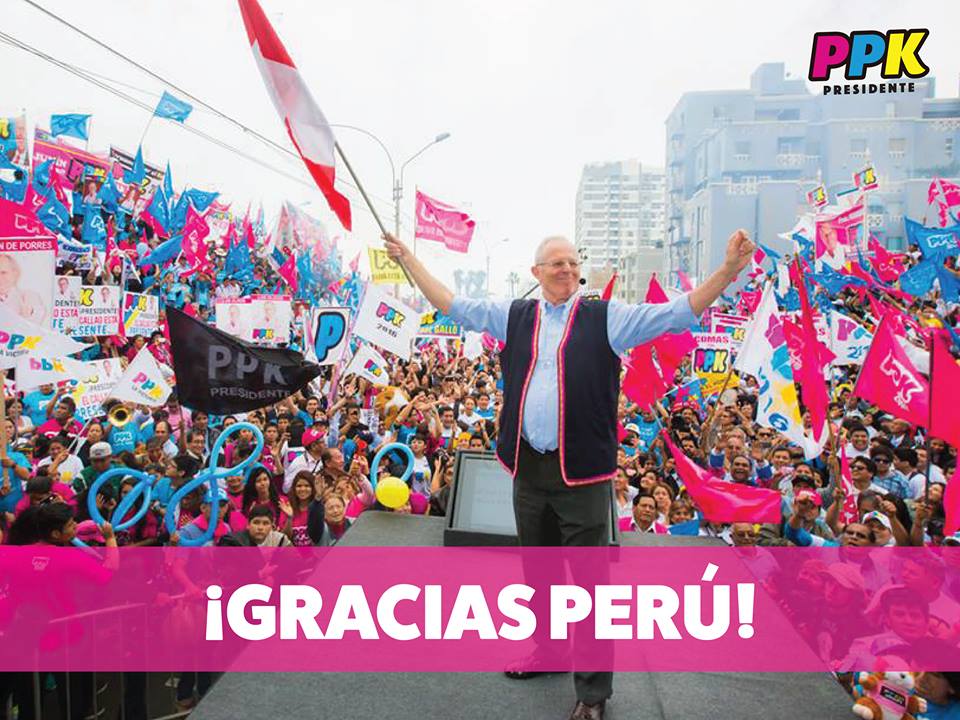
Based on the results of processing 100% of the ballots in the second round, the former Prime Minister Pedro Pablo Kuchinski, representing the law-centric party “Peruvians for Changes”, won. He gained 50.12% of the vote, Fuhimory - 49.88% of the vote, respectively. The first tour of the presidential election was held in April, but then the winner could not be determined. The favorite of the race was Fuhimory, which, according to the results of the first round, secured the support of approximately 40% of voters, with the required 50%.
In the presence of members of her party, Fuhimory accused of defeat the outgoing government, business leaders and the media, which, according to her, supported the campaign, who sought to "wake hatred and fanaticism."
Throughout the campaign, Fuhimory has been the main contender for victory, but in the past few months, trade unions, student organizations, as well as public, feminist and left -handed movements have returned the country's past, associated with the regime of her father Alberto Fuhimory. Now he is serving a 25-year prison term for bribery, human rights violations and bribing of the media during the reign in 1990-2000.
Alberto Fuhimory is accused of forced sterilization of women of the indigenous peoples of Peru, the organization of death squadrons to combat left -winged movements, as well as the use of concentration camps and closed military vessels. The authoritarian regime of Fuhimory has existed for 10 years, relying on the economic growth and elimination of rebel groups. After the divorce of parents in 1994, Keiko Fuhimory for six years of dictatorship had the title of "first lady" Peru. “I am not responsible for my father’s mistakes,” Keiko said in 2011, when I first decided to run for president.
Despite the defeat, Fuhimory will be able to seriously affect the country's policy. According to the results of the spring elections, her Party “People’s Power” received 73 out of 130 seats in parliament. According to local media, the “folk power” continues the political tradition of Alberto Fuhimory and builds his program around his personality and course.
Keiko promises to protect the Peruvian people from the "lobby and the relics of the big business", hinting at the election program of their opponent. Luis Vareze, a political emigrant from Peru, believes that these are nothing more than populist statements. “Of course, she has her own individuality, but she represents Fuchimorism - the interests of the oligarchs, she does not manage the situation. Unlike his opponent, behind Keiko there is a huge political mechanism, her brother Kenji is the president of Congress, and her father is a political mentor of her party, ”Vareze said in an interview with Telesur .
Kuchinski, in turn, called on society to reconciliation and unity. “Let's not confuse dialogue with weakness. We will be determined, but we will work for all Peruvians, ” Financial Times quotes him. The 77-year-old Kuchinski will become the oldest president in Peru's history. The son of the Polish-Jewish immigrant, who was one of the leading specialists in tropical diseases, in 1986 he was supposed to flee the country after the revolutionary government came to the power of Juan Alvarado. Kuchinski was accused in absentia of illegally moving funds from the Central Reserve Bank of Peru, in which he worked since 1966.
Kuchinski moved to the USA, where he worked at the World Bank, and then began a successful career in business. He returned to Peru in 1980, served as Minister of Energy and Coal Industry, and then twice was as Minister of Economics and Finance. In his pre -election program, Kuchinski promised to reduce taxes to stimulate a business, attract foreign investments in infrastructure facilities, provide drinking water and utilities to the poorest regions of the country, as well as launch a number of projects that should create more than a million jobs and help reduce the poverty level.
Over the most part of the last decade, Peru was popular with foreign investors, thanks to the abundance of gold and copper, but a decrease in metals significantly hit the country's economy, The Washington Post notes. Other problems that the new president encounter are illegal drug trafficking (Peru went around Colombia in terms of cocaine supplies) and a high crime rate. Kuchinski, however, already promised to raise salaries to the police.
The Kuchinski party has only 18 seats in parliament, so for the successful implementation of the promised reforms, he will probably have to enter the coalition with “popular force”. One of the conditions of the Union of two parties is likely to be a transfer to the house arrest Alberto Fuhimory. Earlier, Kuchinski said that if he became president, he would not amnesty.